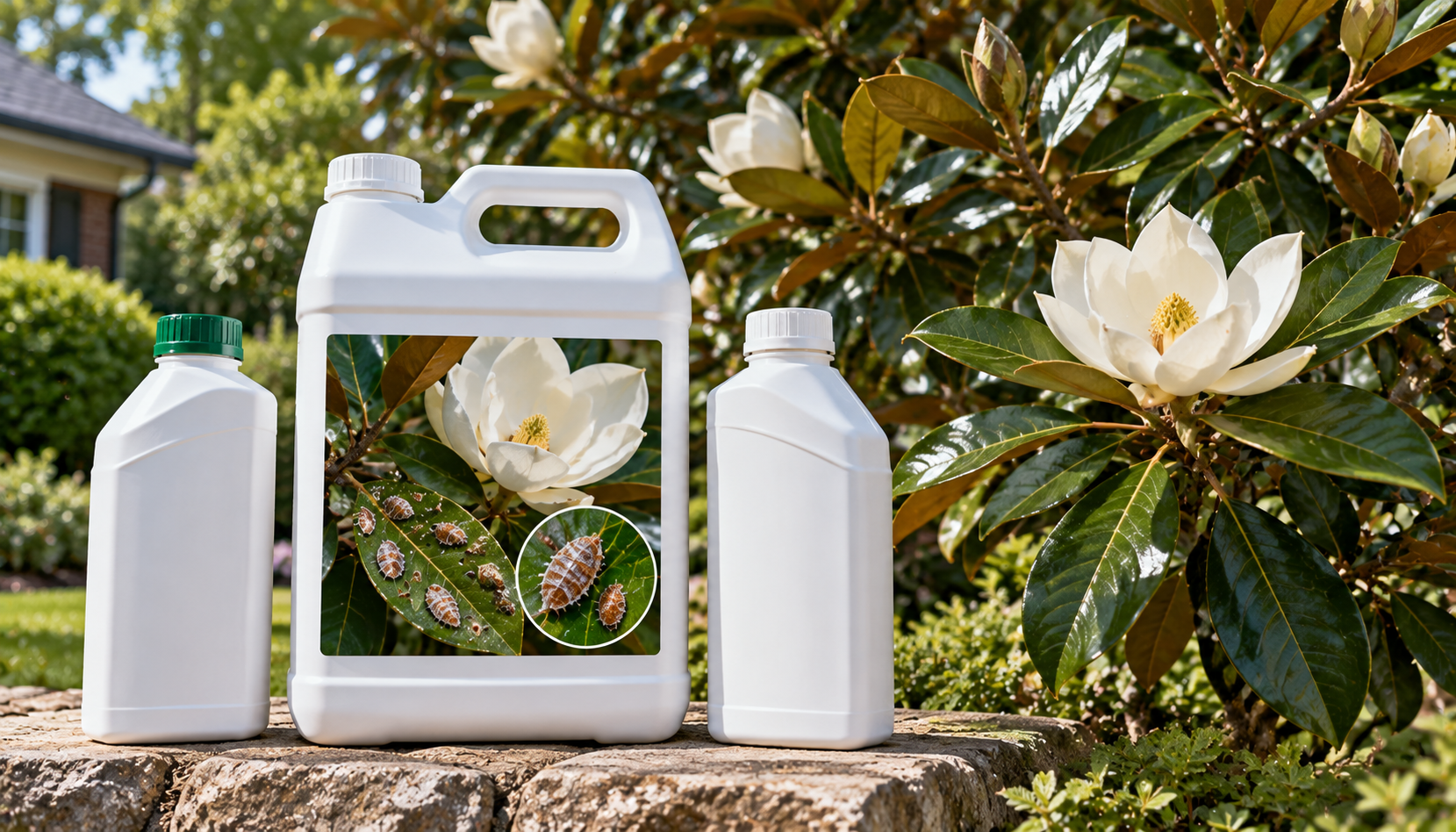
The best insecticide for magnolia scale can help restore heavily infested trees when these sap-feeding insects begin covering branches, stems, and leaves. Effective treatment depends on identifying the scale correctly, choosing the right insecticide for its life stage, and timing applications when the pests are most vulnerable.
Magnolia scale is often easier to manage when an infestation is discovered before branches become heavily coated with insects and honeydew. Regular inspection of young twigs, leaf undersides, and branch junctions can reveal developing populations, while pruning and garden sanitation may reduce localized pressure.
Different products work in different ways, with horticultural oils and systemic insecticides offering distinct advantages depending on tree size, infestation severity, and application timing. Protecting beneficial insects is also important because natural predators and parasitoids can contribute substantially to keeping scale populations below damaging levels.
In this guide, we examine 10 options for managing magnolia scale and explain which situations each approach suits best. We will also cover application timing, treatment methods, prevention, safety considerations, and practical answers to common questions about controlling scale on magnolia trees.
Best Insecticide For Magnolia Scale
1. Bonide Systemic Insect Control — Best systemic insecticide for magnolia scale
Bonide Systemic Insect Control can be considered when magnolia scale is established throughout a tree and direct contact treatment would be difficult. Systemic insecticides are absorbed by plants and can reach sap-feeding insects through the tree’s vascular system, making this approach particularly useful for pests protected beneath waxy coverings.

- Control hard-to-kill insects in your lawn and garden with Bonide Systemic Insect Control Concentrate
- Controlled listed insects include thrips, mealybugs, scale, 2-spotted spider mites, whiteflies and more

However, systemic treatment is not automatically appropriate for every magnolia. The product label should specifically permit use on the tree, target pest, and application method, and gardeners should consider whether the tree is flowering because systemic insecticides can present risks to pollinating insects.
When used correctly, a systemic treatment can provide a longer-lasting approach than repeated surface spraying. Even so, heavily infested branches may still require pruning, and monitoring should continue after treatment to determine whether the scale population is genuinely declining.
Pros:
- Systemic action
- Longer residual
- Targets sap feeders
- Useful on trees
- Good canopy coverage
- Reduced spray dependence
- Suitable for severe infestations
Cons:
- Pollinator concerns
- Label restrictions
- Slow visible results
2. Horticultural Oil — Best horticultural oil for magnolia scale
Horticultural oil is one of the most useful tools for managing scale insects because it can smother exposed insects and vulnerable life stages when coverage is thorough. It is particularly valuable when applied during an appropriate dormant or growing-season window specified by the product label.

- Control insects and diseases in your home garden with All Seasons Horticultural and Dormant Spray Oil Concentrate; use year-round to control listed insects and diseases
- Active ingredient refined mineral oil is approved for organic gardening and the production of organic produce and ornamentals; can be used during the growing season
Coverage matters greatly because mature scale insects can remain protected beneath their waxy coverings. Spray should reach infested twigs and branches thoroughly, but applications should be avoided during unsuitable temperatures or other conditions identified on the label.
Horticultural oil can also fit well into an integrated pest-management program because it provides a targeted physical mode of action. Nevertheless, repeated applications should not be made automatically, since natural enemies may already be suppressing part of the infestation.
Pros:
- Smothers exposed scales
- Useful seasonal treatment
- Targeted action
- Good IPM option
- Broad scale usefulness
- Easy application
- Useful prevention tool
Cons:
- Requires thorough coverage
- Weather sensitive
- Can injure foliage
3. Bonide All Seasons Horticultural Oil — Best oil spray for magnolia scale
Bonide All Seasons Horticultural Oil provides a horticultural-oil approach for managing susceptible insects and mites on appropriate plants. For magnolia scale, an oil product can be useful when the insects are exposed and the application is made at a stage when they are vulnerable.
- Control insects and diseases in your home garden with All Seasons Horticultural and Dormant Spray Oil Concentrate; use year-round to control listed insects and diseases
- Active ingredient refined mineral oil is approved for organic gardening and the production of organic produce and ornamentals; can be used during the growing season
First, confirm that the current label permits application to magnolia trees and addresses the target scale pest or applicable insect category. The timing of treatment is important because crawler stages are generally more exposed than mature insects attached firmly to branches.
Proper dilution and complete coverage are more important than simply applying a large volume of spray. Follow the manufacturer’s instructions concerning temperature, plant sensitivity, application frequency, and mixing, particularly when treating valuable ornamental trees.
Pros:
- Horticultural oil
- Multiple seasonal uses
- Targets exposed insects
- Useful for scale
- Convenient formulation
- Supports IPM
- Good maintenance option
Cons:
- Timing matters
- Coverage can be difficult
- Heat may cause injury
4. Monterey Horticultural Oil — Best oil treatment for magnolia scale crawlers
Monterey Horticultural Oil is another oil-based option that can be useful against susceptible scale insects when applied according to its label. Its greatest value comes when the insects are exposed and the spray can reach the affected branches and foliage thoroughly.

- INSECT KILLER - This pest control is great for use on aphids, leaf miners, thrips, leafhoppers, spider mites, scales, whiteflies, mealy bugs and many more. It gives poor control for caterpillar & worms. However, it does control eggs of all insects.
- FOLIAGE PROTECTOR - Our insecticide is for use on a variety of trees & plants including apples, almonds, avocados, citrus, peaches, pecans, blackberries, figs, pineapple and more
Magnolia scale crawlers are particularly important to monitor because young insects are less protected than established adults. Therefore, observing the tree during the crawler period can provide a better opportunity for effective treatment than waiting until branches are heavily covered.
Oil treatments should be made under suitable environmental conditions because excessive heat, drought stress, or other unfavorable circumstances can increase the risk of plant injury. If the magnolia is already stressed, improving its growing conditions should accompany any pesticide program.
Pros:
- Oil-based control
- Useful against crawlers
- Targeted treatment
- Supports IPM
- Convenient application
- Good scale option
- Useful seasonal control
Cons:
- Needs good coverage
- Weather limitations
- Not instant control
5. Bonide Eight Insect Control — Best broad-spectrum insecticide for magnolia scale
Bonide Eight Insect Control is a broad-spectrum insecticide that may be useful for certain labeled scale-management situations. Because formulations and permitted uses can change, the current label should be checked to confirm that magnolia and the target scale are included before application.

- INSECT KILLER - Our product controls over 130 insects/pests including species of ant, cockroach, cricket, spider, flea, tick, mite, moth, earwig, beetle, water bug, & more.
- VARIETY OF USES - This bug defense is great for use on listed vegetables, roses, lawns, flowers, shrubs, trees, & other outdoor plants & surfaces. Eight Garden & Home is not listed for indoor use.
Broad-spectrum products require more careful consideration than highly targeted treatments because they can affect beneficial insects as well as pests. Consequently, this type of product is better reserved for situations where the scale infestation warrants intervention and less disruptive methods are unsuitable or insufficient.
Application should focus on the affected plant and follow the specified rate rather than increasing concentration in an attempt to obtain faster results. After treatment, inspect the magnolia regularly and avoid unnecessary repeat applications if the infestation is already declining.
Pros:
- Broad-spectrum control
- Multiple pest uses
- Convenient formulation
- Useful targeted treatment
- Can suppress scale
- Suitable landscape option
- Easy availability
Cons:
- Harms beneficial insects
- Label must be checked
- Broad-spectrum action
6. Sevin Insect Killer — Best carbaryl insecticide for magnolia scale
Sevin Insect Killer is available in formulations containing different active ingredients, so gardeners should identify the exact product before using it against magnolia scale. Some formulations may be suitable for particular ornamental pest applications, but the current label must determine whether the intended magnolia and scale treatment is permitted.

- Plant insecticide to protect your roses and edibles from listed damaging pests
- This insecticide sprayer won't harm plants or blooms
Because scale insects can be protected by waxy coverings, application timing and coverage are important factors. Treating during a vulnerable crawler stage may provide a better opportunity for control than repeatedly spraying mature scale that is firmly attached to woody tissue.
Carbaryl and other broad-spectrum insecticides can also affect beneficial insects, so unnecessary applications should be avoided. Where a more selective or physical treatment such as horticultural oil is appropriate, that option may be preferable for protecting natural enemies around the magnolia.
Pros:
- Broad insect control
- Multiple formulations
- Useful landscape option
- Convenient application
- Targets labeled pests
- Widely available
- Useful for outbreaks
Cons:
- Can harm predators
- Formulations differ
- Label restrictions
7. Insecticidal Soap — Best contact treatment for young magnolia scale
Insecticidal soap can be useful against exposed soft-bodied insects and vulnerable scale stages when the product label supports the intended application. Its contact-based action means the spray must reach the pest directly, which makes thorough coverage particularly important.

- Captain Jack's Insecticidal Super Soap controls species of adelgid, ant, aphid, borer, caterpillar, spider mite, cricket, chinch bug, weevil, fly, thrip, and more
- Designed for outdoor residential use in home gardens, lawns, ornamentals, and greenhouses; use on artichoke, cabbage, onions, berries, basil, lavender, mint, sage, pistachios, almonds, apples, plums, cilantro, lawns, turf and more
Young crawlers are generally more exposed than mature scale insects, making monitoring especially valuable when considering a soap treatment. Look closely at twigs and leaves for small mobile stages rather than waiting until the branches become covered with stationary scales.
Use only a commercially formulated insecticidal soap rather than homemade detergent mixtures, which can damage magnolia foliage. Follow directions regarding concentration, temperature, application frequency, and sensitive plant tissue to reduce the possibility of leaf injury.
Pros:
- Contact action
- Useful on crawlers
- Targeted approach
- Simple application
- Supports IPM
- Low residue
- Useful for light infestations
Cons:
- Needs direct contact
- Limited mature-scale control
- May scorch foliage
8. Neem Oil — Best botanical oil for magnolia scale
Neem oil is a botanical pest-control option that some gardeners consider for scale and other sap-feeding insects. Its usefulness depends on the formulation, pest stage, application site, and label directions, so it should not be regarded as a universal solution for established magnolia scale.

- Protect your oasis with 3 garden products in 1 from Captain Jack’s; Bonide Captain Jack’s Ready-to-Use Neem Oil spray for plants is a multi-purpose fungicide, insecticide and miticide for your lawn & garden
- Clarified Hydrophobic Extract of Neem Oil protects your garden from common fungal diseases including rust, powdery mildew and more; apply to house plants, roses, trees, shrubs, fruits, nuts & vegetables for effective protection against garden diseases
For light infestations, a properly labeled neem product may complement pruning and monitoring. However, mature scale insects can be difficult to reach, meaning that treatment is more likely to help when applied at a susceptible stage and with adequate coverage.
Neem products can also affect insects that contact treated foliage, so applications should be made thoughtfully around flowering magnolias and active pollinators. Follow the label precisely and avoid treating stressed trees during conditions that could increase foliage sensitivity.
Pros:
- Botanical formulation
- Useful for light infestations
- Multiple pest uses
- Supports IPM
- Easy to apply
- Useful preventative option
- Low-persistence approach
Cons:
- Variable effectiveness
- Needs thorough coverage
- Can affect beneficials
9. Imidacloprid Systemic Insecticide — Best systemic treatment for mature magnolia scale
Imidacloprid systemic insecticides have been used against various sap-feeding insects, including certain scale pests. Where a specific formulation is registered for magnolia scale, systemic uptake can make the approach useful when insects are distributed throughout a large canopy and direct spray coverage would be difficult.

- THE TOP PICK FOR GRUB AND INSECT CONTROL: Mineiro 2 F Flex contains 21.4% imidacloprid; the same active ingredient as the Leading Brand, the industry-standard insecticide in preventive grub control for more than 20 years.
- LONG-LASTING PREVENTION: When it comes to grubs, don’t underestimate the power of prevention. Mineiro 2 F Flex delivers lasting power to catch grubs throughout their hatching season – preventing them from growing into feeding, reproducing adult grubs.
Nevertheless, this active ingredient deserves particular caution around flowering plants because systemic residues can potentially reach nectar or pollen. Magnolia trees that are flowering or being visited by pollinators should therefore be assessed carefully before any systemic treatment is selected.
Application timing can also influence performance because systemic products may require time to move through the plant before meaningful pest suppression occurs. Follow the exact label concerning tree size, application method, rates, timing, and environmental precautions rather than adapting directions from another formulation.
Pros:
- Systemic activity
- Good canopy reach
- Useful for sap feeders
- Longer-lasting control
- Suitable for large trees
- Reduced surface spraying
- Useful for severe infestations
Cons:
- Pollinator concerns
- Slow action
- Strict label rules
10. Professional Scale Insect Treatment — Best treatment for severe magnolia scale
Professional scale treatment can be the most sensible option when a mature magnolia is heavily infested, unusually large, difficult to spray, or repeatedly affected despite careful homeowner management. Professionals can identify the scale species, determine its developmental stage, inspect the entire tree, and select an appropriately registered treatment.

- Kill borers, miners and more in your lawn and garden with Annual Tree & Shrub Insect Control Concentrate with Systemaxx from Bonide
- Concentrate dissolves in water allowing the insecticide to move through the root zone; once in the roots, it moves up through the tree or shrub providing protection from insects; also provides protection for new growth
Large magnolias can present a practical coverage problem because reaching the upper canopy from ground level may be impossible with ordinary garden equipment. Furthermore, professional arborists and pest-management technicians can assess whether pruning, dormant treatment, crawler control, systemic treatment, or a combination of methods is most appropriate.
Professional intervention is particularly valuable when the tree is near buildings, power lines, public walkways, or other sensitive locations. Ask the service provider which pest has been identified, which treatment will be used, whether the product is registered for the tree and pest, and what precautions should be followed after application.
Pros:
- Expert identification
- Better canopy access
- Customized treatment
- Useful for severe infestations
- Professional equipment
- Reduced homeowner exposure
- Ongoing monitoring
Cons:
- Higher cost
- Requires scheduling
- Availability varies
Buyer’s Guide
1. Identify The Scale Correctly
Magnolia scale should be distinguished from other scale insects and unrelated pests before treatment begins. The appearance of the insects, location on the tree, honeydew production, crawler timing, and seasonal development can all help with identification.
2. Target The Vulnerable Life Stage
Scale insects become harder to control once mature individuals are protected by waxy coverings. Monitoring for crawlers can therefore provide an important opportunity for contact treatments such as horticultural oils or appropriately labeled insecticides.
3. Consider Tree Size
A small ornamental magnolia can often be inspected and treated more thoroughly than a mature specimen with a tall, dense canopy. Large trees may require professional equipment to achieve adequate coverage without creating unnecessary safety risks.
4. Choose Contact Or Systemic Control Carefully
Contact treatments work when the pesticide reaches the pest, whereas systemic products move through the plant and can reach sap-feeding insects internally. Neither approach is universally superior, so consider pest stage, canopy density, tree health, flowering status, and the specific product label.
5. Protect Beneficial Insects
Lady beetles, parasitoid wasps, lacewings, and other natural enemies can help suppress scale populations. Avoid unnecessary broad-spectrum spraying and take particular care when magnolias are flowering or attracting pollinators.
6. Avoid Treating A Stressed Tree
Drought, root problems, poor drainage, compacted soil, and other stresses can weaken a magnolia and make recovery from pest damage more difficult. Correcting underlying cultural problems should accompany pest management whenever possible.
7. Follow The Current Label
Always confirm that the exact product is registered for magnolia trees, the target scale or applicable pest category, and the intended application site. Follow the labeled rate, timing, protective measures, re-entry instructions, and environmental precautions without modification.
FAQs
1. What is the best insecticide for magnolia scale?
The best insecticide for magnolia scale depends on the infestation stage, tree size, and product labeling in your area. Horticultural oils can be highly useful against exposed scale stages, while appropriately labeled systemic insecticides may be considered for larger or more difficult infestations.
2. When should I spray a magnolia tree for scale?
Timing should be based on the scale species and its development rather than a universal calendar date. The crawler stage is often an important treatment window because young insects are more exposed, so monitoring can help determine when control is most likely to work.
3. Will horticultural oil kill magnolia scale?
Horticultural oil can control susceptible scale insects when the product is correctly labeled and the pests receive thorough coverage. It tends to be most useful when the insects are exposed or at a vulnerable developmental stage, while mature heavily protected scales can be more difficult to suppress.
4. Can I use neem oil on magnolia scale?
A properly labeled neem-based product may be used against certain scale insects, but effectiveness varies with the pest stage and formulation. Check the current label for magnolia and the target pest, and avoid applications that could unnecessarily expose pollinators or stress the tree.
5. Why is my magnolia covered in sticky leaves?
Sticky leaves are often caused by honeydew produced by sap-feeding insects such as magnolia scale. Heavy honeydew deposits can also encourage black sooty mold, so identifying and managing the scale infestation is more effective than attempting to clean the leaves alone.
6. Can magnolia scale kill a tree?
A healthy mature magnolia can often tolerate some scale activity, but a severe or prolonged infestation may weaken branches, reduce vigor, cause leaf problems, and contribute to dieback. Young, stressed, or heavily infested trees can be more vulnerable, making early detection and appropriate management especially valuable.
7. How do I prevent magnolia scale from coming back?
Inspect new growth regularly, monitor for crawlers, prune heavily infested branches when appropriate, maintain good tree health, and avoid unnecessary broad-spectrum insecticide use. Preserving natural enemies can also help because beneficial predators and parasitoids may keep surviving scale populations below damaging levels.
Conclusion
In conclusion, the best insecticide for magnolia scale depends on the tree’s size, infestation severity, pest life stage, and the exact product label. Horticultural oil is the best overall starting point for many manageable infestations because it offers targeted contact control and can be particularly effective when scale insects are exposed.
A properly labeled systemic insecticide is the runner-up when magnolia scale has spread through a large or dense canopy where thorough surface coverage is difficult. Gardeners may choose this approach for substantial infestations, although flowering status and potential effects on pollinators make careful product selection especially important.
Successful scale management also depends on timing, tree health, canopy access, weather, beneficial insects, and accurate identification. Monitoring for crawlers, improving irrigation and soil conditions, pruning heavily infested growth, and avoiding unnecessary broad-spectrum applications can make chemical treatment more effective while reducing environmental impact.
The best recommendation is therefore to begin with accurate diagnosis and targeted monitoring rather than automatically reaching for the strongest pesticide. Choose a properly labeled treatment that matches the pest stage and tree condition, follow every application instruction, and seek professional assistance when a large magnolia or severe infestation makes safe and thorough treatment impractical.