Learning how to control olive tree pests is essential for maintaining healthy foliage, productive branches, and a reliable crop of olives. Although established olive trees are generally resilient, insects and mites can weaken growth, damage fruit, encourage disease, and become difficult to manage when populations are allowed to build.
Effective pest management begins with identifying the insect or mite correctly rather than treating every problem in the same way. Regular inspection of leaves, young shoots, bark, flowers, and developing fruit can reveal early warning signs before an infestation becomes severe.
Good growing conditions also play an important role because stressed trees are often less capable of recovering from repeated feeding damage. Adequate sunlight, sensible irrigation, good air circulation, balanced nutrition, pruning, sanitation, and careful monitoring can all reduce the pressure created by common olive tree pests.
In this guide, we examine 15 pests that can affect olive trees and explain how to recognize their damage and manage them effectively. You will also find practical prevention methods, treatment considerations, and answers to common questions about keeping olive trees productive without relying unnecessarily on harsh chemical controls.
How To Control Olive Tree Pests
1. Olive Fruit Fly
The olive fruit fly is one of the most important pests affecting olive production because its larvae develop inside the fruit. Adult flies lay eggs beneath the olive skin, and the emerging larvae feed through the flesh, leaving damaged fruit that may soften, discolor, drop prematurely, or become more susceptible to secondary infections.

- DUAL ACTION - This trap is used both for mass trapping and as a monitoring system.
- EASY SETUP - Very easy to set up.
Begin management by monitoring adult activity and inspecting developing olives for small puncture marks or suspicious discoloration. Removing fallen and heavily infested fruit from beneath the tree can reduce breeding opportunities, while harvesting at an appropriate stage can also limit the amount of time available for further infestation.
Traps can be useful for monitoring and reducing adult populations, particularly when they are installed before numbers become excessive. Where approved for olive fruit fly management, targeted bait treatments or other registered controls can provide additional protection, but always follow the product label and local regulations concerning edible crops.
Pros:
- Targets a major olive fruit pest.
- Can help detect adult activity early.
- Reduces reliance on broad insecticide applications.
- Useful for monitoring pest pressure.
- Can be incorporated into an integrated pest management program.
- Helps protect developing fruit.
- Suitable for preventative monitoring.
Cons:
- Traps may not eliminate established infestations.
- Placement needs regular attention.
- Severe outbreaks may require additional controls.
2. Olive Scale Insects
Scale insects attach themselves to stems, branches, leaves, and sometimes fruit, where they feed on plant sap. Heavy infestations can cause yellowing foliage, reduced vigor, premature leaf drop, and weakened shoots, while honeydew-producing species may encourage the development of sooty mold.

- Control insects and diseases in your home garden with All Seasons Horticultural and Dormant Spray Oil Concentrate; use year-round to control listed insects and diseases
- Active ingredient refined mineral oil is approved for organic gardening and the production of organic produce and ornamentals; can be used during the growing season

Inspect the underside of leaves and young branches because scale can be surprisingly difficult to notice when populations are still small. Pruning heavily infested twigs may provide a straightforward way to remove concentrated colonies, especially when the affected growth has little value to the tree.
Horticultural oils can be effective against susceptible scale stages when applied correctly and under suitable weather conditions. Natural predators such as lady beetles and parasitic wasps can also contribute to long-term control, so unnecessary broad-spectrum insecticide use should be avoided whenever possible.
Pros:
- Works against several scale-related problems.
- Can be incorporated into seasonal management.
- Helps target vulnerable insect stages.
- Supports an integrated pest management approach.
- Can complement pruning and sanitation.
- Useful for trees with recurring scale pressure.
- May reduce visible pest populations.
Cons:
- Timing is important.
- Improper application can injure foliage.
- Heavy infestations may require repeated management.
3. Olive Psyllid
Olive psyllids are small sap-feeding insects that commonly affect tender growth. Their feeding can distort young shoots and leaves, while immature insects may produce noticeable waxy or cotton-like material around feeding sites.

- LAB PROVEN TO KILL & REPEL BUGS. Plant powered pest protection with natural essential oils that works. This pest repellent spray is proven to protect your pets and family from mosquitoes, ants, ticks, fleas, and other common yard bugs. Meets the same effectiveness standards required for conventional flea and tick yard treatment and preventatives. An alternative to conventional pesticide sprays, baits, ant granules, zappers or foggers.
- SPRAY & PLAY CONVENIENCE! NO DRY TIME NEEDED. Safe around pets and the whole family when used as directed with no wait time for drying or reentry into sprayed yard areas. Pre mixed and ready to use. Just attach directly to a garden hose, spray your backyard, and enjoy. Keep the bottle & refill the sprayer with Wondercide Outdoor Pest Control concentrate.
Check new growth regularly during periods of active development, particularly when the tree is producing abundant shoots. A strong stream of water may dislodge some insects from accessible foliage, although this approach is most useful when populations are light.
Encouraging beneficial insects can help keep psyllid numbers manageable over time. If an infestation becomes significant, choose a treatment specifically registered for the pest and crop in your area rather than applying a general insecticide without confirming that it is appropriate.
Pros:
- Early detection can make management easier.
- Young colonies are often easier to suppress.
- Water sprays provide a low-impact first step.
- Beneficial insects can contribute to control.
- Monitoring reduces unnecessary treatments.
- Useful for protecting tender growth.
- Fits into integrated pest management.
Cons:
- Small insects can be difficult to spot.
- Repeated infestations may occur during active growth.
- Severe populations can require additional treatment.
4. Aphids
Aphids tend to gather around tender shoots, young leaves, flower clusters, and other soft plant tissue. They remove sap while feeding and may cause curled leaves, distorted growth, sticky honeydew, and secondary sooty mold.

- READY-TO-USE CONTACT SPRAY: No mixing required. Thoroughly spray insecticide on all plant parts, including the underside of leaves. Pests must be sprayed directly to achieve control
- FOR ORGANIC GARDENING: This product can be used indoors, outdoors and in greenhouses on vegetables, fruit trees, ornamentals, shrubs, flowers and gardens
Fortunately, olive tree aphid infestations are often manageable when discovered early. Inspect the growing tips and undersides of leaves, then use water to dislodge colonies where practical, while preserving lady beetles, lacewings, hoverfly larvae, and other natural enemies.
When natural control is insufficient, an appropriate insecticidal soap or horticultural oil may help reduce exposed aphid populations. Thorough coverage matters because these products generally need direct contact with the insects rather than simply coating the surrounding foliage.
Pros:
- Targets common sap-feeding insects.
- Can be used as part of an integrated approach.
- Water sprays provide a simple first response.
- Beneficial insects can suppress aphid numbers.
- Early intervention is often effective.
- Useful around tender shoots.
- Helps prevent prolonged feeding damage.
Cons:
- Large colonies can spread quickly.
- Contact products require good coverage.
- Repeated applications may be necessary.
5. Spider Mites
Spider mites are tiny pests that can become troublesome during hot, dry weather. Their feeding removes plant fluids from leaves, producing pale stippling, bronzing, premature leaf drop, and a generally tired appearance when populations become substantial.

- 3-IN-1 PLANT CARE: 3-In-1 Insect, Disease & Plant Mite Control provides insect control, disease control, and plant mite control all in one; Rainproof protection starts in 4 hours and lasts up to 14 days
- INSECT KILLER: Pest control formula kills and prevents Aphids, adult Japanese Beetles, Whiteflies, and other listed pests; Use outdoors on rose bushes*, flower plants*, ornamentals, shrubs, and trees
Look closely at leaf undersides and use a magnifying glass if necessary because these pests are easy to overlook. Fine webbing may appear during heavier infestations, although visible webbing usually indicates that the population has already become well established.
Reducing excessive drought stress can make the tree better able to tolerate mite activity, while carefully washing foliage can physically remove some mites. Avoid indiscriminate use of insecticides because eliminating predatory mites and other beneficial organisms can sometimes make spider mite problems worse.
Pros:
- Addresses a pest associated with hot conditions.
- Regular inspection helps detect infestations early.
- Water can provide a nonchemical control option.
- Beneficial predators can contribute to suppression.
- Improved tree care supports recovery.
- Useful for protecting foliage.
- Integrated management reduces unnecessary spraying.
Cons:
- Spider mites are extremely small.
- Hot weather can encourage rapid population growth.
- Severe infestations may be difficult to reverse quickly.
6. Mealybugs
Mealybugs appear as small, soft-bodied insects covered with a white, waxy material. They commonly hide around leaf joints, stems, sheltered branches, and other protected areas, where they feed on sap and may produce sticky honeydew.

- Protect your oasis with 3 garden products in 1 from Captain Jack’s; Bonide Captain Jack’s Ready-to-Use Neem Oil spray for plants is a multi-purpose fungicide, insecticide and miticide for your lawn & garden
- Clarified Hydrophobic Extract of Neem Oil protects your garden from common fungal diseases including rust, powdery mildew and more; apply to house plants, roses, trees, shrubs, fruits, nuts & vegetables for effective protection against garden diseases
A light infestation can sometimes be managed by physically removing visible colonies with a suitable water spray or carefully wiping accessible areas. Pruning badly infested sections can also reduce the number of pests remaining on the tree.
Horticultural oil or another appropriately labeled contact treatment may be useful when colonies are persistent. Good coverage is particularly important because the insects can shelter in crevices and protected parts of the canopy.
Pros:
- Visible colonies are relatively easy to identify.
- Pruning can remove concentrated infestations.
- Water can help with light populations.
- Horticultural oil can provide additional control.
- Encourages regular canopy inspection.
- Can be managed without automatically resorting to systemic products.
- Works well with broader sanitation practices.
Cons:
- Wax can reduce contact with treatments.
- Hidden colonies may escape initial treatment.
- Persistent populations require continued monitoring.
7. Whiteflies
Whiteflies are small flying insects that usually gather beneath leaves and rise in clouds when disturbed. Their feeding removes sap and can weaken foliage, while honeydew left behind may encourage sooty mold on leaves and nearby surfaces.
- Protect your oasis with 3 garden products in 1 from Captain Jack’s; Bonide Captain Jack’s Ready-to-Use Neem Oil spray for plants is a multi-purpose fungicide, insecticide and miticide for your lawn & garden
- Clarified Hydrophobic Extract of Neem Oil protects your garden from common fungal diseases including rust, powdery mildew and more; apply to house plants, roses, trees, shrubs, fruits, nuts & vegetables for effective protection against garden diseases
Start by examining the underside of leaves rather than relying on activity visible from a distance. Yellowing foliage, sticky residue, and clusters of tiny pale insects can all point toward an infestation, particularly when several symptoms occur together.
Removing severely affected leaves where practical can reduce localized populations, while insecticidal soap or horticultural oil may help when insects are directly contacted. Repeated monitoring is important because eggs and immature stages may remain after adult insects have been reduced.
Pros:
- Adults are easy to notice when disturbed.
- Leaf inspection can reveal immature stages.
- Contact treatments can reduce exposed populations.
- Pruning can remove heavily affected foliage.
- Monitoring helps determine treatment timing.
- Beneficial insects may assist with suppression.
- Integrated management can reduce recurring pressure.
Cons:
- Eggs can survive initial treatment.
- Populations may rebound quickly.
- Complete coverage can be difficult in dense foliage.
8. Thrips
Thrips are slender insects that feed on plant tissue by scraping and sucking plant fluids. Their activity may produce silvery scars, distorted leaves, damaged flowers, and blemishes on developing fruit.

- Double Sided Stickiness for Maximum Catch:Our blue sticky traps are designed to be double sided, effectively capturing flying pests including thrips, leaf miners, aphids, black flies, fungus gnats, and other small flying insects. Sticky traps are suitable for rose gardens, Monstera deliciosa, flowering plants, and indoor green areas—blue sticky insect traps are more effective at attracting thrips than yellow ones
- Ready to Use: You will receive 250 sheets of blue sticky traps for thrips + 250 twist ties. Simply hang the gnat sticky traps near your plants and secure them with the cable ties. They can be tied to flower pots, hung on plant grow light stands, placed on greenhouse workbenches, or placed near kitchen sinks, trash cans, and in gardens and plant trellises to quickly capture pests
Because thrips are small and mobile, inspect flowers, tender growth, and sheltered leaf areas carefully. Removing badly damaged plant material and maintaining good garden sanitation can help reduce places where populations develop.
Sticky traps can assist with monitoring, although they should not be viewed as a complete solution for an established infestation. Where treatment is justified, use only products approved for olive trees and the specific pest, following label instructions carefully to protect pollinators and beneficial insects.
Pros:
- Traps can help monitor adult activity.
- Early detection improves management options.
- Sanitation reduces potential breeding sites.
- Useful for identifying population trends.
- Can complement other control methods.
- Helps protect young foliage and flowers.
- Supports integrated pest management.
Cons:
- Thrips can be difficult to identify.
- Traps alone rarely solve heavy infestations.
- Some life stages remain protected from contact treatments.
9. Olive Lace Bug
Olive lace bugs feed on the underside of leaves and can cause pale or speckled foliage as feeding continues. Heavy pressure may leave leaves looking bronzed, weakened, or prematurely shed, particularly when the tree is already under environmental stress.

- Plant insecticide to protect your roses and edibles from listed damaging pests
- This insecticide sprayer won't harm plants or blooms
Examine older and newer foliage for feeding marks and inspect the undersides for insects and dark deposits. Keeping the tree adequately watered during appropriate dry periods can improve its ability to tolerate moderate damage, although irrigation should never leave the root zone chronically saturated.
Natural predators can help regulate lace bug populations, making unnecessary broad-spectrum pesticide applications undesirable. If intervention becomes necessary, select a crop-approved treatment and concentrate on thorough coverage of the affected foliage.
Pros:
- Regular inspections can identify damage early.
- Beneficial insects may provide natural suppression.
- Good irrigation supports overall tree resilience.
- Targeted treatment limits unnecessary spraying.
- Useful for protecting foliage.
- Works within an integrated pest management strategy.
- Early action can prevent extensive leaf damage.
Cons:
- Adults and nymphs can hide beneath leaves.
- Heavy infestations may cause significant discoloration.
- Dense canopies can make thorough coverage difficult.
10. Caterpillars
Several caterpillar species may feed on olive foliage, particularly during periods when larvae are abundant. Their damage usually appears as holes, ragged leaf margins, skeletonized foliage, or clusters of partially eaten leaves.
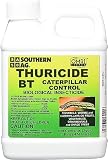
- Size: 16 OZ
- Thuricide BT Caterpillar Control concentrate is used by organic gardeners and is made from bacteria that is toxic to listed pests.
Hand-picking is surprisingly effective on small trees when only a limited number of caterpillars are present. Examine the canopy regularly, paying particular attention to folded leaves and sheltered branches where young larvae may remain hidden during the day.
Maintaining habitat for birds and predatory insects can provide useful natural pressure against caterpillar populations. If biological treatment is needed, a product containing an appropriate caterpillar-specific biological control may be preferable to a broad-spectrum insecticide, provided it is registered for the intended use.
Pros:
- Caterpillar damage is usually easy to recognize.
- Small infestations can be hand-picked.
- Birds can contribute to natural control.
- Biological controls can target larvae.
- Regular inspection reduces surprises.
- Young caterpillars are often easier to manage.
- Integrated control protects beneficial organisms.
Cons:
- Some larvae hide effectively within foliage.
- Large populations can defoliate branches quickly.
- Timing is important for biological treatments.
11. Olive Shoot And Twig Borers
Boring insects can damage olive branches by tunneling into woody tissue, creating weakened shoots and sometimes causing branch dieback. Their presence may be suspected when individual branches decline unexpectedly or when small holes, frass, or damaged bark are visible.

- Kill borers, miners and more in your lawn and garden with Annual Tree & Shrub Insect Control Concentrate with Systemaxx from Bonide
- Concentrate dissolves in water allowing the insecticide to move through the root zone; once in the roots, it moves up through the tree or shrub providing protection from insects; also provides protection for new growth
Inspect pruning wounds and weakened branches because stressed or damaged wood can provide favorable entry points for some boring insects. Remove severely affected material where appropriate and dispose of it away from healthy trees rather than leaving infested branches beneath the canopy.
Prevention is especially important because insects protected inside wood are harder to reach with contact sprays. Maintaining vigorous growth, avoiding unnecessary wounds, pruning correctly, and removing infested material promptly can therefore form the foundation of a practical management strategy.
Pros:
- Pruning can remove infested branches.
- Sanitation reduces breeding material.
- Tree vigor supports natural recovery.
- Early detection limits structural damage.
- Prevention reduces future opportunities for infestation.
- Useful for maintaining healthy branch structure.
- Encourages better pruning practices.
Cons:
- Larvae may be protected inside woody tissue.
- Damage can remain unnoticed initially.
- Severe infestations may require professional assessment.
12. Stink Bugs
Stink bugs may feed on developing olives and other tender plant tissues, leaving punctures and damaged areas behind. Fruit affected during development can develop superficial blemishes or irregularities that reduce its quality, particularly when pest pressure is high.

- ATTRACTS AND TRAPS - Bonide Bug Beater Stink Bug Traps use pheromone technology to safely lure stink bugs from around your home, garden, fruit trees and landscape plants. Once they land on our super tacky glue panels they are stuck.
- BROWN AND GREEN STINK BUGS - Our dual action pheromone lure attracts and traps both Brown Marmorated and Green Stink Bugs from up to 50 feet away.
Regularly inspect fruit clusters and surrounding vegetation because stink bugs can move between the olive tree and nearby plants. Removing heavily infested weeds and reducing unnecessary vegetation around the tree may make the growing area less attractive to some pest populations.
Physical removal can work when only a few insects are present, while monitoring helps determine whether the problem is increasing. Chemical control should be considered carefully because indiscriminate applications can harm beneficial insects and may create secondary pest problems.
Pros:
- Adult insects are relatively noticeable.
- Regular monitoring can reveal increasing populations.
- Hand removal works for isolated insects.
- Vegetation management can reduce pest refuges.
- Supports a targeted approach.
- Helps protect developing fruit.
- Reduces unnecessary pesticide use.
Cons:
- Stink bugs can move between host plants.
- Traps are not always sufficient for heavy infestations.
- Identification can be difficult when several species are present.
13. Beetles
Different beetle species can occasionally feed on olive foliage, shoots, bark, or fruit. The symptoms vary according to the species, but chewing damage, holes in leaves, bark injury, or damaged developing fruit may indicate beetle activity.
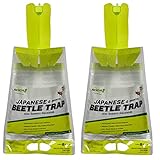
- Catch Beetles by the Bagful – Japanese and Oriental Beetles are invasive species that can wreak havoc on your garden and landscaping. This trap attracts and catches both!
- How It Works– Once attracted by the pheromone scent, Japanese beetles fly into the large green panels of the trap and are stunned on impact. They then fall into the attached bag. Once inside, they cannot fly out of the trap.
Inspect the tree during cooler parts of the day and check beneath leaves, around branch junctions, and near the base of the trunk. Removing weeds and plant debris can make it easier to spot insects and may reduce sheltered locations where some pests remain during unfavorable conditions.
Do not automatically treat every beetle as harmful because many beetles found in gardens are harmless or beneficial predators. Identify the species and confirm that it is actually causing damage before selecting a control method.
Pros:
- Regular inspection can reveal chewing damage.
- Identification prevents unnecessary treatments.
- Sanitation improves visibility around the tree.
- Hand removal can work for small populations.
- Supports beneficial insect conservation.
- Can protect foliage and fruit when targeted correctly.
- Encourages evidence-based pest management.
Cons:
- Not every beetle is easy to identify.
- Different species require different controls.
- Some adults can quickly move away when disturbed.
14. Ants Associated With Olive Tree Pests
Ants are not usually the primary insects damaging olive foliage, but they can become an important part of an infestation involving aphids, scale insects, or other honeydew-producing pests. Ants may protect these insects from predators because they feed on the sugary honeydew produced during feeding.

- IMPRESSIVE TREE COVERAGE: Catchmaster's Tree Shield Insect Barrier is a heavy-duty crawling and flying insect trap. The tree shield measures 30 feet long, allowing you to protect more of your trees in less time. The 30-foot rolls can be easily cut to adapt to different tree and plant sizes throughout your property
- DEFEND YOUR TREES: Protect your trees, shrubs, and ornamental plants from destructive insects like the spotted lanternfly, cankerworms, fungus gnats, cicadas, and gypsy moths. Crawling pests will travel up and down trees, but the Catchmaster Tree Shield will act as a bug catcher and create a physical barrier
For this reason, controlling ants alone may not solve the underlying problem. Inspect the olive tree for aphids, scale, mealybugs, or other sap-feeding insects and address the source of the honeydew while also reducing ant access to the canopy.
Keeping branches from touching walls, fences, or other structures can make the tree harder for ants to reach. Physical barriers and appropriate ant management around the base may be useful, but they should be combined with control of the sap-feeding pest responsible for attracting the ants.
Pros:
- Addresses an important pest interaction.
- Can improve control of honeydew-producing insects.
- Physical barriers reduce access to the canopy.
- Encourages treatment of the underlying infestation.
- Can reduce protection given to aphids and scale.
- Useful as part of integrated management.
- Reduces unnecessary insecticide applications to foliage.
Cons:
- Ant control alone does not remove aphids or scale.
- Colonies may have multiple access routes.
- Barriers require regular inspection.
15. Root-Feeding Insects
Some soil-dwelling insects can damage olive trees by feeding on roots or the lower parts of the plant. Because the pests remain below ground, symptoms may appear indirectly as weak growth, yellowing foliage, reduced vigor, or poor recovery from otherwise moderate environmental stress.

- Protect plants from insect damage with Systemic Houseplant Insect Control Granules from Bonide; this product is a low odor ready-to-use solution for containerized plants
- Protection lasts for up to 8 weeks after application; the granular treatment is absorbed into the roots and continues to move through the plant to provide protection against listed insects; this protection will not be washed away with water
Begin by checking the entire growing environment rather than assuming that every symptom is caused by a root pest. Poor drainage, drought, root disease, nutrient imbalance, compacted soil, and planting problems can produce similar signs, so diagnosis should precede treatment.
Maintaining healthy soil conditions and avoiding prolonged waterlogging can reduce stress on the root system. If root-feeding insects are strongly suspected, professional diagnosis may be worthwhile because treatment options vary considerably according to the pest species and the crop regulations applicable in your location.
Pros:
- Encourages investigation of hidden pest problems.
- Healthy soil supports stronger root systems.
- Good drainage reduces additional plant stress.
- Diagnosis prevents inappropriate treatment.
- Useful for young and established olive trees.
- Supports long-term tree health.
- Integrated management addresses environmental causes as well.
Cons:
- Root pests are difficult to observe directly.
- Symptoms can resemble nutritional or watering problems.
- Some infestations require professional diagnosis.
How To Control Olive Tree Pests Guide
1. Identify The Pest Before Treating
The first step in learning how to control olive tree pests is accurate identification. Look at the insect itself, the location of the damage, the affected plant tissue, and any secondary symptoms before selecting a treatment.
2. Inspect Olive Trees Regularly
Walk around the tree every week during periods of active growth and examine leaves, shoots, flowers, fruit, branches, and the trunk. Checking early allows you to deal with small pest populations before they become established.
3. Protect Beneficial Insects
Lady beetles, lacewings, predatory mites, parasitic wasps, birds, and other beneficial organisms can naturally suppress pests. Avoid broad-spectrum treatments when they are unnecessary, particularly when a minor infestation can be managed through physical removal or targeted methods.
4. Keep The Tree Properly Watered
Olive trees tolerate dry conditions once established, but prolonged stress can reduce their ability to withstand pest damage. Water according to the tree’s age, soil, climate, and season while ensuring that excess moisture drains away from the root zone.
5. Prune For Airflow And Access
Selective pruning can improve light penetration and air circulation while making it easier to inspect the canopy. Remove dead, damaged, or severely infested branches when appropriate, but avoid unnecessary heavy pruning that can create additional stress.
6. Use Pest Controls Responsibly
Always confirm that a pesticide, horticultural oil, insecticidal soap, trap, or biological treatment is approved for olive trees and the intended pest in your country. Follow the label carefully, observe harvest intervals where applicable, and take particular care around flowering periods when pollinators may be present.
7. Combine Several Management Methods
The most reliable approach rarely depends on one product. Monitoring, sanitation, pruning, proper irrigation, beneficial insects, physical controls, traps, and carefully selected treatments can work together to keep pest populations below damaging levels.
How To Control Olive Tree Pests FAQs
1. What is the most common pest on olive trees?
The most common olive tree pest varies according to climate and growing region, but olive fruit flies, scale insects, aphids, psyllids, mites, and other sap-feeding insects can all become significant problems. Monitoring the tree and fruit regularly is more useful than assuming that one pest will always be responsible for damage.
2. How do I get rid of insects on my olive tree?
Start by identifying the insect and determining how severe the infestation is. Light problems may respond to pruning, hand removal, water sprays, sanitation, traps, or encouragement of natural predators, while persistent infestations may require a crop-approved treatment.
3. How can I prevent olive fruit flies?
Regular monitoring, removal of fallen fruit, timely harvesting, orchard sanitation, and appropriate traps can all help reduce olive fruit fly pressure. In areas where the pest is particularly serious, an integrated management program using approved bait or other registered controls may provide additional protection.
4. Can I use neem oil on an olive tree?
Neem-based products may be useful against certain insects, but suitability depends on the formulation, pest, crop, application conditions, and local regulations. Check the product label to confirm that it is approved for olive trees and follow all directions concerning concentration, timing, harvest, and pollinator safety.
5. Why does my olive tree have sticky leaves?
Sticky leaves often indicate honeydew produced by sap-feeding insects such as aphids, scale insects, mealybugs, or whiteflies. Inspect the undersides of leaves and young stems for the insects themselves, then address the underlying pest rather than treating the sticky residue alone.
6. Should I spray my olive tree for pests?
Spraying is not always necessary, particularly when pest numbers are low and natural enemies are keeping them under control. A targeted treatment becomes more appropriate when monitoring shows that the pest is increasing or causing economically or aesthetically significant damage, provided the product is approved for the crop and pest.
7. What is the best way to keep an olive tree healthy and pest-free?
The strongest long-term strategy combines regular inspection with suitable watering, good drainage, adequate sunlight, sensible pruning, sanitation, balanced nutrition, and conservation of beneficial organisms. Healthy growing conditions do not make olive trees immune to pests, but they can improve resilience and make outbreaks easier to manage.
Conclusion
In conclusion, the most effective way to control olive tree pests is to identify the specific pest early and respond with the least disruptive method that will provide reliable control. Olive fruit flies, scale insects, aphids, mites, psyllids, and other pests require different management strategies, so accurate diagnosis should always come before treatment.
Regular monitoring is the strongest practical alternative to reacting only after serious damage has occurred. By inspecting leaves, shoots, fruit, branches, and the soil around the tree, gardeners can often detect developing problems while populations are still small enough to manage through pruning, sanitation, water sprays, traps, biological controls, or other targeted measures.
Olive tree pest management also depends heavily on the condition of the growing environment. Appropriate irrigation, good drainage, adequate sunlight, balanced nutrition, sensible pruning, clean surroundings, and protection of beneficial insects can all contribute to stronger trees and reduce the likelihood that pest populations will become difficult to control.
The best approach is therefore not simply to find a powerful insecticide, but to build a consistent integrated pest management routine around the olive tree. Match the control method to the pest, use chemical products only when justified and legally approved for the crop, and continue monitoring after treatment so that future infestations can be detected before they threaten the health or productivity of the tree.