Gardeners who wage an endless war against Weeds That Keep Coming Back understand the profound frustration of removing the same stubborn plants season after season. These persistent weeds that keep coming back possess remarkable survival strategies—deep root systems, underground storage organs, and incredible regenerative abilities that allow them to resurrect themselves long after you thought they were gone.
The distinction between annual weeds (which complete their life cycle in a single season) and perennial weeds (which persist year after year) is crucial for effective management. The most troublesome returning weeds belong to the perennial category, equipped with taproots reaching several feet deep, creeping rhizomes that extend in all directions, or tuberous root systems that store energy for rapid regrowth after disturbance.
Understanding why certain weeds keep reappearing is essential for selecting appropriate control methods. Mechanical removal that works on shallow-rooted annuals often proves futile against deep-rooted perennials, which regenerate from the smallest root fragment left behind. Herbicide timing becomes critical—applications made when the plant stores energy in its roots can be devastating, while poorly timed treatments may only burn back top growth.
In this guide, we examine ten aggressive weeds that keep coming back, explore their survival mechanisms and reproductive strategies, and offer effective, long-term control solutions for reclaiming your garden from these determined invaders.
10 Weeds That Keep Coming Back
1. Field Bindweed (Convolvulus arvensis) – The Deep-Rooted Spreader
Field bindweed ranks among the most persistent returning weeds, with roots that can penetrate 20 feet or more into the soil. This perennial vine produces arrow-shaped leaves and white or pink trumpet-shaped flowers, twining around desirable plants and forming dense tangles that smother garden vegetation.
Native to Europe and Asia, field bindweed has naturalized across North America, infesting gardens, fields, and disturbed areas with remarkable tenacity. Its brittle roots regenerate from even the smallest fragments left behind during cultivation, making mechanical removal particularly counterproductive. The plant produces hundreds of seeds that remain viable in soil for decades.
Control requires systemic herbicides containing glyphosate or dicamba applied when the plant is actively growing. Persistent monitoring and follow-up treatments over multiple seasons are essential. Preventing seed production is critical for long-term management.
2. Canadian Thistle (Cirsium arvense) – The Regenerative Nuisance
Canadian thistle represents one of the most challenging returning weeds due to its extensive creeping root system that can extend 15 feet deep and spread 20 feet or more horizontally. This perennial produces prickly leaves and purple flower heads, forming dense patches that quickly overwhelm pastures, fields, and gardens.
The plant’s root system stores enormous energy reserves, allowing rapid regrowth after cutting, mowing, or cultivation. Even small root fragments left behind can generate new plants, making thorough removal exceptionally difficult. Canadian thistle produces numerous wind-dispersed seeds that contribute to its spread.
Control requires systemic herbicides containing glyphosate, 2,4-D, or dicamba applied during the flowering stage when the plant transports nutrients to its roots. Repeated applications over multiple seasons are necessary. Deep cultivation to expose and desiccate roots can be effective but requires persistence.
3. Quackgrass (Elymus repens) – The Rhizome-Dominant Returner
Quackgrass spreads through an extensive network of brittle, creeping rhizomes that can extend several feet deep and produce numerous shoots along their length. This cool-season perennial grass invades lawns, gardens, and crop fields, creating dense patches that crowd out desirable vegetation.
The weed’s rhizomes break easily, with each fragment capable of producing a new plant—a feature that makes cultivation counterproductive. Quackgrass tolerates various soil conditions and can survive drought, flooding, and close mowing. Its ability to regenerate from small fragments makes it exceptionally persistent.
Control requires non-selective herbicides containing glyphosate applied in fall when the plant stores energy in its roots. Solarization and repeated cultivation can also be effective but require persistent effort. Maintaining dense turf provides the best prevention.
4. Nutsedge (Cyperus spp.) – The Tuber-Producing Perennial
Yellow and purple nutsedge spread through underground rhizomes and tubers (nutlets) that persist in soil for years. These sedge weeds form extensive underground networks that can produce dozens of new plants from a single tuber, creating rapidly expanding infestations that return repeatedly despite removal efforts.
Nutsedge tubers remain viable in soil for several seasons, with each tuber capable of producing multiple shoots and new tubers. The weed thrives in moist, poorly drained soils and frequently invades lawns, gardens, and agricultural fields. Its triangular stems and glossy, V-shaped leaves distinguish it from grass-like weeds.
Control requires sedge-specific herbicides containing halosulfuron (Sedgehammer) or sulfentrazone. Improving drainage and reducing soil moisture help prevent establishment. Multiple applications over several seasons are often necessary to deplete the tuber system.
5. Japanese Knotweed (Fallopia japonica) – The Structural Threat
Japanese knotweed spreads through an aggressive rhizome system that can extend 20 feet deep and horizontally, penetrating asphalt, foundations, and drainage systems. This invasive perennial forms dense thickets reaching 6-10 feet in height, rapidly colonizing roadsides, stream banks, and disturbed areas.
The plant’s rhizomes can regenerate from even small fragments, making it one of the most difficult weeds to control. Its rapid growth allows it to outcompete native vegetation and reduce biodiversity. Japanese knotweed emerges early in spring and grows aggressively throughout summer.
Control requires systemic herbicides containing glyphosate applied late in the growing season when the plant stores nutrients in its rhizomes. Mechanical removal is generally ineffective and may spread fragments. Persistent monitoring and follow-up treatments over several years are essential.
6. Dandelion (Taraxacum officinale) – The Taproot Returner
Dandelion keeps returning through its deep, persistent taproot that can reach 18 inches or more. This perennial produces bright yellow flowers and deeply toothed leaves in a basal rosette. Even when the top is removed, the taproot regenerates new shoots, creating a continuous cycle of regrowth.
Dandelion produces hundreds of wind-dispersed seeds that contribute to its spread, but the taproot is the primary mechanism for its persistence. Even small root fragments left behind can regenerate into new plants. The weed thrives in compacted soils and thin lawns.
Control requires broadleaf herbicides containing 2,4-D, dicamba, or triclopyr applied when the plant is actively growing. Deep digging to remove the entire taproot is effective for small infestations. Preventing flowering and seed production through regular mowing reduces spread.
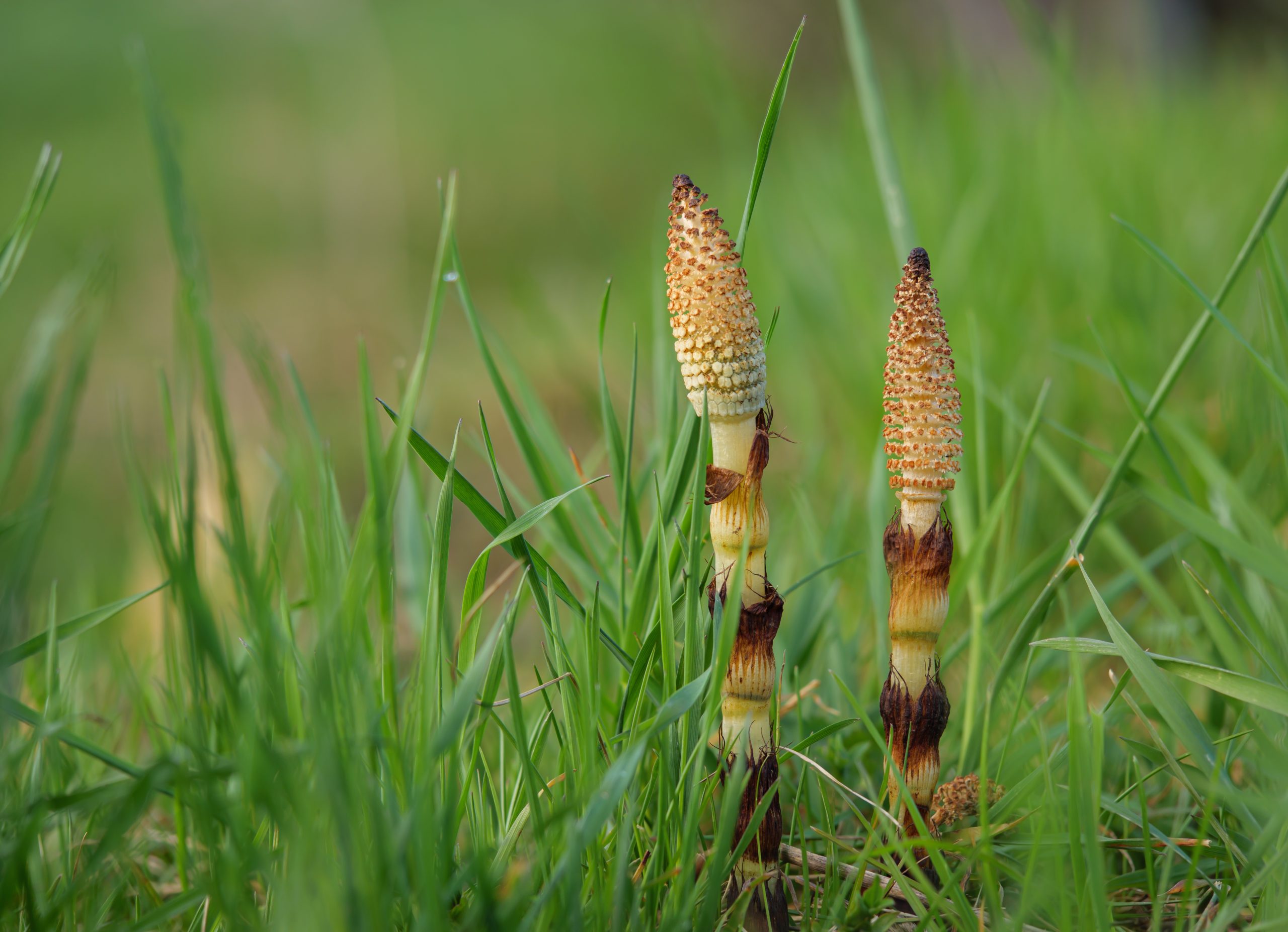
7. Horsetail (Equisetum arvense) – The Primitive Persistent
Horsetail spreads through aggressive creeping rhizomes that can extend several feet deep and produce numerous shoots along their length. This primitive perennial produces jointed, hollow stems and has no true leaves, reproducing through both spores and rhizomes.
Horsetail rhizomes are exceptionally persistent, with the plant containing silica crystals that make it difficult to control with conventional herbicides. The plant thrives in moist, poorly drained soils and can quickly colonize gardens, lawns, and disturbed areas.
Control requires improved drainage, persistent cultivation to expose rhizomes, and herbicides containing glyphosate applied when the plant is actively growing. Regular monitoring and follow-up treatments are essential. Mulching can suppress emergence but rarely eliminates the plant.
8. Ground Ivy (Glechoma hederacea) – The Creeping Returner
Ground ivy spreads through aggressive stolons that creep along the ground, rooting at each node and forming dense mats that return repeatedly. This low-growing perennial produces rounded, scalloped leaves and small blue-purple trumpet-shaped flowers in spring.
The plant’s creeping stems root at each node, allowing it to spread rapidly in all directions. Even small fragments left behind can regenerate, making thorough removal challenging. Ground ivy thrives in moist, shaded areas where lawn grasses are thin.
Control requires persistent hand-pulling (ensuring all stem fragments are removed), broadleaf herbicides containing triclopyr or dicamba, and improving growing conditions for desirable plants. Multiple applications are often necessary due to its extensive spreading network.
9. Bermuda Grass (Cynodon dactylon) – The Rhizome and Stolon Returner
Bermuda grass spreads through an aggressive combination of above-ground stolons and below-ground rhizomes, ensuring it returns season after season. This warm-season perennial can invade flower beds, vegetable gardens, and lawns, forming dense, impenetrable mats.
Bermuda grass rhizomes can penetrate several feet deep, while stolons quickly colonize new areas. The plant can regenerate from small root fragments left behind during cultivation, making it exceptionally persistent. It thrives in full sun and tolerates drought, heat, and close mowing.
Control requires systemic herbicides containing glyphosate applied in late summer or fall, when the plant transports nutrients to roots. Deep cultivation to remove rhizomes and regular monitoring are essential for preventing reinfestation. In lawns, selective herbicides may provide suppression.
10. Bindweed (Convolvulus arvensis) – The Deep-Rooted Vine
Bindweed, also called morning glory, keeps returning through an extensive root system that can reach depths of 20 feet or more. This perennial vine produces arrow-shaped leaves and white to pink trumpet-shaped flowers, twining around and smothering desirable plants.
Bindweed roots are brittle and can regenerate from small fragments, making deep cultivation counterproductive. Each plant can produce hundreds of seeds that remain viable in soil for decades. The weed thrives in disturbed areas, fields, and gardens, tolerating various soil conditions.
Control requires systemic herbicides containing glyphosate or dicamba applied when the plant is actively growing. Mechanical removal is effective for small infestations but must be repeated regularly to exhaust the root system. Preventing seed production is essential.
7 Effective Strategies For Controlling Returning Weeds
-
Identify the survival mechanism: Determine whether your returning weed spreads by deep taproots, creeping rhizomes, tubers, stolons, or seeds. Understanding the plant’s primary reproductive strategy guides effective control selection.
-
Time herbicide applications strategically: Apply systemic herbicides when the plant actively transports nutrients to its roots—typically late summer through fall. This timing maximizes herbicide translocation and root kill.
-
Avoid spreading fragments: Cultivation can fragment roots and rhizomes, creating new plants from every piece. Use care when digging and remove all plant material from the site.
-
Prevent seed production: Remove or mow weeds before they flower and set seed. Each plant can produce thousands of seeds that persist in soil for years.
-
Establish competitive vegetation: Dense turf, groundcovers, or desirable plantings create competition that suppresses weed regrowth. Prevention through healthy vegetation is the most sustainable strategy.
-
Monitor and act early: Small infestations are easier to control than established ones. Regular scouting and prompt intervention prevent returning weeds from becoming overwhelming problems.
-
Integrate multiple methods: Combine cultural, mechanical, and chemical approaches for the most effective and sustainable control. Relying on a single method often leads to treatment failures.
Weeds That Keep Coming Back FAQS
1. Why do some weeds keep coming back year after year?
Perennial weeds possess underground storage organs—deep taproots, creeping rhizomes, tubers, or stolons—that store energy reserves allowing them to regrow after top growth is removed. These adaptations evolved to survive disturbances, making them exceptionally persistent in gardens and landscapes.
2. What is the most difficult weed to eliminate?
Japanese knotweed and field bindweed rank among the most difficult weeds to eliminate due to their extensive rhizome and root systems. Canadian thistle and nutsedge are also exceptionally persistent, requiring multiple seasons of targeted control for effective management.
3. Will digging up returning weeds get rid of them permanently?
Digging can be effective for small infestations of taprooted weeds like dandelions when the entire root is removed. However, for rhizomatous weeds like quackgrass and bindweed, digging often spreads fragments that regenerate into new plants. Complete removal requires persistent effort and follow-up treatments.
4. Why do weeds return after herbicide treatment?
Herbicides may not reach all underground storage organs, allowing regrowth from untreated roots, rhizomes, or tubers. Poor timing, insufficient rates, or applying to stressed plants can also reduce effectiveness. Repeated applications over multiple seasons are often necessary.
5. Can mulch prevent returning weeds?
Mulch suppresses weed emergence by blocking light and creating a barrier, but deep-rooted perennials may still penetrate through thick mulch layers. Combining mulch with other control methods provides better results. Organic mulches decompose over time and require replenishment.
6. What is the best time of year to control returning weeds?
Late summer through fall is optimal for systemic herbicide application, as weeds transport nutrients to their roots for winter storage. Spring applications often produce less root kill. Mechanical removal is most effective when plants are actively growing.
7. How long does it take to eliminate a persistent weed problem?
Persistent perennial weeds typically require 2-5 years of consistent management for effective control. The timeline depends on the weed species, infestation size, chosen control methods, and follow-up diligence. Patience and persistence are essential for long-term success.
Final Thoughts
Winning the battle against weeds that keep coming back demands more than seasonal effort—it requires understanding the survival mechanisms that make these plants so tenacious. The key to long-term control lies not in fighting the visible growth but in depleting the underground energy reserves that sustain regrowth season after season.
Field bindweed and Japanese knotweed represent the most challenging returning weeds, their extensive root and rhizome systems defying conventional removal methods. Canadian thistle and nutsedge require persistent, multi-year herbicide programs, while dandelions demand thorough taproot removal or targeted applications. Each persistent weed reveals its vulnerabilities through attentive observation and strategic timing.
Armed with knowledge of root systems, survival mechanisms, and optimal treatment timing, gardeners can shift from endless cycles of removal to effective, long-term control. Regular monitoring, appropriate herbicide timing, establishment of competitive vegetation, and patience provide the foundation for reclaiming gardens from these determined invaders that keep coming back.