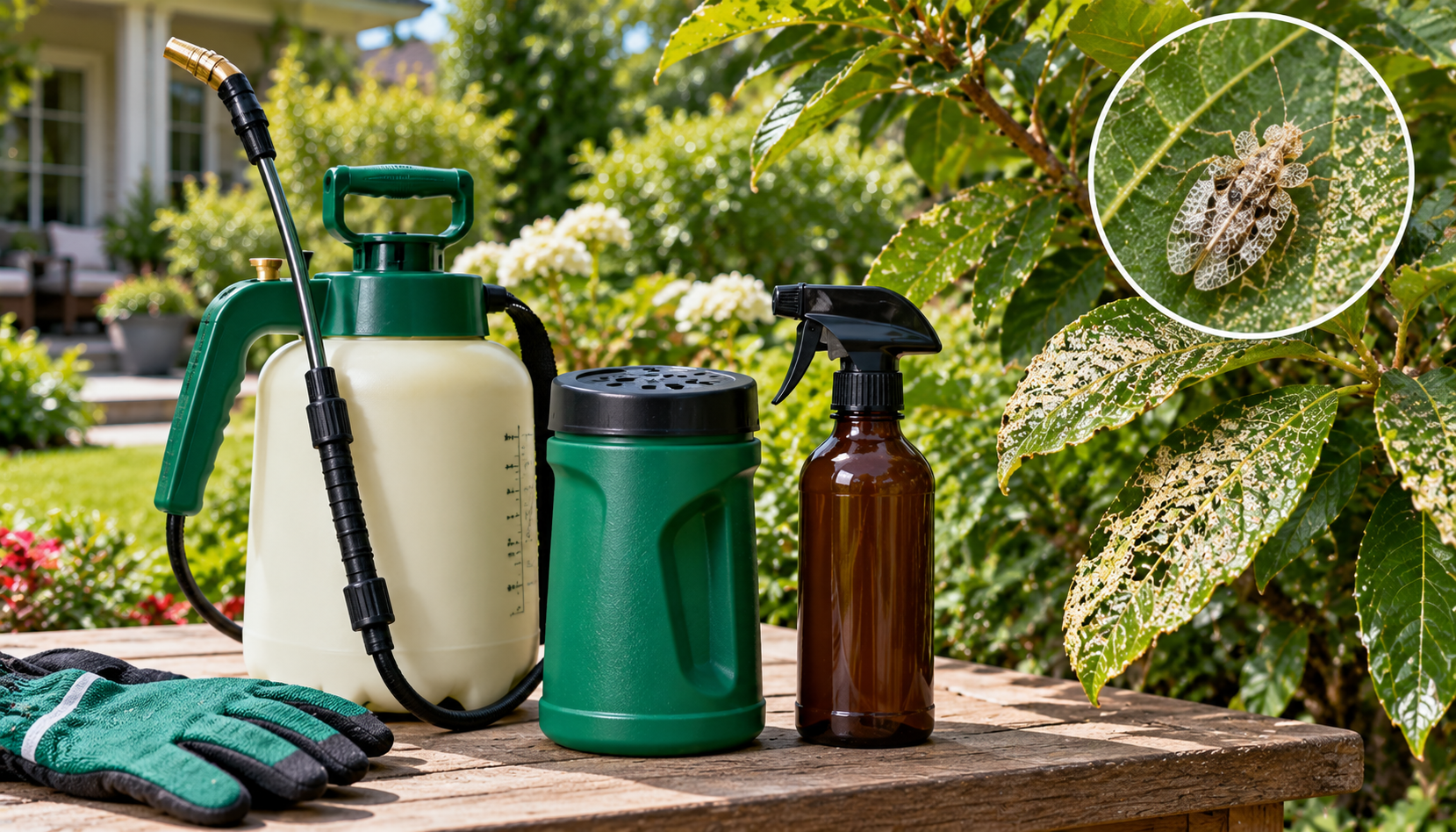
The best insecticide for lace bugs can become an important part of plant care when these small sap-feeding pests begin causing pale, stippled, or bronzed foliage. Lace bugs commonly feed on the undersides of leaves, where their feeding can gradually reduce the appearance and vigor of susceptible ornamental shrubs and trees.
Identifying an infestation early makes treatment considerably easier because young lace bug nymphs are more exposed and vulnerable to contact products. Examine the undersides of damaged leaves for dark droppings, shed skins, eggs, nymphs, and adult insects before deciding whether chemical control is necessary.
Different lace bug insecticides work in different ways, with horticultural oils and insecticidal soaps providing direct-contact control while systemic treatments move through plant tissues to reach sap-feeding insects. The appropriate option depends on the host plant, infestation severity, pest life stage, application timing, product label, and the need to protect beneficial insects.
In this guide, we examine 10 treatments and explain where each can be useful when controlling lace bugs on susceptible plants. We will also cover application timing, coverage, plant safety, beneficial insects, prevention, and practical factors to consider when choosing the best insecticide for lace bugs.
10 Best Insecticides For Lace Bugs
1. Bonide Systemic Insect Control — Best Systemic Insecticide For Lace Bugs
Bonide Systemic Insect Control is a practical choice when you need the best systemic insecticide for lace bugs and the product label permits systemic treatment on the affected ornamental plant. Systemic insecticides are absorbed by the plant and can provide an alternative to relying entirely on thorough surface coverage of every leaf.

- Control hard-to-kill insects in your lawn and garden with Bonide Systemic Insect Control Concentrate
- Controlled listed insects include thrips, mealybugs, scale, 2-spotted spider mites, whiteflies and more

This type of treatment can be particularly useful when lace bugs are difficult to reach because much of their activity occurs on leaf undersides. However, systemic insecticides require careful attention to the product label, application timing, plant species, and pollinator precautions before use.
Use systemic treatment as part of an integrated pest-management approach rather than automatically treating every lace bug sighting. Monitor the plant after application and combine chemical control with sanitation, appropriate irrigation, pruning, and conservation of natural enemies where practical.
Pros:
- Systemic action
- Longer protection
- Leaf uptake
- Useful coverage
- Easy application
- Ornamental use
- Targeted approach
Cons:
- Pollinator concerns
- Label restrictions
- Slower results
2. Horticultural Oil — Best Horticultural Insecticide For Lace Bugs
Horticultural oil is one of the most useful options when searching for the best horticultural insecticide for lace bugs because it works primarily through direct contact. Thoroughly covering the undersides of leaves is particularly important because lace bugs spend much of their feeding time in those protected areas.

- Control insects and diseases in your home garden with All Seasons Horticultural and Dormant Spray Oil Concentrate; use year-round to control listed insects and diseases
- Active ingredient refined mineral oil is approved for organic gardening and the production of organic produce and ornamentals; can be used during the growing season
Oil treatments can be especially valuable when you want a lower-impact option that can reduce lace bug numbers while limiting unnecessary harm to natural enemies when used correctly. Nevertheless, complete coverage is critical, and repeat applications may be necessary because contact products do not provide the same residual activity as many systemic or residual insecticides.
Apply only according to the product label and avoid spraying under conditions that can increase the possibility of foliage injury. Check the label for compatible plants, temperature restrictions, mixing directions, and precautions before treating a large area.
Pros:
- Low-impact option
- Direct contact
- Good coverage
- Useful on nymphs
- Multiple applications
- Ornamental applications
- Broad utility
Cons:
- Requires coverage
- Limited residual
- Repeat sprays
3. Bonide All Seasons Horticultural Oil — Best Oil Insecticide For Lace Bugs On Shrubs
Bonide All Seasons Horticultural Oil provides another practical choice for gardeners looking for the best oil insecticide for lace bugs on shrubs. Its usefulness comes from direct contact, making accurate spraying of the foliage especially important when lace bugs are concentrated beneath leaves.
- Control insects and diseases in your home garden with All Seasons Horticultural and Dormant Spray Oil Concentrate; use year-round to control listed insects and diseases
- Active ingredient refined mineral oil is approved for organic gardening and the production of organic produce and ornamentals; can be used during the growing season
This type of oil treatment can fit well into an integrated pest-management program when the affected shrub is listed on the product label. Because lace bugs hide on leaf undersides, move the spray wand around the plant rather than concentrating only on the upper leaf surfaces.
Monitor treated shrubs afterward to determine whether the infestation is declining or whether another application is permitted by the label. Avoid unnecessary treatments when populations are low and the plant is otherwise healthy, since lace bugs do not always cause serious long-term damage.
Pros:
- Direct contact
- Broad usefulness
- Low residue
- Easy application
- Leaf coverage
- Shrub friendly
- Repeatable treatment
Cons:
- Coverage sensitive
- Limited residual
- Weather dependent
4. Monterey Horticultural Oil — Best Insecticide For Lace Bugs On Ornamental Plants
Monterey Horticultural Oil is worth considering when choosing the best insecticide for lace bugs on ornamental plants and a horticultural oil is appropriate for the specific host. The oil must contact the insects directly, so thorough coverage of the undersides of leaves is more important than simply wetting the visible upper foliage.

- INSECT KILLER - This pest control is great for use on aphids, leaf miners, thrips, leafhoppers, spider mites, scales, whiteflies, mealy bugs and many more. It gives poor control for caterpillar & worms. However, it does control eggs of all insects.
- FOLIAGE PROTECTOR - Our insecticide is for use on a variety of trees & plants including apples, almonds, avocados, citrus, peaches, pecans, blackberries, figs, pineapple and more
Horticultural oil can be useful where gardeners want a contact-oriented approach with comparatively limited persistence on the plant when used according to the label. It can also complement nonchemical methods such as strong water sprays that dislodge lace bug nymphs from smaller plants.
Before spraying, verify that the ornamental plant is included on the label and follow all temperature, dilution, and application restrictions. Continue inspecting the foliage after treatment because eggs and newly emerging insects may require additional management.
Pros:
- Contact control
- Ornamental applications
- Good leaf coverage
- Low residue
- Simple use
- Useful on nymphs
- Repeat applications
Cons:
- Direct contact
- Repeat treatment
- Foliage sensitivity
5. Bonide Eight Insect Control — Best Broad Spectrum Insecticide For Lace Bugs
Bonide Eight Insect Control can be considered when looking for the best broad spectrum insecticide for lace bugs and the product is labeled for the plant and pest situation being treated. Broad-spectrum products can provide strong insect control, but they may also affect beneficial insects that naturally help suppress lace bug populations.

- INSECT KILLER - Our product controls over 130 insects/pests including species of ant, cockroach, cricket, spider, flea, tick, mite, moth, earwig, beetle, water bug, & more.
- VARIETY OF USES - This bug defense is great for use on listed vegetables, roses, lawns, flowers, shrubs, trees, & other outdoor plants & surfaces. Eight Garden & Home is not listed for indoor use.
This makes careful identification and targeted application particularly important when treating ornamental landscapes. Rather than spraying an entire garden indiscriminately, concentrate treatment on confirmed infestations and follow the label for application rate, protective equipment, reentry restrictions, and plant compatibility.
Broad-spectrum insecticides can be most useful when lace bug numbers are high and less disruptive approaches have not provided adequate control. Even then, avoid unnecessary applications and continue monitoring the plant so future treatments are based on actual pest pressure.
Pros:
- Broad spectrum
- Fast action
- Multiple pests
- Convenient application
- Residual activity
- Wide utility
- Useful coverage
Cons:
- Nonselective control
- Beneficial insect risk
- Label dependent
6. Sevin Insect Killer — Best Carbaryl Insecticide For Lace Bugs
Sevin Insect Killer is an option for gardeners searching for the best carbaryl insecticide for lace bugs where a carbaryl product is labeled for the intended plant and pest. Carbaryl is a broad-spectrum insecticide, so its use should be targeted carefully rather than applied simply because lace bugs are visible.

- Plant insecticide to protect your roses and edibles from listed damaging pests
- This insecticide sprayer won't harm plants or blooms
Good coverage is important when treating lace bugs because both adults and nymphs commonly occupy the undersides of foliage. Directing the spray toward these hidden feeding areas can improve contact with the pest while reducing unnecessary application to unaffected portions of the landscape.
Always check the current product label for approved plants, rates, harvest restrictions where relevant, protective equipment, and environmental precautions. Because broad-spectrum insecticides can affect beneficial organisms, reserve this type of treatment for situations where the infestation justifies chemical intervention.
Pros:
- Broad insect control
- Established active ingredient
- Contact activity
- Useful coverage
- Multiple formulations
- Convenient application
- Targeted treatment
Cons:
- Nonselective insecticide
- Beneficial insect risk
- Label restrictions
7. Insecticidal Soap — Best Contact Insecticide For Lace Bugs
Insecticidal soap is a useful choice when you want the best contact insecticide for lace bugs and the affected plant is suitable for the labeled formulation. Its effectiveness depends heavily on direct contact, which means the spray needs to reach the undersides of leaves where lace bugs are actively feeding.

- Captain Jack's Insecticidal Super Soap controls species of adelgid, ant, aphid, borer, caterpillar, spider mite, cricket, chinch bug, weevil, fly, thrip, and more
- Designed for outdoor residential use in home gardens, lawns, ornamentals, and greenhouses; use on artichoke, cabbage, onions, berries, basil, lavender, mint, sage, pistachios, almonds, apples, plums, cilantro, lawns, turf and more
Because insecticidal soap has limited residual activity, repeat applications may be necessary when new insects continue to appear. It can therefore work particularly well when combined with regular scouting and physical control measures rather than being treated as a single permanent solution.
Follow the label carefully because concentrated soaps or unsuitable homemade mixtures can injure plant tissue. Test the treatment according to label directions when appropriate, avoid stressful environmental conditions, and stop unnecessary applications once the infestation is under control.
Pros:
- Contact action
- Low residual
- Simple application
- Useful on nymphs
- Targeted treatment
- Repeatable use
- Low-impact option
Cons:
- Requires coverage
- Short persistence
- Repeat sprays
8. Neem Oil — Best Natural Insecticide For Lace Bugs
Neem oil is commonly considered when gardeners are looking for the best natural insecticide for lace bugs and want a botanical-based treatment option. Neem-based products can have different modes of action depending on the formulation, so the exact label should be checked rather than assuming every neem product performs identically.

- Protect your oasis with 3 garden products in 1 from Captain Jack’s; Bonide Captain Jack’s Ready-to-Use Neem Oil spray for plants is a multi-purpose fungicide, insecticide and miticide for your lawn & garden
- Clarified Hydrophobic Extract of Neem Oil protects your garden from common fungal diseases including rust, powdery mildew and more; apply to house plants, roses, trees, shrubs, fruits, nuts & vegetables for effective protection against garden diseases
Thorough foliage coverage remains important because lace bugs feed primarily on the undersides of leaves. Neem treatments are generally better suited to an integrated program that includes monitoring and cultural practices rather than repeated blanket spraying without confirming pest activity.
Check the product label for permitted plants, application intervals, dilution requirements, and precautions concerning pollinators and beneficial insects. Avoid treating flowering plants when the label warns against exposure to bees and other pollinating insects.
Pros:
- Botanical option
- Multiple actions
- Plant-based treatment
- Easy application
- Useful rotation
- Foliage treatment
- Garden friendly
Cons:
- Limited persistence
- Coverage required
- Repeat applications
9. Spinosad Insecticide — Best Spinosad Insecticide For Lace Bugs
Spinosad insecticide can be considered when evaluating the best spinosad insecticide for lace bugs and the specific formulation is labeled for the pest and host plant. Its inclusion should always be based on the product label because not every spinosad formulation is registered for every plant, pest, or application site.

- CONTROLS A VARIETY OF INSECTS - Designed to control Adelgids, Ants, Aphids, Armyworms, Beetles including ColoradoPotato Beetle, Borers, Caterpillars, Chinch Bugs, Codling Moth, Earwigs, Fruit Flies, Gypsy Moth, Lace Bugs, Leafhoppers and more. See label for full list.
- DESIGNED FOR OUTDOOR USE - Apply this product to Vegetables, Trees, Shrubs, Flowers, Fruits & Citrus to control listed insects and pests. Great for gardens, lawns, ornamentals and greenhouses.
Spinosad is often valued in garden pest-management programs because it provides an alternative mode of action from several conventional contact insecticides. Nevertheless, application timing and coverage remain important, and gardeners should avoid treating blooming plants when label directions or pollinator precautions indicate a risk.
Use spinosad as part of a rotation when repeated insecticide treatments are necessary rather than relying continuously on one active ingredient. Combine treatment with scouting, removal of heavily damaged foliage when appropriate, irrigation management, and conservation of natural enemies.
Pros:
- Distinct mode
- Useful rotation
- Garden applications
- Broad utility
- Convenient formulation
- Targeted treatment
- Multiple pest uses
Cons:
- Label dependent
- Pollinator concerns
- Timing sensitive
10. Professional Lace Bug Treatment — Best Insecticide Treatment For Severe Lace Bugs
A professional application can be the best insecticide treatment for severe lace bugs when infestations involve large mature trees, extensive ornamental plantings, or areas that are difficult to reach safely. Licensed tree-care professionals can identify the pest, assess plant condition, select an appropriate labeled treatment, and apply it using equipment suited to the size of the plant.

- Effectively controls aphids, thrips, spider mites, lace bugs and more. See label for full list.
- For use on herbaceous plants, ornamental non-flowering plants, shrubs, vegetables, and fruit trees.
Professional treatment can be particularly useful when repeated homeowner applications have failed because lace bugs are concentrated high in the canopy or on numerous large plants. A professional can also determine whether chemical treatment is actually warranted instead of automatically treating discoloration that may have another cause.
Ask the applicator about the active ingredient, application timing, plant coverage, pollinator precautions, and expected monitoring schedule before treatment begins. For serious infestations, combining professional treatment with regular scouting and improved plant-care practices can provide a more sustainable management strategy.
Pros:
- Expert identification
- Professional equipment
- Canopy coverage
- Targeted treatment
- Safety guidance
- Large-tree capability
- Monitoring support
Cons:
- Higher cost
- Scheduling required
- Professional access
Buyer’s Guide: Choosing The Best Insecticide For Lace Bugs
- Identify the pest first. Confirm that the insects and feeding damage are actually caused by lace bugs before applying an insecticide, since leaf stippling and discoloration can have several causes.
- Check the leaf undersides. Lace bugs commonly feed beneath leaves, so a treatment that cannot reach these areas may provide disappointing control.
- Consider contact products. Horticultural oils and insecticidal soaps can be useful lower-impact options when the insects can be thoroughly contacted.
- Consider systemic products carefully. Systemic insecticides can move through plant tissues, but pollinator precautions and plant-specific label restrictions are especially important.
- Protect beneficial insects. Broad-spectrum insecticides can kill predators and other beneficial organisms, potentially disrupting natural suppression of lace bugs.
- Match the product to the plant. Always verify that the exact plant, pest, application site, and intended use appear on the current pesticide label.
- Use monitoring to guide treatment. Regularly inspect susceptible plants and treat according to actual pest pressure rather than applying insecticide automatically whenever minor feeding damage appears.
Best Insecticide For Lace Bugs Frequently Asked Questions
1. What is the best insecticide for lace bugs?
The best insecticide depends on the host plant, infestation severity, pest stage, and treatment conditions. Horticultural oils and insecticidal soaps can be useful for direct-contact control, while labeled systemic or broad-spectrum products may be appropriate for more difficult infestations.
2. What insecticide kills lace bugs quickly?
Contact insecticides can act quickly when they thoroughly contact exposed lace bugs. However, treatment speed depends on the active ingredient, pest stage, coverage, weather, and application method.
3. Will horticultural oil kill lace bugs?
Yes, horticultural oil can control lace bugs when the insects are directly contacted by the spray. Thorough coverage of the undersides of leaves is especially important because that is where lace bugs commonly feed.
4. Can insecticidal soap control lace bugs?
Insecticidal soap can control lace bugs when the spray directly contacts susceptible insects. Because it has limited residual activity, repeat applications may be necessary when new insects continue appearing.
5. Is systemic insecticide effective against lace bugs?
Systemic insecticides can be effective because the active ingredient moves through plant tissues to leaves where lace bugs feed. However, systemic products can present significant pollinator risks, so the label and application timing must be followed carefully.
6. Should I spray the top or bottom of leaves for lace bugs?
The undersides of leaves should receive particular attention because lace bugs commonly feed there. A treatment that only coats the upper leaf surface may fail to contact a significant portion of the infestation.
7. Can lace bugs kill a healthy tree?
Lace bugs generally cause leaf discoloration and aesthetic damage, and healthy mature trees and shrubs can often tolerate their feeding. Heavy or repeated infestations can cause more serious stress, particularly on young or recently transplanted plants, so monitoring is still important.
Conclusion
In conclusion, Bonide Systemic Insect Control is the best overall choice among these options when a systemic treatment is appropriate for the affected ornamental plant and the product label permits lace bug control. Its systemic action can be useful when lace bugs are difficult to reach and when thorough surface coverage is challenging.
The runner-up is horticultural oil because it provides a practical direct-contact approach and can fit well into lower-impact integrated pest-management programs. It is particularly useful when gardeners can thoroughly cover the undersides of leaves where lace bugs commonly feed.
The right treatment should always be selected according to the plant species, infestation level, pest life stage, application conditions, and current pesticide label. Contact products generally require excellent coverage, while systemic and broad-spectrum products require additional consideration of pollinators, beneficial insects, and environmental precautions.
For minor infestations, begin with monitoring, strong water sprays where practical, and lower-impact treatments before escalating control. When lace bugs are numerous, persistent, or located high in large trees, a properly labeled insecticide or licensed professional treatment can provide more reliable management while reducing unnecessary pesticide use.