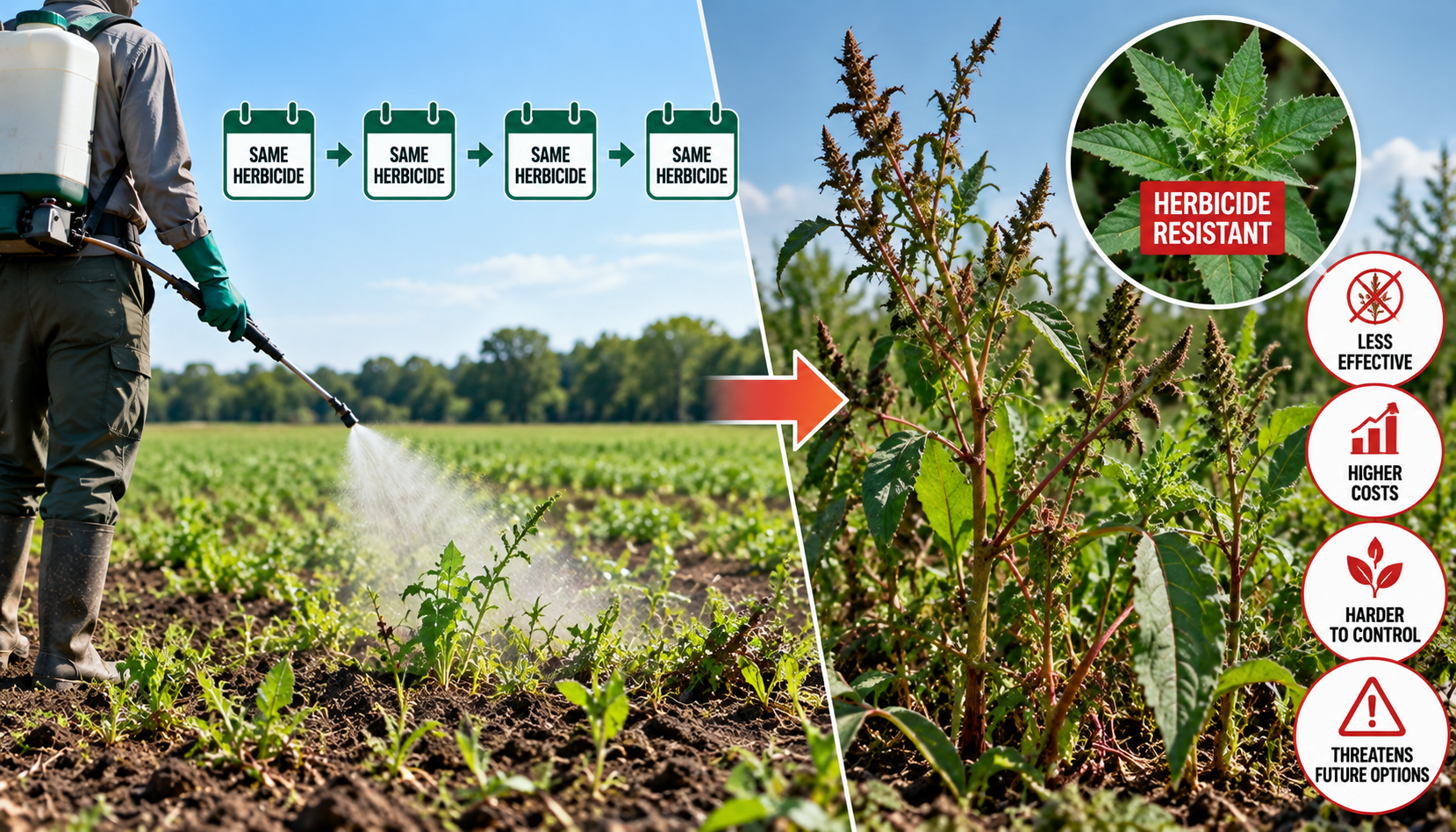
Using the same herbicide repeatedly is dangerous because it accelerates the development of herbicide-resistant weeds, degrades soil health, and increases the risk of crop injury, water contamination, and long-term environmental damage. Repeated applications of a single active ingredient create selection pressure that favors resistant individuals, and those survivors multiply until the herbicide no longer works on the population.
Herbicide resistance is now documented in more than 500 weed species worldwide, and repeated use of the same mode of action is the primary driver. Once resistance develops, growers and homeowners must switch to more expensive products, combine multiple herbicides, or resort to mechanical control, often at significant cost. In some cases, resistant weeds cannot be controlled with any available chemical.
Beyond resistance, repeated herbicide use affects soil biology, beneficial insects, and water quality. Many products persist in soil and groundwater, harming non-target plants and aquatic life. Understanding why repeated applications are risky helps landowners build safer, more sustainable weed management programs.
In this guide, we break down why using the same herbicide repeatedly is dangerous by examining resistance, soil and water impacts, crop injury, and practical rotation strategies.
Why Is Using The Same Herbicide Repeatedly Dangerous? 10 Hidden Risks
1. Herbicide Resistance – The Most Serious Consequence
Herbicide resistance is the most serious consequence of using the same product repeatedly because it renders the chemical ineffective against target weeds. When a single herbicide is applied year after year, susceptible plants die while a small number of naturally resistant individuals survive and reproduce. Over several seasons, resistant individuals dominate the population, and the herbicide no longer controls the weed.
More than 500 weed species worldwide have developed resistance to at least one herbicide group, and some species are resistant to multiple modes of action. Palmer amaranth, waterhemp, and Italian ryegrass are notorious examples that have developed resistance to several herbicide families across the United States. Once resistance is established, it cannot be reversed.
Preventing resistance requires rotating herbicide modes of action, combining multiple effective products, and integrating cultural practices like crop rotation and mechanical control. Herbicide rotation is one of the most effective strategies because it reduces selection pressure and prevents resistant individuals from dominating.
2. Selection Pressure And Weed Shifts
Selection pressure occurs when repeated herbicide use favors certain weed species while suppressing others, eventually causing a shift in the weed community. A product that once controlled a broad spectrum of weeds may, after several seasons of repeated use, allow tolerant species to flourish while eliminating susceptible ones. This shift often leads to new dominant weeds that the herbicide cannot control.
Weed shifts are common in both agricultural fields and home landscapes. For example, repeated use of grass-selective herbicides can cause broadleaf weeds to increase, while repeated broadleaf herbicides can allow grasses to dominate. Over time, the weed community becomes more difficult and expensive to manage.
Preventing weed shifts requires using multiple herbicide groups and non-chemical methods that address the entire weed spectrum. Monitoring the weed community each season helps identify shifts early, before they become severe.
3. Soil Health Degradation
Soil health degradation occurs when repeated herbicide applications harm beneficial soil organisms that support plant growth and nutrient cycling. Many herbicides are toxic to soil bacteria, fungi, and earthworms at label rates, reducing microbial diversity and the soil’s ability to break down organic matter and cycle nutrients.
Reduced microbial activity slows the breakdown of plant residues and reduces the availability of key nutrients like nitrogen and phosphorus. Earthworms and other soil invertebrates are also affected, leading to poorer soil structure, reduced water infiltration, and increased erosion over time. These effects accumulate with repeated applications.
Protecting soil health requires minimizing herbicide use, rotating products, and incorporating organic matter through cover crops and compost. Soil testing and biological monitoring help track changes in soil health over time.
4. Groundwater And Surface Water Contamination
Groundwater and surface water contamination occurs when herbicides move off target through leaching, runoff, and erosion. Some products, including atrazine, metolachlor, and certain sulfonylureas, are highly mobile in soil and can reach groundwater wells and nearby streams. Once in water, these chemicals can harm aquatic plants, fish, and amphibians.
Repeated applications increase the total load of herbicide in the environment, raising the risk of contamination even when individual applications follow label rates. Contaminated water supplies require expensive treatment, and some wells have been permanently affected. Surface runoff also carries herbicides into wetlands and rivers, where they damage aquatic ecosystems.
Preventing water contamination requires selecting products with lower mobility, avoiding application before heavy rain, maintaining buffer strips along waterways, and following label restrictions on setbacks and application timing.
5. Crop Injury And Carryover
Crop injury and carryover occur when herbicides persist in soil longer than expected and damage sensitive crops planted in rotation. Some products, including picloram, clopyralid, and certain sulfonylureas, can remain active in soil for months or years after application. When sensitive crops like soybeans, canola, or vegetables are planted in treated fields, they may suffer stunted growth, yellowing, and yield loss.
Repeated applications of the same product increase the concentration of herbicide residues in the soil and lengthen the carryover period. This is particularly problematic in diversified crop rotations and in gardens where multiple crops are planted in the same area. Carryover damage can be difficult to diagnose because symptoms resemble nutrient deficiencies or disease.
Preventing crop injury requires reading label rotation restrictions carefully, tracking application history, and choosing herbicides with shorter soil residual activity when sensitive crops follow.
6. Non-Target Plant And Pollinator Damage
Non-target plant and pollinator damage occurs when herbicides drift or move off target, harming desirable vegetation and insects that depend on it. Some products, including 2,4-D and dicamba, are highly volatile and can move long distances, damaging sensitive crops, ornamental plants, and native vegetation. Pollinators that rely on flowering plants may lose critical forage.
Repeated applications increase the total amount of herbicide released into the environment and raise the risk of drift events. Off-target damage is often worse in hot, windy conditions or when sprayers are not properly calibrated. In some cases, drift damage leads to lawsuits and financial losses for growers.
Preventing non-target damage requires applying herbicides in calm conditions, using drift-reducing nozzles and adjuvants, and maintaining buffer zones around sensitive areas and pollinator habitat.
7. Human Health Concerns
Human health concerns arise from repeated exposure to herbicides through skin contact, inhalation, and consumption of contaminated food or water. Some herbicides are linked to acute symptoms like skin irritation, headaches, and nausea, while others have been associated with chronic health issues in long-term epidemiological studies. Applicator safety is a major consideration in any herbicide program.
Repeated applications increase the cumulative exposure of applicators, farmworkers, and nearby residents. Protective clothing, respirators, and proper handling reduce risk, but even careful applicators can experience exposures. Long-term studies continue to examine the relationship between herbicide exposure and health outcomes.
Reducing human health risk requires using the lowest effective rate, following label instructions precisely, wearing appropriate personal protective equipment, and rotating to products with lower toxicity profiles.
8. Loss Of Effective Tools For The Future
Loss of effective tools occurs when resistance and regulation remove products from the market, leaving growers and homeowners with fewer options. When a herbicide loses effectiveness due to resistance, it cannot be replaced quickly because new active ingredients take years or decades to develop and register. Meanwhile, regulatory restrictions continue to remove older products from use.
The loss of effective herbicides is a major concern for agricultural sustainability and food security. Without effective chemical tools, growers must rely more heavily on mechanical and cultural methods, which are often more expensive and less consistent. Preserving the effectiveness of existing products through rotation and integrated management is essential.
Protecting future tools requires treating every herbicide application as a limited resource and using it only when necessary, at the correct rate, and in combination with other methods.
9. Increased Costs And Reduced Profitability
Increased costs and reduced profitability occur when resistance forces growers to use more expensive products, apply more frequently, or adopt alternative control methods. Herbicide-resistant weeds often require tank mixes of multiple products, higher application rates, and additional mechanical or hand labor to control. These costs add up quickly across a farm or landscape.
In severe cases, resistant weeds can reduce crop yields by 50 percent or more, leading to significant financial losses. Homeowners face similar cost increases when weeds become resistant in lawns and gardens, requiring repeat purchases and additional labor. The economic impact of resistance is estimated in the billions of dollars annually worldwide.
Preventing resistance through rotation and integrated management is far cheaper than dealing with resistant populations after they develop. Investing in prevention today saves money and reduces long-term weed management costs.
10. Regulatory And Environmental Pressure
Regulatory and environmental pressure increase when repeated herbicide use leads to contamination, resistance, and non-target damage. Regulators respond by restricting or banning products, imposing buffer zones, and requiring additional training and record-keeping. These changes affect both agricultural and residential users, reducing options and increasing compliance costs.
Environmental groups and the public increasingly scrutinize herbicide use, especially in sensitive areas like wetlands, waterways, and pollinator habitat. Repeated applications draw attention and often lead to tighter restrictions. Being proactive about responsible use helps maintain access to important tools.
Reducing regulatory pressure requires demonstrating responsible stewardship through integrated management, careful application, and ongoing monitoring of environmental impacts. Transparency and record-keeping also help build trust with regulators and the public.
7 Tips For Avoiding The Risks Of Repeated Herbicide Use
- Rotate herbicide modes of action: Alternate between herbicide groups with different modes of action to reduce selection pressure and prevent resistant weeds from dominating. Never use the same active ingredient year after year.
- Combine multiple effective products: Tank-mixing herbicides with different modes of action improves control and reduces the chance that resistant individuals survive. Check label compatibility before mixing.
- Integrate cultural and mechanical methods: Crop rotation, cover crops, mulching, mowing, and hand-pulling reduce reliance on herbicides and address weeds that chemicals miss. Integrated programs are more sustainable and effective.
- Apply at the correct rate and timing: Using the labeled rate at the right growth stage maximizes effectiveness and minimizes the chance of resistance. Avoid reduced rates that allow survivors to reproduce.
- Monitor weeds after application: Scout treated areas 7 to 14 days after spraying to evaluate control and identify escapes. Early detection of resistance allows faster response.
- Keep detailed records: Track products, rates, dates, and weed responses year by year. Records help identify resistance patterns and guide future decisions.
- Follow label and environmental restrictions: Respect buffer zones, setback distances, and application timing restrictions to protect water, wildlife, and non-target plants. Responsible use protects both the environment and continued access to herbicides.
Risks Of Repeated Herbicide Use (FAQs)
1. Why is using the same herbicide repeatedly dangerous?
Using the same herbicide repeatedly is dangerous because it accelerates herbicide resistance, degrades soil health, contaminates water, and increases the risk of crop injury and non-target damage. Resistance is the most serious consequence and cannot be reversed once established.
2. How quickly can weeds develop herbicide resistance?
Herbicide resistance can develop in as few as three to five years of repeated use of the same mode of action, depending on the weed species, application frequency, and other management practices. Some species develop resistance faster than others.
3. What is herbicide rotation and why does it matter?
Herbicide rotation means alternating between products with different modes of action across seasons or applications. It matters because it reduces selection pressure and prevents resistant weeds from dominating, preserving the effectiveness of each product.
4. Can repeated herbicide use harm my soil?
Yes, repeated herbicide use can harm soil bacteria, fungi, and earthworms, reducing microbial diversity and nutrient cycling. These effects accumulate over time and can reduce soil health, structure, and productivity.
5. Do herbicides get into groundwater?
Some herbicides, including atrazine and metolachlor, are highly mobile in soil and can reach groundwater through leaching. Repeated applications increase the total load and raise the risk of contamination. Following label restrictions and avoiding application before rain reduces this risk.
6. How do I know if weeds are becoming resistant?
Signs of resistance include weeds that survive herbicide applications that previously controlled them, patches of uncontrolled weeds in treated areas, and declining control over successive seasons. Testing suspected resistant populations confirms the diagnosis.
7. What should I do if I suspect herbicide resistance?
If you suspect resistance, stop using the product, switch to a different mode of action, and combine chemical control with mechanical and cultural methods. Report suspected resistance to your local extension office for confirmation and guidance.
Conclusion
Herbicide resistance is the most serious consequence of repeated herbicide use because it renders products ineffective and cannot be reversed once established. Selection pressure, weed shifts, and loss of effective tools follow closely, leaving landowners with fewer options and higher costs.
Beyond resistance, repeated applications degrade soil health, contaminate water, injure crops, and harm non-target plants and pollinators. These effects accumulate over time and affect the environment, human health, and long-term profitability of any weed management program.
Preventing these problems requires rotating herbicide modes of action, combining multiple effective products, integrating cultural and mechanical methods, and following label restrictions carefully. Monitoring weeds and keeping detailed records helps identify resistance early and guides better decisions.
Treat every herbicide application as a limited resource and use it only when necessary, at the correct rate, and in combination with other methods. Responsible use protects your land, your budget, and the effectiveness of these important tools for years to come.