Purple deadnettle is a winter annual broadleaf weed that emerges in fall, overwinters as a low rosette, and blooms in early spring with small purple flowers. It spreads rapidly through seeds and thrives in thin turf, garden beds, and no-till fields. Because it is a broadleaf species, selective broadleaf herbicides control it without harming most grasses.
Choosing the best herbicide for purple deadnettle depends on where the weed is growing, what stage it is in, and what surrounding plants you want to protect. Fall applications target seedlings before winter, while spring applications kill established plants before they set seed. Pre-emergent herbicides prevent germination in late summer and early fall.
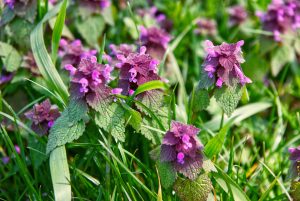
Purple deadnettle is often found alongside henbit, chickweed, and speedwell, so identifying it correctly before treatment matters. It tolerates close mowing and poor soil, which is why it spreads quickly in stressed lawns and neglected garden beds. Improving turf density and soil fertility reduces future infestations.
In this guide, we review the best herbicides for purple deadnettle by examining pre-emergent and post-emergent options, application timing, and cultural practices for long-term control.
Herbicide For Purple Deadnettle: 20 Best Options For Total Control
1. 2,4-D Amine – Best Overall Herbicide For Purple Deadnettle
2,4-D amine is the best overall herbicide for purple deadnettle because it selectively controls broadleaf weeds without harming most turfgrasses and cereal crops. It is a synthetic auxin that causes uncontrolled cell division and twisting. It is absorbed through leaves and translocated throughout the plant.


- Low, economical use rate of 1 to 4 pints per acre
- Controls many broadleaf weeds & woody plants
2,4-D amine is used in lawns, sports fields, pastures, and cereal crops to control purple deadnettle and other winter annual broadleaf weeds. It works best when applied to actively growing weeds in fall or early spring before they set seed. It is often tank-mixed with dicamba or MCPP for broader spectrum control.
This product is easy to apply with a backpack or hose-end sprayer and requires careful calibration for even coverage. It is not safe around desirable broadleaf plants, so drift control is essential in mixed landscapes.
- Selective for broadleaf weeds
- Safe for most grasses
- Affordable
- Widely available
- Absorbed and translocated
- Works in lawns and crops
- Trusted by land managers
- Drift risk to desirable plants
- Requires repeat applications
- Not safe around gardens
2. Dicamba – Best Herbicide For Purple Deadnettle In Crop Fields
Dicamba is a selective broadleaf herbicide that controls purple deadnettle and other tough winter annual weeds in lawns, pastures, and crop fields. It is absorbed through leaves, roots, and stems, making it effective under a wide range of conditions. It is often tank-mixed with 2,4-D for broader spectrum control.

- CROP-SAFE WEED KILLER: This herbicide weed killer targets broadleaf weeds in a variety of crops, including corn, soybean, cotton, sugarcane, and turf. Its fast-acting formula ensures long-lasting results, keeping your fields and pastures clean
- FLEXIBLE FIELD COVERAGE: Compatible with both ground and aerial application equipment, this broadleaf herbicide is easy to apply regardless of your farming setup. Whether treating dense vegetation or large-acreage fields, you can depend on consistent coverage
Dicamba is used in lawns, fence rows, corn, and small grains to control purple deadnettle and other broadleaf weeds. It has some soil residual activity that extends control of germinating broadleaf weeds. It works best when applied to actively growing weeds in fall or early spring.
Dicamba is volatile and can drift long distances, damaging sensitive crops and garden plants. It is regulated in many states, with restrictions on timing and buffer zones.
- Broad-spectrum broadleaf control
- Some soil residual
- Works with 2,4-D
- Effective on tough weeds
- Widely available
- Affordable
- Trusted by land managers
- Highly volatile
- Long-distance drift risk
- State-regulated use
3. MCPP – Best Herbicide For Purple Deadnettle And Clover
MCPP is a selective broadleaf herbicide that controls purple deadnettle, clover, and other winter annual weeds in lawns and turf. It is a synthetic auxin absorbed through leaves and roots and translocated through the plant. It is often used in combination with 2,4-D and dicamba.
- Low, economical use rate of 1 to 4 pints per acre
- Controls many broadleaf weeds & woody plants
MCPP is labeled for lawns, sports fields, and non-crop turf areas. It is particularly effective on clover and other legumes, making it a good option when both deadnettle and clover are present. It works best when applied to actively growing weeds in fall or early spring.
This product requires careful calibration and even coverage for consistent results. It is not safe around desirable broadleaf plants such as tomatoes, roses, and ornamentals.
- Effective on clover and deadnettle
- Safe for most turfgrasses
- Absorbed through leaves and roots
- Works in lawns and sports fields
- Often tank-mixed
- Affordable
- Trusted by turf managers
- Drift risk to desirable plants
- Requires even coverage
- Not for use near gardens
4. Three-Way Broadleaf Herbicide – Best Ready-Mixed Herbicide For Purple Deadnettle Control
Three-way broadleaf herbicides combine 2,4-D, dicamba, and MCPP in a single formulation, providing broad-spectrum control of purple deadnettle and other winter annual weeds. They are absorbed through leaves and roots and act on multiple sites within the plant. They are widely used in turf management.

- USE SITES: For use on both cool and warm season grasses
- EFFECTIVE AGAINST: Dandelion, clover, plantain, and many other listed broadleaf weeds
Three-way herbicides are labeled for lawns, sports fields, parks, and other turf areas. They control a wide range of broadleaf weeds including purple deadnettle, henbit, clover, and dandelion. They work best when applied to actively growing weeds in fall or early spring.
These products require careful calibration and even coverage for consistent results. They are not safe around desirable broadleaf plants, so drift control is essential in mixed landscapes.
- Broad-spectrum control
- Safe for most turfgrasses
- Multiple modes of action
- Convenient single product
- Works in lawns and sports fields
- Widely available
- Trusted by turf managers
- Drift risk to desirable plants
- Requires even coverage
- Not for use near gardens
5. Fluroxypyr – Best Fast-Acting Herbicide For Purple Deadnettle
Fluroxypyr is a selective broadleaf herbicide that acts quickly on purple deadnettle and other broadleaf weeds in turf and crops. It is absorbed through leaves and translocated to growing points, causing rapid distortion and decline of treated plants. It is often tank-mixed with 2,4-D or MCPP.

- Selective control of woody plants and brush
- Thorough translocation kills hard-to-control brush like blackberry, rose and privet
Fluroxypyr is labeled for turf, sports fields, and non-crop areas. It is particularly effective on clover, purple deadnettle, and other broadleaf weeds that are difficult to control with 2,4-D alone. It works best when applied to actively growing weeds during mild weather.
This product has limited soil residual activity, reducing the risk of damage to sensitive plants after application. It requires even coverage for consistent results.
- Fast-acting on broadleaf weeds
- Safe for most turfgrasses
- Limited soil residual
- Tank-mix flexibility
- Works in turf and sports fields
- Effective on tough species
- Trusted by turf managers
- Requires even coverage
- Drift risk to desirable plants
- Not for use near gardens
6. Metsulfuron Methyl – Best Low-Rate Herbicide For Purple Deadnettle Control
Metsulfuron methyl is a selective ALS inhibitor that controls purple deadnettle and other broadleaf weeds at very low application rates. It is absorbed through leaves and roots and translocated to growing points, disrupting cell division. It is highly effective on many broadleaf species.

- BROAD SPECTRUM WEED CONTROL: The MSM herbicide effectively targets over 100 species of broadleaf weeds and brush, giving you comprehensive vegetation management in pastures, rangelands, and industrial sites with precision and reliability
- VERSATILE APPLICATION OPTIONS: Use weed killer concentrate as a post-emergent herbicide for active weeds or apply pre-emergent at dormancy break for early control. This flexibility makes it ideal for diverse settings, from forestry to utility rights-of-way
Metsulfuron methyl is labeled for turf, non-crop areas, and some crops. It controls purple deadnettle, henbit, and other broadleaf weeds when applied to actively growing plants. It works best when applied in fall or early spring during mild weather.
This product has significant soil residual activity that can affect sensitive broadleaf plants for months. It is not suitable for use where sensitive plants will be planted soon after application.
- Low application rates
- Effective on broadleaf weeds
- Safe for most turfgrasses
- Long-lasting control
- Reduces repeat applications
- Works in turf and non-crop areas
- Trusted by turf managers
- Long soil residual
- Can affect sensitive plants
- Not for use near gardens
7. Carfentrazone – Best Contact Herbicide For Purple Deadnettle Burndown
Carfentrazone is a selective PPO inhibitor that causes rapid cell membrane disruption and desiccation of treated weeds, including purple deadnettle. It is absorbed through leaves and acts on contact, with symptoms appearing within hours. It is often tank-mixed with systemic herbicides for longer control.

- Provides ultra-fast weed control
- Visible results in just 24 hours
Carfentrazone is labeled for turf, cereals, and non-crop areas. It is particularly effective on small broadleaf weeds like purple deadnettle and henbit when applied in tank mixes with other products. It works best on actively growing weeds with good spray coverage.
This product has limited soil residual activity and does not control grasses. It requires even coverage for effective results and works best on small, actively growing weeds.
- Fast contact action
- Effective on small weeds
- Tank-mix flexibility
- Works in turf and cereals
- Limited soil residual
- Burndown partner
- Trusted by turf managers
- Requires good coverage
- No grass control
- Best on small weeds only
8. Sulfentrazone – Best Herbicide For Purple Deadnettle And Sedges
Sulfentrazone is a selective PPO inhibitor that controls purple deadnettle, clover, and some sedges in turf. It is absorbed through roots and shoots and acts on contact, disrupting cell membranes. It has both pre-emergent and post-emergent activity.

- STOP WEEDS BEFORE THEY START: This pre-emergent and post-emergent herbicide targets weed seeds just as they're germinating; Say goodbye to troublesome weeds like crabgrass and creeping charlie before they take over your lawn or garden
- COST-EFFECTIVE: With low usage rates, our product provides an economical weed-killing solution, ideal for both small and large areas
Sulfentrazone is labeled for turf, including lawns, sports fields, and golf courses. It controls purple deadnettle, clover, and other broadleaf weeds when applied to actively growing plants. It is often tank-mixed with other herbicides for broader spectrum control.
This product has significant soil residual activity that contributes to its pre-emergent effect. It requires even coverage for effective results and works best on small, actively growing weeds.
- Pre and post-emergent activity
- Effective on purple deadnettle
- Safe for most turfgrasses
- Some soil residual
- Works in lawns and sports fields
- Tank-mix flexibility
- Trusted by turf managers
- Some soil residual
- Requires even coverage
- Drift risk to desirable plants
9. Halosulfuron – Best Herbicide For Purple Deadnettle And Nutsedge
Halosulfuron is a selective ALS inhibitor that controls purple deadnettle, clover, and yellow nutsedge in turf. It is absorbed through leaves and roots and translocated to growing points, disrupting cell division. It is one of the few products that controls both broadleaf weeds and sedges.

- TRUSTED PERFORMER: Empero contains 75% halosulfuron-methyl; the active ingredient professionals trust most for control of tough nutsedge.
- TOTAL NUTSEDGE TAKEDOWN: Empero travels down to the root system tubers for complete top-to-bottom weed kill.
Halosulfuron is labeled for turf, including lawns, sports fields, and golf courses. It controls purple deadnettle, clover, and yellow nutsedge when applied to actively growing plants. It works best when applied in fall or early spring.
This product has some soil residual activity that helps prevent new weeds from germinating. It is safe for most turfgrasses when applied according to label directions.
- Controls deadnettle and nutsedge
- Safe for most turfgrasses
- Absorbed and translocated
- Some soil residual
- Works in lawns and sports fields
- Reduces repeat applications
- Trusted by turf managers
- Some soil residual
- Requires even coverage
- Drift risk to desirable plants
10. Penoxsulam – Best Low-Rate ALS Herbicide For Purple Deadnettle
Penoxsulam is a selective ALS inhibitor that controls purple deadnettle and other broadleaf weeds at low application rates. It is absorbed through leaves and roots and translocated to growing points, disrupting cell division. It is highly effective on many broadleaf species in turf.


Penoxsulam is labeled for turf, including lawns, sports fields, and golf courses. It controls purple deadnettle, clover, and other broadleaf weeds when applied to actively growing plants. It works best when applied in fall or early spring during mild weather.
This product has some soil residual activity that helps prevent new weeds from germinating. It is safe for most turfgrasses when applied according to label directions.
- Low application rates
- Effective on broadleaf weeds
- Safe for most turfgrasses
- Some soil residual
- Works in lawns and sports fields
- Reduces repeat applications
- Trusted by turf managers
- Some soil residual
- Can affect sensitive plants
- Requires even coverage
11. Prodiamine – Best Pre-Emergent Herbicide For Purple Deadnettle
Prodiamine is a pre-emergent herbicide that forms a soil barrier preventing purple deadnettle seeds from germinating. It is absorbed by emerging seedlings and disrupts cell division. It has no post-emergent activity on established plants.

- Crabgrass Control
- Pre-emergent and broadleaf weed control
Prodiamine is labeled for turf, including lawns, sports fields, and golf courses. It controls purple deadnettle and other winter annual weeds when applied in late summer or early fall before seed germination. It works best when applied to bare soil or thin turf before the fall flush.
This product has significant soil residual activity that prevents new weeds from germinating for months. It is safe for most turfgrasses when applied according to label directions.
- Prevents deadnettle germination
- Safe for most turfgrasses
- Long soil residual
- Reduces post-emergent applications
- Works in lawns and sports fields
- Widely available
- Trusted by turf managers
- No post-emergent activity
- Requires proper timing
- Long soil residual
12. Isoxaben – Best Pre-Emergent Herbicide For Purple Deadnettle In Landscape Beds
Isoxaben is a pre-emergent herbicide that prevents purple deadnettle seeds from germinating in landscape beds and around ornamentals. It is absorbed by emerging seedlings and disrupts cell wall formation. It has no post-emergent activity on established plants.

- Gallery specialty herbicide provides season-long control of more than 90 species of broadleaf weeds.
- Gallery provides superior preemergence broadleaf weed control with best-in-class ornamental and turf safety
Isoxaben is labeled for landscape beds, ornamental plantings, and non-crop areas. It controls purple deadnettle and other broadleaf weeds when applied in late summer or early fall before seed germination. It works best when applied to bare soil or mulch before the fall flush.
This product has significant soil residual activity that prevents new weeds from germinating for months. It is safe for most ornamentals when applied according to label directions.
- Prevents deadnettle germination
- Safe for ornamentals
- Long soil residual
- Reduces hand-weeding
- Works in landscape beds
- Widely available
- Trusted by landscapers
- No post-emergent activity
- Requires proper timing
- Long soil residual
13. Atrazine – Best Herbicide For Purple Deadnettle In Corn And Sorghum
Atrazine is a selective herbicide that provides both pre-emergent and post-emergent control of purple deadnettle in corn and sorghum. It inhibits photosynthesis in susceptible plants and is absorbed through roots and leaves. It is one of the most widely used herbicides in North America.

- Kills many broadleaf weeds
- Also used in centipede grass
Atrazine is labeled for corn, sorghum, and some non-crop areas to control purple deadnettle and other broadleaf weeds. It works best when applied in fall or early spring before seed germination and again after emergence. It is restricted in some states due to groundwater concerns.
This product has significant soil residual activity that helps prevent new deadnettle seedlings from emerging. It is a restricted-use product and must be applied according to label directions.
- Pre and post-emergent activity
- Effective on purple deadnettle
- Works in corn and sorghum
- Long soil residual
- Reduces repeat applications
- Widely used in crop production
- Trusted by growers
- Restricted-use product
- Groundwater contamination concerns
- Not for use on all crops
14. Metribuzin – Best Herbicide For Purple Deadnettle In Soybeans
Metribuzin is a selective herbicide that inhibits photosynthesis and provides both pre-emergent and post-emergent control of purple deadnettle. It is absorbed through roots and leaves and translocated to growing points. It is used in a range of crops including soybeans, cereals, and tomatoes.

- Active Ingredient: Metribuzin 75%
- TARGET PESTS: Annual bluegrass (Poa annua), Bedstraw, Carpetweed, Chickweed, Corn speedwell, Goosegrass, Henbit, Littleseed canarygrass, Parsley-piert, Prostrate knotweed, Rabbitfootgrass, Red deadnettle, Shepherdspurse, Spotted spurge, Spur weed, White clover, Wild mustard and more
Metribuzin is labeled for soybeans, cereals, and vegetables to control purple deadnettle and other broadleaf weeds. It works best when applied to actively growing weeds in fall or early spring. It is often tank-mixed with other herbicides for broader spectrum control.
This product can cause crop injury if applied when crops are stressed or if rates are too high. It has moderate soil residual activity that contributes to its pre-emergent effect.
- Pre and post-emergent activity
- Effective on purple deadnettle
- Works in multiple crops
- Moderate soil residual
- Tank-mix flexibility
- Affordable
- Trusted by growers
- Crop injury risk
- Requires proper timing
- Some soil residual
15. Bentazon – Best Post-Emergent Herbicide For Purple Deadnettle In Soybeans
Bentazon is a selective post-emergent herbicide that inhibits photosynthesis in susceptible broadleaf weeds, including purple deadnettle. It is absorbed through leaves and translocated to growing points. It controls many broadleaf weeds without harming most grasses.

- Powerful Weed Control: Fast-acting bentazon formula targets broadleaf weeds and sedges on contact; controls over 25 weed species including velvetleaf, pigweed, and nutsedge
- Active Ingredient: Contains sodium salt of bentazon 44.0% (equivalent to 4 pounds bentazon per gallon); selective post-emergence liquid concentrate
Bentazon is labeled for soybeans, corn, peanuts, and rice to control purple deadnettle and other broadleaf weeds. It works best when applied to small, actively growing weeds in fall or early spring. It is often tank-mixed with other herbicides for broader spectrum control.
This product has limited soil residual activity, so it does not prevent new weeds from germinating. It requires good spray coverage for effective control and is not effective on grasses or sedges.
- Selective for broadleaf weeds
- Safe for most grasses
- Works in multiple crops
- Limited soil residual
- Tank-mix flexibility
- Effective on purple deadnettle
- Trusted by growers
- Requires good coverage
- No grass control
- No pre-emergent activity
16. Glyphosate – Best Non-Selective Herbicide For Purple Deadnettle
Glyphosate is a non-selective herbicide that kills purple deadnettle and most other vegetation it contacts. It is absorbed through foliage and translocated to roots, killing both top growth and the underground crown. It has no soil residual activity.

- Powerful Weed Control:Effectively kills over 130 types of weeds and grasses, reaching down to the roots to prevent regrowth. Perfect for driveways, sidewalks, fences, and garden areas.
- Covers Up To 26,000 Square Feet
Glyphosate is used for fence line clearing, driveway cracks, and site preparation before planting. It works best when applied to actively growing purple deadnettle in fall or early spring, when the plant is moving energy to its roots. It is not selective, so it kills desirable plants on contact.
Resistance to glyphosate has developed in many weed species, so rotating to other modes of action helps preserve its effectiveness. It requires careful application to avoid drift onto desirable vegetation.
- Kills roots and top growth
- Broad-spectrum control
- No soil residual
- Effective on purple deadnettle
- Works in site preparation
- Affordable price
- Trusted by land managers
- Non-selective
- Kills desirable plants
- Widespread resistance
17. Glufosinate – Best Non-Selective Alternative For Purple Deadnettle
Glufosinate is a non-selective herbicide that controls purple deadnettle and other vegetation through contact action. It is absorbed through leaves and acts on contact, with symptoms appearing within hours. It is often used as an alternative to glyphosate where resistance is a concern.

- NON-SELECTIVE BROAD-SPECTRUM CONTROL Provides post-emergence control of a wide range of broadleaf and grassy weeds, including tough and resistant species such as marestail (horseweed).
- EFFECTIVE ON RESISTANT WEEDS Ideal for managing weeds resistant to glyphosate and multiple herbicide modes of action, making it a powerful rotational or rescue treatment.
Glufosinate is labeled for fence rows, rights-of-way, and non-crop areas. It has no soil residual activity, so it does not prevent new weeds from germinating. It works best when applied to small, actively growing vegetation with good spray coverage.
This product requires good spray coverage for effective control and works best on small weeds. It is less effective on large or stressed vegetation than systemic herbicides.
- Fast contact action
- Broad-spectrum control
- Alternative to glyphosate
- No soil residual
- Works in burndown programs
- Effective on resistant weeds
- Trusted by land managers
- Non-selective
- Requires good coverage
- Weak on large vegetation
18. Diquat – Best Fast Burndown Herbicide For Purple Deadnettle
Diquat is a non-selective contact herbicide that rapidly desiccates purple deadnettle foliage. It is absorbed through leaves and disrupts cell membranes, causing wilting and browning within hours. It has no soil residual activity.

- INSTANT WEED CONTROL: Expect visible results within hours, as hydrilla killer starts working immediately on contact with green plant tissue, making it an ideal solution when fast, effective weed control is needed with minimal downtime
- GLYPHOSATE-FREE POWER: This non-selective aquatic herbicide for ponds provides broad-spectrum control without using glyphosate. It works quickly to kill a wide range of weeds and is ideal for those looking for an efficient and fast-acting substitute
Diquat is labeled for fence rows, driveways, and non-crop areas. It controls small annual weeds and provides fast burndown where quick results are needed. It works best when applied to small, actively growing vegetation with good spray coverage.
This product requires good spray coverage for effective control and works best on small weeds. It is less effective on perennial species and large purple deadnettle plants because it does not move into roots.
- Fast burndown action
- No soil residual
- Effective on small weeds
- Works in fence rows and driveways
- Widely available
- Affordable
- Trusted by land managers
- Non-selective
- No perennial control
- Requires good coverage
19. Prodiamine + Sulfentrazone – Best Combination Herbicide For Purple Deadnettle
Prodiamine combined with sulfentrazone provides both pre-emergent and post-emergent control of purple deadnettle in turf. Prodiamine forms a soil barrier that prevents new deadnettle seeds from germinating, while sulfentrazone kills existing plants. The combination delivers the most complete control.

- PRE-EMERGENT HERBICIDE: Quali-Pro's Prodiamine 65 WDG provides pre-emergent grass and broadleaf weed control. Flexible application allows for both spring and fall use providing season long crabgrass control. Available in a 5 pound bottle.
- FEATURES & BENEFITS: Excellent tank mix partner with fertilizers and iron solutions
Prodiamine plus sulfentrazone is labeled for lawns, sports fields, and golf courses to control purple deadnettle and other winter annual weeds. It works best when applied in late summer or early fall before seed germination and again in spring as a post-emergent treatment.
This combination has significant soil residual activity from prodiamine that prevents new weeds from germinating for months. It requires even coverage for effective results and works best when applied according to label directions.
- Pre and post-emergent control
- Effective on purple deadnettle
- Safe for most turfgrasses
- Long soil residual
- Reduces repeat applications
- Works in lawns and sports fields
- Trusted by turf managers
- Long soil residual
- Can affect sensitive plants
- Requires even coverage
20. 2,4-D + Dicamba + MCPP – Best Three-Way Herbicide For Purple Deadnettle In Lawns
2,4-D combined with dicamba and MCPP provides broad-spectrum control of purple deadnettle and other broadleaf weeds in lawns and turf. All three ingredients are synthetic auxins that cause uncontrolled cell division and twisting. The combination delivers faster and more complete control than any single product.

This three-way combination is labeled for lawns, sports fields, and other turf areas. It controls purple deadnettle, henbit, clover, and other broadleaf weeds when applied to actively growing plants. It works best when applied in fall or early spring.
This combination has some soil residual activity that helps prevent new weeds from germinating. It requires even coverage for effective results and works best when applied according to label directions.
- Broad-spectrum control
- Safe for most turfgrasses
- Multiple modes of action
- Effective on purple deadnettle
- Works in lawns and sports fields
- Widely available
- Trusted by turf managers
- Drift risk to desirable plants
- Requires even coverage
- Not for use near gardens
Tips For Controlling Purple Deadnettle With Herbicides
- Identify the weed first: Confirm that the weed is purple deadnettle and not henbit or another winter annual before choosing a product.
- Apply pre-emergent in late summer or early fall: Prodiamine, isoxaben, and three-way combinations prevent purple deadnettle seeds from germinating when applied before the fall flush.
- Treat post-emergent in fall or early spring: 2,4-D, dicamba, MCPP, and fluroxypyr work best on young, actively growing purple deadnettle before it sets seed.
- Improve turf density: Purple deadnettle thrives in thin, weak lawns. Fertilize, water, and mow at the correct height to help desirable grasses outcompete it.
- Rotate modes of action: Using the same herbicide group repeatedly selects for resistant weeds. Rotate between synthetic auxins, ALS inhibitors, and PPO inhibitors.
- Avoid drift: 2,4-D and dicamba can drift onto sensitive broadleaf plants and cause serious damage. Spray in calm conditions and use drift-reducing nozzles.
- Re-treat as needed: Purple deadnettle can regrow from seeds in the soil. Monitor treated areas and re-treat new flushes while they are small.
Herbicide For Purple Deadnettle Frequently Asked Questions
1. What is the best herbicide for purple deadnettle?
2,4-D amine is the best overall herbicide for purple deadnettle because it selectively kills broadleaf weeds without harming most grasses. Three-way products and pre-emergent combinations are best for season-long control.
2. Will 2,4-D kill purple deadnettle?
Yes, 2,4-D kills purple deadnettle when applied to actively growing plants. It is absorbed through leaves and translocated to roots, causing the plant to twist and die over one to three weeks.
3. What is the best pre-emergent for purple deadnettle?
Prodiamine, isoxaben, and three-way combinations are the best pre-emergent options for purple deadnettle. They form a soil barrier that prevents seeds from germinating when applied in late summer or early fall.
4. When should I spray purple deadnettle?
Spray purple deadnettle in fall or early spring when the plant is actively growing and before it sets seed. Pre-emergent products go down in late summer or early fall before germination.
5. Does purple deadnettle come back after spraying?
Purple deadnettle can regrow from seeds in the soil after post-emergent treatment. Pre-emergent herbicides and improved turf density help prevent regrowth.
6. Is purple deadnettle toxic to livestock?
Purple deadnettle is not considered toxic to livestock, but it is generally unpalatable. In pastures, it can reduce forage quality when it forms dense patches.
7. Can I use vinegar to kill purple deadnettle?
Vinegar can burn purple deadnettle foliage but rarely kills the roots. It works best as part of an integrated program combining hand-pulling, mulching, and selective herbicides.
Conclusion
2,4-D amine is the best overall herbicide for purple deadnettle because it selectively kills broadleaf weeds without harming most grasses. Dicamba, MCPP, three-way products, and fluroxypyr follow closely as broad-spectrum options for lawns, pastures, and crop fields.
For pre-emergent control, prodiamine, isoxaben, and combination products prevent purple deadnettle seeds from germinating when applied in late summer or early fall. Combining pre-emergent and post-emergent programs delivers the most reliable control across lawns and gardens.
Effective control requires correct product selection, proper timing, even spray coverage, and follow-up monitoring for regrowth. Rotating modes of action prevents resistance, and improving turf density and soil fertility reduces future infestations.
Start your purple deadnettle control program this season, choose the right product for your site, and plan for follow-up treatments each year. Consistent effort delivers a clean lawn and long-term control.