Weeds with violet flowers are usually plants whose blooms range from pale lavender to deep purple, and identifying them matters because some spread aggressively, some are toxic, and a few are legally listed as noxious. The violet color comes from pigments in the petals, and the same shade appears across very different plant families, from tiny lawn weeds to tall pasture thistles.
Identifying the weed depends on where it grows, how the flowers are arranged, and what the leaves and stems look like. Some weeds produce tiny violet blooms on low sprawling stems, others carry tall spires of purple flowers, and a few form rounded violet flower heads at the tips of upright stalks. Lawn weeds, pasture weeds, wetland weeds, and garden bed weeds each include species with this look, and confusing a harmless wildflower with a noxious weed wastes time or lets a serious infestation spread.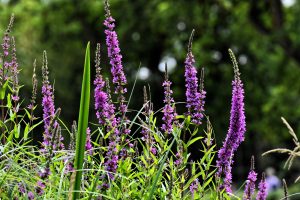
Removal and prevention decide whether the weed returns. Pulling or cutting before the violet flowers set seed, bagging seed heads rather than composting them, improving lawn density, and correcting wet or compacted soil all reduce the next generation, while mowing weeds in bloom and scattering seed across the yard spreads the problem. Get those wrong and the result is a bigger infestation next season.
In this guide, we review 30 weeds with violet flowers by examining identification, spread habit, and what each one needs to be managed effectively.
Weeds With Violet Flowers: 30 Common Types And How To Identify Them
1. Purple Loosestrife – Most Common Wetland Weed With Violet Flowers
Purple loosestrife is the most common wetland weed with violet flowers because its dense purple spires dominate marshes, pond edges, and wet ditches. The tall spikes bloom for weeks and stand out against green wetland foliage.
It spreads by seed and creeping roots, and a single mature plant can release hundreds of thousands of seeds. This combination makes it invasive across much of North America and hard to control once established.
Dig purple loosestrife before the spikes set seed, removing the whole plant including the root crown. Bag the seed heads and check the site for regrowth through the season.
- Violet flower spikes
- Easy to identify
- Common in wetlands
- Priority before seed set
- Widely distributed
- Digging removes crown
- Tall and visible
- Spreads by seed and roots
- Thrives in wet ground
- Invasive in many regions
2. Canada Thistle – Most Common Spiny Weed With Violet Flowers
Canada thistle is the most common spiny weed with violet flowers because its purple flower heads sit on prickly stems across pastures and roadsides. The plant forms dense patches that crowd out forage and native plants.
It spreads by creeping rhizomes that regrow from small fragments, which makes hand removal frustrating without repeated effort. Seed also travels on wind and equipment.
Cut Canada thistle before the flowers set seed, and dig the root system where possible, since the plant spreads by rhizomes. Bag seed heads and repeat removal through the season.
- Violet flower heads
- Easy to identify
- Priority before seed set
- Common in pastures
- Widely distributed
- Cut-and-dig method
- Spreads by seed
- Creeping rhizomes
- Spines on stems
- Hard to remove completely
3. Bull Thistle – Most Common Spiny Weed With Violet Flower Heads
Bull thistle is the most common spiny weed with violet flower heads because its purple blooms sit on heavily spined stems. The plant is a biennial that forms a low rosette before sending up a tall flower stalk.
It spreads only by seed, but each plant produces thousands, and the spines discourage grazing and make handling unpleasant. Bare ground and disturbed soil invite germination.
Cut bull thistle at the base before the flowers mature, wearing gloves since the stems are spiny. Bag the heads and repeat removal to prevent regrowth.
- Violet flower heads
- Easy to identify
- Priority before seed set
- Common in pastures
- Widely distributed
- Cut-and-bag method
- Spreads by seed
- Spiny stems
- Regrows after cutting
- Needs bagging
4. Milk Thistle – Most Common Tall Weed With Violet Flowers
Milk thistle is the most common tall weed with violet flowers because its spiny purple flower heads rise above surrounding vegetation. The white-marbled leaves make it easy to spot even before bloom.
It spreads by seed and develops a deep taproot that regrows if the crown survives. Disturbed ground, pastures, and roadsides are its favorite sites.
Cut milk thistle at the base before the flowers mature, wearing gloves since the plant is spiny. Bag the heads and dig the taproot where possible.
- Violet flower heads
- Easy to identify
- Priority before seed set
- Common in pastures
- Widely distributed
- Cut-and-bag method
- Tall and visible
- Very spiny
- Taproot regrows
- Needs bagging
5. Violet Wood Sorrel – Most Common Low Weed With Violet Flowers
Violet wood sorrel is the most common low weed with violet flowers because its small violet blooms and clover-like leaves spread across lawns and shaded beds. It looks delicate but spreads steadily.
It spreads by seed and by small bulbils that form at the base of the plant. Shaded, moist lawns and bare patches are its preferred sites.
Pull violet wood sorrel before the flowers set seed, digging the bulbs where possible. Bag the plants and improve lawn density so new growth cannot establish.
- Small violet flowers
- Easy to identify
- Common in lawns
- Priority before seed set
- Widely distributed
- Removable by hand
- Signals thin turf
- Bulbils spread easily
- Needs digging
- Hard to remove completely
6. Ground Ivy – Most Common Creeping Weed With Violet Flowers
Ground ivy is the most common creeping weed with violet flowers because its small purple blooms appear along trailing stems that root as they spread. It forms dense mats in lawns and shaded beds.
It spreads by runners that root at the nodes and by seed, and it survives mowing because it grows close to the ground. Shade and thin turf favor it.
Pull ground ivy before the flowers set seed, raking runners out of the lawn and improving turf density. Bag the plants and repeat removal through the season.
- Violet flowers
- Common in lawns
- Easy to identify
- Priority before seed set
- Widely distributed
- Removable by hand
- Rakes out of turf
- Spreads by runners
- Regrows from fragments
- Needs lawn improvement
7. Henbit – Most Common Winter Annual With Violet Flowers
Henbit is the most common winter annual with violet flowers because its small purple blooms appear in lawns and beds in early spring. It fades quickly once warm weather arrives.
It spreads by seed that germinates in fall, and it thrives in thin turf and bare soil. Each plant produces many seeds before dying back.
Pull henbit before the flowers set seed, raking it out of the lawn and improving turf density. Bag the plants and mow before the seed matures.
- Violet flowers
- Early spring bloom
- Easy to identify
- Priority before seed set
- Widely distributed
- Removable by hand
- Signals thin turf
- Seeds spread widely
- Competes with turf
- Needs lawn improvement
8. Purple Deadnettle – Most Common Early Spring Weed With Violet Flowers
Purple deadnettle is the most common early spring weed with violet flowers because its small purple blooms appear on low plants before turf wakes up. The square stems and triangular leaves help confirm identity.
It spreads by seed and colonizes thin turf, garden edges, and disturbed soil. It completes its life cycle quickly and drops seed by late spring.
Pull purple deadnettle before the flowers set seed, raking it out of the lawn and improving turf density. Bag the plants and mow before the seed matures.
- Violet flowers
- Early spring bloom
- Easy to identify
- Priority before seed set
- Widely distributed
- Removable by hand
- Signals thin turf
- Seeds spread widely
- Competes with turf
- Needs lawn improvement
9. Bird Vetch – Most Common Climbing Weed With Violet Flowers
Bird vetch is the most common climbing weed with violet flowers because its pea-like purple blooms appear along tendril-climbing stems. It scrambles over fences, shrubs, and native plants.
It spreads by seed and by creeping roots, and it fixes nitrogen, which helps it compete in poor soil. Disturbed ground and field edges are common sites.
Cut bird vetch at the base before the flowers set seed, and pull vines down from supports. Bag seed heads and repeat removal to weaken the root system.
- Violet flowers
- Easy to identify
- Priority before seed set
- Common along edges
- Widely distributed
- Cut-and-pull method
- Climbing habit
- Spreads by roots
- Climbs over plants
- Hard to remove completely
10. Tufted Vetch – Most Common Perennial Vetch With Violet Flowers
Tufted vetch is the most common perennial vetch with violet flowers because its clustered purple blooms climb through hedges and rough grass. It looks similar to bird vetch but grows in denser colonies.
It spreads by seed and creeping roots and tolerates a range of soils. Hedgerows, field margins, and waste ground are its usual sites.
Cut tufted vetch before the flowers set seed, and dig where the root system allows. Bag seed heads and repeat removal to reduce the colony.
- Violet flowers
- Easy to identify
- Priority before seed set
- Common in hedges
- Widely distributed
- Cut-and-dig method
- Climbing habit
- Creeping roots
- Climbs over plants
- Hard to remove completely
11. Common Vetch – Most Common Agricultural Weed With Violet Flowers
Common vetch is the most common agricultural weed with violet flowers because its purple pea-like blooms appear in fields and field margins. It is sometimes grown as a cover crop but becomes a weed when it escapes.
It spreads by seed and can climb over crops and fences. Disturbed ground and field edges are common.
Cut common vetch before the flowers set seed, and pull vines from supports. Bag seed heads and improve pasture density so the plant has less opportunity to spread.
- Violet flowers
- Easy to identify
- Priority before seed set
- Common in fields
- Widely distributed
- Cut-and-pull method
- Climbing habit
- Spreads by seed
- Climbs over crops
- Needs early removal
12. Hairy Vetch – Most Common Winter Annual Vetch With Violet Flowers
Hairy vetch is the most common winter annual vetch with violet flowers because its purple blooms appear in late spring on sprawling stems. It is grown as a cover crop but becomes a weed when it reseeds.
It spreads by seed that germinates in fall and by sprawling stems that climb over nearby plants. Field edges and disturbed ground are common.
Cut hairy vetch before the flowers set seed, and pull vines from supports. Bag seed heads and remove plants before they dry down and shatter.
- Violet flowers
- Easy to identify
- Priority before seed set
- Common in fields
- Widely distributed
- Cut-and-pull method
- Winter annual
- Spreads by seed
- Climbs over plants
- Reseeds easily
13. Crown Vetch – Most Common Groundcover Weed With Violet Flowers
Crown vetch is the most common groundcover weed with violet flowers because its pink-purple blooms form dense mats along roadsides and slopes. It was planted for erosion control and now spreads aggressively.
It spreads by seed and creeping roots and forms colonies that crowd out native plants. Roadsides, embankments, and disturbed ground are common sites.
Cut crown vetch before the flowers set seed, and dig the root crown where possible. Bag seed heads and repeat removal to weaken the colony.
- Violet flowers
- Easy to identify
- Priority before seed set
- Common on slopes
- Widely distributed
- Cut-and-dig method
- Dense mats
- Creeping roots
- Forms dense colonies
- Hard to remove completely
14. Alfalfa – Most Common Legume Weed With Violet Flowers
Alfalfa is the most common legume weed with violet flowers because its purple blooms appear on tall stems in fields and gardens. It is a valuable forage crop but becomes a weed when it escapes cultivation.
It spreads by seed and deep taproots and can persist for years. Field edges, gardens, and disturbed ground are common.
Cut alfalfa before the flowers set seed, and dig the taproot where possible. Bag seed heads and repeat removal to weaken the plant.
- Violet flowers
- Easy to identify
- Priority before seed set
- Common in fields
- Widely distributed
- Cut-and-dig method
- Deep taproot
- Deep taproot
- Persists for years
- Needs digging
15. Red Clover – Most Common Clover Weed With Violet Flowers
Red clover is the most common clover weed with violet flowers because its rounded purple-pink heads appear in lawns, pastures, and gardens. It is sometimes planted intentionally but spreads readily.
It spreads by seed and forms colonies in thin turf and disturbed ground. Each head produces many seeds.
Pull red clover before the heads set seed, and improve lawn density so new growth cannot establish. Bag seed heads and repeat removal where it competes with grass.
- Violet flower heads
- Easy to identify
- Common in lawns
- Priority before seed set
- Widely distributed
- Removable by hand
- Signals thin turf
- Seeds spread widely
- Competes with turf
- Needs lawn improvement
16. Alsike Clover – Most Common Wet-Soil Clover Weed With Violet Flowers
Alsike clover is the most common wet-soil clover weed with violet flowers because its pale purple heads appear in damp lawns and pastures. It looks similar to red clover but prefers wetter ground.
It spreads by seed and thrives in poorly drained soil, which signals drainage problems. Each head produces many seeds.
Pull alsike clover before the heads set seed, and improve drainage where it dominates. Bag seed heads and overseed the area with grass.
- Violet flower heads
- Easy to identify
- Common in wet lawns
- Priority before seed set
- Widely distributed
- Removable by hand
- Signals drainage issues
- Seeds spread widely
- Thrives in wet ground
- Needs drainage fixes
17. Purple Vetch – Most Common Vine Weed With Violet Flowers
Purple vetch is the most common vine weed with violet flowers because its purple blooms climb fences and shrubs. It spreads quickly in disturbed ground and field edges.
It spreads by seed and by creeping roots and can smother small plants under its vines. Disturbed ground and field edges are common.
Cut purple vetch before the flowers set seed, and pull vines from supports. Bag seed heads and repeat removal to reduce regrowth.
- Violet flowers
- Easy to identify
- Priority before seed set
- Common along edges
- Widely distributed
- Cut-and-pull method
- Climbing habit
- Spreads by roots
- Smothers small plants
- Hard to remove completely
18. Self-Heal – Most Common Low Weed With Violet Flowers
Self-heal is the most common low weed with violet flowers because its small purple blooms appear in lawns and rough grass. It spreads slowly but persists in thin turf.
It spreads by seed and creeping stems and tolerates mowing and poor soil. Lawns, field edges, and waste ground are common sites.
Pull self-heal before the flowers set seed, and improve lawn density where it persists. Bag seed heads and repeat removal to reduce the colony.
- Violet flowers
- Easy to identify
- Common in lawns
- Priority before seed set
- Widely distributed
- Removable by hand
- Signals thin turf
- Spreads by stems
- Persists in turf
- Needs density fixes
19. Field Bindweed – Most Common Twining Weed With Violet Flowers
Field bindweed is the most common twining weed with violet flowers because its trumpet-shaped blooms appear along vines that twist through gardens and fields. It is one of the hardest weeds to control once established.
It spreads by seed and by deep creeping roots that regrow from fragments. Gardens, fields, and disturbed ground are common.
Cut field bindweed before the flowers set seed, and dig the root system repeatedly to exhaust it. Bag seed heads and repeat removal through the season.
- Violet flowers
- Easy to identify
- Priority before seed set
- Common in gardens
- Widely distributed
- Cut-and-dig method
- Twining habit
- Deep creeping roots
- Regrows from fragments
- Very hard to remove
20. Hedge Bindweed – Most Common Fence Weed With Violet Flowers
Hedge bindweed is the most common fence weed with violet flowers because its large trumpet blooms climb through hedges and fences. It looks similar to field bindweed but has larger flowers and leaves.
It spreads by seed and creeping roots and smothers small plants under its vines. Hedgerows, gardens, and field edges are common.
Cut hedge bindweed before the flowers set seed, and pull vines from supports. Dig the root system repeatedly to weaken the plant.
- Violet flowers
- Easy to identify
- Priority before seed set
- Common in hedges
- Widely distributed
- Cut-and-pull method
- Climbing habit
- Creeping roots
- Smothers small plants
- Hard to remove completely
21. Periwinkle – Most Common Groundcover Weed With Violet Flowers
Periwinkle is the most common groundcover weed with violet flowers because its flat blue-violet blooms carpet shaded ground. It was planted as an ornamental and now escapes into woodlands.
It spreads by rooting stems and forms dense mats that crowd out native ground plants. Shaded gardens and woodland edges are common.
Pull or rake periwinkle before the flowers set seed, digging the rooted stems where possible. Bag the plants and repeat removal to clear the colony.
- Violet flowers
- Easy to identify
- Priority before seed set
- Common in shade
- Widely distributed
- Rake-and-dig method
- Dense mats
- Roots at nodes
- Forms dense colonies
- Invasive in some regions
22. Bugleweed – Most Common Moist Lawn Weed With Violet Flowers
Bugleweed is the most common moist lawn weed with violet flowers because its small blue-purple blooms appear in damp lawns and beds. It spreads by runners that root at the nodes.
It spreads by rooting stems and by seed and thrives in moist, shaded turf. Lawns, beds, and woodland edges are common.
Pull bugleweed before the flowers set seed, raking runners out of the lawn and improving drainage. Bag the plants and repeat removal through the season.
- Violet flowers
- Easy to identify
- Common in damp lawns
- Priority before seed set
- Widely distributed
- Removable by hand
- Signals drainage issues
- Spreads by runners
- Thrives in wet ground
- Needs drainage fixes
23. Germander Speedwell – Most Common Spring Lawn Weed With Violet Flowers
Germander speedwell is the most common spring lawn weed with violet flowers because its small blue blooms appear in lawns in spring. It spreads by creeping stems that root at the nodes.
It spreads by runners and seed and thrives in thin turf. Lawns, field edges, and disturbed ground are common.
Pull germander speedwell before the flowers set seed, and improve lawn density so new growth cannot establish. Bag the plants and repeat removal through the season.
- Violet flowers
- Easy to identify
- Common in lawns
- Priority before seed set
- Widely distributed
- Removable by hand
- Signals thin turf
- Spreads by runners
- Competes with turf
- Needs lawn improvement
24. Common Speedwell – Most Common Lawns And Fields Weed With Violet Flowers
Common speedwell is the most common lawns and fields weed with violet flowers because its small blue blooms appear across thin turf and disturbed ground. It spreads by creeping stems and seed.
It spreads by runners that root at the nodes and by seed, and it tolerates mowing. Lawns, fields, and waste ground are common.
Pull common speedwell before the flowers set seed, and improve lawn density so new growth cannot establish. Bag the plants and repeat removal where it persists.
- Violet flowers
- Easy to identify
- Common in lawns
- Priority before seed set
- Widely distributed
- Removable by hand
- Signals thin turf
- Spreads by runners
- Competes with turf
- Needs lawn improvement
25. Creeping Charlie – Most Common Shade Lawn Weed With Violet Flowers
Creeping Charlie is the most common shade lawn weed with violet flowers because its small purple blooms appear along trailing stems in shady lawns. It is another name for ground ivy and behaves the same way.
It spreads by runners that root at the nodes and by seed, and it thrives in shade and thin turf. Shaded lawns and beds are common.
Pull creeping Charlie before the flowers set seed, raking runners out of the lawn and improving turf density. Bag the plants and repeat removal through the season.
- Violet flowers
- Common in shade
- Easy to identify
- Priority before seed set
- Widely distributed
- Removable by hand
- Rakes out of turf
- Spreads by runners
- Regrows from fragments
- Needs lawn improvement
26. Viper’s Bugloss – Most Common Bristly Weed With Violet Flowers
Viper’s bugloss is the most common bristly weed with violet flowers because its blue-violet blooms appear on hairy stems in dry, rough ground. It is a biennial that forms a rosette before flowering.
It spreads by seed and prefers bare, dry soil. Roadsides, waste ground, and pastures are common sites.
Cut viper’s bugloss at the base before the flowers set seed, wearing gloves since the stems are bristly. Bag seed heads and improve ground cover so bare soil no longer favors it.
- Violet flowers
- Easy to identify
- Priority before seed set
- Common in dry ground
- Widely distributed
- Cut-and-bag method
- Biennial
- Bristly stems
- Spreads by seed
- Needs bagging
27. Houndstongue – Most Common Shade Weed With Violet Flowers
Houndstongue is the most common shade weed with violet flowers because its dull purple blooms appear on hairy plants in shaded, disturbed ground. It is toxic to livestock and spreads by burr-like seeds.
It spreads by burrs that cling to fur and clothing and by seed, and it prefers shade and disturbed soil. Woodland edges, pastures, and waste ground are common.
Dig houndstongue before the flowers set seed, wearing gloves since the plant is hairy and toxic. Bag the burrs and improve ground cover so bare soil no longer favors it.
- Violet flowers
- Easy to identify
- Priority for removal
- Common in shade
- Widely distributed
- Dig-and-bag method
- Toxic plant
- Toxic to livestock
- Burrs cling to fur
- Needs bagging
28. Common Comfrey – Most Common Tall Weed With Violet Flowers
Common comfrey is the most common tall weed with violet flowers because its bell-shaped purple blooms appear on tall, hairy stems. It is sometimes planted intentionally but spreads aggressively once established.
It spreads by seed and by deep root fragments that regrow readily. Gardens, field edges, and waste ground are common.
Cut common comfrey before the flowers set seed, and dig the root system repeatedly to weaken it. Bag seed heads and repeat removal through the season.
- Violet flowers
- Easy to identify
- Priority before seed set
- Common in gardens
- Widely distributed
- Cut-and-dig method
- Tall and visible
- Deep root fragments
- Regrows readily
- Hard to remove completely
29. Russian Comfrey – Most Common Hybrid Weed With Violet Flowers
Russian comfrey is the most common hybrid weed with violet flowers because its purple blooms appear on tall stems in gardens and field edges. It spreads aggressively by root fragments.
It spreads by seed and by root pieces that regrow from small sections. Gardens, field edges, and waste ground are common.
Cut Russian comfrey before the flowers set seed, and dig the root system repeatedly to weaken it. Bag seed heads and repeat removal through the season.
- Violet flowers
- Easy to identify
- Priority before seed set
- Common in gardens
- Widely distributed
- Cut-and-dig method
- Tall and visible
- Root fragments regrow
- Spreads aggressively
- Hard to remove completely
30. Wild Violet – Most Common Lawn Weed With Violet Flowers
Wild violet is the most common lawn weed with violet flowers because its heart-shaped leaves and purple blooms appear in lawns and shaded beds. It spreads by seed and creeping rootstocks.
It spreads by seed and by rootstocks that form colonies, and it thrives in shade and thin turf. Lawns, beds, and woodland edges are common.
Pull wild violet before the flowers set seed, digging the rootstocks where possible. Bag seed heads and improve lawn density so new growth cannot establish.
- Violet flowers
- Common in lawns
- Easy to identify
- Priority before seed set
- Widely distributed
- Dig-and-bag method
- Signals thin turf
- Spreads by rootstocks
- Regrows from fragments
- Needs lawn improvement
Tips For Managing Weeds With Violet Flowers
- Identify before removing: Violet flowers appear across many plant families, and some belong to spiny or toxic plants that need gloves.
- Remove before flowers mature: Violet blooms become seed heads, so cutting or pulling before they dry is essential.
- Bag seed heads: Never compost mature seed heads, since they survive composting and spread the weed further.
- Improve lawn and bed density: Most of these weeds germinate in bare or thin ground, so dense turf and beds are the best long-term prevention.
- Fix underlying conditions: Wet-soil weeds signal drainage problems, and thin-turf weeds signal compaction or low fertility.
- Clean equipment and clothing: Seeds and burrs cling to fabric and tires, spreading infestations between sites.
- Repeat removal through the season: Many violet-flowered weeds regrow from roots, rhizomes, or fragments, so one pass is rarely enough.
Weeds With Violet Flowers Frequently Asked Questions
1. What weeds have violet flowers?
Purple loosestrife, Canada thistle, bull thistle, milk thistle, violet wood sorrel, ground ivy, henbit, purple deadnettle, bird vetch, tufted vetch, common vetch, hairy vetch, crown vetch, alfalfa, red clover, alsike clover, purple vetch, self-heal, field bindweed, hedge bindweed, periwinkle, bugleweed, germander speedwell, common speedwell, creeping Charlie, viper’s bugloss, houndstongue, common comfrey, Russian comfrey, and wild violet all produce violet flowers.
2. Are weeds with violet flowers dangerous?
Some are. Houndstongue and viper’s bugloss are toxic to livestock, and thistles have sharp spines that injure hands and animals. Wear gloves and bag the plants.
3. Are violet flowers on weeds always the same shade?
No. The shade ranges from pale lavender to deep purple, and some plants produce blue-violet blooms that look violet in certain light.
4. How do I get rid of weeds with violet flowers?
Pull, dig, or cut the weed before the flowers set seed, bag the seed heads, and improve lawn or bed density so new seedlings cannot establish.
5. Why do these weeds keep coming back?
They return because seeds persist in the soil, many regrow from roots or rhizomes, and the underlying conditions—thin turf, wet soil, or bare ground—remain unchanged.
6. Can I compost weeds with violet flowers?
No. Seed heads and root fragments can survive composting and spread the weed where you use the compost. Bag them for disposal instead.
7. What weed with violet flowers grows in lawns?
Wild violet, ground ivy, creeping Charlie, henbit, purple deadnettle, germander speedwell, common speedwell, bugleweed, and red clover are the most common lawn weeds with violet flowers.
Conclusion
Purple loosestrife is the most common wetland weeds with violet flowers because its dense purple spires dominate marshes and pond edges. Canada thistle and bull thistle follow closely as spiny pasture weeds with violet flower heads.
Milk thistle, violet wood sorrel, ground ivy, henbit, purple deadnettle, bird vetch, tufted vetch, common vetch, hairy vetch, crown vetch, alfalfa, red clover, alsike clover, purple vetch, self-heal, field bindweed, hedge bindweed, periwinkle, bugleweed, germander speedwell, common speedwell, creeping Charlie, viper’s bugloss, houndstongue, common comfrey, Russian comfrey, and wild violet each produce a different version of the violet-flower look.
Effective management depends on identifying the weed, removing it before the flowers set seed, bagging seed heads, improving lawn and bed density, and correcting underlying soil or drainage problems.
Start with proper identification, remove before seed set, and fix the conditions that invite weeds. Thoughtful management keeps violet-flowered weeds from taking over the yard.