
Weeds that start with V often surprise gardeners who encounter unfamiliar species bearing unusual names and distinctive characteristics. Several lesser-known weeds that start with V emerge in gardens, lawns, and disturbed areas across North America, yet their unique features make them stand out among more common garden invaders.
The letter V hosts a surprising number of weedy species, ranging from the familiar vetch to the troublesome velvetleaf. These plants share few common features across the group—some produce climbing vines, others form low-growing mats, and a few grow into towering shrubs that overshadow desirable vegetation.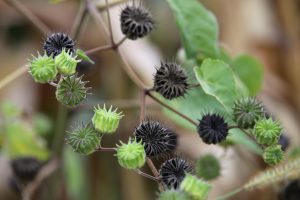
Proper identification of these V-named invaders is essential for effective management. Some produce toxic compounds that threaten livestock and pets, while others harbor pests that damage crops or possess allelopathic properties that suppress neighboring plants.
In this guide, we profile 10 weeds that start with V, detail their distinguishing characteristics, and offer practical control recommendations for reclaiming your landscape from these varied invaders.
10 Weeds That Start With V
1. Velvetleaf (Abutilon theophrasti) – The Velvety Invader
Velvetleaf produces large, heart-shaped leaves covered with soft, velvety hairs that give this weed its common name. This annual reaches 3-7 feet in height with branching stems and produces small, yellow flowers followed by distinctive button-like seed pods. Its leaves are large, soft, and resemble cotton foliage.
Native to Asia, velvetleaf has naturalized across North America, frequently invading agricultural fields, gardens, and disturbed areas. Its prolific seed production allows it to spread rapidly, with seeds remaining viable in soil for decades. The plant competes aggressively with row crops and garden vegetables.
Eradication requires pre-emergence herbicides in spring or post-emergence applications containing 2,4-D or dicamba. Persistent hand-pulling before seed set can reduce infestations. Its velvety leaves and button-like seed pods provide dependable identification markers.
2. Vetch (Vicia spp.) – The Climbing Legume
Vetch species produce climbing or sprawling vines with compound leaves and tendrils that resemble pea plants. This annual or perennial legume reaches 1-3 feet in height with branching stems and produces clusters of purple, pink, or white flowers followed by small seed pods. Its leaves are compound with numerous small leaflets.
Native to Europe and Asia, vetch has naturalized across North America, frequently invading fields, roadsides, and disturbed areas. Some species are cultivated as cover crops or forage, while others become aggressive weeds. The plant fixes nitrogen, which can alter soil chemistry and affect neighboring plants.
Control requires herbicides containing 2,4-D or dicamba, or persistent hand-pulling before seed set. Its climbing habit and pea-like flowers provide reliable distinguishing features from other weeds.
3. Virginia Creeper (Parthenocissus quinquefolia) – The Climbing Vine
Virginia creeper produces compound leaves with five leaflets that can be mistaken for poison ivy, though it lacks the allergenic properties. This woody vine reaches 30-50 feet in height with climbing stems and produces small, inconspicuous flowers followed by blue-black berries. Its leaves turn brilliant red in autumn.
Native to North America, Virginia creeper is common in woodlands, forest edges, and disturbed areas throughout the eastern and central United States. While desirable in natural settings, it can become aggressive in gardens and landscapes, climbing over trees and structures. The plant spreads through seeds and root suckers.
Control requires cutting vines or herbicides containing glyphosate or triclopyr applied to cut stumps. Its compound leaves with five leaflets and red autumn color provide reliable identification markers.
4. Venus’ Looking Glass (Triodanis perfoliata) – The Blue-Flowered Annual
Venus’ looking glass produces upright stems with clasping, rounded leaves and vibrant blue to purple star-shaped flowers. This annual reaches 6-24 inches in height with branching stems and produces small, five-petaled flowers in the leaf axils. Its leaves are distinctive, clasping the stem and forming a cup.
Native to North America, Venus’ looking glass is common in fields, roadsides, and disturbed areas throughout the eastern and central United States. Its self-seeding habit allows it to spread readily, often forming attractive but weedy patches. The plant is sometimes cultivated as a wildflower.
Control requires hand-pulling before seed set or broadleaf herbicides. Its clasping leaves and blue flowers provide reliable distinguishing features.
5. Violets (Viola spp.) – The Heart-Shaped Leaf Mimic
Wild violets produce heart-shaped leaves and distinctive purple, white, or yellow flowers in spring. This perennial reaches 4-8 inches in height with basal leaves and produces small, five-petaled flowers. Its leaves are smooth, dark green, and form low-growing rosettes.
Native to North America, violets are common in lawns, woodlands, and disturbed areas throughout the continent. While attractive, they can become weedy in manicured lawns and gardens, spreading through rhizomes and self-seeding. Some species produce cleistogamous flowers that self-pollinate without opening.
Control requires broadleaf herbicides containing 2,4-D, dicamba, or triclopyr applied when plants are actively growing. Hand-pulling is effective for small infestations. Its heart-shaped leaves and distinctive flowers provide reliable identification markers.
6. Viper’s Bugloss (Echium vulgare) – The Prickly Biennial
Viper’s bugloss produces bristly, hairy stems with narrow, lance-shaped leaves and striking blue to pink trumpet-shaped flowers. This biennial reaches 1-3 feet in height with branching stems and produces numerous flowers in coiled clusters. Its leaves are rough and covered with stiff hairs.
Native to Europe and Asia, viper’s bugloss has naturalized across North America, frequently invading roadsides, fields, and disturbed areas. Its deep taproot makes it difficult to control, and its self-seeding habit allows it to spread readily. The plant contains toxic alkaloids that can affect livestock.
Control requires persistent digging to remove the taproot or herbicides containing 2,4-D or glyphosate. Its bristly stems, blue flowers, and rough texture provide reliable distinguishing features.
7. Velvet Grass (Holcus lanatus) – The Soft-Haired Grass
Velvet grass produces soft, hairy leaves and distinctive purple-tinged flowering heads. This perennial grass reaches 1-3 feet in height with branching stems and produces panicles of small flowers. Its leaves are covered with fine, velvety hairs that give the plant a soft texture.
Native to Europe and Asia, velvet grass has naturalized across North America, frequently invading pastures, lawns, and disturbed areas. Its aggressive growth and tolerance for poor soils allow it to outcompete desirable vegetation. The plant spreads through seeds and tillers.
Control requires herbicides containing glyphosate or selective grass killers. Its soft, hairy leaves and purple-tinged flower heads provide reliable identification markers.
8. Vervain (Verbena spp.) – The Slender Flowering Weed
Vervain species produce slender, branching stems with small, purple, pink, or white flowers in spike-like clusters. This annual or perennial reaches 1-3 feet in height with opposite leaves and produces numerous small flowers that bloom from summer through fall. Its leaves are narrow and toothed.
Native to North America, vervain is common in fields, roadsides, and disturbed areas throughout the continent. Some species are cultivated as ornamentals, while others become weedy in gardens. The plant spreads through seeds and can form dense patches.
Control requires hand-pulling before seed set or broadleaf herbicides. Its slender stems and clustered flowers provide reliable distinguishing features.
9. Virginia Buttonweed (Diodia virginiana) – The Creeping Perennial
Virginia buttonweed produces low, spreading stems with small, opposite leaves and small white flowers with four petals. This perennial reaches 6-12 inches in height with creeping growth habit and produces button-like seed pods. Its leaves are narrow and rough-textured.
Native to North America, Virginia buttonweed is common in moist, disturbed areas throughout the southeastern United States. Its creeping stems root at nodes, allowing rapid spread in lawns and gardens. The plant thrives in poorly drained soils and competes with desirable turf.
Control requires herbicides containing 2,4-D, dicamba, or triclopyr applied during active growth. Improving drainage and maintaining dense turf helps prevent establishment. Its creeping habit and white flowers provide reliable identification markers.
10. Vanilla Leaf (Achlys triphylla) – The Woodland Groundcover
Vanilla leaf produces broad, trifoliate leaves and distinctive vanilla-scented flowers. This perennial reaches 6-12 inches in height with creeping rhizomes and produces small, white flowers in spike-like clusters. Its leaves are large and divided into three leaflets.
Native to western North America, vanilla leaf is common in moist woodlands and shaded areas. While desirable in natural settings, it can become aggressive in gardens and landscapes. The plant spreads through rhizomes and self-seeding.
Control is rarely necessary, but if unwanted, hand-pulling or rhizome removal manages spread. Its vanilla-scented flowers and trifoliate leaves provide reliable identification markers.
7 Practical Strategies For V-Name Weed Identification
-
Examine leaf characteristics: V-named weeds display diverse leaf forms—heart-shaped and velvety (velvetleaf), compound with tendrils (vetch), or five-parted (Virginia creeper). Leaf morphology provides critical identification clues.
-
Check flower structure: Flowers vary dramatically among V-named weeds—yellow (velvetleaf), purple/white (vetch), blue (Venus’ looking glass), or blue/pink (viper’s bugloss). Flower color and form aid identification.
-
Assess growth habit: Growth patterns range from climbing vines (vetch, Virginia creeper) to low-growing rosettes (violets) to tall annuals (velvetleaf). Understanding growth habit guides management decisions.
-
Look for distinctive features: Velvetleaf has velvety leaves; Virginia creeper has five leaflets; viper’s bugloss has bristly stems; vervain has slender flower spikes. These features provide reliable identification markers.
-
Consider habitat preferences: Habitat varies—velvetleaf prefers disturbed soils; violets thrive in lawns and woodlands; Virginia creeper grows in forest edges; vanilla leaf prefers moist woodlands.
-
Examine root systems: Root structures differ—violets have rhizomes; viper’s bugloss has deep taproots; velvetleaf has fibrous roots. Root characteristics aid identification and control selection.
-
Consult identification resources: Use field guides, extension services, or plant identification apps when uncertain. Positive identification is essential before taking management action.
Frequently Asked Questions About Weeds That Start With V
1. Which weed starting with V is most common?
Velvetleaf (Abutilon theophrasti) is one of the most common V-named weeds, particularly in agricultural regions. Its distinctive velvety leaves and button-like seed pods make it recognizable, and its prolific seed production allows it to spread rapidly across fields and gardens.
2. Are any V-named weeds toxic?
Yes, viper’s bugloss contains toxic alkaloids that can affect livestock if consumed in large quantities. Some vetch species can cause toxicity in grazing animals. Always identify plants before allowing animals to consume them.
3. Which V-named weeds are invasive?
Velvetleaf and Virginia creeper can become aggressive in gardens and agricultural settings. Vetch species can also be invasive, particularly in disturbed areas. Japanese knotweed (though not starting with V) is a notorious invasive, but velvetleaf and vetch are significant weed concerns.
4. Should I remove all V-named weeds from my garden?
It depends on the species. Velvetleaf should be removed due to its aggressive nature. Violets may be desirable for their flowers but can become weedy. Virginia creeper may be desirable in natural settings but aggressive in gardens. Identify the species before taking action.
5. Can V-named weeds be beneficial?
Some V-named weeds provide ecological benefits. Vetch fixes nitrogen and can be used as a cover crop. Violets support pollinators. Virginia creeper provides wildlife habitat. However, aggressive species like velvetleaf offer few benefits in cultivated settings.
6. What herbicides control V-named weeds effectively?
Broadleaf herbicides containing 2,4-D, dicamba, or triclopyr control many V-named weeds. Velvetleaf responds to pre-emergence and post-emergence products. Glyphosate provides effective control for perennial species. Always follow label instructions.
7. Why do V-named weeds appear in my garden?
V-named weeds thrive in disturbed soils, varying light conditions, and diverse habitats—the same conditions found in gardens and landscapes. Their seeds often persist in soil seed banks and germinate when conditions are favorable. Garden activities and natural seed dispersal introduce these weeds to cultivated areas.
Final Thoughts
Identifying weeds that start with V reveals a diverse group of plants ranging from the velvety velvetleaf to the climbing vetch and the colorful violet. Despite their varied appearances and growth habits, these weeds share a common ability to thrive in disturbed environments and compete with desirable vegetation, making them persistent challenges for gardeners and land managers.
Velvetleaf emerges as the most significant V-named weed in agricultural settings, its prolific seed production and velvety foliage creating persistent challenges. Vetch and Virginia creeper present climbing challenges in gardens and natural areas, while violets and vervain add colorful but weedy complexity. Each V-named weed reveals distinguishing characteristics that reward attentive observation.
Armed with knowledge of leaf characteristics, flower structures, growth habits, and distinctive features, gardeners can confidently identify these varied invaders and implement appropriate control measures. Regular monitoring, timely intervention, and informed management decisions provide the foundation for maintaining healthy landscapes while keeping your garden free from these weeds that start with V.