Buckthorn forms dense thickets that crowd out native plants, degrade wildlife habitat, and spread rapidly through bird-dispersed seeds. Two species dominate infestations in North America: common buckthorn (Rhamnus cathartica) and glossy buckthorn (Frangula alnus). Both are aggressive invaders that displace native understory plants and alter soil chemistry, making them one of the most persistent invasive shrubs on the continent.
Buckthorn is a deciduous shrub or small tree that grows 10 to 25 feet tall with glossy, oval leaves and distinctive dark berries. Its ability to resprout from cut stumps and its prolific seed production make it difficult to eliminate with a single treatment. Effective control requires combining mechanical removal, chemical treatment, and follow-up monitoring over several seasons.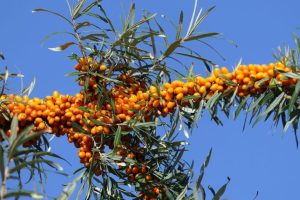
Choosing the right elimination method depends on the size of the infestation, the age of the plants, and whether you want to use herbicides. Small seedlings can be hand-pulled, while mature thickets require cut-stump treatment, basal bark application, or foliar spraying. Timing matters as well, since buckthorn is most vulnerable in late summer and fall when it stores energy in its roots.
In this guide, we break down how to eliminate buckthorn by examining the most effective removal methods, application techniques, and follow-up strategies to help you reclaim your land from this invasive shrub.
10 Effective Methods To Eliminate Buckthorn
1. Cut-Stump Treatment – Most Reliable Method For Eliminating Buckthorn
Cut-stump treatment is the most reliable method for eliminating buckthorn because it combines mechanical removal with herbicide application to prevent resprouting. The technique involves cutting the shrub close to the ground and immediately applying herbicide to the freshly cut surface, where it is absorbed and translocated to the roots. This method works on buckthorn of any size and delivers consistent results.

- REVIVE FORESTS AND PASTURES: Triclopyr 4 Herbicide targets & controls woody plants, broadleaf weeds, & brush, making it ideal for restoring pastures and managing unwanted vegetation in forests, rangelands, and industrial sites without harming grasses
- YEAR-ROUND APPLICATION FLEXIBILITY: With flexible application options throughout the year, this broadleaf herbicide offers versatility for a wide range of conditions. Its ester formulation allows for effective absorption through leaves and roots
The most effective herbicides for cut-stump treatment are triclopyr and glyphosate, applied at concentrated rates within minutes of cutting. Moreover, applying herbicide immediately prevents the cut surface from sealing, which would block absorption and allow the stump to resprout. Therefore, it offers permanent control when performed correctly.
This method is easy to perform with a chainsaw, hand saw, or loppers, plus a spray bottle or brush for herbicide application. Furthermore, it minimizes soil disturbance and reduces the risk of erosion compared to grubbing or bulldozing. Overall, cut-stump treatment delivers the most dependable long-term control for buckthorn.
Pros:
- Reliable, permanent control
- Works on buckthorn of any size
- Minimal soil disturbance
- Low herbicide volume required
- Effective in sensitive habitats
- Reduces resprouting
- Trusted by land managers
Cons:
- Labor intensive
- Requires immediate herbicide application
- Needs follow-up monitoring
2. Basal Bark Treatment – Most Effective Method For Dense Buckthorn Thickets
Basal bark treatment is the most effective method for dense buckthorn thickets because it eliminates the need to cut every stem. The technique involves spraying a concentrated herbicide mixed with oil onto the lower 12 to 18 inches of the trunk, where it penetrates the bark and moves to the roots. This method works best on stems under 6 inches in diameter.

- REVIVE FORESTS AND PASTURES: Triclopyr 4 Herbicide targets & controls woody plants, broadleaf weeds, & brush, making it ideal for restoring pastures and managing unwanted vegetation in forests, rangelands, and industrial sites without harming grasses
- YEAR-ROUND APPLICATION FLEXIBILITY: With flexible application options throughout the year, this broadleaf herbicide offers versatility for a wide range of conditions. Its ester formulation allows for effective absorption through leaves and roots
Triclopyr ester formulated with oil is the standard herbicide for basal bark treatment and provides consistent results on buckthorn. Moreover, the oil carrier helps the herbicide penetrate the bark and remain active long enough for absorption. Therefore, it offers effective control without cutting.
This method is easy to apply with a backpack sprayer and works well in winter when other plants are dormant, reducing damage to desirable species. Furthermore, it is faster than cut-stump treatment in dense infestations. Overall, basal bark treatment delivers efficient, targeted control for buckthorn thickets.
Pros:
- No cutting required
- Effective on dense thickets
- Can be applied in winter
- Minimal damage to desirable plants
- Fast application
- Targeted treatment
- Trusted by land managers
Cons:
- Only works on smaller stems
- Requires oil-based carrier
- Not suitable for wet conditions
3. Foliar Spraying – Most Efficient Method For Large Buckthorn Infestations
Foliar spraying is the most efficient method for large buckthorn infestations because it treats many plants at once with minimal labor. The technique involves spraying herbicide directly onto the leaves, where it is absorbed and translocated to the roots. It works best on buckthorn under 6 feet tall and is typically applied in late summer or fall.

- Powerful Weed Control:Effectively kills over 130 types of weeds and grasses, reaching down to the roots to prevent regrowth. Perfect for driveways, sidewalks, fences, and garden areas.
- Covers Up To 26,000 Square Feet
Glyphosate and triclopyr are the most common herbicides for foliar spraying buckthorn, applied with a surfactant to improve leaf coverage and absorption. Moreover, late-season applications are most effective because buckthorn is actively transporting carbohydrates to its roots. Therefore, it offers efficient control across large areas.
This method is easy to apply with a backpack or boom sprayer and works well in open areas with dense buckthorn regrowth. Furthermore, it reduces labor costs compared to cut-stump or basal bark treatments. Overall, foliar spraying delivers efficient, cost-effective control for large infestations.
Pros:
- Efficient for large areas
- Low labor cost
- Effective on smaller plants
- Reduces resprouting
- Works on dense regrowth
- Fast application
- Trusted by land managers
Cons:
- Can damage desirable plants
- Requires careful timing
- Not suitable near water
4. Hand-Pulling – Most Effective Method For Buckthorn Seedlings
Hand-pulling is the most effective method for buckthorn seedlings because small plants can be removed entirely, including the root, with minimal effort. The technique works best on plants under 2 feet tall growing in moist soil, where roots pull free easily. Removing seedlings early prevents them from developing the deep root systems that make mature buckthorn so difficult to eliminate.

- Portable Weeding Tools :Close-range precision weeding, gap cleaning, portable and labor-saving,13.3 inches Weeder tool,It is the perfect length for a gardening tools.Adopting stainless steel polishing process,The durable handle is more comfortable to hold
- Durable All-Steel Design: The four-tooth uprooting weeding tool is made of high-quality anti-rust steel, with high hardness and durability. Has high impact resistance and tensile strength, not easy to deform or break
Hand-pulling is most effective in spring or after rainfall when soil is soft and roots release easily. Moreover, removing the entire root system prevents resprouting, which is common when stems are cut without herbicide treatment. Therefore, it offers permanent control for small infestations.
This method is easy to perform with gloves and a weed wrench or root puller for slightly larger plants. Furthermore, it requires no herbicides and is safe for use near water and sensitive plants. Overall, hand-pulling delivers effective, chemical-free control for buckthorn seedlings.
Pros:
- No herbicides required
- Safe near water and sensitive plants
- Removes entire root system
- Effective on seedlings
- Low cost
- Immediate results
- Environmentally friendly
Cons:
- Only works on small plants
- Labor intensive for large areas
- Requires moist soil conditions
5. Mowing And Repeated Cutting – Most Effective Method For Suppressing Buckthorn Regrowth
Mowing and repeated cutting is the most effective method for suppressing buckthorn regrowth because it exhausts the plant energy reserves over time. The technique involves cutting buckthorn stems repeatedly throughout the growing season to prevent photosynthesis and root storage. It works best on large infestations where herbicides are not an option.


- AMPLE CUTTING POWER: Powered by a robust 170cc 4-cycle OHV engine, this walk-behind string trimmer features a manual recoil easy start ignition system, ensuring easy starts and the capability to handle heavy mowing tasks.
- BUILT TOUGH FEATURES: Designed with a one-piece steel deck, this gas string trimmer offers enhanced strength and stability while minimizing vibration. Its heavy-duty nylon line clears a 22-inch wide path through the thickest grass and weeds.
Mowing and cutting must be repeated every few weeks during the growing season to be effective, since a single cut stimulates vigorous resprouting. Moreover, combining repeated cutting with a late-season herbicide application to regrowth delivers faster and more complete control. Therefore, it offers a viable strategy for reducing dense thickets over time.
This method is easy to perform with a brush mower, chainsaw, or tractor-mounted cutter for large areas. Furthermore, it requires no herbicide and can be integrated into a long-term management plan. Overall, mowing and repeated cutting delivers gradual but effective control for buckthorn infestations.
Pros:
- No herbicides required
- Works on large infestations
- Reduces thicket density
- Can be mechanized
- Environmentally friendly
- Integrates with other methods
- Reduces seed production
Cons:
- Requires repeated cutting
- Slow to eliminate plants
- Stimulates resprouting if not repeated
6. Prescribed Burning – Most Effective Method For Reducing Buckthorn Seedbank
Prescribed burning is the most effective method for reducing buckthorn seedbank because fire kills seedlings and destroys seeds on the soil surface. The technique involves controlled burns during the dormant season, when desirable plants are less vulnerable and buckthorn is most exposed. It works best as part of an integrated management program.

- [Heavy-duty, Robust Construction]The Double-Bottom Drip Torch features a cast-iron body and a robust design, making it suitable for harsh forestry environments and capable of withstanding repeated outdoor use without compromising structural integrity. Prioritizing long-term reliability over lightweight construction, it ensures consistent performance during controlled burning operations
- [Integrated Fuel Trap and Check Valve]A fuel trap is located at the nozzle, and the sure-seal double-bottom drip torch features a check valve assembly integrated into the cap, effectively preventing abnormal flames or fuel backflow into the tank. Combined with controlled ignition and internal flow management, this enhances the predictability and safety of combustion operations
Prescribed burning must be repeated over several years to be effective, since buckthorn seeds can remain viable in the soil for up to five years. Moreover, fire alone rarely kills mature buckthorn, so combining burning with cut-stump or basal bark treatment delivers better results. Therefore, it offers a valuable tool for reducing reinfestation.
This method requires careful planning, permits, and appropriate equipment, and should be conducted by trained professionals. Furthermore, it improves habitat for native plants by removing thatch and recycling nutrients. Overall, prescribed burning delivers effective long-term control when integrated with other methods.
Pros:
- Reduces seedbank
- Kills seedlings
- Improves native plant habitat
- Recycles nutrients
- Integrates with other methods
- Reduces thatch
- Effective on large areas
Cons:
- Requires permits and training
- Does not kill mature plants
- Weather dependent
7. Goat Grazing – Most Effective Method For Buckthorn In Hard-To-Reach Areas
Goat grazing is the most effective method for buckthorn in hard-to-reach areas because goats browse woody plants aggressively and can access steep, rocky, or wet terrain that machinery cannot. The technique involves rotating goats through infested areas repeatedly to defoliate and weaken buckthorn over time. It works best as part of a long-term management plan.

- ⚠️ ⚠️ ⚠️ Important Warning: This electric fence netting is intended exclusively for livestock. It is NOT suitable for containing chickens, ducks, or any other small poultry. If used for poultry, chicks and small birds can easily slip through the gaps.
- Secure Livestock-Only Electric Netting: Standing 49.6” high and spanning 164 ft in length, this electric netting fence creates a safe, enclosed environment for grazing and containment of livestock. ⚠️ ⚠️ ⚠️Note: Not recommended for small poultry such as chickens or ducks. Compatible with solar, AC, or DC fence energizers (sold separately)
Goats must be rotated through infested areas multiple times per season to prevent buckthorn from recovering between grazing periods. Moreover, combining goat grazing with cut-stump or basal bark treatment speeds up control by reducing regrowth. Therefore, it offers a chemical-free option for sensitive sites.
This method requires temporary fencing, water access, and a source of goats trained for browse management. Furthermore, it is environmentally friendly and can be cost-effective for large acreage. Overall, goat grazing delivers effective, chemical-free control for buckthorn in challenging terrain.
Pros:
- No herbicides required
- Works in hard-to-reach areas
- Environmentally friendly
- Reduces regrowth
- Cost-effective for large acreage
- Improves soil health
- Integrates with other methods
Cons:
- Requires fencing and water
- Slow to eliminate plants
- Needs trained goats and rotation
8. Solarization – Most Effective Method For Buckthorn In Small Areas
Solarization is the most effective method for buckthorn in small areas because it uses heat from the sun to kill roots, seeds, and seedlings without chemicals. The technique involves covering the infested area with clear plastic during the hottest part of the summer to raise soil temperatures. It works best on small infestations, garden beds, and areas where herbicides are not an option.

- 1. Premium 6 Mil Heavy Duty Protection: Engineered with 6 mil thick, industrial-grade polyethylene, this heavy duty plastic sheeting provides ultimate protection for floors, furniture, and equipment during painting, construction, or messy projects. Acts as a durable drop cloth, tarp, or temporary floor covering
- 2. UV Resistant & Tear-Proof Greenhouse Cover: Designed as a premium greenhouse cover, this UV-resistant plastic sheeting shields plants from harsh sunlight, heavy rain, and frost. The tear-proof material withstands strong winds and extreme weather for year-round use
Solarization must be maintained for four to six weeks during peak summer heat to reach temperatures that kill buckthorn roots and seeds. Moreover, it works best on moist soil and in full sun, where soil temperatures can exceed 140 degrees Fahrenheit. Therefore, it offers a chemical-free option for small-scale control.
This method is easy to set up with clear plastic sheeting and requires little maintenance once installed. Furthermore, it improves soil health by killing pathogens and weed seeds along with buckthorn. Overall, solarization delivers effective, chemical-free control for small buckthorn infestations.
Pros:
- No herbicides required
- Safe for sensitive areas
- Kills roots, seeds, and seedlings
- Improves soil health
- Low maintenance once installed
- Environmentally friendly
- Effective in small areas
Cons:
- Only works in full sun
- Requires peak summer heat
- Not practical for large areas
9. Excavation And Root Removal – Most Thorough Method For Eliminating Buckthorn
Excavation and root removal is the most thorough method for eliminating buckthorn because it removes the entire plant, including the root crown and major roots, in a single operation. The technique involves using a skid steer, excavator, or hand tools to dig out the plant and its root system. It works best on small to medium infestations where soil disturbance is acceptable.

- [2 in 1 Garden Tools]: This weed rake has two parts, one with 6 sharp tine that can penetrate deep into the soil to pull out the unwanted weeds, and the other with a sharp edge that can be used to remove a large area ofweeds or level the soil. Please note: The garden hoe for weeding is sharp and solid, please keep away from children and pets
- [Long Handle Weed Puller Tool]: Without bending or kneeling, the weed remover tool with extension pole that can be adjusted from 16" to 60" as you need. 30s easy installation, the grass remover tool head and the stainless steel pole are connected by screw locks, and the poles are rotated and connected to each other to complete the installation of the long handled weed pulling tool
Excavation must remove the root crown completely, since any remaining root fragments can resprout and reinfest the area. Moreover, combining excavation with follow-up herbicide treatment of regrowth delivers the most reliable long-term control. Therefore, it offers a permanent solution when performed correctly.
This method is easy to perform with the right equipment and works well on sites where replanting or landscaping is planned. Furthermore, it eliminates the need for repeated treatments once the roots are removed. Overall, excavation and root removal delivers the most thorough control for buckthorn infestations.
Pros:
- Removes entire plant and roots
- Permanent control when done correctly
- No repeated treatments needed
- Works on medium infestations
- Prepares site for replanting
- Immediate results
- Effective on mature plants
Cons:
- Requires heavy equipment
- Causes soil disturbance
- Can promote erosion on slopes
10. Integrated Management – Most Effective Long-Term Strategy For Buckthorn Control
Integrated management is the most effective long-term strategy for buckthorn control because it combines multiple methods to address every stage of the plant life cycle. The approach involves combining mechanical removal, herbicide treatment, prescribed burning, and revegetation to prevent reinfestation. It works best on large properties and natural areas where a single method is not sufficient.


Integrated management must be planned over several years, since buckthorn seeds remain viable in the soil and resprouting is common after any single treatment. Moreover, revegetating treated areas with native plants shades the soil and reduces germination of new buckthorn seeds. Therefore, it offers the most durable and cost-effective control over time.
This strategy requires careful planning, record-keeping, and consistent follow-up to be effective. Furthermore, it improves habitat quality and reduces the need for repeated herbicide applications. Overall, integrated management delivers the most reliable, sustainable control for buckthorn infestations.
Pros:
- Addresses all life stages
- Most durable long-term control
- Improves habitat quality
- Reduces herbicide use over time
- Prevents reinfestation
- Cost-effective over years
- Adaptable to any site
Cons:
- Requires multi-year planning
- Needs consistent follow-up
- Higher initial effort
7 Tips For Eliminating Buckthorn Permanently
- Treat in late summer or fall: Buckthorn translocates carbohydrates to its roots in late summer and fall, making herbicide applications more effective during this window than in spring or early summer.
- Act before berries form: Remove or treat buckthorn before berries ripen to prevent birds from spreading seeds to new areas. Berries typically ripen in late summer and persist into winter.
- Apply herbicide immediately after cutting: Cut-stump treatments must be applied within minutes of cutting, before the surface seals and blocks absorption. Keep a spray bottle or brush ready while cutting.
- Monitor for resprouts: Buckthorn resprouts readily from cut stumps and root fragments. Scout treated areas several times per season and re-treat regrowth while it is still small.
- Revegetate treated areas: Plant native grasses, shrubs, and trees after removing buckthorn to shade the soil and reduce germination of new buckthorn seeds.
- Work from the edges inward: Start removal at the perimeter of an infestation and work toward the center. This prevents birds and wildlife from spreading seeds from untreated plants into cleared areas.
- Plan for multiple years: Buckthorn seeds remain viable in the soil for up to five years, so expect to monitor and re-treat for several seasons before the seedbank is exhausted.
How To Eliminate Buckthorn (FAQs)
1. What is the fastest way to eliminate buckthorn?
Cut-stump treatment with concentrated triclopyr or glyphosate is the fastest reliable way to eliminate buckthorn. Cutting alone stimulates resprouting, so herbicide must be applied to the freshly cut surface within minutes to kill the root system.
2. Will buckthorn grow back after cutting?
Yes, buckthorn resprouts vigorously from cut stumps and root fragments. Cutting without herbicide treatment typically results in multiple new stems growing from each stump, making the infestation denser than before.
3. When is the best time to treat buckthorn?
Late summer and fall are the best times to treat buckthorn because the plant is actively moving carbohydrates to its roots, which improves herbicide absorption and translocation. Basal bark treatments can also be applied in winter when desirable plants are dormant.
4. Do I need a license to apply buckthorn herbicides?
Some herbicides used for buckthorn control, including certain triclopyr formulations, are general-use products available to homeowners. Others may require applicator certification. Check your state regulations and the product label before purchasing.
5. Can I eliminate buckthorn without herbicides?
Yes, methods like hand-pulling, repeated mowing, goat grazing, solarization, and excavation can eliminate buckthorn without herbicides. These methods require more labor and repeated treatments but are effective for small infestations and sensitive areas.
6. How long does it take to eliminate buckthorn completely?
Complete elimination typically takes three to five years of consistent treatment and monitoring because buckthorn seeds remain viable in the soil for up to five years. Expect to re-treat resprouts and new seedlings for several seasons.
7. What should I plant after removing buckthorn?
Plant native grasses, shrubs, and trees adapted to your region and site conditions. Native vegetation shades the soil, competes with buckthorn seedlings, and restores habitat for wildlife. Consult your local extension service for recommended species.
Conclusion
Cut-stump treatment is the most reliable method for eliminating buckthorn because it combines mechanical removal with herbicide application to kill the root system. Basal bark treatment follows closely as the most effective option for dense thickets, allowing treatment of many stems without cutting each one.
For large infestations, foliar spraying and repeated mowing offer efficient options, while hand-pulling, solarization, and goat grazing provide chemical-free alternatives for small or sensitive areas. Prescribed burning and excavation address specific situations, from reducing the seedbank to removing entire plants and roots.
No single method eliminates buckthorn permanently on its own. The most effective strategy combines mechanical removal, targeted herbicide treatment, and revegetation with native plants, followed by monitoring for several seasons until the seedbank is exhausted.
Start your buckthorn control program this season, treat before berries form, and plan for follow-up work each year. Consistent effort over three to five seasons delivers a clean, productive site free of this invasive shrub.