Choosing the best herbicide for teasel therefore depends on the species, growth stage, surrounding vegetation, and whether the infestation occurs in turf, pasture, rangeland, or a non-crop area. Herbicide timing is particularly important with teasel because treatments made during the rosette stage are generally more useful than waiting until plants bolt and produce flowering stalks.
Teasel (Dipsacus spp.) is a persistent broadleaf weed that can establish dense stands in pastures, roadsides, prairies, meadows, and disturbed landscapes. Its basal rosette develops a deep taproot before the plant bolts, flowers, and produces large quantities of seed.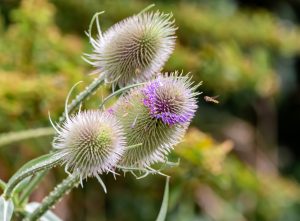
Several other active ingredients are documented for teasel management, including 2,4-D, dicamba combinations, chlorsulfuron, imazapic, and combinations containing aminocyclopyrachlor. The appropriate choice depends heavily on the application site because some products are restricted to pasture, rangeland, conservation areas, or non-crop sites and may injure desirable trees, shrubs, legumes, or grasses.
In this guide, we examine 10 herbicide options and active-ingredient combinations used for teasel management, with attention to rosette-stage treatment, selective control, non-selective applications, and site restrictions. We also explain what to consider before treatment so you can select the best herbicide for teasel according to the infestation and vegetation you need to protect.
10 Best Herbicide For Teasel
1. Triclopyr Herbicide — Best Herbicide For Teasel In Grass
Triclopyr is one of the best herbicide options for teasel in grass because extension guidance specifically identifies triclopyr for foliar treatment of teasel before the plants bolt. University of Illinois Extension recommends a triclopyr solution for teasel rosettes in spring or early summer and notes that treatment becomes less effective once plants begin to bolt.

- REVIVE FORESTS AND PASTURES: Triclopyr 4 Herbicide targets & controls woody plants, broadleaf weeds, & brush, making it ideal for restoring pastures and managing unwanted vegetation in forests, rangelands, and industrial sites without harming grasses
- YEAR-ROUND APPLICATION FLEXIBILITY: With flexible application options throughout the year, this broadleaf herbicide offers versatility for a wide range of conditions. Its ester formulation allows for effective absorption through leaves and roots
Triclopyr provides systemic activity against susceptible broadleaf plants and can therefore be useful when teasel is actively growing among compatible grass vegetation. Wisconsin DNR also lists triclopyr among the herbicide active ingredients that can be applied before common teasel has bolted.
The main consideration is protecting desirable broadleaf vegetation around the treatment area. Apply only where the specific formulation is labeled, avoid spray drift, and target teasel while it remains in the rosette or otherwise actively growing stage.
- Strong teasel control
- Systemic activity
- Rosette-stage use
- Grass-compatible options
- Broadleaf weed activity
- Multiple formulations
- Established herbicide
- Drift injury risk
- Broadleaf plant injury
- Label restrictions
2. Milestone Herbicide — Best Herbicide For Teasel Rosettes
Milestone contains aminopyralid and is one of the best herbicide options to consider for teasel rosettes in appropriate labeled sites. Wisconsin DNR identifies aminopyralid among the foliar herbicide active ingredients that can be used against teasel before the plant bolts.


- Target Pests: . See Product label for all listed pests.
- For use In: Rangeland, permanent grass pastures, CRP Acres, non-cropland areas, non-irrigation ditch banks, natural areas, and grazed areas in and around these sites. See Product label for complete list.
Aminopyralid is a systemic broadleaf herbicide ingredient, making it relevant to teasel management where selective broadleaf control is required. Illinois Extension’s invasive-plant management material also identifies aminopyralid as an effective foliar option when teasel is fully leafed out and actively growing before flowering.
Milestone should not be treated as a universal herbicide for every landscape because aminopyralid products have specific site and application restrictions. Protect desirable broadleaf plants and follow the current label for the exact site, rate, application timing, and grazing or hay restrictions.
- Rosette-stage activity
- Systemic broadleaf control
- Teasel management
- Pasture applications
- Rangeland applications
- Active-growth treatment
- Professional option
- Site restrictions
- Broadleaf injury risk
- Label dependent
3. Glyphosate Herbicide — Best Non-Selective Herbicide For Teasel
Glyphosate is one of the best non-selective herbicide options for teasel when desirable vegetation does not need to be preserved around the target plants. University of Illinois Extension recommends glyphosate foliar treatment for teasel during the rosette stage and notes that applications are less effective once plants begin to bolt.

- Powerful Weed Control:Effectively kills over 130 types of weeds and grasses, reaching down to the roots to prevent regrowth. Perfect for driveways, sidewalks, fences, and garden areas.
- Covers Up To 26,000 Square Feet
The broad-spectrum activity of glyphosate allows it to target teasel along with other vegetation present in the treatment area. This makes it more appropriate for carefully controlled non-crop or renovation situations than for established grass or areas containing desirable broadleaf plants.
Glyphosate should be viewed as a targeted tool rather than a guaranteed solution for mature teasel. Early treatment is important, and preventing surviving plants from flowering and producing seed remains an important part of long-term management.
- Non-selective control
- Rosette-stage activity
- Broad weed spectrum
- Systemic activity
- Spot treatment option
- Widely available
- Non-crop applications
- Damages desirable plants
- Mature plants harder
- Drift risk
4. Clopyralid Herbicide — Best Herbicide For Teasel In Pastures
Clopyralid is one of the best herbicide options for teasel in pastures and other appropriately labeled sites because Wisconsin DNR identifies clopyralid as a foliar treatment option before teasel bolts. It belongs to the pyridinecarboxylic acid group of herbicides and provides systemic activity against susceptible broadleaf weeds.

- POST-EMERGENT CONTROL - Thistledown is a full-strength herbicide based on the active ingredient clopyralid and is designed to control actively growing broadleaf weeds and thistle in a range, pasture, and other non-crop areas.
- SELECTIVE WEED KILLER - Weeds controlled by Thistledown include Canada thistle, musk thistle, star thistle, and knapweed. It can also be used to control kudzu, dandelion, and Oxalis.
Clopyralid can be particularly useful when teasel is growing among grass vegetation where a selective broadleaf approach is required. The Pacific Northwest Pest Management Handbook also lists a triclopyr plus clopyralid combination for actively growing teasel, demonstrating that clopyralid-based approaches can form part of professional teasel-management programs.
Application-site restrictions must be considered carefully because clopyralid can injure susceptible broadleaf plants. Use only a formulation registered for the particular pasture, rangeland, or non-crop site and follow restrictions concerning desirable vegetation and reseeding.
- Systemic activity
- Selective broadleaf control
- Pasture applications
- Teasel activity
- Rosette treatment
- Professional formulations
- Grass-compatible options
- Broadleaf injury risk
- Site restrictions
- Label dependent
5. Metsulfuron Herbicide — Best Herbicide For Established Teasel
Metsulfuron is one of the best herbicide options for established teasel when plants are actively growing and the application site is appropriately labeled. Wisconsin DNR identifies metsulfuron as a foliar option for teasel before bolting, while the Pacific Northwest handbook lists metsulfuron for actively growing teasel.

- Description: High quality formulation specifically targeted to broadleaf and grassy weed control on ornamental turf, such as lawns, parks, cemeteries, golf courses (fairways, aprons, tees and roughs) and sod farms.
- For use In: Commercial & Residential Turf-grass: Residential Lawns, Parks, Cemeteries and Golf Courses (Fairways, Aprons, Tees, Roughs) * See Product label for complete list. See Product label for complete list.
Metsulfuron is particularly relevant to pasture, rangeland, and non-crop vegetation-management programs. The Pacific Northwest handbook specifically cautions that application sites differ among products, so the active ingredient alone is not enough to determine whether a particular formulation can be used at a given location.
Because metsulfuron can affect susceptible broadleaf vegetation and has specific site restrictions, accurate application is essential. Treat actively growing teasel and follow the current label regarding application rate, surfactant use, grazing, reseeding, and sensitive crops or plants.
- Active-growth treatment
- Teasel control
- Systemic activity
- Pasture applications
- Rangeland applications
- Non-crop options
- Low-use-rate products
- Site restrictions
- Broadleaf injury risk
- Label dependent
6. 2,4-D Herbicide — Best Herbicide For Teasel Rosettes
2,4-D is one of the best herbicide options for teasel rosettes when used on an appropriately labeled site. The Pacific Northwest Pest Management Handbook specifically lists 2,4-D amine for teasel and recommends treatment during the rosette stage in spring or fall.

- Low, economical use rate of 1 to 4 pints per acre
- Controls many broadleaf weeds & woody plants
The same guidance warns that treatment after teasel begins to bolt may not be effective. This makes growth stage one of the most important considerations when using 2,4-D against this weed.
2,4-D is a selective broadleaf herbicide, so it can be useful where compatible grass needs to remain. However, desirable broadleaf plants are susceptible to injury, making spray-drift prevention particularly important around gardens, crops, shrubs, and other sensitive vegetation.
- Rosette-stage control
- Selective broadleaf activity
- Spring applications
- Fall applications
- Grass-compatible options
- Established herbicide
- Multiple formulations
- Bolted plants harder
- Drift injury risk
- Sensitive crops
7. 2,4-D + Dicamba Herbicide — Best Combination Herbicide For Teasel
A combination of 2,4-D and dicamba is one of the best combination herbicide options for teasel when treatment is directed at the rosette stage. The Pacific Northwest Pest Management Handbook specifically lists 2,4-D plus dicamba for teasel and recommends application during spring or fall rosette growth.

- Active Ingredients: 2,4-D and dicamba - Provides tough, long-lasting control of a broad spectrum of annual, biennial, and perennial broadleaf weeds and brush in grass forages and selected row crops
- Versatile Usage: Ideal for conservation reserve program land, fallow systems, general farmstead, sorghum, grass (hay or silage), pastures, rangeland, sugarcane, wheat, corn (pre-plant and pre-emergence), soybeans (pre-plant), and cotton (pre-plant). Also for control of brush and broadleaf weeds on rights-of-way, forest brush, industrial sites, non-irrigation ditchbanks, fence rows, and other labeled non-crop areas
Combining two synthetic auxin herbicides provides a broader approach to susceptible broadleaf vegetation than relying on 2,4-D alone. The handbook nevertheless notes that treatments made after teasel begins to bolt may not be effective, reinforcing the importance of early intervention.
This combination requires careful drift management because both active ingredients can injure sensitive broadleaf plants. Use only products labeled for the intended application site and follow restrictions concerning nearby crops, ornamentals, and other desirable vegetation.
- Two active ingredients
- Rosette-stage treatment
- Broadleaf activity
- Spring applications
- Fall applications
- Systemic activity
- Combination formulation
- Drift injury risk
- Bolted plants harder
- Sensitive vegetation
8. Chlorsulfuron Herbicide — Best Herbicide For Teasel In Rangeland
Chlorsulfuron is one of the best herbicide options for teasel in rangeland and other labeled non-crop or pasture situations. The Pacific Northwest Pest Management Handbook recommends applying chlorsulfuron to actively growing teasel in the rosette stage and identifies pasture, range, Conservation Reserve Program, and non-crop sites among the registered uses for the cited product.

- Water-Based Formulation: Experience the power of our unique water-based formulation that ensures superior control and faster plant uptake, delivering results you can see quickly
- Extended Residual Control: Enjoy up to 30 days of residual control, keeping your turfgrass free from troublesome weeds for longer periods and reducing the need for frequent applications; Rainfast in less than an hour
The herbicide provides a selective approach in appropriate vegetation-management programs and is particularly relevant where teasel is growing in grass-dominated areas. The handbook recommends a nonionic surfactant for the cited application and emphasizes that chlorsulfuron can persist in soil.
Chlorsulfuron should not be selected without considering sensitive vegetation and soil conditions. The cited guidance warns about injury to sensitive crops and restrictions involving dry, sandy, or frozen soils, so the current label must be followed closely.
- Rosette-stage activity
- Rangeland applications
- Pasture applications
- Non-crop applications
- Selective weed control
- Low-use-rate option
- Professional formulation
- Soil persistence
- Sensitive crop risk
- Site restrictions
9. Imazapic Herbicide — Best Herbicide For Teasel Rosettes In Rangeland
Imazapic is one of the best herbicide options for teasel rosettes in appropriately labeled rangeland and vegetation-management situations. The Pacific Northwest Pest Management Handbook lists imazapic for teasel and recommends application to rosettes with methylated seed oil.

- BROAD-SPECTRUM WEED CONTROL: The weed and grass killer concentrate is effective at controlling a wide range of weeds, including vines and hardwood brush. Ideal for forestry and rangeland, it provides lasting protection and eliminates tough vegetation
- VERSATILE APPLICATION METHODS: This weed and grass killer can be applied using multiple methods: broadcast, targeted handgun, low volume, cut stump, or basal application. It offers a flexible application for both large areas and specific vegetation
Its role is particularly relevant to situations where teasel is being managed as part of a broader range or non-crop weed-control program. Because imazapic can have soil activity and crop-rotation implications, its selection requires more consideration than simply identifying teasel as the target weed.
The current product label should determine the permitted application site, rate, timing, surfactant requirements, and rotation restrictions. Avoid using an imazapic formulation on a site that is not specifically covered by its label.
- Rosette treatment
- Teasel activity
- Rangeland applications
- Systemic activity
- Residual activity
- Professional option
- Integrated control tool
- Rotation restrictions
- Soil activity
- Label dependent
10. Aminocyclopyrachlor + Chlorsulfuron — Best Professional Herbicide For Teasel
Aminocyclopyrachlor plus chlorsulfuron is one of the best professional herbicide combinations for teasel in appropriately labeled rangeland and non-crop situations. The Pacific Northwest Pest Management Handbook lists the combination for actively growing teasel in spring and provides specific warnings about injury to non-target trees, shrubs, and certain grasses.
No products found.
The combination provides two different herbicide modes of action, which can make it useful in professional vegetation-management programs where the product is registered. However, the broad activity of these ingredients means that site selection and protection of desirable vegetation are extremely important.
The handbook specifically warns that even low rates can kill non-target tree and shrub species and notes that some grass species can also be injured. This is therefore a product category that should be used only where the current label permits it and with careful attention to drift and surrounding vegetation.
- Two active ingredients
- Two modes of action
- Teasel control
- Spring applications
- Professional use
- Rangeland applications
- Non-crop applications
- Tree injury risk
- Grass injury possible
- Strict site restrictions
7 Factors To Consider When Choosing A Herbicide For Teasel
1. Identify The Teasel Species
Common teasel (Dipsacus fullonum) and cut-leaved teasel (Dipsacus laciniatus) are two important species to distinguish. Wisconsin DNR notes differences in leaf shape, flower color, and bracts between the species, so accurate identification is useful before selecting a control program.
2. Treat The Rosette Stage
Growth stage is one of the most important factors in teasel management. Illinois Extension and Pacific Northwest guidance both emphasize rosette-stage treatment, while applications after plants begin to bolt can become considerably less effective.
3. Know Your Application Site
A herbicide registered for rangeland may not be appropriate for a lawn, garden, pasture, crop, or ornamental landscape. Always select a product specifically labeled for the site where the teasel is growing.
4. Consider Selective Or Non-Selective Control
Selective herbicides can be useful where desirable grass needs to remain, while glyphosate is non-selective and can damage vegetation it contacts. The surrounding plants should therefore be considered before deciding which type of treatment is appropriate.
5. Protect Desirable Plants
Several teasel herbicides can injure sensitive broadleaf plants, trees, shrubs, legumes, and certain grasses. The Pacific Northwest handbook specifically warns about non-target tree and shrub injury from aminocyclopyrachlor plus chlorsulfuron, making drift prevention particularly important.
6. Prevent Seed Production
Teasel can produce substantial quantities of seed, and Wisconsin DNR reports that common and cut-leaved teasel can each produce up to approximately 2,000 seeds per plant. Preventing flowering and seed production is therefore an important part of long-term management.
7. Combine Herbicide With Other Control Methods
Herbicide should not necessarily be the only management tool. Illinois Extension notes that small rosettes can be dug out, while flowering heads can be cut and bagged to reduce seed spread; repeated mowing alone is not considered effective because teasel can still flower.
Best Herbicide For Teasel FAQ’S
1. What is the best herbicide for teasel?
Triclopyr is a strong option for teasel because Illinois Extension specifically recommends triclopyr foliar treatment for rosettes, while Wisconsin DNR also lists triclopyr among the herbicides used before teasel bolts. The correct product still depends on the application site and current label.
2. Will triclopyr kill teasel?
Triclopyr can provide control of teasel when applied to actively growing plants at the appropriate growth stage. Illinois Extension specifically recommends triclopyr treatment during the rosette stage and notes that control becomes less effective after bolting.
3. Does glyphosate kill teasel?
Glyphosate can control teasel, particularly when applied to rosettes, but it is non-selective and can injure desirable vegetation. Illinois Extension recommends glyphosate treatment during the rosette stage and notes reduced effectiveness after plants begin to bolt.
4. What is the best time to spray teasel?
The rosette stage is generally the most important treatment window. Extension recommendations identify spring, early summer, or fall applications to rosettes, depending on the herbicide and site.
5. Can I mow teasel instead of spraying it?
Mowing alone is not considered an effective long-term teasel-control method. Illinois Extension reports that teasel can continue flowering after repeated mowing, although cutting flowering heads and properly removing them can help prevent seed production.
6. What herbicides work on teasel in pasture?
Triclopyr, clopyralid, aminopyralid, and metsulfuron are among the active ingredients identified by Wisconsin DNR for teasel control before bolting. The Pacific Northwest handbook also lists several additional options for pasture and rangeland situations, but the particular product must be labeled for the intended site.
7. How do I prevent teasel from coming back?
Preventing seed production is an important part of long-term teasel management. Remove small rosettes when practical, treat susceptible plants before they bolt, and cut and bag flowering heads if flowering has already begun so seeds are not allowed to spread.
Conclusion
In conclusion, Triclopyr Herbicide stands out as the leading option in this list for teasel management where the product is labeled for the particular site. University of Illinois Extension specifically recommends triclopyr for rosette-stage teasel, while Wisconsin DNR also identifies it as a chemical-control option before plants bolt.
Milestone Herbicide is the runner-up because its aminopyralid active ingredient is specifically identified by Wisconsin DNR as an option for foliar teasel control before bolting. Its suitability depends on the labeled site and surrounding vegetation, particularly where sensitive broadleaf plants are present.
Glyphosate, clopyralid, metsulfuron, 2,4-D, and other products provide additional options for particular sites and management objectives. The important distinction is that teasel control becomes more difficult after plants bolt, so selecting an appropriate herbicide is only part of the process; treatment timing and prevention of seed production are equally important.
Ultimately, the best herbicide for teasel should be selected according to the teasel species, growth stage, application site, desirable vegetation, and current product label. Targeting rosettes before flowering, preventing seed production, and combining chemical treatment with appropriate mechanical control can provide a more reliable long-term approach than waiting until mature flowering plants dominate the site.