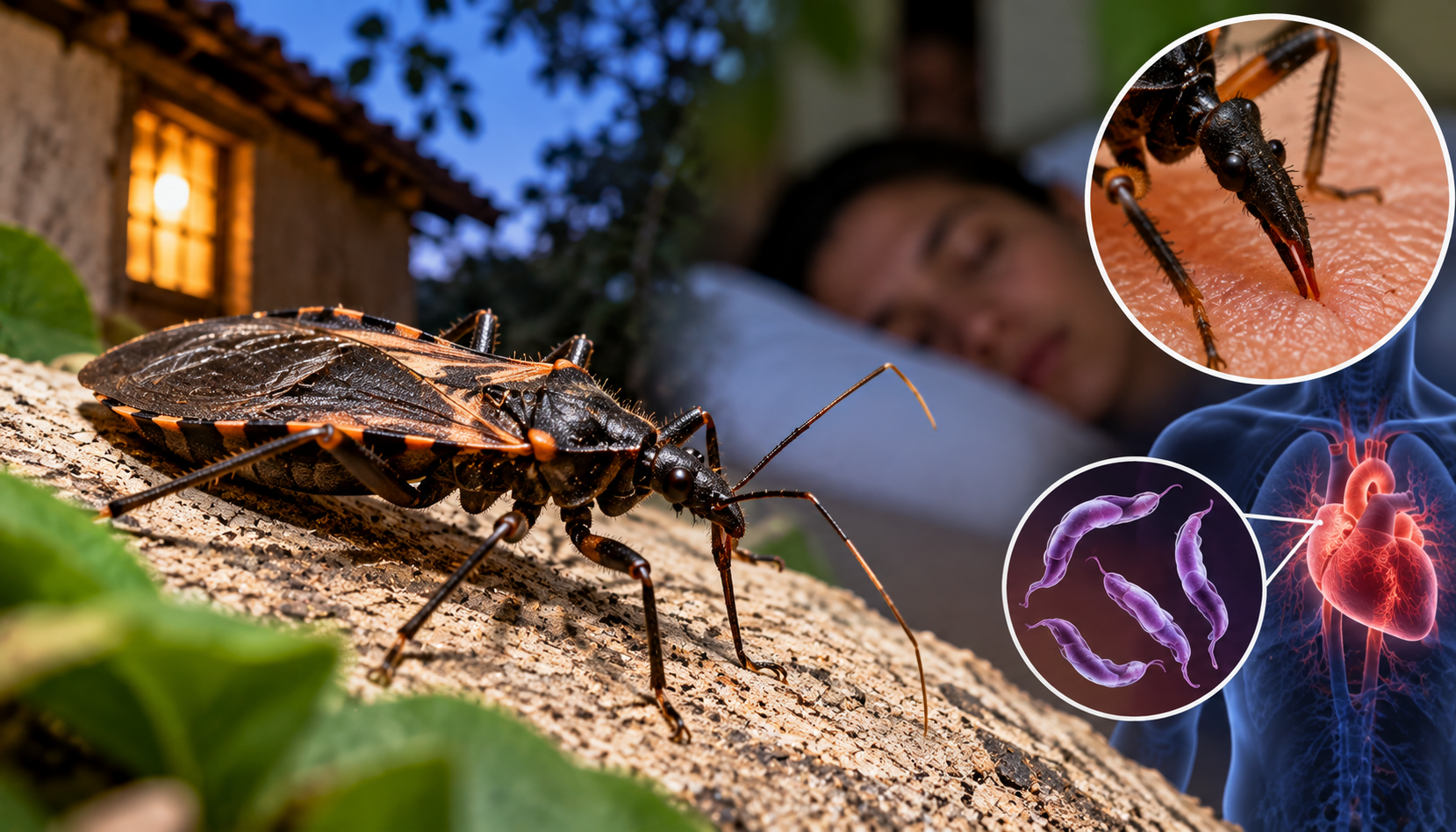
The deadliest assassin bug is Triatoma infestans, a blood-feeding insect in the Triatominae subfamily commonly known as a kissing bug. It is the primary vector of Chagas disease, a parasitic infection that affects an estimated 6 to 7 million people worldwide and causes roughly 10,000 deaths each year. No other assassin bug comes close to its impact on human health.
Assassin bugs belong to the family Reduviidae, a large group of predatory insects found on every continent except Antarctica. Most species are beneficial garden predators that hunt caterpillars, beetles, and other pests. Only the Triatominae subfamily feeds on vertebrate blood, and only a handful of those species transmit the parasite Trypanosoma cruzi that causes Chagas disease.
Chagas disease develops slowly and often goes undiagnosed for decades. The parasite damages the heart and digestive system, leading to cardiomyopathy, enlarged colon, and sometimes sudden death. Because the disease is most common in rural Latin America, where housing conditions allow kissing bugs to live in wall cracks and thatched roofs, prevention focuses on housing improvement and vector control.
In this guide, we break down what makes Triatoma infestans the deadliest assassin bug by examining its biology, disease transmission, geographic range, and the steps you can take to reduce risk.
10 Key Facts About The Deadliest Assassin Bug
1. Triatoma infestans – Deadliest Assassin Bug Species
Triatoma infestans is the deadliest assassin bug species because it is the most efficient vector of Chagas disease in South America. It lives in close association with humans, hiding in wall cracks, thatched roofs, and furniture during the day and feeding on sleeping people at night. This domestic behavior makes it far more dangerous than assassin bugs that live in forests and rarely contact humans.
The species is found primarily in Bolivia, Argentina, Chile, Paraguay, and southern Brazil, where it has been the target of large-scale elimination programs. It feeds on blood at every life stage, from nymph to adult, and can survive weeks between meals. Its habit of defecating immediately after feeding is what makes it such an effective disease vector.
Control programs have eliminated Triatoma infestans from much of its former range, but pockets of infestation remain. Continued surveillance, insecticide treatment of homes, and housing improvement are essential to prevent reintroduction and protect at-risk communities.
2. How Kissing Bugs Transmit Chagas Disease
Kissing bugs transmit Chagas disease through a process called stercorarian transmission, which means the parasite is passed in the insect feces rather than through the bite itself. When an infected bug feeds, it defecates near the wound, and the person scratches the feces into the bite or a mucous membrane. The parasite then enters the bloodstream and begins multiplying.
The parasite Trypanosoma cruzi is a protozoan that invades cells throughout the body, particularly in the heart and digestive tract. It can also be transmitted through blood transfusions, organ transplants, contaminated food, and from mother to child during pregnancy. These alternate routes explain why Chagas disease persists even in areas where kissing bugs have been controlled.
Because the infection is often silent for years, many people do not know they carry the parasite until heart or digestive complications appear. Blood screening and early diagnosis are critical for preventing long-term damage and reducing transmission.
3. Chagas Disease Symptoms And Long-Term Effects
Chagas disease has two phases: an acute phase that lasts a few weeks and a chronic phase that can last decades. Acute symptoms are often mild or absent, but some people develop fever, fatigue, body aches, swelling at the bite site, or swelling of the eyelids on one side, known as Romaña sign. Because symptoms are vague, most acute cases go unnoticed.
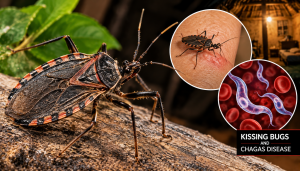
The chronic phase develops in roughly 30 percent of infected people, often 10 to 30 years after the initial infection. The most serious complication is Chagas cardiomyopathy, which causes heart enlargement, heart rhythm abnormalities, and heart failure. Digestive complications, including enlarged esophagus or colon, occur in a smaller percentage of cases.
Treatment with antiparasitic medications is most effective during the acute phase and can cure the infection in many cases. Once chronic complications develop, treatment focuses on managing symptoms and preventing further damage. This is why early detection and screening are so important for people from endemic regions.
4. Geographic Range Of Deadly Assassin Bugs
Deadly assassin bugs in the Triatominae subfamily are found throughout the Americas, from the southern United States to northern Argentina and Chile. Triatoma infestans is concentrated in South America, while Rhodnius prolixus and Triatoma dimidiata are more common in Central America and Mexico. Each species has a different habitat preference and transmission efficiency.
In the United States, kissing bugs are found primarily in the southern and southwestern states, including Texas, Arizona, New Mexico, and California. Local transmission of Chagas disease is rare in the U.S., but cases do occur, and infected bugs have been documented in several states. The lower transmission rate is partly due to better housing conditions and different bug behavior.
Travelers and immigrants from endemic regions should be aware of Chagas disease risk and consider screening if they have potential exposure. Blood banks in the United States and many other countries now screen donations for Trypanosoma cruzi to prevent transmission through transfusion.
5. Other Assassin Bugs That Bite Humans
Several other assassin bugs can bite humans, but most do not transmit disease. The wheel bug (Arilus cristatus) is a common beneficial predator in North American gardens that delivers a painful bite but carries no human pathogens. The masked hunter (Reduvius personatus) also bites humans when handled roughly, but again without disease transmission.
Bites from non-triatomine assassin bugs are painful but rarely dangerous. They typically cause localized swelling, redness, and itching that resolves within a few days. Allergic reactions are possible in sensitive individuals, but anaphylaxis is extremely rare.
The key distinction is that Triatominae feed on vertebrate blood and can carry Trypanosoma cruzi, while other assassin bugs feed on insects and do not transmit human diseases. This is why only the kissing bug group poses a serious public health threat.
6. How To Identify A Kissing Bug
Kissing bugs are distinguishable from other assassin bugs by their shape, color, and behavior. They have an elongated, oval body with a distinctive cone-shaped head and a long, slender beak used for blood feeding. Most species are dark brown or black with red, orange, or yellow markings along the edges of the abdomen.
Unlike other assassin bugs, kissing bugs are nocturnal and attracted to light and carbon dioxide. They are often found near sleeping areas, pet bedding, and rodent nests. Adults are roughly 0.5 to 1 inch long and have wings, while nymphs are smaller and wingless.
If you find a suspected kissing bug, do not handle it with bare hands. Capture it in a container and contact your local extension office or health department for identification. In endemic areas, submitting samples for testing helps track the spread of Chagas disease.
7. Treatment And Prevention Of Chagas Disease
Treatment for Chagas disease uses antiparasitic medications, including benznidazole and nifurtimox, which are most effective during the acute phase. These drugs can cure the infection in many cases but have side effects that require medical supervision. Treatment is also recommended for chronic cases, especially in younger patients and women of childbearing age.
Prevention focuses on reducing contact with kissing bugs through housing improvement, insecticide treatment, and bed nets in endemic areas. Screening of blood donations, organ transplants, and pregnant women helps prevent transmission through non-vector routes. Travelers to endemic regions should avoid sleeping in poorly constructed housing and use insect repellent when outdoors at night.
Public health programs in Latin America have made significant progress in reducing transmission, but Chagas disease remains a major health burden in many communities. Continued investment in vector control, screening, and treatment is essential to reduce deaths and improve outcomes for infected individuals.
8. Why Most Assassin Bugs Are Beneficial
The vast majority of assassin bugs are beneficial insects that prey on garden and agricultural pests. They feed on caterpillars, aphids, beetles, and other insects that damage crops, reducing the need for chemical pesticides. Gardeners often encounter wheel bugs, spined soldier bugs, and ambush bugs, all of which are helpful predators.
Only the Triatominae subfamily feeds on vertebrate blood, and only about 130 species fall into this group. Within that group, a small number transmit Chagas disease. This means the risk of encountering a disease-carrying assassin bug is very low for most people, especially outside endemic regions.
Recognizing the difference between beneficial assassin bugs and kissing bugs helps prevent unnecessary fear and protects helpful garden predators. If you are unsure about a bug you have found, consult a local extension service or entomologist for identification.
9. Chagas Disease Statistics And Global Impact
Chagas disease affects an estimated 6 to 7 million people worldwide, with the majority of cases in Latin America. The disease causes approximately 10,000 deaths per year, making it one of the most significant parasitic infections in the Western Hemisphere. It is classified as a neglected tropical disease by the World Health Organization.
In the United States, an estimated 300,000 people are infected, most of whom acquired the infection in endemic countries before immigrating. Because Chagas disease is not nationally notifiable in the U.S., the true burden is likely underestimated. Blood donation screening has reduced transfusion-related transmission significantly.
Global efforts to control Chagas disease focus on vector control, screening, and treatment. The WHO aims to eliminate transmission in endemic areas by 2030 through integrated programs that combine insecticide treatment, housing improvement, and healthcare access.
10. When To Seek Medical Attention
Seek medical attention if you have been bitten by a kissing bug and develop symptoms like fever, swelling at the bite site, or eyelid swelling. If you have lived in or traveled to an endemic region and experience unexplained heart or digestive symptoms, ask your doctor about Chagas disease testing.
People from endemic countries, especially those who grew up in rural areas with mud or thatched housing, should consider screening even if they feel well. Because Chagas disease can remain silent for decades, early detection through blood testing allows treatment before serious complications develop.
Pregnant women from endemic regions should be tested for Chagas disease, since the infection can be passed to the baby. Treatment options for infants are highly effective, making early diagnosis critical for preventing lifelong complications.
7 Tips For Reducing Kissing Bug And Chagas Disease Risk
- Seal cracks and gaps in housing: Kissing bugs hide in wall cracks, thatched roofs, and furniture. Sealing these entry points reduces indoor infestation and lowers the risk of bites during sleep.
- Use insecticide treatments in endemic areas: Public health programs apply residual insecticides to homes in endemic regions. Follow local guidance and reapply as recommended to maintain protection.
- Sleep under a bed net: In areas where kissing bugs are active, sleeping under a permethrin-treated bed net reduces bites and lowers transmission risk, especially for travelers and campers.
- Avoid handling kissing bugs with bare hands: Use gloves or a container to capture suspected kissing bugs. Avoid crushing them against the skin, which can introduce parasite-laden feces into the bite wound.
- Screen blood donations and organ transplants: Blood banks and transplant programs in many countries screen for Trypanosoma cruzi. If you are from an endemic region, inform your doctor before donating or receiving organs.
- Get tested if you are from an endemic region: People who grew up in rural Latin America should ask their doctor about Chagas disease screening, even if they feel healthy. Early diagnosis prevents long-term heart and digestive damage.
- Protect pets from kissing bugs: Kissing bugs feed on dogs and other pets, which can bring infected bugs into the home. Keep pets indoors at night and use veterinarian-approved insect control products.
The Deadliest Assassin Bug (FAQs)
1. What is the deadliest assassin bug?
Triatoma infestans is the deadliest assassin bug because it is the primary vector of Chagas disease, which causes roughly 10,000 deaths per year worldwide. It is a kissing bug species that lives in close association with humans in parts of South America.
2. Do all assassin bugs carry Chagas disease?
No, only assassin bugs in the Triatominae subfamily, commonly called kissing bugs, can carry Trypanosoma cruzi. The vast majority of assassin bugs are beneficial predators that feed on insects and pose no risk to humans.
3. Can assassin bugs kill humans?
Assassin bugs do not kill humans directly through their bite. The danger comes from kissing bugs transmitting Chagas disease, which can cause fatal heart complications decades after infection. Most assassin bugs are harmless to humans.
4. What happens if you get bitten by an assassin bug?
Most assassin bug bites cause localized pain, redness, and swelling that resolves within a few days. If you are bitten by a kissing bug in an endemic area, watch for fever, swelling, or eyelid inflammation and consult a doctor about Chagas disease testing.
5. Where are deadly assassin bugs found?
Deadly assassin bugs in the Triatominae subfamily are found throughout the Americas, from the southern United States to northern Argentina and Chile. Triatoma infestans is concentrated in South America, while other species dominate in Central America and Mexico.
6. Is there a cure for Chagas disease?
Yes, Chagas disease can be cured with antiparasitic medications like benznidazole and nifurtimox, especially when treated during the acute phase. Treatment is also recommended for chronic cases, though it is most effective in younger patients and early infections.
7. Should I be worried about assassin bugs in my garden?
No, most assassin bugs in gardens are beneficial predators that eat pest insects. Only kissing bugs pose a health risk, and they are uncommon in most garden settings. If you find a suspected kissing bug, contact your local extension office for identification.
Conclusion
Triatoma infestans is the deadliest assassin bug because it is the most efficient vector of Chagas disease, a parasitic infection that affects millions and causes thousands of deaths each year. Its habit of living in human housing and feeding on sleeping people makes it far more dangerous than other assassin bugs.
Most assassin bugs, however, are beneficial garden predators that pose no risk to humans. Only the Triatominae subfamily feeds on vertebrate blood, and only a small number of species transmit Trypanosoma cruzi. Recognizing the difference helps protect both public health and helpful garden insects.
Prevention focuses on housing improvement, insecticide treatment, bed nets, and screening of blood donations and at-risk populations. Early diagnosis and treatment of Chagas disease prevent long-term heart and digestive complications, making screening essential for people from endemic regions.
If you suspect you have been exposed to kissing bugs or Chagas disease, consult a healthcare provider promptly. Early testing and treatment save lives and prevent the most serious complications of this neglected tropical disease.