Getting rid of shrub roots is often harder than removing the shrub itself because roots continue to send up new shoots long after the top growth is gone. Shrubs like lilac, privet, and honeysuckle regrow from root fragments and crowns, turning a simple removal job into a multi-season project. Killing the roots is the only permanent solution.
The right approach depends on the shrub species, the size of the root system, and whether you plan to replant the area. Small shrubs can be dug out by hand, while large established root systems may require stump grinding, herbicide treatment, or excavation. Timing also matters, since roots are most vulnerable when the shrub is actively storing energy.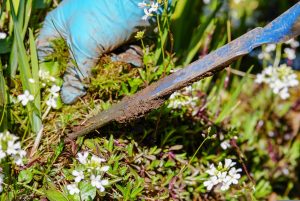
Several methods work well, from chemical stump killers to non-chemical options like smothering and solarization. Combining two or more approaches usually delivers faster, more reliable results than relying on a single technique. Follow-up monitoring is essential because roots can survive for years underground.
In this guide, we break down the best ways to get rid of shrub roots by examining digging, grinding, chemical treatment, and non-chemical removal methods for permanent control.
What Is The Best Way To Get Rid Of Shrub Roots? Top 15 Options
1. Digging Out The Entire Root Ball – Most Thorough Method
Digging out the entire root ball is the most thorough method for getting rid of shrub roots because it removes the crown and major roots in a single operation. The technique involves digging a trench around the shrub, loosening the root ball with a fork, and lifting it out. It works best on small to medium shrubs and loose soil.


- Thickened Aluminum Alloy Material: Our gardening shovel is made of high-quality aluminum alloy material, allowing the garden trowel to dig deeply into the soil and cut through hard turf easily. The 0.08 inch thickness makes our spade shovel more sturdy and long lasting, ensures durability and stability during use, and makes the trowel not easy to break and long lasting
- Ergonomic Design: The trowel garden tool is designed with an ergonomic rubber-grip handle that reduces hand and wrist fatigue while digging. The high-quality non-slip TPR material of the handle makes the trowel garden tool easy to hold and comfortable to use. Saving your labor, time and energy
Digging must remove the crown and all major roots, since shrubs regrow readily from root fragments left in the soil. Working when soil is moist makes it easier to lift roots intact without breaking them. Removing every visible root fragment prevents resprouting and reduces follow-up work.
This method requires a shovel, fork, and pruners for cutting thick roots. It is labor intensive but delivers permanent results when performed thoroughly, making it ideal for gardens where herbicides are not an option.
Pros:
- No herbicides required
- Removes entire root system
- Safe around desirable plants
- Immediate results
- Prepares site for replanting
- Low cost
- Environmentally friendly
Cons:
- Labor intensive
- Only practical for small shrubs
- Requires thorough root removal
2. Stump Grinding – Most Effective For Large Roots
Stump grinding is the most effective method for removing large shrub roots because it pulverizes the stump and major roots below ground. The technique uses a stump grinder to chip away the wood to a depth of 6 to 12 inches, eliminating the crown that would otherwise resprout. It works best on large, established shrubs.

- 【Connect】This attachment is powered by the included PTO drive shaft. 540 RPM PTO input, 1200 N·m max. torque, allows for efficient power transfer. Adopting a 3 point hitch for easy installation. It is recommended for 15-45HP Cat 1 tractors and loaders.
- 【Design】❶ The 24'' diameter flywheel is fitted with 34 tungsten carbide cutting teeths. Easily remove roots up to 6 feet below ground level, ready for grading or sodding. ❷ A black small box is equipped above the grinder, which can hold instructions, drawings, or various small tools, etc
Stump grinding must go deep enough to remove the crown completely, since any remaining crown tissue can send up new shoots. Grinding also destroys the surface roots that would otherwise interfere with mowing and planting. The resulting wood chips can be mixed into the soil or removed.
This method requires a stump grinder, which can be rented or hired through a professional service. It is fast, thorough, and leaves the site ready for replanting without extensive digging.
Pros:
- Fast and thorough
- Removes crown and major roots
- Site ready for replanting
- No herbicides required
- Effective on large shrubs
- Reduces resprouting
- Professional results
Cons:
- Requires equipment rental
- Higher cost than digging
- Leaves wood chips behind
3. Cut-Stump Herbicide Treatment – Most Reliable Chemical Method
Cut-stump herbicide treatment is the most reliable chemical method for getting rid of shrub roots because it kills the crown and root system without digging. The technique involves cutting the shrub close to the ground and immediately applying concentrated herbicide to the freshly cut surface. It works on shrubs of any size.

- REVIVE FORESTS AND PASTURES: Triclopyr 4 Herbicide targets & controls woody plants, broadleaf weeds, & brush, making it ideal for restoring pastures and managing unwanted vegetation in forests, rangelands, and industrial sites without harming grasses
- YEAR-ROUND APPLICATION FLEXIBILITY: With flexible application options throughout the year, this broadleaf herbicide offers versatility for a wide range of conditions. Its ester formulation allows for effective absorption through leaves and roots
Triclopyr and glyphosate are the most effective herbicides for cut-stump treatment on shrubs, applied within minutes of cutting. Applying herbicide immediately prevents the cut surface from sealing, which would block absorption and allow the stump to resprout. This method delivers permanent control when performed correctly.
Cut-stump treatment requires pruners or a saw plus a spray bottle or brush for herbicide application. It minimizes soil disturbance and reduces the risk of erosion, making it suitable for slopes and sensitive sites.
Pros:
- Reliable, permanent control
- Works on shrubs of any size
- Minimal soil disturbance
- Low herbicide volume required
- Effective on slopes
- Reduces resprouting
- Trusted by land managers
Cons:
- Labor intensive
- Requires immediate herbicide application
- Needs follow-up monitoring
4. Foliar Herbicide Spraying – Most Efficient For Large Infestations
Foliar herbicide spraying is the most efficient method for getting rid of shrub roots across large infestations because it treats many plants at once with minimal labor. The technique involves spraying herbicide directly onto the leaves, where it is absorbed and translocated to the roots. It works best on shrubs under 6 feet tall and is typically applied in late summer or fall.

- Powerful Weed Control:Effectively kills over 130 types of weeds and grasses, reaching down to the roots to prevent regrowth. Perfect for driveways, sidewalks, fences, and garden areas.
- Covers Up To 26,000 Square Feet
Glyphosate and triclopyr are the most common herbicides for foliar spraying shrubs, applied with a surfactant to improve leaf coverage and absorption. Late-season applications are most effective because shrubs are actively transporting carbohydrates to their roots. This timing improves control and reduces the chance of resprouting.
Foliar spraying requires a backpack or pump sprayer and works well in open areas with dense shrub regrowth. It reduces labor costs compared to digging or cut-stump treatment but requires careful application to avoid damage to desirable plants.
Pros:
- Efficient for large areas
- Low labor cost
- Effective on smaller plants
- Reduces resprouting
- Works on dense regrowth
- Fast application
- Trusted by land managers
Cons:
- Can damage desirable plants
- Requires careful timing
- Not suitable near water
5. Grubbing And Pulling Roots By Hand – Best For Small Roots
Grubbing and pulling roots by hand is the best method for removing small shrub roots because it eliminates the source of regrowth without heavy equipment. The technique involves using a mattock, grub hoe, or weed wrench to loosen and pull roots from the soil. It works best on young shrubs and shallow root systems.

- Dual pick mattock tool design tackles tough jobs like breaking up hardened ground, severing roots, and prying rocks
- Patented IsoCore Shock Control System absorbs impact, transferring 2X less shock and vibration than standard pickaxes for reduced user fatigue

Hand grubbing must remove the crown and major roots completely, since shrubs regrow readily from small pieces left behind. Working when soil is moist makes it easier to pull roots intact without breaking them. Combining grubbing with follow-up monitoring delivers permanent control.
This method requires a mattock, grub hoe, or weed wrench plus gloves and eye protection. It is labor intensive but effective for small infestations and ideal for gardeners who prefer to avoid herbicides.
Pros:
- No herbicides required
- Removes roots completely
- Safe around desirable plants
- Effective on small shrubs
- Low cost
- Immediate results
- Environmentally friendly
Cons:
- Labor intensive
- Only practical for small roots
- Requires moist soil conditions
6. Smothering With Mulch Or Plastic – Best Non-Chemical Method
Smothering with mulch or plastic is the best non-chemical method for getting rid of shrub roots because it blocks sunlight and starves the root system over time. The technique involves cutting the shrub to the ground, then covering the area with several layers of cardboard or black plastic topped with mulch. It works best on beds being renovated or left fallow.

- Plastic Sheeting has dozens of uses around the home, garden and garage
- Use it to cover and protect furniture, appliances and equipment and/or to make storm windows and doors
Smothering must be maintained for at least one full growing season to starve the roots and kill the shrub. Overlapping the edges of the smothering material prevents shrubs from escaping through gaps. This method is chemical-free and safe for use around desirable plants.
This approach requires cardboard, newspaper, or black plastic plus mulch for weight. It improves soil health by suppressing weeds and encouraging earthworm activity under the mulch, making it ideal for organic gardens.
Pros:
- No herbicides required
- Safe for sensitive areas
- Improves soil health
- Low maintenance once installed
- Works on garden beds
- Environmentally friendly
- Suppresses other weeds
Cons:
- Requires a full season
- Not practical for large shrubs
- Can harbor pests under plastic
7. Solarization – Best For Small Root Systems In Hot Climates
Solarization is the best method for getting rid of small shrub roots in hot climates because it uses heat from the sun to kill roots without chemicals. The technique involves covering the infested area with clear plastic during the hottest part of the summer to raise soil temperatures. It works best on small infestations and garden beds.

- 1. Premium 6 Mil Heavy Duty Protection: Engineered with 6 mil thick, industrial-grade polyethylene, this heavy duty plastic sheeting provides ultimate protection for floors, furniture, and equipment during painting, construction, or messy projects. Acts as a durable drop cloth, tarp, or temporary floor covering
- 2. UV Resistant & Tear-Proof Greenhouse Cover: Designed as a premium greenhouse cover, this UV-resistant plastic sheeting shields plants from harsh sunlight, heavy rain, and frost. The tear-proof material withstands strong winds and extreme weather for year-round use
Solarization must be maintained for four to six weeks during peak summer heat to reach temperatures that kill shrub roots. It works best on moist soil and in full sun, where soil temperatures can exceed 140 degrees Fahrenheit. This method is chemical-free and improves soil health by killing pathogens and weed seeds.
This method requires clear plastic sheeting and requires little maintenance once installed. It is not practical for large shrubs or shaded areas but delivers effective results in small, sunny spots.
Pros:
- No herbicides required
- Safe for sensitive areas
- Kills roots and seeds
- Improves soil health
- Low maintenance once installed
- Environmentally friendly
- Effective in hot climates
Cons:
- Only works in full sun
- Requires peak summer heat
- Not practical for large roots
8. Excavation With Heavy Equipment – Best For Large Root Systems
Excavation with heavy equipment is the best method for removing large shrub root systems because it removes the entire plant, including roots, in a single operation. The technique involves using a skid steer or excavator to dig out the shrub and its root ball. It works best on large properties where soil disturbance is acceptable.

- The 1/2" thick mount plate can easily weld or bolt onto plows, forks, or any attachment that you want to convert to quick tach hookup. Specially designed for use on heavy duty items like concrete breakers or stump buckets and other HD attachments.
- Condition: Material: Made from Grade 50 structural steel. It is sturdy enough to handle heavy workloads. When the load is too heavy, you don't have to worry about the plate bending.
Excavation must remove the root crown completely, since any remaining root fragments can resprout and reinfest the area. Combining excavation with follow-up herbicide treatment of regrowth delivers the most reliable long-term control. This method is fast and thorough but requires access for heavy machinery.
Excavation is ideal for sites being prepared for replanting or landscaping. It eliminates the need for repeated treatments once the roots are removed but can promote erosion on slopes if not followed by revegetation.
Pros:
- Removes entire plant and roots
- Permanent control when done correctly
- No repeated treatments needed
- Works on large root systems
- Prepares site for replanting
- Immediate results
- Effective on mature shrubs
Cons:
- Requires heavy equipment
- Causes soil disturbance
- Can promote erosion on slopes
9. Chemical Stump Killer Granules – Best For Slow Root Decay
Chemical stump killer granules are the best method for getting rid of shrub roots when you prefer slow, low-effort decay over digging. The technique involves drilling holes into the stump and filling them with granules that accelerate wood rot. It works best on stumps you are willing to leave in place for several months.

- SPEED-UP DECOMPOSITION-Accelerates the decay of stumps for easy removal.
- FAST ACTING-Works within 4-6 weeks when applied as directed.
Stump killer granules must be applied to freshly cut stumps for best results, since the wood must still be capable of absorbing the product. The granules speed decomposition and prevent resprouting, but they do not kill the entire root system instantly. This method is low-effort but requires patience.
This approach requires a drill, granules, and a covering to protect the stump from rain during treatment. It is ideal for homeowners who want to eliminate roots without heavy digging or equipment rental.
Pros:
- Low effort
- No digging required
- Prevents resprouting
- Accelerates decay
- Affordable
- Easy to apply
- Available to homeowners
Cons:
- Slow results
- Stump remains in place
- Requires patience
10. Vinegar And Natural Remedies – Best For Small Regrowth
Vinegar and natural remedies are the best option for getting rid of small shrub root regrowth because they kill top growth without synthetic chemicals. The technique involves spraying concentrated vinegar or natural herbicide blends directly onto young leaves and stems. It works best on small shoots rather than established root systems.

- ✅ All Natural and Safe Product- Safe for your family, safe for your pets.
- ✅ No Harmful Herbicides, Derived from Vinegar
Natural remedies must be applied repeatedly to be effective, since they typically kill only top growth and do not reach the roots. Combining natural sprays with digging or smothering improves results and prevents regrowth. This approach is safe for use in organic gardens and around pets.
These remedies are most effective on sunny days when plants are actively growing. They are not a standalone solution for large shrub roots but work well as part of an integrated management program.
Pros:
- No synthetic chemicals
- Safe for organic gardens
- Safe around pets
- Low cost
- Easy to apply
- Environmentally friendly
- Works on small regrowth
Cons:
- Kills only top growth
- Requires repeated applications
- Not effective on established roots
11. Root Pruning And Starvation – Best For Persistent Resprouts
Root pruning and starvation is the best method for getting rid of persistent shrub roots that resprout repeatedly because it weakens the root system over time. The technique involves cutting new shoots to the ground every few weeks during the growing season to prevent photosynthesis and energy storage. It works best on shrubs you cannot dig out.

- CHOPS THROUGH 2-INCH BRANCHES EFFORTLESSLY: The compound action mechanism multiplies your cutting power for fast removal of dry, dead and woody growth. This anvil-style blade is built for the toughest preparatory cuts and cut-to-length work, making heavy-duty pruning dramatically easy through extra leverage.
- SHARP HARDENED CARBON STEEL BLADE: Stays sharp even after heavy use, and the low-friction non-stick coating makes every cut a joyful experience with less gumming from sap. The tool is easy to use, even for the elderly gardener or anyone with arthritic wrists. There's no cut you can't make — replacement cutting blades available.
Root pruning must be repeated consistently throughout the growing season, since a single cut stimulates vigorous resprouting. Combining repeated cutting with a late-season herbicide application to regrowth delivers faster and more complete control. This approach is particularly effective for invasive shrubs like multiflora rose and privet.
This method requires loppers, pruners, or a brush mower for large stems. It is labor intensive but requires no herbicide and can be integrated into a long-term management plan.
Pros:
- No herbicides required
- Works on persistent resprouts
- Reduces root energy reserves
- Can be mechanized
- Environmentally friendly
- Integrates with other methods
- Effective on invasive shrubs
Cons:
- Requires repeated cutting
- Slow to eliminate roots
- Stimulates resprouting if not repeated
12. Herbicide Injection Into Roots – Best For Targeted Control
Herbicide injection into roots is the best method for targeted control of shrub roots because it delivers herbicide directly into the plant’s vascular system. The technique involves drilling or cutting into the stump or major roots and injecting concentrated herbicide, which is then translocated to the root system. It works best on large, isolated shrubs where foliar spraying is impractical.

Injection must be performed when the plant is actively growing so that herbicide moves efficiently to the roots. Combining injection with cut-stump treatment of smaller stems improves overall control. This method minimizes off-target damage and is suitable for sensitive sites.
Herbicide injection requires a drill or saw plus a syringe or injection tool. It is more time-consuming than foliar spraying but delivers targeted control with minimal chemical use.
Pros:
- Targeted control
- Minimal chemical use
- Minimal off-target damage
- Works on large roots
- Suitable for sensitive sites
- Effective on isolated plants
- Reduces resprouting
Cons:
- Time-consuming
- Requires specialized tools
- Needs active growth for best results
13. Repeated Herbicide Applications – Best For Persistent Root Regrowth
Repeated herbicide applications are the best method for getting rid of persistent shrub root regrowth because roots often survive a single treatment. The technique involves applying herbicide to regrowth several times per season until the root system is exhausted. It works best on invasive species that resprout vigorously.

- Internal No Leak Pump design is safer to use chemicals will not drip down your back. Internal piston pump delivers up to 150 PSI
- Durable, 21 inch poly wand with the highest quality Viton seals can be used with Wet table powders and liquids for all applications does the work of both a piston and diaphragm backpack
Repeated applications must be timed for late summer and early fall when shrubs are translocating energy to their roots. Combining foliar sprays with cut-stump treatment of larger stems improves effectiveness. This approach requires patience but delivers reliable long-term control.
This method requires a sprayer and a supply of herbicide for multiple applications. It is cost-effective for large infestations but demands consistent follow-up over several seasons.
Pros:
- Effective on persistent regrowth
- Works on invasive species
- Reliable long-term control
- Cost-effective for large areas
- Integrates with other methods
- Reduces seedbank over time
- Trusted by land managers
Cons:
- Requires multiple applications
- Time-consuming
- Needs consistent follow-up
14. Soil Solarization With Black Plastic – Best For Small Patches
Soil solarization with black plastic is the best method for getting rid of shrub roots in small patches because it combines heat and light deprivation to kill roots. The technique involves covering the infested patch with black plastic during the hottest part of summer and leaving it in place for several weeks. It works best on isolated patches where full renovation is not practical.

- Packaged plastic sheet has dozens of uses around the home, garden and garage
- Use it to cover and protect furniture, appliances and equipment
Black plastic solarization must be maintained for several weeks during peak summer heat to reach temperatures that kill shrub roots. It works best on moist soil and in full sun, where the plastic traps heat and blocks light. This method is chemical-free and improves soil health in the treated area.
This approach requires black plastic sheeting and requires little maintenance once installed. It is effective for small patches but not practical for large root systems or shaded areas.
Pros:
- No herbicides required
- Safe for small patches
- Kills roots and top growth
- Low maintenance once installed
- Environmentally friendly
- Effective in full sun
- Improves soil health
Cons:
- Only works in full sun
- Requires peak summer heat
- Not practical for large roots
15. Complete Site Renovation – Most Thorough Long-Term Solution
Complete site renovation is the most thorough long-term solution for getting rid of shrub roots because it eliminates all vegetation and prepares the area for replanting. The technique involves killing all plants with non-selective herbicide, removing dead material, improving soil, and replanting with desirable species. It works best when shrubs have overtaken a large area.

- KILLS WEEDS AND GRASSES: Use on driveways and walkways, and around fences, trees, flower beds, shrubs and other listed areas
- ACCUSHOT SPRAYER: Includes continuous power sprayer with extendable wand
Complete renovation must be planned carefully, since shrubs can regrow from root fragments left in the soil after spraying. Combining herbicide treatment with soil preparation and replanting in the same season minimizes the window for reinfestation. This approach delivers a clean slate for establishing new plantings.
This method requires careful timing, soil preparation, and investment in new plants or seed. It delivers the most reliable results when combined with proper irrigation and follow-up maintenance afterward.
Pros:
- Most thorough long-term control
- Provides clean slate for new plantings
- Effective on large infestations
- Allows soil improvement
- Permanent results when done correctly
- Improves landscape quality
- Reduces future weed pressure
Cons:
- Expensive and labor intensive
- Requires planning and timing
- Temporary loss of site use
7 Tips For Getting Rid Of Shrub Roots Permanently
- Treat in late summer or fall: Shrubs translocate energy to their roots in late summer and fall, making herbicide applications more effective during this window than in spring or early summer.
- Remove the root crown completely: Shrubs regrow readily from root fragments left in the soil. Digging, grinding, or treating the crown is essential to prevent resprouting and reduce follow-up work.
- Apply herbicide immediately after cutting: Cut-stump treatments must be applied within minutes of cutting, before the surface seals and blocks absorption. Keep a spray bottle or brush ready while cutting.
- Monitor for resprouts: Shrub roots resprout readily from cut stumps and root fragments. Scout treated areas several times per season and re-treat regrowth while it is still small.
- Prevent seed production: Remove or treat shrubs before berries or seeds ripen to prevent birds and mammals from spreading seeds to new areas.
- Clean equipment between areas: Pruners, mowers, and hand tools can spread root fragments and seeds to new areas. Clean equipment after working in infested zones.
- Replant with non-invasive species: After removing shrub roots, plant native or non-invasive species that provide similar landscape value without spreading aggressively into surrounding areas.
Frequently Asked Questions (FAQs)
1. What is the best way to get rid of shrub roots?
Digging out the entire root ball is the most thorough method for getting rid of shrub roots, while cut-stump herbicide treatment is the most reliable chemical option. Stump grinding works well for large roots, and smothering or solarization provide chemical-free alternatives for smaller areas.
2. Will shrub roots grow back after cutting?
Yes, shrub roots resprout vigorously from cut stumps and root fragments. Cutting without herbicide treatment or root removal typically results in multiple new shoots growing from each stump, making the problem worse than before.
3. How long do shrub roots stay alive after cutting?
Shrub roots can stay alive for several years after the top growth is cut, depending on the species and conditions. Some shrubs, like privet and lilac, resprout for many seasons if the root system is not killed or removed.
4. Can I get rid of shrub roots without herbicides?
Yes, digging, stump grinding, smothering, solarization, and repeated cutting can eliminate shrub roots without herbicides. These methods require more labor and repeated treatments but are effective for small infestations and sensitive areas.
5. How deep do shrub roots grow?
Shrub roots typically grow 12 to 24 inches deep, though some species send roots deeper. The crown and major roots are usually within the top 12 inches of soil, which is why digging and grinding work well for removal.
6. Do I need to remove shrub roots before replanting?
Yes, removing shrub roots before replanting prevents resprouting and competition with new plants. Leftover roots can also harbor pests and diseases that affect new plantings, so thorough removal is recommended.
7. What should I plant after removing shrub roots?
Plant native or non-invasive species that suit your site conditions and landscape goals. Native shrubs, perennials, and grasses provide habitat and beauty without the aggressive spread of the shrub you removed.
Conclusion
Digging out the entire root ball is the most thorough method for getting rid of shrub roots because it removes the crown and major roots in a single operation. Cut-stump herbicide treatment follows closely as the most reliable chemical option, delivering permanent control with minimal soil disturbance.
For large root systems, stump grinding and excavation with heavy equipment offer efficient options, while smothering, solarization, and repeated cutting provide chemical-free alternatives for small or sensitive areas. Complete site renovation delivers the most thorough long-term solution when shrubs have overtaken a large area.
No single method eliminates shrub roots permanently on its own. The most effective strategy combines mechanical removal, targeted herbicide treatment, and consistent follow-up to prevent regrowth from root fragments left in the soil.
Start your shrub root removal project this season, treat before seeds ripen, and plan for follow-up work each year. Consistent effort over two to three seasons delivers a clean, productive site ready for new plantings.