Weed science is the branch of agricultural and environmental science that studies weeds, their biology, and the methods used to manage them. It combines plant biology, ecology, chemistry, genetics, and engineering to understand how unwanted plants spread, compete, and respond to control tactics. The field supports farmers, land managers, and homeowners.
The discipline covers far more than herbicide recommendations. Weed scientists study seed dormancy, germination, root systems, and the ways weeds adapt to changing environments. They also examine how cropping systems, soil health, and climate influence weed populations across different regions and growing conditions.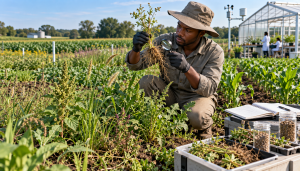
Modern weed science increasingly focuses on integrated management and resistance prevention. As herbicide-resistant weeds spread worldwide, researchers work to develop diversified strategies that combine chemical, cultural, mechanical, and biological controls. This approach protects crop yields while reducing environmental impact.
In this guide, we break down what weed science studies by examining its core areas, research methods, and practical applications for farmers, land managers, and gardeners.
What Does Weed Science Study? 10 Core Research Areas
1. Weed Biology And Ecology – Foundation Of The Discipline
Weed biology and ecology form the foundation of weed science because understanding how weeds grow, reproduce, and interact with their environment is essential for effective management. Researchers study seed dormancy, germination triggers, root architecture, and life cycles to identify weak points that can be targeted with control tactics.
Ecological research examines how weeds compete with crops for water, nutrients, and light, and how they respond to changes in soil, climate, and management. This knowledge helps predict which species will become problematic under different conditions and informs long-term management planning.
Field studies track weed population dynamics across seasons and locations, revealing how management practices influence community shifts. This research guides recommendations for rotation, tillage, and crop selection that reduce weed pressure over time.
2. Herbicide Chemistry And Mode Of Action – Core Chemical Research
Herbicide chemistry and mode of action research focuses on how chemical compounds interact with plant physiology to kill weeds. Scientists identify new active ingredients, determine how they move through plants, and evaluate their selectivity between crops and weeds. This work drives the development of safer, more effective products.
Understanding mode of action is critical for resistance management because it determines which herbicides can be rotated or combined effectively. Researchers classify products into groups based on how they disrupt plant processes, allowing farmers to plan rotations that reduce selection pressure.
Chemistry research also examines environmental fate, including how herbicides break down in soil, move in water, and affect non-target organisms. This information supports regulatory decisions and label recommendations that protect human health and the environment.
3. Herbicide Resistance And Genetics – Fastest Growing Research Area
Herbicide resistance and genetics is the fastest growing research area in weed science because resistant weeds threaten crop production worldwide. Scientists study the genetic mechanisms that allow weeds to survive herbicide applications, including target-site mutations, enhanced metabolism, and reduced uptake.
Resistance research also examines how traits spread through populations and how quickly resistance develops under different management practices. This knowledge helps predict resistance risks and develop strategies that slow its onset, such as rotation, tank mixes, and full-rate applications.
Genetic tools, including molecular markers and sequencing, allow researchers to identify resistance mechanisms quickly and track their spread across regions. This information supports testing services and management recommendations that help farmers respond before resistance becomes widespread.
4. Integrated Weed Management – Most Practical Application
Integrated weed management is the most practical application of weed science because it combines multiple tactics into a single, coordinated program. Researchers evaluate how cultural, mechanical, chemical, and biological methods work together to control weeds while reducing reliance on any single approach.
Integrated programs are designed to address the entire weed community rather than individual species, reducing the risk of weed shifts and resistance. Studies compare different combinations of practices to identify the most effective and economically viable options for different crops and regions.
Extension specialists translate this research into practical recommendations for farmers, including crop rotation plans, cover crop selection, and herbicide schedules. These programs consistently outperform single-tactic approaches in both weed control and long-term sustainability.
5. Weed Seedbank Dynamics – Key To Long-Term Control
Weed seedbank dynamics research examines how seeds persist in soil, what triggers germination, and how management practices influence seed survival. Understanding the seedbank is key to long-term control because most weed problems originate from seeds already present in the soil.
Scientists study seed dormancy, predation, decay, and burial depth to identify practices that reduce seed survival. Tillage, cover crops, and crop rotation all influence the seedbank in different ways, and research clarifies how to combine these tactics for maximum effect.
Long-term studies track seedbank changes across years, showing how quickly populations decline under consistent management. This research helps farmers set realistic expectations and plan multi-season programs that exhaust the seedbank over time.
6. Cultural And Mechanical Control Methods – Non-Chemical Research
Cultural and mechanical control research evaluates non-chemical methods for managing weeds, including tillage, mowing, flaming, mulching, and hand-weeding. Scientists measure how effective each method is under different conditions and how it interacts with other practices in an integrated program.
Cultural research examines how crop competition, row spacing, planting dates, and fertility influence weed establishment and growth. These practices can reduce weed pressure significantly without additional herbicide applications, lowering costs and slowing resistance.
Mechanical research studies equipment design, timing, and operation to improve effectiveness and reduce soil disturbance. Advances in precision cultivation and automated weeders are expanding the range of non-chemical options available to farmers and gardeners.
7. Biological Control – Sustainable Long-Term Research
Biological control research explores the use of natural enemies, including insects, pathogens, and grazing animals, to manage weeds. Scientists identify candidate organisms, test their host specificity, and evaluate their effectiveness and safety before release.
Classical biocontrol introduces natural enemies from a weed’s native range to provide long-term suppression in areas where the weed is invasive. Augmentative and conservation approaches support existing beneficial organisms to improve their impact on weed populations.
Biological control requires careful risk assessment because introduced organisms can affect non-target plants. Regulatory review and long-term monitoring ensure that approved agents provide benefits without causing unintended harm to native ecosystems.
8. Precision And Digital Agriculture – Fastest Growing Technology
Precision and digital agriculture research applies technology to weed management, including GPS-guided sprayers, drone imagery, and machine learning algorithms. These tools allow farmers to target weeds precisely, reducing herbicide use and improving efficiency.
Sensor-based systems detect weeds in real time and apply herbicides only where needed, cutting chemical use by 50 percent or more in some studies. Drones and satellite imagery map weed patches across fields, helping farmers plan targeted treatments and monitor results.
Data analytics and decision-support tools integrate weather, soil, and management data to recommend optimal timing and product selection. These advances reduce costs, improve control, and support more sustainable weed management across diverse farming systems.
9. Environmental Fate And Toxicology – Protecting Ecosystems
Environmental fate and toxicology research examines how herbicides move, break down, and affect non-target organisms after application. Scientists study leaching, runoff, volatilization, and soil persistence to understand risks to water, wildlife, and human health.
Toxicology studies evaluate herbicide effects on beneficial insects, aquatic organisms, and soil microbes. This research informs regulatory decisions, label restrictions, and buffer requirements that protect sensitive ecosystems and public health.
Environmental monitoring programs track herbicide residues in water, soil, and air to identify emerging concerns and evaluate the effectiveness of mitigation practices. This work supports continuous improvement in product stewardship and environmental protection.
10. Extension, Education, And Policy – Practical Application
Extension, education, and policy work translates weed science research into practical guidance for farmers, land managers, and homeowners. Extension specialists develop recommendations, conduct field days, and provide diagnostic services that help users apply research findings effectively.
Policy research examines how regulations, incentives, and market forces influence weed management decisions. Scientists contribute to regulatory reviews, develop best management practices, and help shape programs that support sustainable agriculture and environmental protection.
Education and outreach ensure that new knowledge reaches the people who need it most. Training programs, publications, and online resources help users stay current with evolving recommendations and emerging threats like herbicide resistance.
7 Tips For Applying Weed Science Principles On Your Land
- Identify weeds before treating: Accurate identification determines the best management approach and prevents wasting time and money on ineffective treatments.
- Rotate herbicide modes of action: Alternating products with different mechanisms reduces selection pressure and slows resistance development across your property.
- Integrate multiple control methods: Combine cultural, mechanical, chemical, and biological tactics to address weeds at every life stage and reduce reliance on any single approach.
- Manage the seedbank: Prevent seed production by removing escapes before they flower. Consistent effort over several seasons reduces weed populations dramatically.
- Scout fields regularly: Walk your land 7 to 14 days after each treatment to identify survivors and take action before resistant weeds set seed.
- Keep detailed records: Track products, rates, dates, and weed responses year by year to identify patterns and guide future decisions.
- Stay informed: Follow extension updates, attend field days, and consult with agronomists to stay current with new research and recommendations.
Frequently Asked Questions (FAQs)
1. What does weed science study?
Weed science studies the biology, ecology, and management of unwanted plants, including how weeds grow, spread, compete with crops, and respond to control methods. It combines plant biology, chemistry, genetics, and engineering to develop effective and sustainable management strategies.
2. Why is weed science important?
Weed science is important because weeds reduce crop yields, increase production costs, and threaten food security worldwide. Research in this field develops practical solutions that help farmers, land managers, and homeowners control weeds while protecting the environment and human health.
3. What is integrated weed management?
Integrated weed management combines cultural, mechanical, chemical, and biological tactics into a coordinated program that addresses the entire weed community. This approach reduces reliance on any single method and slows the development of herbicide resistance.
4. How does weed science address herbicide resistance?
Weed science addresses resistance through research on genetic mechanisms, testing services, and management recommendations that include rotation, tank mixes, full rates, and diversified control tactics. These strategies slow resistance development and preserve herbicide effectiveness.
5. What careers are available in weed science?
Careers in weed science include research scientist, extension specialist, crop consultant, agronomist, regulatory specialist, and product development roles in industry. Positions are available in universities, government agencies, and private companies.
6. How can farmers apply weed science research?
Farmers can apply weed science research by rotating herbicide modes of action, integrating multiple control methods, managing the seedbank, scouting regularly, and consulting with extension specialists and agronomists for region-specific recommendations.
7. Where can I learn more about weed science?
Learn more about weed science through university extension programs, the Weed Science Society of America, regional weed science societies, and online resources from land-grant universities. Many organizations offer publications, webinars, and field days for farmers and the public.
Conclusion
Weed science studies the biology, ecology, and management of unwanted plants, combining plant physiology, chemistry, genetics, and engineering to develop effective control strategies. It supports farmers, land managers, and homeowners in reducing weed pressure while protecting yields and the environment.
Core research areas include herbicide chemistry, resistance genetics, seedbank dynamics, integrated management, and precision agriculture technology. Each area contributes practical knowledge that guides product development, regulatory decisions, and on-farm recommendations across diverse cropping systems.
Extension and education translate this research into actionable guidance for the people who manage land every day. Training programs, diagnostic services, and field days ensure that new knowledge reaches those who need it most, from large farms to backyard gardens.
Understanding what weed science studies helps land managers make better decisions and support the research that protects food production and natural ecosystems. Stay informed through extension resources and apply proven principles to your own weed management program this season.