Wondering What Can I Put In My Pond To Kill Lily Pads? Well, Effectively selecting what you can put in a pond to kill lily pads is essential for restoring open water and protecting native aquatic life. Lily pads spread through vigorous rhizomes and floating leaves, and once established they can shade out submerged plants, reduce oxygen exchange, and clog the surface within a few seasons.
Choosing a control option depends on the pond size, whether it holds fish or wildlife, what local regulations allow, and how quickly results are needed. Herbicides, dyes, mechanical cutters, bottom barriers, and biological methods each work differently, and some approaches harm fish or beneficial plants if used carelessly. The safest plan usually combines several methods rather than relying on one.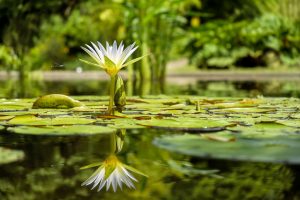
Timing and follow-up decide whether the treatment sticks. Applying aquatic herbicides when the plant is actively growing, removing cut material before it sinks and rots, and repeating the process across seasons all prevent rebound, while broadcasting chemicals without a permit or leaving cut fragments to drift creates bigger problems. Get those wrong and the result is a thicker mat next summer.
In this guide, we explore 15 best options for killing lily pads in a pond, including aquatic herbicides, dyes, mechanical cutters, bottom barriers, and biological controls. We examine their intended applications, legal requirements, effectiveness, limitations, and suitability for different pond conditions.
What Can I Put In My Pond To Kill Lily Pads?
1. Fluridone Aquatic Herbicide – Best Overall Method To Kill Lily Pads In A Pond
Fluridone aquatic herbicide is the best overall method to kill lily pads in a pond because it moves systemically through the rhizome system and kills the plant from the root up. To begin with, the active ingredient is absorbed through the leaves and stems, stopping new growth within weeks. This makes it far more effective than contact treatments.


- No Mixing, No Spray Equipment, or Boat needed
- The most simple DIY systemic herbicide you can buy, just pour in the right dose directly into the pond
Fluridone must be applied to the whole pond at a low concentration, because partial treatments allow surviving rhizomes to regrow. One standout feature is that it stays active in water for months, giving extended control. For heavily infested ponds, this persistence matters greatly.
Check state and local permits before using any aquatic herbicide, since regulations vary widely. Another advantage is that the product is effective against submerged, floating, and emergent plants when labeled. Without question, it remains the most reliable single option for large infestations.
- Systemic action kills rhizomes
- Long-lasting residual activity
- Effective on large infestations
- Treats submerged and floating plants
- Reduces repeat applications
- Well studied for pond use
- Works at low concentrations
- Requires permits in many states
- Slow visible results
- Can affect non-target plants
2. Glyphosate For Emergent Lily Pads – Best Spot Treatment Method
Glyphosate for emergent lily pads is the best spot treatment method because it targets individual plants without treating the entire pond. Right from the start, applying a labeled aquatic glyphosate product directly to floating leaves kills the plant through its foliage. As such, surrounding water and fish are protected from broad exposure.

- Broad Spectrum Liquid Aquatic Herbicide -- Airmax Shoreline Defense Emergent Weed Control is great for controlling cattails, phragmites, grasses, weeds, and brush. For use in fresh and brackish water.
- Emergent Weed Killer -- Reclaim your beach, shoreline, or dock. Kill the roots of even the most persistent emergent aquatic weeds and grasses. For best results, apply herbicide with a surfactant.
Use only glyphosate products labeled for aquatic use, since terrestrial formulations contain surfactants that harm fish. An added benefit is that the treatment can be repeated through the season as new pads appear. Because of this flexibility, spot spraying fits small ponds well.
Applying on a calm day prevents drift onto desirable plants. Even better, the method pairs with mechanical removal for faster results. Taken together, it offers targeted control with minimal environmental impact.
- Targets individual plants
- Minimal drift with care
- Works on small ponds
- Repeatable through season
- Aquatic-labeled versions available
- Pairs with mechanical removal
- Effective on floating leaves
- Terrestrial versions harm fish
- Requires careful application
- Needs permits in many areas
3. 2,4-D Aquatic Herbicide – Best Selective Method For Broadleaf Lily Pads
2,4-D aquatic herbicide is the best selective method for broadleaf lily pads because it targets dicot plants while leaving most grasses and sedges unharmed. From the outset, the active ingredient is absorbed through the leaves and moves into the rhizome system, killing the plant from within.

- BROADLEAF WEED ELIMINATOR: Our 2,4-D Amine herbicide effectively tackles a wide range of tough broadleaf weeds, including Pigweed, Thistle, Ragweed, and more. Keep your pastures, lawns, landscape, and aquatic sites clean and thriving with just one solution
- FARM-GRADE WEED CONTROL: Formulated with 47.2% active ingredient, the grass weed killer delivers superior results with every application. Achieve professional-grade weed control for a variety of environments, including farms and industrial areas
Use only the aquatic-labeled formulation, since standard 2,4-D products are not approved for water use. One impressive feature is that it works quickly on floating-leaved plants without harming fish when applied correctly. With careful dosing, results appear within two to three weeks.
Check local regulations before applying, because 2,4-D is restricted in some states. Just as important, the product should be applied when the pads are actively growing for the best uptake. For selective control, it is a dependable choice.
- Selective on broadleaf plants
- Systemic action
- Fast visible results
- Safe for fish when labeled
- Effective on floating pads
- Widely studied
- Works on many pond weeds
- Aquatic-labeled only
- Restricted in some states
- Can harm desirable broadleaf plants
4. Diquat Dibromide – Best Fast-Acting Contact Herbicide For Lily Pads
Diquat dibromide is the best fast-acting contact herbicide for lily pads because it kills foliage on contact and shows visible results within days. Right away, the active ingredient disrupts cell membranes in the leaves, causing them to collapse and die. This rapid action suits ponds where a quick knockdown is needed.

- FAST-ACTING FORMULA: See visible results in just 1-2 days with our weed killer; It's a quick solution for stubborn weeds like chickweed, poison ivy, and more
- VERSATILE APPLICATIONS: Perfect for both water and land, tackle weeds in ponds, lakes, greenhouses, nurseries, and landscapes with one versatile product
Diquat does not move into the rhizome system, so regrowth often follows unless the treatment is repeated. One useful feature is that the product is labeled for aquatic use and safe for fish when applied at the correct rate. For stubborn colonies, this speed matters greatly.
Removing dead plant material within a week prevents oxygen depletion as it decays. Equally beneficial, the method pairs well with systemic herbicides for long-term control. Among fast-acting options, it stands out for visible results.
- Fast contact action
- Visible results in days
- Safe for fish when labeled
- Effective on floating leaves
- Easy to apply
- Widely available
- Pairs with systemic products
- Does not kill rhizomes
- Requires repeat applications
- Needs dead material removed
5. Pond Dye – Best Light-Blocking Method For Preventing Lily Pad Growth
Pond dye is the best light-blocking method for preventing lily pad growth because it tints the water and reduces the sunlight submerged plants need to thrive. From the outset, adding a blue or black dye limits photosynthesis in the water column, slowing new pad development. This approach keeps existing pads from spreading aggressively.

- 2-in1 Formula -- Pond Dye Plus combines color-enhancing pond dyes with water-clarifying Liquid PondClear beneficial bacteria for the ultimate 1-2 punch. Ideal for large ponds and lakes.
- Improves Water Quality & Clarity -- Shade and beautify your water with pond dye, while bacteria treatment eliminates suspended organic debris that contributes to cloudy water, muck, and weed growth.
Apply dye before the growing season starts for the best prevention. One impressive feature is that it does not harm fish or wildlife when used per the label. With regular reapplication, the pond stays clear of aggressive growth.
Checking dye concentration monthly keeps the tint effective. Just as important, the method pairs well with mechanical removal of mature pads. For long-term prevention, it offers an excellent combination of safety and simplicity.
- Blocks sunlight
- Safe for fish and wildlife
- Low cost
- Easy to apply
- Prevents new growth
- Improves pond appearance
- No permits required
- Does not kill existing pads
- Needs regular reapplication
- Limits submerged plant growth
6. Aquatic Weed Cutter – Best Mechanical Method For Removing Lily Pad Leaves
Aquatic weed cutter is the best mechanical method for removing lily pad leaves because it cuts stems below the surface without chemicals. Right from the start, the tool slices through stems and floats the pads to the surface for collection. This immediately opens the water for recreation and light penetration.

- Contains Weed Razer, 25 ft of rope, instructions, weed deflectors, blade sharpener and covers
- The v shaped head has razor sharp blades with a 48 inch cutting path; lightweight construction (8 pounds)
Cutting must be repeated every few weeks through the growing season, since rhizomes regrow. An added benefit is that the method does not harm fish or water quality. Because of this, it suits ponds used for swimming and fishing.
Collecting the cut material prevents it from sinking and decaying. Even better, the method pairs well with bottom barriers for long-term suppression. Taken together, it offers control without chemicals.
- No chemicals
- Immediate results
- Safe for fish
- Works for recreation
- Easy to use
- Widely available
- Pairs with barriers
- Labor intensive
- Requires repeat cutting
- Must collect cut material
7. Bottom Barrier Fabric – Best Long-Term Method To Stop Lily Pads From Rooting
Bottom barrier fabric is the best long-term method to stop lily pads from rooting because the physical barrier prevents rhizomes from anchoring in the pond bed. From the outset, laying heavy fabric over the bottom blocks sunlight and roots from establishing. This creates a permanent solution in treated areas.

- Pond-Tex Puncture Protection: Engineered 4.5 oz non woven geotextile underlayment cushions your pond liner or preformed pond tub against punctures from rocks, roots, stones and rough terrain. Works with EPDM rubber, HDPE, LLDPE, RPE, LDPE and PVC liners. Lays underneath your liner as a protective layer, not a water barrier.
- Keeps the Pond Bed Stable: Dense, permeable geotextile padding lets ground gases and moisture vent through instead of pushing the liner up, prevents liner sagging and shifting, helps control soil erosion, and maintains the structural integrity of the pond for even water distribution.
The fabric must be weighted down with sand or gravel to stay in place. One impressive feature is that it does not break down in water like standard landscape fabric. With proper installation, it lasts for many years.
Cleaning the surface occasionally removes sediment that could support new growth. Just as important, the method works best during pond construction or drawdown. For permanent suppression, it offers an excellent solution.
- Blocks rhizome rooting
- Long-term solution
- No chemicals
- Works for years
- Safe for fish
- Prevents regrowth
- Suits new ponds
- Requires draining
- Installation labor
- Limited to accessible areas
8. Hand Pulling And Raking – Best Small Pond Method For Killing Lily Pads
Hand pulling and raking is the best small pond method for killing lily pads because it removes the plant directly without chemicals. Right away, pulling the rhizomes out by hand eliminates the source of new growth in accessible areas. This suits ponds where chemical use is restricted or undesirable.

- 11-Inch long plastic tines -- which is almost twice as long as those of others‘, significantly increasing the cleaning area and efficiency.
- 40-Inch Aluminum Rake Head - Reinforced for Strength & Efficiency: Upgraded thicker design ensures tines are held securely while keeping the head lightweight. Covers more area per sweep, boosting your cleanup speed significantly.
Working from a boat or the bank is easier with a long-handled rake. One useful feature is that the method gives immediate visual results. For small infestations, this speed matters greatly.
Bagging the pulled material prevents fragments from re-rooting. Equally beneficial, the method pairs well with dye or barrier treatments. Among manual options, it stands out for simplicity and safety.
- No chemicals
- Immediate results
- Safe for fish
- Works in small ponds
- Low cost
- Easy to start
- Pairs with other methods
- Labor intensive
- Limited to shallow water
- Needs repeat visits
9. Grass Carp Stocking – Best Biological Method For Controlling Lily Pads
Grass carp stocking is the best biological method for controlling lily pads because the fish graze on soft aquatic vegetation and reduce new growth over time. From the outset, stocking the correct number of sterile grass carp keeps plant growth in check without chemicals. This suits ponds where long-term natural control is preferred.

- Material : our fish throw pillow is filled with PP cotton, which makes the small fish soft and elastic, not easy to deform, washable and durable; There is also a zipper in the fish belly, you can freely add or reduce the filling
- Soft & Comfortable: The fish-shaped decorative cushions are made of high-quality short-wool fabric for softer and more comfortable. Without chemicals, hypoallergenicity will give you a better skin feel.
Only sterile triploid grass carp should be stocked, since fertile fish are illegal in most states. One impressive feature is that a well-stocked pond stays clearer for years. With proper permits, the method works on larger ponds effectively.
Monitoring plant regrowth confirms the fish are keeping up with new pads. Just as important, the method pairs well with mechanical removal of mature pads. For long-term biological control, it offers an excellent combination of effectiveness and sustainability.
- Long-term control
- No chemicals
- Works on larger ponds
- Reduces new growth
- Self-sustaining
- Cost-effective over years
- Suits natural ponds
- Requires permits
- Slow to show results
- Can eat desirable plants
10. Benthic Barrier Mats – Best Method To Smother Lily Pad Rhizomes
Benthic barrier mats are the best method to smother lily pad rhizomes because the mats lie directly on the pond bottom and block light from reaching new shoots. Right from the start, the weighted mats starve rhizomes beneath them and prevent regrowth. This makes them useful for localized colonies.

- How It Works: The Lake Bottom Blanket reduces sunlight exposure to the lake floor, which helps limit the growth of underwater vegetation. Simply position the blanket over the area you’d like to manage. It works only on the plants it covers, while allowing fish and other aquatic life to move freely underneath.
- What's Included in the Box: (1) Our Patented Lake Bottom Blanket with weight channels (un-weighted) (2) Installation ropes, Rebar End Caps and Warning Buoy (3) Instructions and QR Code to view videos on your phone or computer.
Mats must be anchored firmly so they do not shift in currents or storms. An added benefit is that they can be installed by divers or during seasonal drawdown. Because of this flexibility, they suit ponds of many sizes.
Inspecting the mats each season confirms they are still in place. Even better, the method pairs with hand pulling above the mat. Taken together, it handles stubborn colonies without chemicals.
- Smothers rhizomes
- No chemicals
- Targets specific areas
- Long-lasting
- Safe for fish
- Works in many ponds
- Pairs with hand pulling
- Difficult installation
- Higher upfront cost
- Needs anchoring
11. Aeration And Nutrient Reduction – Best Preventative Method For Lily Pads
Aeration and nutrient reduction is the best preventative method for lily pads because excess nutrients from runoff fuel aggressive growth. From the outset, installing an aerator improves oxygen levels and discourages nutrient overload that drives pad spread. This addresses the underlying cause rather than the visible plant.

- #1 selling septic aerator in the USA. Premium quality and longevity.
- Quiet, energy efficient, oil/ lubrication free, outdoor UL rated
Reducing runoff from fertilizer and leaf litter limits the nutrient supply. One impressive feature is that aeration also benefits fish and water clarity. With proper maintenance, the pond stays balanced naturally.
Monitoring nutrient levels with a test kit confirms improvement over time. Just as important, the method pairs with dye and mechanical removal. For long-term prevention, it offers an excellent combination of environmental benefit and cost control.
- Improves water quality
- Reduces nutrient load
- Benefits fish
- No chemicals
- Works long term
- Improves clarity
- Pairs with other methods
- Higher equipment cost
- Requires electricity
- Slow visible results
12. Flumioxazin Granular Herbicide – Best Bottom Treatment For Lily Pad Colonies
Flumioxazin granular herbicide is the best bottom treatment for lily pad colonies because the granules sink to the pond bed and kill rhizomes on contact. Right from the start, the product targets the roots where the plant regrows. This makes it useful for established colonies that return each year.

- THE PRO CHOICE FOR SEASON-LONG WEED CONTROL: Semera 51.0% WDG contains 51% flumioxazin; the same active ingredient as the Leading Brand, the herbicide pros trust for season-long weed control.
- AQUATIC WEED CONTROL: Semera 51.0% WDG is a fast-acting contact herbicide that controls selected submersed, emergent and floating aquatic weeds. Controls Duckweed, Alligator Weed, Coontail, Frog's-bit, Hydrilla, Pondweed, Water Fern, Water Lettuce, Watermilfoil.
Applying the granules in spring before new pads emerge improves results. One useful feature is that the treatment can be targeted to specific colonies rather than treating the entire pond. For mixed ponds, this precision matters greatly.
Check regulations before using, since flumioxazin is restricted in some states. Equally beneficial, the method pairs well with mechanical removal above the treated area. Among bottom treatments, it stands out for direct rhizome control.
- Targets rhizomes
- Granular application
- Works on colonies
- Reduces regrowth
- Precise placement
- Good for established pads
- Pairs with mechanical removal
- Restricted in some states
- Needs careful timing
- Requires permits
13. Chelated Copper Herbicide – Best Algaecide And Pad Suppressant Combo
Chelated copper herbicide is the best algaecide and pad suppressant combo because it controls algae while reducing the nutrients that fuel lily pad spread. From the outset, the copper works on algae without harming fish when dosed correctly, and less algae means less organic matter feeding the pads.

- Cutrine Plus targets all major algae types-planktonic, filamentous, and chara-for total water clarity and balance in lakes, ponds, and reservoirs
- Fast-Acting Algae Solution Used by Experts: Can see reduction in algae growth within 1-2 days
Apply per the label when algae is present, and avoid overdosing, which can harm fish. One impressive feature is that the product is widely available and easy to use. With proper dosing, results appear within a week.
Testing copper levels before each application prevents buildup in the pond. Just as important, the method pairs with aeration and dye for a balanced approach. For combined algae and pad control, it offers an excellent solution.
- Controls algae
- Reduces nutrient load
- Safe for fish at label rates
- Widely available
- Fast visible results
- Easy to apply
- Pairs with aeration
- Does not kill pads directly
- Copper can accumulate
- Overdose harms fish
14. Drawdown And Drying – Best Seasonal Method To Kill Lily Pad Rhizomes
Drawdown and drying is the best seasonal method to kill lily pad rhizomes because exposed roots dry out and die when water is removed. Right away, lowering the pond level in autumn exposes the root zone to air and sun. This kills rhizomes without chemicals.

- AUTOMATIC WATER LEVEL CONTROL – Automatically Opens When The Water Level Drops And Shuts Off When The Internal Float Rises. Operates With Water Pressure Of 0.02–1.2 MPa (2.9–174 PSI) To Maintain A Consistent Water Level Without Electricity. A Pressurized Water Supply Is Required.
- DURABLE 304 STAINLESS STEEL – Constructed From Corrosion-Resistant 304 Stainless Steel For Reliable Performance In Indoor And Outdoor Water Systems. The Sturdy Metal Body Offers Greater Durability Than Typical Plastic Float Valves. Protect From Freezing Conditions To Ensure Proper Operation.
Draining partially rather than fully preserves fish habitat. An added benefit is that exposed rhizomes can be removed by hand during the drawdown. Because of this, the method combines chemical-free control with direct removal.
Timing the drawdown for late summer accelerates drying in warm weather. Even better, the method suits ponds with controllable water levels. Taken together, it handles large colonies efficiently.
- Kills rhizomes naturally
- No chemicals
- Allows direct removal
- Works on large ponds
- Low cost
- Improves access
- Compatible with fish
- Needs water control
- Seasonal timing
- Can stress fish
15. Integrated Pond Management Plan – Best Long-Term Strategy To Kill Lily Pads
Integrated pond management plan is the best long-term strategy to kill lily pads because combining methods addresses both existing plants and the conditions that help them return. From the outset, blending herbicides, mechanical removal, dye, aeration, and biological control keeps pressure on the plant year-round. This prevents the rebound that single methods allow.


Planning each season keeps treatments timed to plant growth stages. One impressive feature is that the approach adapts as the pond responds. With careful monitoring, results improve every year.
Recording what worked and what did not helps refine the plan. Just as important, the method pairs the strengths of individual techniques. For permanent control, it offers the most durable protection.
- Combines multiple methods
- Prevents rebound
- Adapts over time
- Reduces single-method reliance
- Improves long-term results
- Works on any pond
- Supports native habitat
- Requires planning
- Takes time
- Needs record keeping
What Can I Put In My Pond To Kill Lily Pads? FAQs
1. What can I put in my pond to kill lily pads?
Fluridone aquatic herbicide is the best overall option for large infestations, while glyphosate spot treatments and diquat work well for smaller areas. Combine with mechanical removal and dye for long-term control.
2. Is it legal to kill lily pads in my pond?
In most states, aquatic herbicides and grass carp require permits, and some products are restricted. Check with your state environmental agency before applying any treatment.
3. Will killing lily pads harm fish?
When labeled aquatic products are used at correct rates, fish are not harmed. Always remove dead plant material after treatment to prevent oxygen depletion.
4. How long does it take to kill lily pads?
Contact herbicides like diquat show results within days, while systemic products like fluridone take several weeks to kill rhizomes. Complete elimination may require multiple seasons.
5. What is the cheapest way to kill lily pads?
Hand pulling and pond dye are the lowest-cost options. Mechanical cutting is affordable but requires repeat work through the season.
6. Do grass carp eat lily pads?
Grass carp graze on soft aquatic vegetation but do not reliably eat mature lily pads. They work best as part of an integrated plan alongside mechanical or chemical control.
7. Can I use vinegar or salt to kill lily pads?
No. Household vinegar and salt are not effective on established lily pads and can harm fish, water quality, and beneficial plants.
Conclusion
In conclusion, fluridone aquatic herbicide earns the best overall recommendation for what can I put in my pond to kill lily pads because it moves into the rhizome system and kills the plant from the root. Its persistence and effectiveness on large infestations make it the most reliable single method.
Glyphosate spot treatments and diquat contact herbicide are deserving runners-up thanks to their targeted and fast-acting qualities. They provide dependable control for smaller areas or quick knockdowns.
Every method featured in this guide offers reliable control, practical features, and long-term value for what can I put in my pond to kill lily pads. Selecting the correct approach for your pond will help ensure lasting results and a healthier water body.
Before starting, check local regulations and compare treatment options to find the perfect match for your pond. Choosing the right method today will provide lasting value, dependable results, and open water for years to come.