Top herbicides for mesquite control are essential tools for ranchers, landowners, and pasture managers battling one of the most invasive woody plants in the southwestern United States. Mesquite (Prosopis spp.) spreads aggressively across rangeland, competing with desirable grasses for water and nutrients while reducing grazing capacity and property value. Once established, mesquite is difficult and expensive to remove without a structured chemical program.
Mesquite is a deep-rooted, drought-tolerant legume that can grow 20 to 30 feet tall with a spreading canopy and sharp thorns. Its extensive taproot system allows it to survive drought and resprout after fire, mechanical cutting, or grazing pressure. These survival traits are why herbicides remain the most practical and cost-effective control method for large infestations.
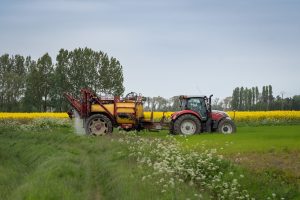
Choosing the right herbicide for mesquite depends on application method, timing, soil type, and the size of the plants you are targeting. Some products work best as foliar sprays on small trees, while others are formulated for basal bark, cut stump, or soil applications on larger specimens. Understanding how each product moves through the plant helps you match the herbicide to your specific situation.
In this guide, we review the top herbicides for mesquite control by examining active ingredients, application methods, effectiveness, and practical considerations to help you build an effective management program.
Top 10 Herbicides For Mesquite Control
1. Triclopyr – Most Versatile Herbicide For Mesquite Control
Triclopyr is one of the most versatile herbicides for mesquite control, effective in foliar, basal bark, and cut stump applications. The product is a selective systemic herbicide that targets broadleaf plants and woody species while leaving most grasses unharmed, making it ideal for pastures and rangeland where grass production matters.

- REVIVE FORESTS AND PASTURES: Triclopyr 4 Herbicide targets & controls woody plants, broadleaf weeds, & brush, making it ideal for restoring pastures and managing unwanted vegetation in forests, rangelands, and industrial sites without harming grasses
- YEAR-ROUND APPLICATION FLEXIBILITY: With flexible application options throughout the year, this broadleaf herbicide offers versatility for a wide range of conditions. Its ester formulation allows for effective absorption through leaves and roots
Triclopyr moves through the plant’s vascular system after absorption and accumulates in the roots, causing gradual decline and death of treated mesquite. It is most effective when applied during active growth in late spring and early summer, when mesquite is translocating carbohydrates to its root system.
For best results, apply triclopyr as a basal bark treatment on stems under 4 inches in diameter or as a cut stump treatment on larger trees. Adding a surfactant improves foliar absorption, and combining triclopyr with picloram or fluroxypyr broadens the control spectrum. Always follow label rates to avoid injury to desirable vegetation.
Pros:
- Versatile across multiple application methods
- Selective for broadleaf plants
- Safe for established grasses
- Effective on resprouting mesquite
- Widely available
- Trusted by land managers
- Works well in tank mixes
Cons:
- Requires repeat applications
- Less effective on mature trees
- Can drift to sensitive plants
2. Picloram – Most Effective Herbicide For Deep-Rooted Mesquite
Picloram is one of the most effective herbicides for deep-rooted mesquite because of its long soil residual and systemic activity. It is a pyridine carboxylic acid herbicide that moves readily through both soil and plant tissue, reaching roots that other products cannot. This makes it a strong choice for established infestations with mature trees.


- Effective: Kills cut stumps on fence lines&non-cropland areas. Control unwanted trees by cut surface treatments in forest&non-crop areas such as fence rows, roadsides&rights-of-way
Picloram is commonly applied as a soil treatment, cut stump treatment, or in combination with triclopyr for foliar applications. Its residual activity in soil can persist for months or even years, which is both an advantage and a limitation, since it restricts replanting of sensitive broadleaf species in treated areas.
Because of its persistence and mobility, picloram should be applied carefully near water sources, desirable trees, and gardens. Always check local regulations, as picloram is a restricted-use product in some states and requires applicator certification. Label directions must be followed precisely to protect non-target plants.
Pros:
- Highly effective on deep-rooted mesquite
- Long soil residual activity
- Works on mature trees
- Effective in soil and cut stump applications
- Reduces repeat applications
- Trusted for tough infestations
- Works well with triclopyr
Cons:
- Long soil residual can damage sensitive plants
- Restricted-use in some states
- Requires applicator certification
3. Clopyralid – Most Selective Herbicide For Mesquite And Legumes
Clopyralid is a highly selective herbicide for mesquite and other leguminous woody plants, making it useful in pastures where clover and other legumes are present. It is a pyridine carboxylic acid that is absorbed through leaves and roots and translocated throughout the plant, including the root system.

- POST-EMERGENT CONTROL - Thistledown is a full-strength herbicide based on the active ingredient clopyralid and is designed to control actively growing broadleaf weeds and thistle in a range, pasture, and other non-crop areas.
- SELECTIVE WEED KILLER - Weeds controlled by Thistledown include Canada thistle, musk thistle, star thistle, and knapweed. It can also be used to control kudzu, dandelion, and Oxalis.
Clopyralid is effective on mesquite when applied as a foliar spray during active growth, especially when combined with triclopyr or picloram for broader spectrum control. It is gentle on most grasses, which makes it a good fit for rangeland and pasture programs where grass production is a priority.
Because clopyralid has moderate soil residual activity, it should be applied with attention to nearby sensitive broadleaf plants. Timing applications in late spring or early summer when soil moisture is adequate improves uptake and long-term control. Follow label rates and use a quality surfactant for best results.
Pros:
- Highly selective for mesquite
- Safe for many pasture legumes
- Gentle on established grasses
- Works well in tank mixes
- Effective foliar activity
- Moderate soil residual
- Trusted by pasture managers
Cons:
- Moderate soil residual
- Requires adequate soil moisture
- Less effective on large trees
4. Aminopyralid – Best Herbicide For Mesquite In Grazing Systems
Aminopyralid is a strong choice for mesquite control in grazing systems because it is highly effective on leguminous woody plants while remaining safe for established grasses. It is a pyridine carboxylic acid herbicide with systemic activity that moves through the plant to the roots after foliar absorption.

- Target Pests: . See Product label for all listed pests.
- For use In: Rangeland, permanent grass pastures, CRP Acres, non-cropland areas, non-irrigation ditch banks, natural areas, and grazed areas in and around these sites. See Product label for complete list.
Aminopyralid is typically applied as a foliar spray on smaller mesquite or in combination with other herbicides for larger plants. Because it is labeled for use in pastures and rangeland, it fits well into integrated programs where livestock grazing continues after treatment intervals are observed.
Aminopyralid has long soil residual activity, which means it can affect sensitive broadleaf plants, including some desirable forbs, for an extended period. Careful application and adherence to grazing and replanting restrictions on the label are essential to avoid unintended damage to non-target species.
Pros:
- Effective on leguminous woody plants
- Safe for established grasses
- Labeled for pastures and rangeland
- Long soil residual control
- Works well in integrated programs
- Reduces repeat applications
- Trusted by land managers
Cons:
- Long soil residual can affect forbs
- Grazing and replanting restrictions apply
- Requires careful application
5. Fluroxypyr – Fast-Acting Herbicide For Mesquite Foliage
Fluroxypyr is a fast-acting herbicide that works well on mesquite foliage, especially when tank-mixed with triclopyr or aminopyralid. It is a pyridine carboxylic acid that is absorbed through leaves and translocated to growing points, causing rapid distortion and decline of treated plants.

- Selective control of woody plants and brush
- Thorough translocation kills hard-to-control brush like blackberry, rose and privet
Fluroxypyr is most effective when applied as a foliar spray during active growth in late spring or early summer. It is gentle on most grasses, making it suitable for pasture and rangeland use, and it pairs well with other systemic herbicides to improve overall mesquite control.
Fluroxypyr has limited soil residual activity compared to picloram and aminopyralid, which reduces the risk of damage to sensitive plants after application. For best results, use a quality surfactant, apply when soil moisture is adequate, and avoid spraying during drought stress when uptake is reduced.
Pros:
- Fast-acting on mesquite foliage
- Safe for most grasses
- Limited soil residual
- Works well in tank mixes
- Effective on resprouting plants
- Suitable for pasture use
- Reduces risk to sensitive plants
Cons:
- Requires adequate soil moisture
- Less effective on mature trees
- Requires quality surfactant
6. Hexazinone – Best Soil-Active Herbicide For Mesquite
Hexazinone is a soil-active herbicide that is effective on mesquite when applied as a granular or liquid soil treatment around the base of the plant. It is absorbed primarily through the roots and moves upward through the xylem, causing gradual decline and death of treated trees.

- Visible Results in One Hour - Spruce dehydrates to kill roots, showing visible results in just 1 hour, dead weeds in 1 day. The hardworking weed sprayer can kill all types of broadleaf and grassy weeds including dandelions, large crabgrass, white clover, dollarweed and morning glory vines.
- Ready to Use Worry-Free Formula - Spruce grass and weed killer is safe to use around people, pets, and bees when used as directed, and one bottle can treat up to 400 weeds. This versatile weed killer spray is made with water, essential oils and surfactant.
Hexazinone is most useful for controlling mesquite in rangeland and non-cropland settings where soil application is practical. Because it is taken up by roots, it works well during periods of active growth when soil moisture is adequate for absorption and translocation.
Hexazinone has significant soil residual activity and can affect non-target plants, including desirable trees and shrubs. Careful placement and adherence to label rates are essential, and application near water sources or sensitive vegetation should be avoided. Check local regulations, as use restrictions vary by state.
Pros:
- Effective soil-active control
- Works on mature mesquite
- Long residual activity
- Granular and liquid options
- Reduces repeat applications
- Suitable for rangeland
- Trusted for tough infestations
Cons:
- Can damage non-target plants
- Use restrictions vary by state
- Avoid application near water sources
7. Tebuthiuron – Best Long-Term Herbicide For Mesquite Infestations
Tebuthiuron is a long-term soil-active herbicide that provides extended control of mesquite by moving through the soil profile and being absorbed by roots. It is commonly applied as pellets or granules and is valued for its ability to control large infestations over multiple seasons.

- YEAR-ROUND BRUSH CONTROL: This brush control herbicide offers extended control of tough brush, woody plants, and weeds for up to one year, reducing repeat treatments and keeping rangelands, pastures, and wildlife clearings free from unwanted vegetation
- VERSATILE WEED DEFENSE: The Tebuthiuron weed and brush killer works both before and after weed emergence, ensuring versatile control of a wide range of grasses and woody plants, providing users with a flexible and reliable vegetation management option
Tebuthiuron is particularly effective on deep-rooted woody plants like mesquite because it remains active in the soil and continues to be taken up by roots over time. This makes it a strong choice for rangeland and rights-of-way where long-term control is the goal.
Because tebuthiuron has long soil residual activity, it can affect desirable vegetation for years after application. It should be used with caution near sensitive plants, water sources, and areas where replanting is planned. Check local regulations and follow label directions carefully to avoid off-target damage.
Pros:
- Long-term control of mesquite
- Effective on deep-rooted plants
- Pellet and granular formulations
- Reduces repeat applications
- Suitable for rangeland and rights-of-way
- Trusted for large infestations
- Multi-season activity
Cons:
- Long soil residual can affect desirable plants
- Use restrictions vary by state
- Requires careful placement
8. 2,4-D – Most Affordable Herbicide For Mesquite Seedlings
2,4-D is one of the most affordable herbicides for mesquite seedlings and small plants, though it is less effective on mature trees. It is a synthetic auxin herbicide that causes abnormal growth and eventual death in susceptible broadleaf plants after foliar absorption.

- Low, economical use rate of 1 to 4 pints per acre
- Controls many broadleaf weeds & woody plants
2,4-D is typically applied as a foliar spray on young mesquite during active growth in spring or early summer. It is gentle on most grasses, making it suitable for pasture and rangeland use, and it can be tank-mixed with other herbicides to improve effectiveness on larger plants.
2,4-D has limited soil residual activity and short-lived effectiveness compared to soil-active products. It is best used as part of an integrated program that combines chemical control with mechanical and cultural methods. Follow label rates and use a surfactant to improve coverage and absorption.
Pros:
- Affordable price
- Effective on seedlings
- Safe for most grasses
- Widely available
- Works well in tank mixes
- Easy to apply
- Trusted by pasture managers
Cons:
- Less effective on mature trees
- Limited soil residual
- Requires repeat applications
9. Dicamba – Effective Herbicide For Mesquite In Tank Mixes
Dicamba is an effective herbicide for mesquite when used in tank mixes with other products like 2,4-D or triclopyr. It is a synthetic auxin herbicide that causes abnormal growth and decline in susceptible broadleaf plants after foliar absorption.

- CROP-SAFE WEED KILLER: This herbicide weed killer targets broadleaf weeds in a variety of crops, including corn, soybean, cotton, sugarcane, and turf. Its fast-acting formula ensures long-lasting results, keeping your fields and pastures clean
- FLEXIBLE FIELD COVERAGE: Compatible with both ground and aerial application equipment, this broadleaf herbicide is easy to apply regardless of your farming setup. Whether treating dense vegetation or large-acreage fields, you can depend on consistent coverage
Dicamba is typically applied as a foliar spray on mesquite during active growth, and it works best when combined with other systemic herbicides for broader spectrum control. It is gentle on most grasses, which makes it a good fit for pasture and rangeland applications.
Dicamba has moderate soil residual activity and can affect sensitive broadleaf plants if applied carelessly. Use a quality surfactant, apply during periods of active growth and adequate soil moisture, and follow label rates to avoid off-target damage and reduced effectiveness.
Pros:
- Effective in tank mixes
- Safe for most grasses
- Widely available
- Affordable price
- Works on resprouting plants
- Trusted by land managers
- Good for pasture use
Cons:
- Moderate soil residual
- Can drift to sensitive plants
- Requires adequate soil moisture
10. Glyphosate – Non-Selective Herbicide For Cut Stump Treatment
Glyphosate is a non-selective herbicide that is effective for mesquite control when applied as a cut stump treatment or in basal bark applications. It is absorbed through cut surfaces and translocated to the roots, causing gradual decline and death of treated trees.

- Powerful Weed Control:Effectively kills over 130 types of weeds and grasses, reaching down to the roots to prevent regrowth. Perfect for driveways, sidewalks, fences, and garden areas.
- Covers Up To 26,000 Square Feet
Glyphosate is most effective on mesquite when applied immediately after cutting, before the cut surface begins to seal. It kills both the treated tree and any resprouting tissue, making it useful for follow-up treatments in areas where mechanical removal has already been performed.
Because glyphosate is non-selective, it can damage or kill desirable grasses and broadleaf plants if applied to their foliage. Careful application directly to cut stumps or bark minimizes off-target damage. Follow label rates and use appropriate personal protective equipment during application.
Pros:
- Effective on cut stumps
- Kills resprouting tissue
- Widely available
- Affordable price
- Works on mature trees
- No soil residual activity
- Trusted for follow-up treatments
Cons:
- Non-selective
- Can damage desirable plants
- Requires careful application
7 Tips For Effective Mesquite Control With Herbicides
- Time applications correctly: Apply foliar herbicides when mesquite is actively growing, usually late spring to early summer, when the plant is translocating carbohydrates to its roots for maximum uptake.
- Match the method to the plant size: Use foliar sprays on seedlings and small trees, basal bark or cut stump treatments on medium trees, and soil-active herbicides for large infestations and mature stands.
- Use a quality surfactant: Surfactants improve herbicide absorption through the waxy mesquite leaf surface. Always follow label recommendations for surfactant type and rate.
- Ensure adequate soil moisture: Herbicide uptake and translocation are reduced during drought stress. Apply when soil moisture is adequate for best results.
- Combine methods for better control: Integrated programs that combine herbicides with mechanical removal, prescribed fire, and proper grazing management deliver better long-term results than any single method alone.
- Follow up with monitoring: Mesquite often resprouts from root crowns after treatment. Monitor treated areas for regrowth and re-treat as needed to prevent reinfestation.
- Check local regulations: Some herbicides are restricted-use products that require applicator certification, and use restrictions vary by state. Confirm requirements before purchasing or applying.
Top Herbicides For Mesquite Control (FAQs)
1. What is the most effective herbicide for mesquite control?
Triclopyr and picloram are among the most effective herbicides for mesquite control, especially when used together in foliar or basal bark applications. Soil-active products like tebuthiuron and hexazinone are better for large infestations and long-term control.
2. When is the best time to spray mesquite?
The best time to spray mesquite is late spring to early summer when the plant is actively growing and soil moisture is adequate. Foliar herbicides are most effective when applied during this period because the plant is translocating carbohydrates to its roots.
3. Can I kill mesquite without chemicals?
Mechanical removal, prescribed fire, and intensive grazing can suppress mesquite, but they rarely eliminate established plants because mesquite resprouts from its root crown. Herbicides remain the most practical and cost-effective control method for large infestations.
4. How long does it take for mesquite herbicide to work?
Foliar herbicides typically show visible effects within two to four weeks, with full decline taking several months. Soil-active herbicides like tebuthiuron work more slowly, often taking one to two growing seasons for complete control.
5. Will mesquite herbicides harm my grass?
Most herbicides labeled for mesquite control, including triclopyr, clopyralid, and aminopyralid, are selective for broadleaf plants and safe for established grasses when applied at label rates. Always read the label to confirm grass tolerance for your specific product.
6. Do I need a license to apply mesquite herbicides?
Some mesquite herbicides, including picloram and certain formulations of tebuthiuron, are restricted-use products that require applicator certification. Check your state regulations and the product label to determine whether a license is required.
7. How often should I re-treat mesquite after spraying?
Monitor treated areas for resprouting within six to twelve months after application. Re-treat regrowth while plants are still small, and plan follow-up applications every two to three years until the seedbank and root reserves are exhausted.
Conclusion
Top herbicides for mesquite control come down to matching the product and application method to the size of the plants and the goals of your land management program. Triclopyr offers the most versatility across foliar, basal bark, and cut stump applications, while picloram and tebuthiuron deliver long-term control on mature infestations.
Foliar herbicides like clopyralid, aminopyralid, and fluroxypyr work well on smaller mesquite and are gentle on grasses, making them suitable for pasture and rangeland use. Soil-active products like hexazinone and tebuthiuron provide extended control but require careful application to avoid damage to desirable vegetation.
Effective mesquite control depends on timing, soil moisture, proper surfactant use, and follow-up monitoring. Combining herbicides with mechanical removal and sound grazing management delivers the best long-term results. Always follow label directions and check local regulations before applying any herbicide.