Invasive plants in Finland threaten native ecosystems across forests, wetlands, coastal areas, and urban landscapes. The country’s cool climate and long summer days create conditions where introduced species can spread rapidly once established. Many of these plants arrived through horticulture, agriculture, and shipping, escaping cultivation to colonize natural habitats.
Finland’s invasive plant list includes species from Europe, Asia, and North America that compete with native vegetation for light, water, and nutrients. Some form dense monocultures that displace native wildflowers and grasses, while others alter soil chemistry or block waterways. Eradicating established populations is difficult once they spread.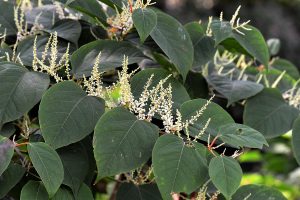
Identifying invasive plants early is the most effective way to prevent them from taking over a property or natural area. Many species are still sold in nurseries, which contributes to their continued spread into forests, shorelines, and meadows. Understanding growth habits and habitat preferences helps landowners act before seed production begins.
In this guide, we break down 50 invasive plants in Finland by examining their appearance, habitat, spread, and control methods to help you identify and manage these species on your land.
Invasive Plants Finland: 50 Species To Identify And Manage
1. Japanese Knotweed (Fallopia japonica) – Most Destructive Invasive Plant
Japanese knotweed is the most destructive invasive plant in Finland, forming dense stands that damage foundations, pavement, and stream banks. It grows 6 to 12 feet tall with hollow, bamboo-like stems and large, heart-shaped leaves. The plant spreads primarily through rhizomes that can extend 20 feet from the parent plant.
Japanese knotweed is particularly problematic because its deep rhizome system makes hand-pulling ineffective unless the entire root is removed. It is especially aggressive along waterways, where rhizome fragments are carried downstream and establish new infestations. Dense stands reduce habitat quality for native wildlife and increase erosion.
Control requires a multi-year program because Japanese knotweed resprouts vigorously after cutting or herbicide treatment. Repeated herbicide applications in late summer and early fall are most effective, combined with cutting or mowing to weaken the rhizome system. Follow-up monitoring for several seasons is essential.
2. Giant Hogweed (Heracleum mantegazzianum) – Most Dangerous Invasive Plant
Giant hogweed is the most dangerous invasive plant in Finland because its sap causes severe skin burns and blistering when exposed to sunlight. It grows 8 to 15 feet tall with massive, deeply lobed leaves and large white flower heads. The plant spreads through abundant seeds that remain viable in the soil for years.
Giant hogweed is particularly problematic along rivers, roadsides, and disturbed areas, where it forms dense stands that crowd out native vegetation. Its sap contains furanocoumarins that cause photodermatitis, a painful reaction that can leave scars lasting for years. Contact with the plant requires immediate medical attention.
Control requires protective clothing, gloves, and eye protection, plus careful removal of flower heads before seed set. Herbicide treatment or root cutting is effective when performed by trained professionals. Never attempt to remove giant hogweed without proper protective equipment.
3. Himalayan Balsam (Impatiens glandulifera) – Most Aggressive Riverside Invader
Himalayan balsam is the most aggressive riverside invasive plant in Finland, forming dense stands along streams, ditches, and wet meadows. It grows 3 to 10 feet tall with hollow stems, serrated leaves, and pink to purple flowers in summer. The plant spreads through explosive seed pods that scatter seeds up to 20 feet from the parent plant.
Himalayan balsam is particularly problematic because it outcompetes native vegetation along waterways and increases erosion when it dies back in winter. Its rapid growth and high seed production allow it to dominate riverbanks within a few seasons. Dense stands reduce habitat quality for native plants and insects.
Control involves hand-pulling before seed set, which is effective because the plant has shallow roots. Repeated mowing or cutting before flowering prevents seed production. Removing plants before seed pods mature is essential to prevent spread along waterways.
4. Lupine (Lupinus polyphyllus) – Most Common Roadside Invader
Lupine is one of the most common invasive plants in Finland, forming dense stands along roadsides, railways, and disturbed areas. It grows 2 to 4 feet tall with palmate leaves and tall spikes of blue, purple, or pink flowers in summer. The plant spreads through seeds that remain viable in the soil for years.
Lupine is particularly problematic because it fixes nitrogen in the soil, changing nutrient cycles and favoring its own growth over native species. It spreads rapidly along transportation corridors, forming dense stands that crowd out native vegetation. Dense populations reduce habitat quality for wildlife that depends on native plants.
Control involves hand-pulling before seed set, mowing before flowering, and repeated cutting to exhaust the root system. Herbicide treatment is effective on large infestations when applied at the right growth stage. Follow-up monitoring for several seasons is essential.
5. Canada Goldenrod (Solidago canadensis) – Most Aggressive Meadow Invader
Canada goldenrod is an aggressive meadow invader in Finland, forming dense stands that crowd out native wildflowers and grasses. It grows 2 to 5 feet tall with narrow leaves and bright yellow flower clusters in late summer. The plant spreads through seeds and creeping rhizomes that form dense colonies.
Canada goldenrod is particularly problematic because it produces allelopathic chemicals that suppress the growth of competing plants. It spreads rapidly in meadows, roadsides, and disturbed areas, forming monocultures that reduce plant diversity. Dense stands also reduce habitat quality for pollinators that depend on diverse wildflower communities.
Control involves repeated mowing before seed set, hand-pulling small infestations, and herbicide treatment for large stands. Combining mowing with late-season herbicide application weakens the rhizome system. Follow-up monitoring for several seasons is essential.
6. Rosa Rugosa (Rosa rugosa) – Most Common Coastal Invader
Rosa rugosa is the most common coastal invasive plant in Finland, forming dense thickets along beaches, dunes, and shorelines. It grows 3 to 6 feet tall with wrinkled leaves, fragrant pink or white flowers, and large red hips in fall. The plant spreads through seeds, root suckers, and stems that root where they touch the ground.
Rosa rugosa is particularly problematic because it displaces native dune vegetation and alters coastal habitat structure. Its dense thickets reduce nesting habitat for shorebirds and change the natural succession of coastal plant communities. The plant spreads rapidly once established and is difficult to eradicate.
Control involves cutting the plant and treating the stump with herbicide to prevent resprouting. Repeated mowing over several seasons weakens the root system. Removing seed-producing plants before hips ripen prevents birds from spreading seeds to new areas.
7. Rugosa Rose Hybrids (Rosa spp.) – Most Persistent Coastal Thicket
Rugosa rose hybrids are persistent coastal invaders in Finland, forming dense thickets along beaches and shorelines. They grow 3 to 6 feet tall with wrinkled leaves and fragrant pink or white flowers followed by red hips. The plants spread through seeds, root suckers, and stems that root at the ground.
Rugosa rose hybrids are particularly problematic because they displace native dune vegetation and reduce habitat quality for shorebirds and insects. Their dense thickets alter coastal plant succession and are difficult to eradicate once established. Hybrids often spread more aggressively than the parent species.
Control involves cutting the plant and treating the stump with herbicide to prevent resprouting. Repeated mowing over several seasons weakens the root system. Removing seed-producing plants before hips ripen prevents birds from spreading seeds to new areas.
8. Spanish Bluebell (Hyacinthoides hispanica) – Most Aggressive Woodland Invader
Spanish bluebell is an aggressive woodland invader in Finland, forming dense carpets that crowd out native spring wildflowers. It grows 12 to 18 inches tall with strap-shaped leaves and spikes of blue, pink, or white bell-shaped flowers in spring. The plant spreads through bulb offsets and abundant seeds.
Spanish bluebell is particularly problematic because it hybridizes with native bluebells and displaces them from woodland habitats. Its dense growth suppresses native wildflowers and reduces plant diversity in forests and parks. The plant spreads readily through bulb fragments moved by gardening activities.
Control involves digging out bulbs before seed set, which is effective because the plant has shallow bulbs. Repeated digging over several seasons is necessary to exhaust the bulb bank. Removing flower spikes before they set seed prevents further spread.
9. Garden Lupine (Lupinus polyphyllus) – Most Ornamental Invasive Plant
Garden lupine is an ornamental invasive plant in Finland, widely planted for its colorful flower spikes before its invasive nature became clear. It grows 2 to 4 feet tall with palmate leaves and tall spikes of blue, purple, or pink flowers in summer. The plant spreads through seeds that remain viable in the soil for years.
Garden lupine is particularly problematic because it fixes nitrogen in the soil, changing nutrient cycles and favoring its own growth over native species. It spreads rapidly along roadsides and railways, forming dense stands that crowd out native vegetation. Dense populations reduce habitat quality for wildlife that depends on native plants.
Control involves hand-pulling before seed set, mowing before flowering, and repeated cutting to exhaust the root system. Herbicide treatment is effective on large infestations when applied at the right growth stage. Follow-up monitoring for several seasons is essential.
10. Japanese Rose (Rosa rugosa) – Most Widespread Coastal Thicket
Japanese rose is the most widespread coastal thicket-forming invasive plant in Finland, growing along beaches, dunes, and shorelines. It grows 3 to 6 feet tall with wrinkled leaves, fragrant pink or white flowers, and large red hips in fall. The plant spreads through seeds, root suckers, and stems that root where they touch the ground.
Japanese rose is particularly problematic because it displaces native dune vegetation and alters coastal habitat structure. Its dense thickets reduce nesting habitat for shorebirds and change the natural succession of coastal plant communities. The plant spreads rapidly once established and is difficult to eradicate.
Control involves cutting the plant and treating the stump with herbicide to prevent resprouting. Repeated mowing over several seasons weakens the root system. Removing seed-producing plants before hips ripen prevents birds from spreading seeds to new areas.
11. Creeping Thistle (Cirsium arvense) – Most Aggressive Perennial Thistle
Creeping thistle is the most aggressive perennial thistle in Finland, forming dense patches in pastures, roadsides, and disturbed areas. It grows 1 to 4 feet tall with spiny leaves and purple flower heads in summer. The plant spreads through creeping roots and abundant seeds that remain viable in the soil for years.
Creeping thistle is particularly problematic in pastures because its spines deter livestock and reduce forage quality. Its deep, creeping root system makes hand-pulling ineffective unless the entire root is removed. Dense populations can spread quickly across a property and reduce crop yields.
Control involves repeated mowing before seed set, improving drainage, and applying systemic herbicides in spring or fall. Repeated treatments over several seasons are necessary to exhaust the root system and seedbank in the soil.
12. Spear Thistle (Cirsium vulgare) – Most Common Biennial Thistle
Spear thistle is a common biennial thistle in Finland, forming large rosettes in the first year and tall flowering stalks in the second. It grows 2 to 5 feet tall with spiny leaves and purple flower heads in summer. The plant spreads through abundant seeds that remain viable in the soil for years.
Spear thistle is particularly problematic in pastures because its spines deter livestock and reduce forage quality. Its large size and spiny leaves make hand-pulling difficult without gloves. Dense populations can spread quickly across a property and reduce crop yields.
Control involves hand-pulling rosettes before flowering, mowing before seed set, and applying broadleaf herbicides in spring or fall. Removing plants before they flower prevents seed production and reduces future populations.
13. Common Ragwort (Jacobaea vulgaris) – Most Toxic Invasive Plant
Common ragwort is the most toxic invasive plant in Finland, containing alkaloids that cause liver damage in livestock. It grows 1 to 4 feet tall with deeply lobed leaves and bright yellow flower heads in summer. The plant spreads through abundant seeds that remain viable in the soil for years.
Common ragwort is particularly problematic in pastures because it is toxic to horses and cattle, even when dried in hay. Its rapid spread and high seed production allow it to colonize disturbed areas quickly. Dense populations reduce forage quality and pose a serious risk to livestock.
Control involves hand-pulling before seed set, mowing before flowering, and applying broadleaf herbicides in spring or fall. Removing plants before they flower prevents seed production and reduces future populations.
14. Oxeye Daisy (Leucanthemum vulgare) – Most Common Meadow Invader
Oxeye daisy is a common meadow invader in Finland, forming dense patches that crowd out native wildflowers and grasses. It grows 1 to 2 feet tall with lobed leaves and white daisy-like flowers in summer. The plant spreads through seeds and creeping rhizomes that form dense colonies.
Oxeye daisy is particularly problematic because it spreads rapidly in meadows, pastures, and roadsides, forming monocultures that reduce plant diversity. Its dense growth suppresses native wildflowers and reduces habitat quality for pollinators. The plant is difficult to eradicate once established.
Control involves repeated mowing before seed set, hand-pulling small infestations, and herbicide treatment for large stands. Combining mowing with late-season herbicide application weakens the rhizome system. Follow-up monitoring for several seasons is essential.
15. Cow Parsley (Anthriscus sylvestris) – Most Common Roadside Invader
Cow parsley is a common roadside invader in Finland, forming dense stands along verges, hedgerows, and disturbed areas. It grows 2 to 4 feet tall with fern-like leaves and white umbrella-shaped flower clusters in spring. The plant spreads through abundant seeds that remain viable in the soil for years.
Cow parsley is particularly problematic because it spreads rapidly along transportation corridors, forming dense stands that crowd out native vegetation. Its rapid growth and high seed production allow it to dominate roadsides within a few seasons. Dense populations reduce habitat quality for native plants and insects.
Control involves repeated mowing before seed set, hand-pulling small infestations, and herbicide treatment for large stands. Removing plants before they flower prevents seed production and reduces future populations.
16. Wood Crane’s-Bill (Geranium sylvaticum) – Most Aggressive Woodland Invader
Wood crane’s-bill is an aggressive woodland invader in Finland, forming dense patches that crowd out native wildflowers. It grows 1 to 2 feet tall with deeply lobed leaves and purple flowers in summer. The plant spreads through seeds and creeping rhizomes that form dense colonies.
Wood crane’s-bill is particularly problematic because it spreads rapidly in woodlands, meadows, and roadsides, forming monocultures that reduce plant diversity. Its dense growth suppresses native wildflowers and reduces habitat quality for pollinators. The plant is difficult to eradicate once established.
Control involves repeated mowing before seed set, hand-pulling small infestations, and herbicide treatment for large stands. Combining mowing with late-season herbicide application weakens the rhizome system. Follow-up monitoring for several seasons is essential.
17. Garden Lady’s Mantle (Alchemilla mollis) – Most Common Garden Escape
Garden lady’s mantle is a common garden escape in Finland, forming dense clumps that spread into meadows, roadsides, and woodland edges. It grows 1 to 2 feet tall with scalloped leaves and clusters of yellow-green flowers in summer. The plant spreads through seeds and creeping stems that root at the nodes.
Garden lady’s mantle is particularly problematic because it spreads rapidly from garden plantings into natural areas, forming dense stands that crowd out native vegetation. Its tolerance for a wide range of conditions makes it difficult to control once established. Dense populations reduce habitat quality for native plants and insects.
Control involves hand-pulling before seed set, repeated mowing, and herbicide treatment for large stands. Removing plants before they flower prevents seed production and reduces future populations.
18. Japanese Spiraea (Spiraea japonica) – Most Common Landscape Escape
Japanese spiraea is a common landscape escape in Finland, forming dense stands in forests, roadsides, and natural areas. It grows 2 to 6 feet tall with alternate leaves and flat clusters of pink flowers in summer. The plant spreads through seeds and root suckers that remain viable in the soil for years.
Japanese spiraea is particularly problematic because it spreads from landscape plantings into natural areas, where it displaces native shrubs and wildflowers. Its dense thickets reduce habitat quality for wildlife and alter forest structure. Dense populations can spread quickly across a property.
Control involves hand-pulling small plants, cut-stump treatment with herbicide, and foliar herbicide applications in spring or fall. Repeated treatments over several seasons are necessary to exhaust the seedbank in the soil.
19. Snowberry (Symphoricarpos albus) – Most Persistent Shrub Invader
Snowberry is a persistent shrub invader in Finland, forming dense thickets in forests, roadsides, and disturbed areas. It grows 3 to 6 feet tall with oval leaves and clusters of white berries in fall. The plant spreads through seeds, root suckers, and stems that root where they touch the ground.
Snowberry is particularly problematic because it forms dense thickets that crowd out native shrubs and wildflowers. Its tolerance for shade allows it to establish beneath forest canopies, where it slowly displaces native understory plants. Dense infestations reduce habitat quality for wildlife.
Control involves cutting the plant and treating the stump with herbicide to prevent resprouting. Repeated mowing over several seasons weakens the root system. Removing seed-producing plants before berries ripen prevents birds from spreading seeds to new areas.
20. Cotoneaster (Cotoneaster spp.) – Most Common Shrub Escape
Cotoneaster is a common shrub escape in Finland, forming dense stands in forests, roadsides, and natural areas. It grows 3 to 10 feet tall with small oval leaves and clusters of red berries in fall. The plant spreads through bird-dispersed seeds that remain viable in the soil for years.
Cotoneaster is particularly problematic because it spreads from landscape plantings into natural areas, where it displaces native shrubs and wildflowers. Its dense thickets reduce habitat quality for wildlife and alter forest structure. Dense populations can spread quickly across a property.
Control involves cut-stump treatment with herbicide, foliar herbicide applications in spring or fall, and repeated mowing to weaken the root system. Repeated treatments over several seasons are necessary to exhaust the seedbank in the soil.
21. Black Cherry (Prunus serotina) – Most Aggressive Tree Invader
Black cherry is an aggressive tree invader in Finland, forming dense stands in forests, roadsides, and disturbed areas. It grows 30 to 60 feet tall with oval leaves and clusters of small white flowers in spring followed by dark berries. The plant spreads through bird-dispersed seeds that remain viable in the soil for years.
Black cherry is particularly problematic because it grows rapidly and outcompetes native tree species for light and nutrients. Its dense stands reduce forest biodiversity and alter habitat structure. The plant also harbors pests and diseases that affect native trees.
Control involves cutting the tree and treating the stump with herbicide to prevent resprouting. Repeated mowing over several seasons weakens the root system. Removing seed-producing trees before berries ripen prevents birds from spreading seeds to new areas.
22. Sycamore Maple (Acer pseudoplatanus) – Most Aggressive Tree Invader
Sycamore maple is an aggressive tree invader in Finland, forming dense stands in forests, roadsides, and coastal areas. It grows 40 to 80 feet tall with large lobed leaves and clusters of winged seeds in fall. The plant spreads through wind-dispersed seeds that remain viable in the soil for years.
Sycamore maple is particularly problematic because it grows rapidly and outcompetes native tree species for light and nutrients. Its dense stands reduce forest biodiversity and alter habitat structure. The plant also tolerates salt spray, allowing it to colonize coastal areas.
Control involves cutting the tree and treating the stump with herbicide to prevent resprouting. Repeated mowing over several seasons weakens the root system. Removing seed-producing trees before seeds ripen prevents wind from spreading seeds to new areas.
23. Norway Maple (Acer platanoides) – Most Common Shade Tree Invader
Norway maple is a common shade tree invader in Finland, forming dense stands in forests, roadsides, and urban areas. It grows 40 to 60 feet tall with large lobed leaves and clusters of winged seeds in fall. The plant spreads through wind-dispersed seeds that remain viable in the soil for years.
Norway maple is particularly problematic because it grows rapidly and outcompetes native tree species for light and nutrients. Its dense canopy shades out native understory plants, reducing forest biodiversity. The plant also releases allelopathic chemicals that suppress competing vegetation.
Control involves cutting the tree and treating the stump with herbicide to prevent resprouting. Repeated mowing over several seasons weakens the root system. Removing seed-producing trees before seeds ripen prevents wind from spreading seeds to new areas.
24. Red Elderberry (Sambucus racemosa) – Most Common Shrub Invader
Red elderberry is a common shrub invader in Finland, forming dense thickets in forests, roadsides, and disturbed areas. It grows 6 to 12 feet tall with compound leaves and clusters of small white flowers in spring followed by red berries. The plant spreads through bird-dispersed seeds that remain viable in the soil for years.
Red elderberry is particularly problematic because it grows rapidly and outcompetes native shrubs for light and nutrients. Its dense thickets reduce forest biodiversity and alter habitat structure. The plant also spreads readily from garden plantings into natural areas.
Control involves cutting the shrub and treating the stump with herbicide to prevent resprouting. Repeated mowing over several seasons weakens the root system. Removing seed-producing plants before berries ripen prevents birds from spreading seeds to new areas.
25. Rugosa Rose (Rosa rugosa) – Most Widespread Coastal Invader
Rugosa rose is the most widespread coastal invader in Finland, forming dense thickets along beaches, dunes, and shorelines. It grows 3 to 6 feet tall with wrinkled leaves, fragrant pink or white flowers, and large red hips in fall. The plant spreads through seeds, root suckers, and stems that root where they touch the ground.
Rugosa rose is particularly problematic because it displaces native dune vegetation and alters coastal habitat structure. Its dense thickets reduce nesting habitat for shorebirds and change the natural succession of coastal plant communities. The plant spreads rapidly once established and is difficult to eradicate.
Control involves cutting the plant and treating the stump with herbicide to prevent resprouting. Repeated mowing over several seasons weakens the root system. Removing seed-producing plants before hips ripen prevents birds from spreading seeds to new areas.
26. Balsam Poplar (Populus balsamifera) – Most Aggressive Tree Invader
Balsam poplar is an aggressive tree invader in Finland, forming dense stands in forests, roadsides, and disturbed areas. It grows 40 to 80 feet tall with large oval leaves and sticky buds in spring. The plant spreads through wind-dispersed seeds and root suckers that form dense colonies.
Balsam poplar is particularly problematic because it grows rapidly and outcompetes native tree species for light and nutrients. Its dense stands reduce forest biodiversity and alter habitat structure. The plant also spreads readily through root suckers that form new trees.
Control involves cutting the tree and treating the stump with herbicide to prevent resprouting. Repeated mowing over several seasons weakens the root system. Removing seed-producing trees before seeds ripen prevents wind from spreading seeds to new areas.
27. Russian Poplar (Populus x canadensis) – Most Common Hybrid Invader
Russian poplar is a common hybrid invader in Finland, forming dense stands in forests, roadsides, and urban areas. It grows 40 to 80 feet tall with large triangular leaves and wind-dispersed seeds. The plant spreads through seeds and root suckers that form dense colonies.
Russian poplar is particularly problematic because it grows rapidly and outcompetes native tree species for light and nutrients. Its dense stands reduce forest biodiversity and alter habitat structure. The plant also spreads readily through root suckers that form new trees.
Control involves cutting the tree and treating the stump with herbicide to prevent resprouting. Repeated mowing over several seasons weakens the root system. Removing seed-producing trees before seeds ripen prevents wind from spreading seeds to new areas.
28. Japanese Honeysuckle (Lonicera japonica) – Most Aggressive Vine Invader
Japanese honeysuckle is the most aggressive vine invader in Finland, forming dense mats that smother native vegetation. It grows 15 to 30 feet long with oval leaves and fragrant white to yellow flowers in summer. The plant spreads through bird-dispersed seeds and stems that root where they touch the ground.
Japanese honeysuckle is particularly problematic because it grows rapidly and outcompetes native plants for light and nutrients. Its dense mats smother native shrubs and trees, reducing forest biodiversity. The plant also spreads readily from garden plantings into natural areas.
Control involves cutting the vine and treating the stump with herbicide to prevent resprouting. Repeated mowing over several seasons weakens the root system. Removing seed-producing plants before berries ripen prevents birds from spreading seeds to new areas.
29. Himalayan Honeysuckle (Leycesteria formosa) – Most Common Shrub Escape
Himalayan honeysuckle is a common shrub escape in Finland, forming dense thickets in forests, roadsides, and natural areas. It grows 4 to 6 feet tall with opposite leaves and clusters of white flowers followed by purple berries. The plant spreads through bird-dispersed seeds that remain viable in the soil for years.
Himalayan honeysuckle is particularly problematic because it spreads from landscape plantings into natural areas, where it displaces native shrubs and wildflowers. Its dense thickets reduce habitat quality for wildlife and alter forest structure. Dense populations can spread quickly across a property.
Control involves cut-stump treatment with herbicide, foliar herbicide applications in spring or fall, and repeated mowing to weaken the root system. Repeated treatments over several seasons are necessary to exhaust the seedbank in the soil.
30. Red Osier Dogwood (Cornus sericea) – Most Common Shrub Invader
Red osier dogwood is a common shrub invader in Finland, forming dense thickets in wetlands, roadsides, and disturbed areas. It grows 6 to 10 feet tall with opposite leaves and clusters of white flowers followed by white berries. The plant spreads through bird-dispersed seeds and stems that root where they touch the ground.
Red osier dogwood is particularly problematic because it forms dense thickets that crowd out native shrubs and wildflowers. Its tolerance for wet soils allows it to colonize wetlands and shorelines, where it alters habitat structure. Dense infestations reduce habitat quality for wildlife.
Control involves cutting the shrub and treating the stump with herbicide to prevent resprouting. Repeated mowing over several seasons weakens the root system. Removing seed-producing plants before berries ripen prevents birds from spreading seeds to new areas.
31. Black Locust (Robinia pseudoacacia) – Most Aggressive Tree Invader
Black locust is an aggressive tree invader in Finland, forming dense stands in forests, roadsides, and disturbed areas. It grows 40 to 80 feet tall with compound leaves and clusters of white flowers in spring followed by seed pods. The plant spreads through seeds and root suckers that form dense colonies.
Black locust is particularly problematic because it grows rapidly and outcompetes native tree species for light and nutrients. Its dense stands reduce forest biodiversity and alter habitat structure. The plant also fixes nitrogen in the soil, changing nutrient cycles.
Control involves cutting the tree and treating the stump with herbicide to prevent resprouting. Repeated mowing over several seasons weakens the root system. Removing seed-producing trees before pods ripen prevents seeds from spreading to new areas.
32. Tree of Heaven (Ailanthus altissima) – Most Invasive Urban Tree
Tree of heaven is the most invasive urban tree in Finland, forming dense stands in cities, roadsides, and disturbed areas. It grows 40 to 80 feet tall with compound leaves and clusters of winged seeds in fall. The plant spreads through wind-dispersed seeds and root suckers that form dense colonies.
Tree of heaven is particularly problematic because it grows rapidly and outcompetes native tree species for light and nutrients. Its dense stands reduce urban biodiversity and alter habitat structure. The plant also releases allelopathic chemicals that suppress competing vegetation.
Control involves cutting the tree and treating the stump with herbicide to prevent resprouting. Repeated mowing over several seasons weakens the root system. Removing seed-producing trees before seeds ripen prevents wind from spreading seeds to new areas.
33. Norway Spruce (Picea abies) – Most Common Plantation Escape
Norway spruce is a common plantation escape in Finland, forming dense stands in forests, roadsides, and disturbed areas. It grows 60 to 100 feet tall with needle-like leaves and cones in fall. The plant spreads through wind-dispersed seeds that remain viable in the soil for years.
Norway spruce is particularly problematic because it grows rapidly and outcompetes native tree species for light and nutrients. Its dense stands reduce forest biodiversity and alter habitat structure. The plant also spreads readily from plantations into natural areas.
Control involves cutting the tree and removing the stump to prevent resprouting. Repeated mowing over several seasons weakens the root system. Removing seed-producing trees before cones ripen prevents wind from spreading seeds to new areas.
34. Sitka Spruce (Picea sitchensis) – Most Aggressive Coastal Invader
Sitka spruce is an aggressive coastal invader in Finland, forming dense stands along shorelines and dunes. It grows 60 to 100 feet tall with needle-like leaves and cones in fall. The plant spreads through wind-dispersed seeds that remain viable in the soil for years.
Sitka spruce is particularly problematic because it displaces native coastal vegetation and alters dune habitat structure. Its dense stands reduce habitat quality for shorebirds and change the natural succession of coastal plant communities. The plant spreads rapidly once established.
Control involves cutting the tree and removing the stump to prevent resprouting. Repeated mowing over several seasons weakens the root system. Removing seed-producing trees before cones ripen prevents wind from spreading seeds to new areas.
35. Lodgepole Pine (Pinus contorta) – Most Common Plantation Escape
Lodgepole pine is a common plantation escape in Finland, forming dense stands in forests, roadsides, and disturbed areas. It grows 40 to 80 feet tall with needle-like leaves and cones in fall. The plant spreads through wind-dispersed seeds that remain viable in the soil for years.
Lodgepole pine is particularly problematic because it grows rapidly and outcompetes native tree species for light and nutrients. Its dense stands reduce forest biodiversity and alter habitat structure. The plant also spreads readily from plantations into natural areas.
Control involves cutting the tree and removing the stump to prevent resprouting. Repeated mowing over several seasons weakens the root system. Removing seed-producing trees before cones ripen prevents wind from spreading seeds to new areas.
36. Mountain Pine (Pinus mugo) – Most Common Shrub Pine Escape
Mountain pine is a common shrub pine escape in Finland, forming dense stands in forests, roadsides, and disturbed areas. It grows 3 to 20 feet tall with needle-like leaves and cones in fall. The plant spreads through wind-dispersed seeds that remain viable in the soil for years.
Mountain pine is particularly problematic because it grows rapidly and outcompetes native shrubs for light and nutrients. Its dense stands reduce forest biodiversity and alter habitat structure. The plant also spreads readily from garden plantings into natural areas.
Control involves cutting the shrub and removing the stump to prevent resprouting. Repeated mowing over several seasons weakens the root system. Removing seed-producing plants before cones ripen prevents wind from spreading seeds to new areas.
37. Japanese Larch (Larix kaempferi) – Most Common Plantation Escape
Japanese larch is a common plantation escape in Finland, forming dense stands in forests, roadsides, and disturbed areas. It grows 60 to 90 feet tall with needle-like leaves and cones in fall. The plant spreads through wind-dispersed seeds that remain viable in the soil for years.
Japanese larch is particularly problematic because it grows rapidly and outcompetes native tree species for light and nutrients. Its dense stands reduce forest biodiversity and alter habitat structure. The plant also spreads readily from plantations into natural areas.
Control involves cutting the tree and removing the stump to prevent resprouting. Repeated mowing over several seasons weakens the root system. Removing seed-producing trees before cones ripen prevents wind from spreading seeds to new areas.
38. Cherry Laurel (Prunus laurocerasus) – Most Common Garden Escape
Cherry laurel is a common garden escape in Finland, forming dense thickets in forests, roadsides, and natural areas. It grows 10 to 20 feet tall with glossy evergreen leaves and clusters of white flowers in spring followed by black berries. The plant spreads through bird-dispersed seeds that remain viable in the soil for years.
Cherry laurel is particularly problematic because it spreads from landscape plantings into natural areas, where it displaces native shrubs and wildflowers. Its dense thickets reduce habitat quality for wildlife and alter forest structure. Dense populations can spread quickly across a property.
Control involves cut-stump treatment with herbicide, foliar herbicide applications in spring or fall, and repeated mowing to weaken the root system. Repeated treatments over several seasons are necessary to exhaust the seedbank in the soil.
39. Portugal Laurel (Prunus lusitanica) – Most Persistent Evergreen Invader
Portugal laurel is a persistent evergreen invader in Finland, forming dense thickets in forests, roadsides, and natural areas. It grows 10 to 20 feet tall with glossy evergreen leaves and clusters of white flowers in spring followed by dark berries. The plant spreads through bird-dispersed seeds that remain viable in the soil for years.
Portugal laurel is particularly problematic because it spreads from landscape plantings into natural areas, where it displaces native shrubs and wildflowers. Its dense thickets reduce habitat quality for wildlife and alter forest structure. Dense populations can spread quickly across a property.
Control involves cut-stump treatment with herbicide, foliar herbicide applications in spring or fall, and repeated mowing to weaken the root system. Repeated treatments over several seasons are necessary to exhaust the seedbank in the soil.
40. Cherry Plum (Prunus cerasifera) – Most Common Fruit Tree Escape
Cherry plum is a common fruit tree escape in Finland, forming dense thickets in forests, roadsides, and natural areas. It grows 15 to 30 feet tall with oval leaves and clusters of white flowers in spring followed by red or yellow plums. The plant spreads through bird-dispersed seeds that remain viable in the soil for years.
Cherry plum is particularly problematic because it spreads from garden plantings into natural areas, where it displaces native shrubs and wildflowers. Its dense thickets reduce habitat quality for wildlife and alter forest structure. Dense populations can spread quickly across a property.
Control involves cutting the tree and treating the stump with herbicide to prevent resprouting. Repeated mowing over several seasons weakens the root system. Removing seed-producing trees before fruit ripens prevents birds from spreading seeds to new areas.
41. Bird Cherry (Prunus padus) – Most Common Shrub Invader
Bird cherry is a common shrub invader in Finland, forming dense thickets in forests, roadsides, and natural areas. It grows 15 to 30 feet tall with oval leaves and clusters of white flowers in spring followed by black berries. The plant spreads through bird-dispersed seeds that remain viable in the soil for years.
Bird cherry is particularly problematic because it spreads from garden plantings into natural areas, where it displaces native shrubs and wildflowers. Its dense thickets reduce habitat quality for wildlife and alter forest structure. Dense populations can spread quickly across a property.
Control involves cutting the shrub and treating the stump with herbicide to prevent resprouting. Repeated mowing over several seasons weakens the root system. Removing seed-producing plants before berries ripen prevents birds from spreading seeds to new areas.
42. Rowan (Sorbus aucuparia) – Most Common Bird-Dispersed Invader
Rowan is a common bird-dispersed invader in Finland, forming dense stands in forests, roadsides, and natural areas. It grows 15 to 40 feet tall with compound leaves and clusters of white flowers in spring followed by red berries. The plant spreads through bird-dispersed seeds that remain viable in the soil for years.
Rowan is particularly problematic because it spreads readily from garden plantings into natural areas, where it displaces native shrubs and wildflowers. Its dense stands reduce habitat quality for wildlife and alter forest structure. Dense populations can spread quickly across a property.
Control involves cutting the tree and treating the stump with herbicide to prevent resprouting. Repeated mowing over several seasons weakens the root system. Removing seed-producing trees before berries ripen prevents birds from spreading seeds to new areas.
43. Swedish Whitebeam (Sorbus intermedia) – Most Common Urban Invader
Swedish whitebeam is a common urban invader in Finland, forming dense stands in cities, roadsides, and natural areas. It grows 20 to 40 feet tall with lobed leaves and clusters of white flowers in spring followed by red berries. The plant spreads through bird-dispersed seeds that remain viable in the soil for years.
Swedish whitebeam is particularly problematic because it spreads from urban plantings into natural areas, where it displaces native shrubs and wildflowers. Its dense stands reduce habitat quality for wildlife and alter forest structure. Dense populations can spread quickly across a property.
Control involves cutting the tree and treating the stump with herbicide to prevent resprouting. Repeated mowing over several seasons weakens the root system. Removing seed-producing trees before berries ripen prevents birds from spreading seeds to new areas.
44. Hawthorn (Crataegus monogyna) – Most Common Hedgerow Invader
Hawthorn is a common hedgerow invader in Finland, forming dense thickets in forests, roadsides, and natural areas. It grows 10 to 30 feet tall with lobed leaves and clusters of white flowers in spring followed by red berries. The plant spreads through bird-dispersed seeds that remain viable in the soil for years.
Hawthorn is particularly problematic because it spreads from hedgerow plantings into natural areas, where it displaces native shrubs and wildflowers. Its dense thickets reduce habitat quality for wildlife and alter forest structure. Dense populations can spread quickly across a property.
Control involves cutting the shrub and treating the stump with herbicide to prevent resprouting. Repeated mowing over several seasons weakens the root system. Removing seed-producing plants before berries ripen prevents birds from spreading seeds to new areas.
45. Blackthorn (Prunus spinosa) – Most Common Thorny Invader
Blackthorn is a common thorny invader in Finland, forming dense thickets in forests, roadsides, and natural areas. It grows 10 to 15 feet tall with oval leaves and clusters of white flowers in spring followed by blue-black sloes. The plant spreads through bird-dispersed seeds and root suckers that form dense colonies.
Blackthorn is particularly problematic because it forms dense thickets that crowd out native shrubs and wildflowers. Its thorns make hand-pulling difficult without protective clothing. Dense populations can spread quickly across a property and reduce habitat quality for wildlife.
Control involves cutting the shrub and treating the stump with herbicide to prevent resprouting. Repeated mowing over several seasons weakens the root system. Removing seed-producing plants before fruit ripen prevents birds from spreading seeds to new areas.
46. Dog Rose (Rosa canina) – Most Common Hedgerow Rose
Dog rose is a common hedgerow rose in Finland, forming dense thickets in forests, roadsides, and natural areas. It grows 6 to 10 feet tall with arching stems covered in curved thorns and clusters of pink or white flowers in summer followed by red hips. The plant spreads through bird-dispersed seeds and stems that root where they touch the ground.
Dog rose is particularly problematic because it forms dense thickets that crowd out native shrubs and wildflowers. Its thorns make hand-pulling difficult without protective clothing. Dense populations can spread quickly across a property and reduce habitat quality for wildlife.
Control involves cutting the shrub and treating the stump with herbicide to prevent resprouting. Repeated mowing over several seasons weakens the root system. Removing seed-producing plants before hips ripen prevents birds from spreading seeds to new areas.
47. Sweet Briar (Rosa rubiginosa) – Most Fragrant Invasive Rose
Sweet briar is a fragrant invasive rose in Finland, forming dense thickets in forests, roadsides, and natural areas. It grows 6 to 10 feet tall with arching stems covered in curved thorns and clusters of pink flowers in summer followed by red hips. The plant spreads through bird-dispersed seeds and stems that root where they touch the ground.
Sweet briar is particularly problematic because it forms dense thickets that crowd out native shrubs and wildflowers. Its thorns make hand-pulling difficult without protective clothing. Dense populations can spread quickly across a property and reduce habitat quality for wildlife.
Control involves cutting the shrub and treating the stump with herbicide to prevent resprouting. Repeated mowing over several seasons weakens the root system. Removing seed-producing plants before hips ripen prevents birds from spreading seeds to new areas.
48. Japanese Rose (Rosa rugosa) – Most Common Coastal Thicket
Japanese rose is the most common coastal thicket-forming invasive plant in Finland, growing along beaches, dunes, and shorelines. It grows 3 to 6 feet tall with wrinkled leaves, fragrant pink or white flowers, and large red hips in fall. The plant spreads through seeds, root suckers, and stems that root where they touch the ground.
Japanese rose is particularly problematic because it displaces native dune vegetation and alters coastal habitat structure. Its dense thickets reduce nesting habitat for shorebirds and change the natural succession of coastal plant communities. The plant spreads rapidly once established and is difficult to eradicate.
Control involves cutting the plant and treating the stump with herbicide to prevent resprouting. Repeated mowing over several seasons weakens the root system. Removing seed-producing plants before hips ripen prevents birds from spreading seeds to new areas.
49. Rugosa Rose (Rosa rugosa) – Most Widespread Coastal Invader
Rugosa rose is the most widespread coastal invader in Finland, forming dense thickets along beaches, dunes, and shorelines. It grows 3 to 6 feet tall with wrinkled leaves, fragrant pink or white flowers, and large red hips in fall. The plant spreads through seeds, root suckers, and stems that root where they touch the ground.
Rugosa rose is particularly problematic because it displaces native dune vegetation and alters coastal habitat structure. Its dense thickets reduce nesting habitat for shorebirds and change the natural succession of coastal plant communities. The plant spreads rapidly once established and is difficult to eradicate.
Control involves cutting the plant and treating the stump with herbicide to prevent resprouting. Repeated mowing over several seasons weakens the root system. Removing seed-producing plants before hips ripen prevents birds from spreading seeds to new areas.
50. Beach Rose (Rosa rugosa) – Most Persistent Coastal Invader
Beach rose is the most persistent coastal invader in Finland, forming dense thickets along beaches, dunes, and shorelines. It grows 3 to 6 feet tall with wrinkled leaves, fragrant pink or white flowers, and large red hips in fall. The plant spreads through seeds, root suckers, and stems that root where they touch the ground.
Beach rose is particularly problematic because it displaces native dune vegetation and alters coastal habitat structure. Its dense thickets reduce nesting habitat for shorebirds and change the natural succession of coastal plant communities. The plant spreads rapidly once established and is difficult to eradicate.
Control involves cutting the plant and treating the stump with herbicide to prevent resprouting. Repeated mowing over several seasons weakens the root system. Removing seed-producing plants before hips ripen prevents birds from spreading seeds to new areas.
7 Tips For Managing Invasive Plants In Finland
- Identify before removing: Confirm the plant is invasive before cutting or spraying, since some native species look similar to invasive plants. Consult local extension services or a field guide for accurate identification.
- Remove before seed set: Cut or treat invasive plants before they produce seed to prevent birds and wind from spreading seeds to new areas. This is the single most effective way to slow the spread of invasive species.
- Treat cut stumps immediately: Most invasive shrubs and trees resprout vigorously after cutting alone. Apply concentrated herbicide to freshly cut stumps within minutes to kill the root system and prevent regrowth.
- Time herbicide applications for late summer and fall: Invasive plants translocate energy to their roots in late summer and fall, making herbicide applications more effective during this window than in spring or early summer.
- Replace with native alternatives: Plant native species after removing invasive plants to provide habitat and prevent reinfestation. Native plants compete with invasive seedlings and support local wildlife.
- Monitor and re-treat for several seasons: Invasive plants regrow from seeds and root fragments left in the soil. Scout treated areas several times per season and re-treat regrowth while it is still small.
- Clean equipment between areas: Mowers, trimmers, and hand tools can spread seeds and root fragments to new areas. Clean equipment after working in infested zones to prevent introducing invasive plants to clean sites.
Invasive Plants Finland (FAQs)
1. What are the most invasive plants in Finland?
Japanese knotweed, giant hogweed, Himalayan balsam, lupine, Canada goldenrod, and rosa rugosa are among the most invasive plants in Finland. Each spreads aggressively and displaces native vegetation across forests, wetlands, and coastal areas.
2. Why are invasive plants a problem in Finland?
Invasive plants in Finland crowd out native species, reduce biodiversity, alter soil chemistry, and damage ecosystems. Some species are toxic to humans or livestock, while others block waterways or increase erosion along rivers and coastlines.
3. How do invasive plants spread in Finland?
Invasive plants spread through bird-dispersed seeds, wind-dispersed seeds, root fragments, and garden escapes. Many species were introduced through horticulture, agriculture, and shipping, and continue to spread from planted landscapes into natural areas.
4. What is the most dangerous invasive plant in Finland?
Giant hogweed is the most dangerous invasive plant in Finland because its sap causes severe skin burns and blistering when exposed to sunlight. Contact with the plant requires immediate medical attention, and removal should only be attempted with protective equipment.
5. Can I remove invasive plants from my property?
Yes, landowners can remove invasive plants from their property using digging, cutting, herbicide treatment, or smothering. Timing matters, and repeated follow-up is usually necessary because most species regrow from seeds or root fragments.
6. Are invasive plants in Finland illegal to plant?
Finland regulates certain invasive species under national and EU law, restricting their sale and planting. Check the official Finnish invasive species list and local regulations before purchasing or planting any species that may be invasive.
7. What should I plant instead of invasive plants in Finland?
Plant native Finnish species like rowan, birch, lingonberry, and native wildflowers after removing invasive plants. Native species provide habitat for wildlife, compete with invasive seedlings, and require less maintenance over time.
Conclusion
Japanese knotweed is the most destructive invasive plant in Finland, forming dense stands that damage foundations, pavement, and stream banks. Giant hogweed follows closely as the most dangerous species, causing severe skin burns on contact and requiring professional removal with protective equipment.
Himalayan balsam, lupine, Canada goldenrod, and rosa rugosa are among the most aggressive spreaders, colonizing riverbanks, roadsides, meadows, and coastal dunes across the country. Each species threatens native biodiversity and requires consistent, multi-season control to manage effectively.
Effective management requires identifying invasive plants early, removing them before seed set, treating cut stumps with herbicide, and replacing them with native alternatives. Follow-up monitoring for several seasons is essential because seeds and root fragments remain viable in the soil long after the parent plants are gone.
Start your invasive plant control program this season, prioritize the most aggressive species on your property, and plan for follow-up work each year. Consistent effort over several seasons protects Finland’s forests, wetlands, and coastlines from these destructive invaders.