No, bleach does not kill weeds permanently. Household bleach is a cleaning and disinfecting product, not a registered weed-control herbicide. Direct contact can burn and brown visible leaves, but bleach does not move into the root system. Perennial weeds with surviving underground roots, rhizomes, or tubers may regrow within weeks.
Sodium hypochlorite, the active ingredient in bleach, damages plant tissue through oxidation on contact. It has no systemic movement, meaning it cannot travel from leaves to roots. Whatever foliage the spray touches dies, while everything below the soil surface remains alive and capable of regrowth.
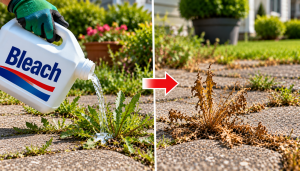
Gardeners who spray bleach on dandelions, thistles, and bindweed often see brown tops followed by fresh green shoots. The weed appears dead for a short time, then regrows from the same root system. This cycle repeats with every application, and extension services warn against using bleach for vegetation management.
In this guide, we break down why bleach is unreliable for permanent weed control by examining its contact-only action, the regrowth patterns of perennials, and what extension sources recommend instead.
Does Bleach Kill Weeds Permanently? 10 Facts To Know
1. Bleach Is A Contact Killer Only – No Root Penetration
Bleach acts only as a contact killer, meaning it damages whatever tissue it touches and nothing more. Sodium hypochlorite destroys cell walls through oxidation, causing leaves and stems to wilt, brown, and dry out within hours. The reaction stops at the plant surface.
Unlike systemic herbicides, bleach does not move through the plant’s vascular system. It cannot travel from the leaves to the roots, rhizomes, or tubers where perennial weeds store their energy. This is the fundamental reason bleach is unreliable for permanent weed control.
Because bleach never reaches the root system, the plant’s growing points remain alive underground. When conditions allow, the weed sends up new shoots from the same root mass, and the gardener is back where they started.
2. Perennial Weeds May Regrow Within Weeks – Most Common Result
Perennial weeds may regrow within weeks after bleach treatment because their underground roots, rhizomes, or other storage organs can remain alive after the foliage is damaged. Species like dandelion, Canada thistle, and field bindweed store energy below ground that bleach cannot reach.
The burned top growth dies back, giving the appearance of success for a short time. Then new shoots may emerge from the surviving root system, and the weed returns. Regrowth timing depends on species, root reserves, environmental conditions, plant size, and how much tissue was injured.
Repeated bleach applications weaken perennials over time, but they rarely eliminate the plant. Without killing or exhausting the root, the weed can continue to resprout, making bleach an unreliable long-term solution.
3. Deep-Rooted Weeds Are Unaffected – Dandelion, Thistle, Bindweed
Deep-rooted weeds are largely unaffected by bleach because their storage organs sit below the soil surface where the spray cannot reach. Dandelions have taproots, Canada thistle spreads through rhizomes, and field bindweed has an extensive underground root system. Each of these species can regrow after top growth is damaged.
Field bindweed in particular has an extensive root system that makes contact-only treatments unreliable for long-term control. Yellow nutsedge survives on underground tubers that regenerate new plants after the foliage dies. These species illustrate why contact products rarely deliver lasting results on established perennials.
Each of these weeds may regrow from the surviving root system after bleach burns the top growth. Effective management typically requires destroying or exhausting the root through systemic herbicide, repeated cultivation, or complete removal.
4. Visible Browning Is Temporary – Not A Sign Of Root Death
Visible browning is temporary and is not a sign of root death. When bleach contacts foliage, the leaves wilt and turn brown within hours, creating the appearance that the weed is dying. This is surface damage, not a sign that the underground plant has been killed.
The root system can remain alive and continue to store energy for regrowth. Within weeks, new shoots may push through the soil and the weed returns. The brown leaves were never a reliable indicator of long-term control.
Judging success by how the top growth looks is one of the biggest mistakes gardeners make with bleach. The only meaningful test is whether the plant regrows, and with bleach, it often does.
5. Bleach Is Not A Residual Herbicide – No Dependable Pre-Emergence Control
Bleach is not a conventional residual herbicide and does not provide dependable pre-emergence weed control. Sodium hypochlorite is highly reactive and breaks down quickly when exposed to sunlight, heat, and organic matter. It leaves nothing behind in the soil to prevent new weed seeds from germinating.
This means the weed problem can return from two directions at once. Perennial roots may resprout from below, and annual weed seeds may germinate from above. Both can happen within days to weeks of application, requiring repeated treatments to maintain even temporary control.
Products formulated with soil residual activity prevent new germination and provide longer control. Bleach does not offer these benefits, which is one reason extension services recommend against using it for weed management.
6. Annual Weeds May Die – But Seeds Remain In The Soil
Annual weeds may die after bleach treatment, but seeds remain in the soil and can germinate within weeks. Species like chickweed, purslane, and crabgrass have shallow roots and no underground storage organs, so direct contact with bleach can kill the plant.
Even in this best-case scenario, the effect is temporary. A single annual weed can produce thousands of seeds that persist in the soil for years. Killing the visible plant does nothing to reduce the seedbank that will produce the next generation.
This is why bleach may appear to work briefly on annual weeds before the problem returns. Without addressing the seeds, the cycle continues, and the gardener keeps spraying with the same disappointing result.
7. Bleach Can Harm Soil Organisms – Not For Routine Garden Use
Bleach can harm soil organisms and is not appropriate for routine garden use. University extension guidance specifically advises against pouring bleach into gardens because it can harm plants and beneficial soil organisms, and Penn State warns that bleach can severely damage soil health.
Bleach is highly reactive and can harm soil microorganisms and vegetation, making it inappropriate for routine weed control. Beneficial bacteria, fungi, and earthworms in the treated area can be affected, which may reduce nutrient cycling and soil structure over time.
Because the chemical behavior of bleach in soil is complex and depends on concentration, application frequency, and site conditions, the safest approach is to avoid using it for vegetation management altogether.
8. Bleach Can Injure Desirable Plants On Contact – No Selectivity
Bleach can injure desirable plants on contact and offers no practical selectivity. Spray drift, splashing, and runoff can carry bleach to nearby foliage, lawns, and ornamental shrubs, causing visible damage within hours. There is no reliable way to target weeds without risking surrounding vegetation.
Root contact is also a concern because bleach can move into the soil and affect roots of nearby species. Seedlings and shallow-rooted plants are especially vulnerable. This makes bleach a poor choice for garden beds, borders, and lawns.
Gardeners who use bleach often restrict it to cracks, driveways, and gravel paths where desirable plants are absent. Even there, the treatment is temporary, and new weeds germinate from seeds within weeks.
9. Systemic Herbicides Work Differently – They Reach The Roots
Systemic herbicides work differently from bleach because they move through the plant’s vascular system and can reach the roots. Products containing glyphosate or triclopyr are absorbed through leaves and translocated to underground storage organs, damaging the entire plant including the root system when applied correctly.
This is why systemic herbicides can provide longer-term control of perennials that bleach cannot address. The trade-off is that they can also injure desirable plants if they contact them, so careful application is essential. Timing matters too, with late summer and fall applications often delivering the best results.
Understanding the difference between contact and systemic action explains why bleach is unreliable where systemic products succeed. Contact killers damage surfaces, while systemic products move within the plant to affect the root system.
10. What Works Better – Alternatives For Longer-Term Control
What works better for longer-term weed control depends on the species, site, and management goals. Systemic herbicides, repeated cultivation, smothering, solarization, and hand-digging roots all target the underground storage organs that bleach cannot reach.
For perennial weeds like dandelion and thistle, digging out the root or applying systemic herbicide in late summer often provides longer-term control. For annual weeds, mulching and pre-emergent products help prevent germination in the first place. For large infestations, combining methods usually works best.
No single product eliminates every weed permanently, but integrated approaches that combine cultural, mechanical, and chemical tools deliver the most reliable results. Bleach does not fit into any of these categories because it is not a labeled vegetation-management product.
7 Tips For Reliable Weed Control Without Bleach
- Identify the weed first: Confirm whether the weed is annual or perennial before choosing a method, since perennials usually require root-targeting approaches that bleach cannot provide.
- Use labeled weed-control products: Choose herbicides registered for the specific weed and site rather than household cleaners that are not labeled for vegetation management.
- Dig out roots for small infestations: Removing the entire root system by hand eliminates the plant without chemicals and reduces the chance of regrowth.
- Apply systemic herbicides in late summer or fall: Weeds translocate energy to their roots during this window, which often improves absorption and delivers longer-term control.
- Mulch and smother to prevent germination: A layer of mulch or cardboard blocks light and helps stop new weed seeds from sprouting, reducing future pressure.
- Monitor and re-treat regrowth: Scout treated areas every few weeks and remove new shoots while they are still small to prevent the weed from rebuilding root reserves.
- Protect soil health: Avoid bleach and other products that can harm soil organisms, since healthy soil supports desirable plants and naturally suppresses weeds over time.
Does Bleach Kill Weeds Permanently (FAQs)
1. Does bleach kill weeds permanently?
No, bleach does not kill weeds permanently. It can burn visible leaves on contact but does not reach the root system. Perennial weeds with surviving underground roots, rhizomes, or tubers may regrow within weeks, and annual weeds can be replaced by seeds germinating in the soil.
2. How long does it take for weeds to regrow after bleach?
Regrowth timing varies by species, root reserves, and site conditions, but perennial weeds may regrow within weeks after bleach treatment. The burned top growth dies back first, then new shoots may emerge from the surviving root system.
3. Why does bleach fail on dandelions and thistles?
Bleach fails on dandelions, thistles, and other deep-rooted perennials because it cannot reach their taproots and rhizomes. These storage organs can remain alive underground and send up new shoots once the damaged foliage dies back.
4. Is bleach effective on annual weeds?
Bleach can kill annual weeds if it contacts their growing points directly, but the effect is temporary. Seeds already in the soil can germinate within weeks, so the weed problem may return unless the seedbank is also addressed.
5. Is bleach labeled for weed control?
No, household bleach is a cleaning and disinfecting product and is not labeled for vegetation management. Penn State and other extension services specifically warn against using household bleach as a homemade weed killer.
6. What provides longer-term control instead of bleach?
Systemic herbicides containing glyphosate or triclopyr can provide longer-term control by reaching the roots when applied correctly. Digging out the entire root system, repeated cultivation, and smothering with mulch also deliver lasting results without bleach.
7. Can I use bleach to kill weeds in my driveway?
Bleach can temporarily burn weeds in driveways and cracks, but it does not kill the roots and it can corrode metal tools and surfaces. Herbicides labeled for hardscape use or manual removal are better options for long-term control.
Conclusion
Bleach does not kill weeds permanently because it acts only as a contact killer that burns visible leaves without reaching the root system. Perennial weeds with surviving underground roots, rhizomes, or tubers may regrow within weeks, and annual weeds can be replaced by seeds germinating in the soil.
The regrowth cycle can repeat with every application, making bleach an unreliable long-term solution. Bleach can also harm soil organisms, injure desirable plants, and corrode some materials, adding hidden costs that outweigh any short-term savings.
Longer-term control requires targeting the root system, not just the top growth. Systemic herbicides, digging out roots, repeated cultivation, and smothering all address the underground storage organs that bleach cannot reach, and integrated programs deliver the most reliable results.
Skip the bleach and choose a method matched to the weed species and site. Identifying the weed accurately and applying the right tool saves time, protects soil health, and delivers better results than an endless cycle of regrowth.