Wisconsin gardens face unique challenges, with cold winters, warm summers, and diverse growing conditions across the state. The best plants for Wisconsin are cold-hardy species that survive harsh winters, thrive in the state’s varied climate, and provide beauty and resilience throughout the growing season. From native wildflowers to tough perennials, these plants are perfectly adapted to Badger State conditions.
Choosing the right plants for Wisconsin depends on your specific region within the state, from the Lake Michigan shoreline to the Mississippi River valley. The state spans USDA hardiness zones 3b to 5b, with northern areas experiencing extreme cold and southern regions enjoying milder conditions. Understanding your zone helps you select plants that will survive and thrive in your garden.
Wisconsin’s native plants are particularly well-suited to local conditions, having evolved with the state’s climate, soils, and wildlife. These species support pollinators, birds, and other wildlife while requiring minimal maintenance once established. Incorporating native plants into your garden creates beautiful, sustainable landscapes that celebrate Wisconsin’s natural heritage.
In this guide, the best plants for Wisconsin are evaluated based on their cold hardiness, adaptability, seasonal interest, and wildlife value. You’ll find expert recommendations for perennials, shrubs, trees, native plants, and ground covers that will thrive in Badger State gardens.
50 Best Plants For Wisconsin
1. Purple Coneflower (Echinacea purpurea) – Best Perennial For Wisconsin Gardens
Purple Coneflower is the best perennial for Wisconsin gardens, producing large, pink-purple daisies that thrive in the state’s varying conditions. Its deep taproot makes it drought-tolerant, while its hardiness to -30°F ensures winter survival. As a result, it is essential for Wisconsin perennial borders.

- SUMMER COLOR: Vibrant orange blooms create a bold display that brightens garden beds and attracts beneficial pollinators.
- GROWTH: Orange Coneflower can grow to be about 24 inches tall and 18 inches wide at maturity.

This native perennial produces flowers from midsummer to autumn, attracting bees and butterflies while providing winter seed heads for birds. Moreover, it tolerates drought, poor soil, and temperature extremes, making it incredibly resilient. Therefore, it offers reliable colour with exceptional Wisconsin adaptability.
Coneflower is easy to grow in full sun and well-drained soil, with its sturdy stems needing no staking. Furthermore, it is available in a wide range of colours, from classic purple to white, orange, and red. Overall, Coneflower delivers reliable perennial beauty with outstanding Wisconsin performance.
Pros:
- Hardy to -30°F
- Long summer to autumn bloom
- Attracts pollinators and birds
- Drought and poor soil tolerant
- Wide range of colours
Cons:
- Can be short-lived in heavy soil
- May need division every few years
- Susceptible to aster yellows
2. Black-Eyed Susan (Rudbeckia hirta) – Best Cheerful Perennial For Wisconsin
Black-Eyed Susan is the best cheerful perennial for Wisconsin, producing masses of golden-yellow daisies with dark centres that thrive in state conditions. Its hardiness to -30°F and ability to self-seed make it a reliable choice for Badger State gardens. As a result, it is essential for adding late-summer colour.

- High-Value Wildflower: 10,000 Black eyed susan seeds perennial (tender) deliver masses of yellow daisy blooms for pollinator gardens. Great wildflower seeds for beds, borders, containers, and meadows, USDA 1-12.
- Many Sowing Options: 1. Sow blackeyed susan flower seeds Directly in late Fall. 2. Or, For spring, cold stratify rudbeckia seeds 4 wks with moist sand, 3. Or start indoors 6–8 wks early. Versatile flower seed packets and gardening seeds. Surface-sow; needs light.
This tough perennial produces flowers from midsummer through autumn, attracting bees and butterflies while providing winter seed heads for birds. Moreover, it adapts to various soil types and tolerates drought, heat, and cold. Therefore, it offers cheerful colour with exceptional Wisconsin adaptability.
Black-Eyed Susan is easy to grow in full sun and well-drained soil, with its sturdy stems needing no staking. Furthermore, it self-seeds readily, creating naturalistic drifts that return year after year. Overall, Black-Eyed Susan delivers sunny daisy charm with outstanding Wisconsin performance.
Pros:
- Hardy to -30°F
- Long late-summer bloom
- Self-seeds for naturalizing
- Drought and heat tolerant
- Winter seed heads for birds
Cons:
- Can be short-lived
- May need division
- Susceptible to leaf spot
3. Daylily (Hemerocallis) – Most Reliable Perennial For Wisconsin
Daylily is the most reliable perennial for Wisconsin, producing trumpet-shaped flowers in a rainbow of colours that thrive in state conditions. Its exceptional hardiness and adaptability make it a staple of Badger State gardens. As a result, it is essential for any Wisconsin landscape.

- This listing is for 3 pots of Stellas-- the perfect number to add a little something to your landscaping! Stella D'Oro--- one of the best rebloomer in daylily family.
- Please note: Our shipping occurs only one time for up to 5 items, so please check out all our plants and bulbs to make the most of your shipping dollar
This tough perennial produces flowers from late spring through summer, with each bloom lasting only a day but followed by many more. Moreover, it tolerates drought, poor soil, and temperature extremes, making it incredibly resilient. Therefore, it offers reliable colour with exceptional Wisconsin adaptability.
Daylily is easy to grow in full sun to partial shade and any well-drained soil, with its grass-like foliage providing attractive ground cover. Furthermore, it is available in thousands of cultivars, offering endless colour and form options. Overall, Daylily delivers reliable, low-maintenance beauty with outstanding Wisconsin performance.
Pros:
- Exceptionally cold-hardy
- Wide range of colours
- Tolerates drought and poor soil
- Low-maintenance
- Long blooming season
Cons:
- Each flower lasts one day
- Foliage can look tired
- Can become overcrowded
4. Peony (Paeonia) – Best Fabulous Bloom For Wisconsin
Peony is the best fabulous bloom for Wisconsin, producing large, fragrant, sumptuous flowers that are the highlight of the spring garden. Its exceptional cold hardiness and longevity make it a treasured heirloom for Badger State gardens. As a result, it is essential for classic Wisconsin borders.

This long-lived perennial produces spectacular flowers in late spring to early summer, with blooms that can last up to two weeks in cool weather. Moreover, it is extremely cold-hardy, surviving temperatures well below -30°F, and can live for decades. Therefore, it offers sumptuous spring beauty with exceptional longevity.
Peony is easy to grow in full sun and well-drained, fertile soil, with its attractive foliage providing interest even after flowering. Furthermore, it is deer-resistant and virtually pest-free, making it a reliable choice for Wisconsin gardens. Overall, Peony delivers spectacular spring blooms with outstanding Wisconsin performance.
Pros:
- Spectacular, fragrant blooms
- Extremely cold-hardy
- Long-lived heirloom plant
- Deer-resistant
- Minimal maintenance
Cons:
- Short flowering period
- Need support for heavy blooms
- Slow to establish
5. Sedum (Stonecrop) – Best Succulent For Wisconsin Gardens
Sedum is the best succulent for Wisconsin gardens, producing fleshy leaves and late-season flower heads that provide colour from summer through winter. Its exceptional cold hardiness makes it perfect for Badger State rock gardens, borders, and containers. As a result, it is essential for low-maintenance Wisconsin landscapes.

- FAST AND EFFICIENT LIFE CYCLE – These Wisconsin Fast Plants seeds (Brassica rapa) complete a full life cycle in 35-40 days, making them ideal for classroom studies in life cycles, environmental science, and botany. Flowering occurs in just 13-17 days for quick observation.
- EASY POLLINATION WITH PURPLE STIGMA – A new purple stigma trait has been introduced to make pollination easier. The contrast between the purple stigma and yellow pollen allows students to quickly identify pollinated flowers, increasing successful pollination rates and seed production.
This tough perennial produces flat heads of pink, red, or yellow flowers from late summer to autumn, attracting bees and butterflies. Moreover, it survives temperatures well below -20°F and requires minimal water once established. Therefore, it offers reliable succulent beauty with exceptional Wisconsin adaptability.
Sedum is easy to grow in full sun and well-drained soil, with its architectural form providing year-round interest. Furthermore, the dried flower heads provide winter structure and food for birds. Overall, Sedum delivers drought-tolerant beauty with outstanding Wisconsin performance.
Pros:
- Exceptionally cold-hardy
- Drought-tolerant
- Late-season flower heads
- Architectural form
- Winter interest
Cons:
- Needs well-drained soil
- Slow to establish
- Can become leggy in rich soil
6. Russian Sage (Perovskia atriplicifolia) – Best Silver-Foliage Perennial For Wisconsin
Russian Sage is the best silver-foliage perennial for Wisconsin, producing aromatic, grey-green leaves and airy spikes of lavender-blue flowers that thrive in cold, dry conditions. Its exceptional hardiness makes it perfect for Badger State borders and cottage gardens. As a result, it is essential for adding texture and colour to Wisconsin landscapes.

- RUSSIAN SAGE LIVE PLANT: Healthy, live perennial; no waiting for seeds or tiny plant plugs to grow
- POLLINATOR FRIENDLY: Butterflies and bees will thank you; you'll know you're contributing to the well-being of pollinators when you add this plant to your garden
This tough perennial produces flowers from midsummer to autumn, attracting bees and butterflies with its abundant nectar. Moreover, it survives temperatures down to -30°F and tolerates drought, poor soil, and heat. Therefore, it offers silver-textured beauty with exceptional Wisconsin adaptability.
Russian Sage is easy to grow in full sun and well-drained soil, with its airy, upright form adding movement to borders. Furthermore, it is deer-resistant and low-maintenance, making it perfect for challenging Wisconsin conditions. Overall, Russian Sage delivers silver-foliage charm with outstanding Wisconsin performance.
Pros:
- Hardy to -30°F
- Drought and heat tolerant
- Silver-grey aromatic foliage
- Long flowering season
- Deer-resistant
Cons:
- Needs full sun
- Can become floppy
- May need staking in rich soil
7. Hosta – Best Shade Perennial For Wisconsin
Hosta is the best shade perennial for Wisconsin, producing lush, attractive foliage in a stunning array of colours, sizes, and textures. Its exceptional cold hardiness makes it a staple of Badger State shade gardens. As a result, it is essential for shady Wisconsin spots.

This shade-loving perennial produces spikes of lavender or white flowers in summer, with its attractive foliage providing interest from spring through autumn. Moreover, it survives temperatures well below -30°F and tolerates various soil types with consistent moisture. Therefore, it offers lush foliage beauty with exceptional Wisconsin adaptability.
Hosta is easy to grow in partial to full shade and well-drained, moist soil, with its mounding habit providing excellent ground cover. Furthermore, it is available in thousands of cultivars, offering endless colour and texture combinations. Overall, Hosta delivers lush shade beauty with outstanding Wisconsin performance.
Pros:
- Exceptionally cold-hardy
- Wide range of foliage colours
- Excellent shade ground cover
- Low-maintenance
- Attractive flowers
Cons:
- Susceptible to deer and slugs
- Needs consistent moisture
- Can be slow to establish
8. Butterfly Weed (Asclepias tuberosa) – Best Monarch Magnet For Wisconsin
Butterfly Weed is the best monarch magnet for Wisconsin, producing clusters of brilliant orange flowers that attract monarch butterflies and thrive in state conditions. Its deep taproot and hardiness make it a reliable performer in Badger State gardens. As a result, it is essential for Wisconsin wildlife gardens.

- Asclepias Live Plant: No waiting for seeds to germinate
- Pollinator Plant: Loved by butterflies and bees
This native perennial produces flowers from early to late summer, providing essential nectar for monarchs and other butterflies. Moreover, it is hardy to -30°F and tolerates drought, poor soil, and heat, making it incredibly resilient. Therefore, it offers brilliant colour with exceptional Wisconsin adaptability.
Butterfly Weed is easy to grow in full sun and well-drained soil, with its deep taproot making it drought-tolerant once established. Furthermore, it is deer-resistant and low-maintenance, providing reliable colour in challenging conditions. Overall, Butterfly Weed delivers monarch magnet beauty with outstanding Wisconsin performance.
Pros:
- Essential for monarch butterflies
- Brilliant orange flowers
- Hardy to -30°F
- Drought and heat tolerant
- Deer-resistant
Cons:
- Slow to establish from seed
- Late to emerge in spring
- Can be floppy in rich soil
9. Ornamental Grasses – Best Texture Plants For Wisconsin
Ornamental grasses are the best texture plants for Wisconsin, providing movement, structure, and year-round interest in Badger State gardens. Switchgrass (Panicum virgatum), Feather Reed Grass (Calamagrostis), and Blue Fescue (Festuca glauca) are exceptionally hardy choices. As a result, they are essential for adding texture to Wisconsin landscapes.

- Vigorous Growth: Enjoy robust pampas grass that forms stunning white pampas plumes. As perennial plants in USDA Zones 6–11, they reach up to 10-12 feet, adding dramatic height to any flower garden.
- High Germination Rate: tall pampas grass boast up to 90% germination. Sow these fast growing grass seeds at 72°F indoors 8-10 weeks before planting out. Or direct sow in spring. Sporuts in 20-30 days.
These tough perennials produce airy plumes and rustling foliage that add movement and sound to the garden throughout the year. Moreover, they survive temperatures well below -20°F and tolerate drought, poor soil, and wind. Therefore, they offer architectural texture with exceptional Wisconsin adaptability.
Ornamental grasses are easy to grow in full sun and well-drained soil, with their deep root systems helping to break up compacted soil. Furthermore, they provide winter interest and food and shelter for birds. Overall, Ornamental Grasses deliver year-round texture with outstanding Wisconsin performance.
Pros:
- Year-round interest
- Hardy and drought-tolerant
- Adds movement and sound
- Provides wildlife habitat
- Low-maintenance
Cons:
- Some can be invasive
- Needs full sun
- May need cutting back in spring
10. Lilac (Syringa) – Best Fragrant Shrub For Wisconsin
Lilac is the best fragrant shrub for Wisconsin, producing clusters of intoxicatingly fragrant flowers that thrive in state conditions. Its exceptional cold hardiness makes it a cherished feature of Badger State gardens. As a result, it is essential for fragrant Wisconsin landscapes.

- Heavy-Duty Duck Canvas: Each bag is constructed from 10oz cotton duck canvas. This rugged material provides the perfect balance of grip and slide, ensuring they hold up through countless rounds of competition.
- Authentic Wisconsin Corn Fill: We stay true to the game's roots. These bags are filled with real, cleaned Wisconsin corn, providing the traditional weight and feel that synthetic pellets simply can't match.
This classic shrub produces flowers in late spring, filling the garden with its iconic fragrance while attracting bees and butterflies. Moreover, it is hardy to -30°F and tolerates various soil types, requiring minimal care once established. Therefore, it offers fragrant spring beauty with exceptional Wisconsin adaptability.
Lilac is easy to grow in full sun and well-drained soil, with its attractive, heart-shaped foliage providing summer interest. Furthermore, it is long-lived, with some lilacs surviving for over a hundred years. Overall, Lilac delivers fragrant spring charm with outstanding Wisconsin performance.
Pros:
- Intoxicating spring fragrance
- Hardy to -30°F
- Long-lived shrub
- Attracts pollinators
- Minimal maintenance
Cons:
- Short flowering period
- Can become leggy
- Susceptible to powdery mildew
11. Hydrangea (Paniculata) – Best Late-Summer Shrub For Wisconsin
Panicle Hydrangea is the best late-summer shrub for Wisconsin, producing large, cone-shaped flower heads that bloom from summer through autumn. Its exceptional hardiness makes it a standout performer in Badger State gardens. As a result, it is essential for adding late-season colour to Wisconsin landscapes.

- Thrives in USDA Zones 4 to 9
- Grows to a mature size of 36-48 inches H x 36-48 inches W
This tough shrub produces flowers from midsummer to autumn, with blooms changing from white to pink as they age. Moreover, it is hardy to -30°F and tolerates various soil types, requiring minimal care once established. Therefore, it offers late-summer beauty with exceptional Wisconsin adaptability.
Hydrangea is easy to grow in full sun to partial shade and well-drained soil, with its attractive foliage providing summer interest. Furthermore, the dried flower heads provide winter structure, extending seasonal interest. Overall, Hydrangea delivers reliable late-summer colour with outstanding Wisconsin performance.
Pros:
- Long late-summer blooming
- Hardy to -30°F
- Colour-changing blooms
- Dried winter flower heads
- Reliable and easy to grow
Cons:
- Needs consistent moisture
- Can be large
- May need pruning for shape
12. Dogwood (Cornus) – Best Winter-Interest Shrub For Wisconsin
Dogwood is the best winter-interest shrub for Wisconsin, producing brilliant red, yellow, or orange stems that provide stunning colour against the winter snow. Its exceptional cold hardiness makes it a valuable addition to Badger State gardens. As a result, it is essential for adding winter beauty to Wisconsin landscapes.

This tough shrub produces bright stems in winter, attractive flowers in spring, and berries in autumn, providing year-round interest. Moreover, it is hardy to -30°F and tolerates various soil types, including wet conditions. Therefore, it offers stunning winter colour with exceptional Wisconsin adaptability.
Dogwood is easy to grow in full sun to partial shade and well-drained to moist soil, with its suckering habit making it excellent for naturalizing. Furthermore, it provides food and habitat for birds and other wildlife. Overall, Dogwood delivers brilliant winter stems with outstanding Wisconsin performance.
Pros:
- Brilliant winter stem colour
- Hardy to -30°F
- Multi-season interest
- Tolerates wet soil
- Provides wildlife habitat
Cons:
- Can be invasive
- Needs pruning for stem colour
- Can spread suckering
13. Ninebark (Physocarpus) – Best Foliage Shrub For Wisconsin
Ninebark is the best foliage shrub for Wisconsin, producing attractive, textured leaves in shades of purple, gold, or green that provide season-long colour. Its exceptional hardiness makes it a reliable choice for Badger State gardens. As a result, it is essential for adding foliage interest to Wisconsin landscapes.
No products found.
This tough shrub produces clusters of pink or white flowers in spring, with its colourful foliage providing interest throughout the growing season. Moreover, it is hardy to -30°F and tolerates drought, poor soil, and wind. Therefore, it offers season-long foliage colour with exceptional Wisconsin adaptability.
Ninebark is easy to grow in full sun to partial shade and well-drained soil, with its arching form adding structure to borders. Furthermore, it is deer-resistant and virtually pest-free, making it a reliable choice for challenging Wisconsin conditions. Overall, Ninebark delivers colourful foliage with outstanding Wisconsin performance.
Pros:
- Colourful season-long foliage
- Hardy to -30°F
- Drought and wind tolerant
- Deer-resistant
- Low-maintenance
Cons:
- Can be large
- Needs full sun for best colour
- May need occasional pruning
14. Oak (Quercus) – Best Native Tree For Wisconsin
Oak is the best native tree for Wisconsin, producing majestic, long-lived shade trees that provide exceptional wildlife value. Hardy species like Bur Oak (Q. macrocarpa) and White Oak (Q. alba) thrive in state conditions. As a result, it is essential for large Wisconsin landscapes.

- Feel Energized Naturally: Ginsenosides in our DOL Wisconsin ginseng slices boost energy, stamina & mental focus without caffeine crashes. Supports immunity while improving mood naturally.
- Wisconsin’s Peak Potency: Grown in ideal soil/climate for maximum strength. Carefully dried in controlled US facilities to lock in freshness & quality.
These magnificent trees produce acorns that support wildlife, while their strong wood and deep roots provide stability and longevity. Moreover, they are hardy to -30°F and tolerate various soil types, with Bur Oak being particularly adaptable. Therefore, they offer majestic shade with exceptional Wisconsin adaptability.
Oaks are easy to grow in full sun and well-drained soil, with their slow growth ensuring long-lived beauty. Furthermore, their beautiful autumn foliage in shades of red, orange, and brown provides spectacular seasonal colour. Overall, Oak delivers majestic shade with outstanding Wisconsin performance.
Pros:
- Long-lived majestic shade
- Hardy to -30°F
- Exceptional wildlife value
- Beautiful autumn colour
- Strong, durable wood
Cons:
- Slow-growing
- Large size needs space
- Can be messy with acorns
15. Maple (Acer) – Best Autumn Colour Tree For Wisconsin
Maple is the best autumn colour tree for Wisconsin, producing brilliant displays of red, orange, and gold leaves. Hardy species like Sugar Maple (A. saccharum) and Red Maple (A. rubrum) thrive in state conditions. As a result, it is essential for adding autumn colour to Wisconsin landscapes.
- 100% Pure Wisconsin Maple Syrup
- No Additives
These beautiful trees produce stunning autumn foliage, with Sugar Maple providing legendary fall colour and sap for syrup production. Moreover, they are hardy to -30°F and adapt to various soil types, with Red Maple tolerating wet conditions. Therefore, they offer spectacular autumn colour with exceptional Wisconsin adaptability.
Maples are easy to grow in full sun to partial shade and well-drained soil, with their attractive form providing shade and beauty. Furthermore, their distinctive leaves and bark add year-round interest to landscapes. Overall, Maple delivers brilliant autumn colour with outstanding Wisconsin performance.
Pros:
- Spectacular autumn colour
- Hardy to -30°F
- Adaptable to various soils
- Attractive year-round form
- Valuable for syrup production
Cons:
- Can be large
- Shallow roots can be surface
- Susceptible to some diseases
16. Spruce (Picea) – Best Evergreen Tree For Wisconsin
Spruce is the best evergreen tree for Wisconsin, producing attractive, cone-shaped foliage that provides year-round colour and wind protection. Hardy species like Colorado Spruce and Norway Spruce thrive in state conditions. As a result, it is essential for adding structure and winter interest to Wisconsin landscapes.

These classic evergreens produce dense, blue-green or dark green needles that provide year-round colour and excellent windbreaks. Moreover, they are hardy to -30°F and tolerate various soil types. Therefore, they offer evergreen beauty with exceptional Wisconsin adaptability.
Spruce is easy to grow in full sun and well-drained soil, with its pyramidal form providing architectural interest. Furthermore, they provide excellent wildlife habitat and shelter for birds during winter. Overall, Spruce delivers evergreen year-round beauty with outstanding Wisconsin performance.
Pros:
- Year-round evergreen colour
- Hardy to -30°F
- Excellent windbreak
- Provides wildlife habitat
- Architectural form
Cons:
- Can be large
- Slow-growing
- Susceptible to some pests
17. Juniper (Juniperus) – Best Low-Growing Evergreen For Wisconsin
Juniper is the best low-growing evergreen for Wisconsin, producing attractive, scale-like foliage that provides year-round colour and ground cover. Hardy species like Creeping Juniper thrive in state conditions. As a result, it is essential for adding evergreen ground cover to Wisconsin landscapes.

- Decorative aluminum novelty sign with rounded corners and two pre-drilled mounting holes
- Intended for indoor decorative display; not designed for vehicle, roadway, or outdoor use
This tough evergreen produces dense, low-growing foliage that provides excellent ground cover, erosion control, and winter interest. Moreover, it is hardy to -30°F and tolerates drought, poor soil, and wind, making it incredibly resilient. Therefore, it offers evergreen ground cover with exceptional Wisconsin adaptability.
Juniper is easy to grow in full sun and well-drained soil, with its spreading habit providing attractive cover on slopes and banks. Furthermore, it is deer-resistant and low-maintenance, making it perfect for challenging Wisconsin conditions. Overall, Juniper delivers reliable evergreen ground cover with outstanding Wisconsin performance.
Pros:
- Year-round evergreen colour
- Hardy to -30°F
- Drought and wind tolerant
- Excellent erosion control
- Deer-resistant
Cons:
- Needs full sun
- Can be slow to establish
- Some varieties can be prickly
18. Clematis – Best Vine For Wisconsin Gardens
Clematis is the best vine for Wisconsin gardens, producing spectacular flowers in a wide range of colours that thrive in state conditions. Hardy varieties like Clematis viticella are well-suited to Badger State gardens. As a result, it is essential for adding vertical colour to Wisconsin landscapes.
- Clematis, Vines, Monograph, Encyclopedia, Illustrated
- Hardcover Book
This beautiful vine produces masses of flowers from late spring through autumn, with some varieties blooming twice in a season. Moreover, it is hardy to -30°F and tolerates various soil types, with its roots preferring cool, shaded conditions. Therefore, it offers spectacular vertical colour with exceptional Wisconsin adaptability.
Clematis is easy to grow in full sun and well-drained soil, with its twining stems attaching to trellises, fences, and pergolas. Furthermore, it is available in hundreds of cultivars, offering endless colour and flower form options. Overall, Clematis delivers spectacular vertical blooms with outstanding Wisconsin performance.
Pros:
- Spectacular flowering vine
- Hardy to -30°F
- Wide range of colours
- Long flowering season
- Excellent for vertical interest
Cons:
- Different pruning groups
- Can be susceptible to wilt
- Needs support for climbing
19. Bleeding Heart (Dicentra) – Best Spring Woodland Plant For Wisconsin
Bleeding Heart is the best spring woodland plant for Wisconsin, producing delicate, heart-shaped flowers that dangle from arching stems. Its exceptional cold hardiness makes it a beloved Badger State perennial. As a result, it is essential for Wisconsin woodland and shade gardens.

- Bleeding Hearts are primarily used for landscaping in shaded areas. Their distinctive dangling hearts and arching stems provide unique form and dimension to woodland gardens, the north side of homes, or perennial borders, creating a highlight in the spring garden.
- This variety is suited for planting in USDA Hardiness Zones 3 through 9. It performs well in cooler climates and is particularly adapted for gardens with shade across the northern and central states of the U.S.
This graceful perennial produces flowers in late spring, with pink and white blooms that create a romantic, woodland feel. Moreover, it is hardy to -30°F and thrives in partial to full shade, with its ferny foliage providing season-long interest. Therefore, it offers woodland charm with exceptional Wisconsin adaptability.
Bleeding Heart is easy to grow in partial to full shade and well-drained, moist soil, with its mounding habit providing attractive ground cover. Furthermore, it is deer-resistant and virtually pest-free, making it a reliable choice for challenging shade gardens. Overall, Bleeding Heart delivers charming woodland beauty with outstanding Wisconsin performance.
Pros:
- Charming heart-shaped flowers
- Hardy to -30°F
- Thrives in shade
- Ferny attractive foliage
- Deer-resistant
Cons:
- Goes dormant in summer
- Short flowering period
- Needs consistent moisture
20. Coral Bells (Heuchera) – Best Foliage Perennial For Wisconsin Shade
Coral Bells is the best foliage perennial for Wisconsin shade, producing colourful, scalloped leaves in a stunning array of shades. Its exceptional hardiness makes it a valuable Badger State perennial. As a result, it is essential for adding colour to Wisconsin shady spots.

- TOLERANT OF HEAT AND HUMIDITY
- PERENNIAL MOUNDING PLANT
This versatile perennial produces colourful foliage from spring through autumn, with varieties offering purple, green, bronze, silver, and orange leaves. Moreover, it is hardy to -30°F and thrives in partial to full shade, with its mounding habit providing attractive ground cover. Therefore, it offers season-long foliage colour with exceptional Wisconsin adaptability.
Coral Bells is easy to grow in partial to full shade and well-drained soil, with its delicate flower spikes adding summer interest. Furthermore, it is available in numerous cultivars, offering endless colour combinations for creative planting. Overall, Coral Bells delivers colourful shade foliage with outstanding Wisconsin performance.
Pros:
- Colourful season-long foliage
- Hardy to -30°F
- Thrives in shade
- Wide range of colours
- Attractive flower spikes
Cons:
- Can rot in wet clay
- Needs good drainage
- May need winter protection in exposed sites
21. Astilbe – Best Summer-Flowering Shade Perennial For Wisconsin
Astilbe is the best summer-flowering shade perennial for Wisconsin, producing feathery plumes of pink, red, white, or purple flowers that brighten shady gardens. Its exceptional cold hardiness makes it perfect for Badger State shade gardens. As a result, it is essential for adding summer colour to Wisconsin shady spots.
No products found.
This moisture-loving perennial produces feathery flower plumes from early to late summer, with its ferny foliage providing attractive ground cover. Moreover, it is hardy to -30°F and thrives in partial to full shade, with its flowers attracting butterflies and other pollinators. Therefore, it offers summer colour with exceptional Wisconsin adaptability.
Astilbe is easy to grow in partial to full shade and moisture-retentive soil, with its mounding habit providing excellent ground cover. Furthermore, the dried flower heads provide winter interest, extending seasonal appeal. Overall, Astilbe delivers feathery summer blooms with outstanding Wisconsin performance.
Pros:
- Feathery summer flower plumes
- Hardy to -30°F
- Thrives in shade
- Attractive ferny foliage
- Dried winter flower heads
Cons:
- Needs consistent moisture
- Can be slow to establish
- Susceptible to powdery mildew
22. Coreopsis (Tickseed) – Best Long-Blooming Perennial For Wisconsin
Coreopsis is the best long-blooming perennial for Wisconsin, producing masses of bright, daisy-like flowers in yellow, pink, orange, and red that bloom from early summer through autumn. Its exceptional hardiness makes it a valuable Badger State perennial. As a result, it is essential for adding continuous colour to Wisconsin borders.

- Country/Region Of Manufacture:Mexico, Mpn:Perennial
- Brand:Coreopsis, Country Of Manufacture:United States
This tough perennial produces flowers from early summer to autumn, with many varieties blooming continuously until frost. Moreover, it is hardy to -30°F and tolerates drought, poor soil, and heat, making it incredibly resilient. Therefore, it offers long-lasting colour with exceptional Wisconsin adaptability.
Coreopsis is easy to grow in full sun and well-drained soil, with its fine-textured foliage providing attractive ground cover. Furthermore, it is deer-resistant and low-maintenance, making it perfect for challenging Wisconsin conditions. Overall, Coreopsis delivers continuous colour with outstanding Wisconsin performance.
Pros:
- Continuous summer to autumn bloom
- Hardy to -30°F
- Drought and heat tolerant
- Wide range of colours
- Deer-resistant
Cons:
- Can be short-lived in heavy soil
- May need division every few years
- Susceptible to disease in wet soil
23. Lupine (Lupinus) – Best Pea-Flower Perennial For Wisconsin
Lupine is the best pea-flower perennial for Wisconsin, producing dramatic spikes of colourful, pea-like flowers that thrive in state conditions. Its exceptional cold hardiness makes it a standout Badger State perennial. As a result, it is essential for adding height and colour to Wisconsin borders.

- : Inspired by the breathtaking landscapes of Wisconsin, this blanket celebrates the harmony of flora and fauna in nature.
- : Available in a perfect size for draping over couches or beds, ensuring cozy moments anytime.
This striking perennial produces flower spikes from late spring to early summer, with its distinctive flowers attracting bees and other pollinators. Moreover, it is hardy to -30°F and adapts to various soil types, preferring slightly acidic conditions. Therefore, it offers architectural beauty with exceptional Wisconsin adaptability.
Lupine is easy to grow in full sun and well-drained soil, with its attractive, palm-shaped foliage providing season-long interest. Furthermore, it is available in numerous cultivars, with the Russell Hybrids being particularly popular. Overall, Lupine delivers dramatic flower spikes with outstanding Wisconsin performance.
Pros:
- Dramatic flower spikes
- Hardy to -30°F
- Wide range of colours
- Attractive palm-shaped foliage
- Excellent for cottage gardens
Cons:
- Can be short-lived
- Susceptible to aphids
- Prefers acidic soil
24. Bearded Iris – Best Rhizome Plant For Wisconsin
Bearded Iris is the best rhizome plant for Wisconsin, producing stunning, ruffled flowers in a rainbow of colours that thrive in state conditions. Its exceptional hardiness makes it a classic Badger State perennial. As a result, it is essential for adding architectural blooms to Wisconsin borders.

These classic perennials produce flowers in late spring to early summer, with their unique, ruffled blooms adding elegance to borders. Moreover, they are hardy to -30°F and tolerate drought and poor soil, requiring only good drainage to thrive. Therefore, they offer stunning architectural blooms with exceptional Wisconsin adaptability.
Bearded Iris is easy to grow in full sun and well-drained soil, with its sword-like foliage providing attractive structure. Furthermore, they are available in countless colours and patterns, from subtle pastels to vibrant jewel tones. Overall, Bearded Iris delivers stunning flower power with outstanding Wisconsin performance.
Pros:
- Stunning architectural blooms
- Hardy to -30°F
- Wide range of colours
- Drought-tolerant
- Sword-like attractive foliage
Cons:
- Rhizomes can rot in wet soil
- Needs full sun
- Requires division every few years
25. Creeping Phlox (Phlox subulata) – Best Spring Ground Cover For Wisconsin
Creeping Phlox is the best spring ground cover for Wisconsin, producing carpets of brilliant pink, purple, blue, or white flowers in early spring. Its exceptional hardiness makes it perfect for Badger State slopes, rock gardens, and borders. As a result, it is essential for adding early spring colour to Wisconsin landscapes.

- [Dense Carpet of Spring Blooms] Produces masses of star-shaped flowers that blanket foliage in spring. Plants spread slowly to form a thick, weed-suppressing mat.
- [Evergreen Ground Cover] Grows 4-6 inches tall with needle-like foliage that remains green year-round. Spreads 18-24 inches wide, filling gaps between rocks and along pathways. Ideal for erosion control on slopes .
This low-growing perennial produces masses of flowers in early spring, creating a stunning carpet of colour that attracts early pollinators. Moreover, it is hardy to -30°F and tolerates drought, poor soil, and heat, making it incredibly resilient. Therefore, it offers early spring colour with exceptional Wisconsin adaptability.
Creeping Phlox is easy to grow in full sun and well-drained soil, with its spreading habit providing excellent erosion control on slopes. Furthermore, it is evergreen in mild winters, providing year-round interest. Overall, Creeping Phlox delivers stunning spring ground cover with outstanding Wisconsin performance.
Pros:
- Brilliant early spring colour
- Hardy to -30°F
- Excellent erosion control
- Evergreen in mild winters
- Low-maintenance
Cons:
- Needs full sun
- Can become woody
- Short flowering period
26. Wild Bergamot (Monarda fistulosa) – Best Native Bee Balm For Wisconsin
Wild Bergamot is the best native bee balm for Wisconsin, producing clusters of lavender-pink flowers that attract bees, butterflies, and hummingbirds. Its hardiness and drought tolerance make it perfect for Badger State prairies and gardens. As a result, it is essential for Wisconsin native plantings.

- Monarda fistulosa - Open-pollinated. Non-GMO
- High Germination Rate - 92 to 98 % with current lot
This native perennial produces flowers from midsummer to autumn, with its aromatic leaves adding sensory interest. Moreover, it is hardy to -30°F and tolerates drought, poor soil, and heat, making it incredibly resilient. Therefore, it offers pollinator-friendly beauty with exceptional Wisconsin adaptability.
Wild Bergamot is easy to grow in full sun and well-drained soil, with its spreading habit providing attractive ground cover. Furthermore, it is deer-resistant and low-maintenance, making it perfect for challenging Wisconsin conditions. Overall, Wild Bergamot delivers native bee balm beauty with outstanding Wisconsin performance.
Pros:
- Attracts bees and hummingbirds
- Native to Wisconsin
- Drought-tolerant
- Aromatic foliage
- Deer-resistant
Cons:
- Can spread aggressively
- Susceptible to powdery mildew
- May need division
27. False Indigo (Baptisia australis) – Best Native Shrub-Like Perennial For Wisconsin
False Indigo is the best native shrub-like perennial for Wisconsin, producing tall spikes of blue-purple flowers that resemble lupines. Its deep root system makes it drought-tolerant, while its hardiness ensures winter survival. As a result, it is essential for Wisconsin native gardens.

- First Quality Native Wildflower Seeds – Current Lab Test Data Shown on Packet
- Exclusive Gold Vault Packaging – Provides 3X Longer Storage than Paper or Plastic with Triple Layer Mylar Gold Foil.
This native perennial produces flowers in late spring to early summer, with its attractive blue-green foliage providing season-long interest. Moreover, it is hardy to -30°F and tolerates drought, poor soil, and heat, making it incredibly resilient. Therefore, it offers native shrub-like beauty with exceptional Wisconsin adaptability.
False Indigo is easy to grow in full sun and well-drained soil, with its deep taproot making it drought-tolerant once established. Furthermore, it is deer-resistant and low-maintenance, providing reliable colour in challenging conditions. Overall, False Indigo delivers native shrub-like beauty with outstanding Wisconsin performance.
Pros:
- Native shrub-like perennial
- Blue-purple flower spikes
- Drought-tolerant
- Deep taproot for stability
- Deer-resistant
Cons:
- Slow to establish
- Large size for small gardens
- Can be difficult to transplant
28. Prairie Dropseed (Sporobolus heterolepis) – Best Native Grass For Wisconsin
Prairie Dropseed is the best native grass for Wisconsin, producing fine-textured foliage and airy seed heads that provide year-round interest. Its hardiness and adaptability make it perfect for Badger State prairies and gardens. As a result, it is essential for Wisconsin native plantings.

- Hardy in USDA zones 5-9. Due to varying agricultural regulations, we do not ship to the following states: AK, AZ, CA, CO, ID, MT, NV, OR, UT, WA and HI.
- Full Sun, Native
This native grass produces attractive mounds of fine foliage that turn golden in autumn, with airy seed heads adding movement. Moreover, it is hardy to -30°F and tolerates drought, poor soil, and heat, making it incredibly resilient. Therefore, it offers native grass beauty with exceptional Wisconsin adaptability.
Prairie Dropseed is easy to grow in full sun and well-drained soil, with its neat, mounding habit providing attractive ground cover. Furthermore, it is low-maintenance and provides winter interest and wildlife habitat. Overall, Prairie Dropseed delivers native grass beauty with outstanding Wisconsin performance.
Pros:
- Native Wisconsin grass
- Year-round interest
- Drought-tolerant
- Neat, mounding habit
- Wildlife habitat value
Cons:
- Slow to establish
- Can be expensive
- May need seed collection for large areas
29. Milkweed (Asclepias) – Best Native Plant For Monarchs In Wisconsin
Milkweed is the best native plant for monarchs in Wisconsin, providing essential food for monarch caterpillars and nectar for adult butterflies. Species like Common Milkweed (A. syriaca) and Swamp Milkweed (A. incarnata) are well-suited to state conditions. As a result, it is essential for Wisconsin monarch gardens.
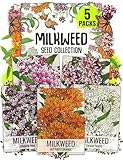
- Pollinator Attraction: Milkweed flowers are known for attracting a variety of pollinators, including bees, butterflies, and hummingbirds. They produce a sweet nectar that is particularly enticing to monarch butterflies, which lay their eggs exclusively on milkweed plants.
- 5 Packets: This collection includes Showy Milkweed Seeds (Asclepias speciosa), Pink Swamp Milkweed Seeds (Asclepias incarnata), White Swamp Milkweed Seeds (Asclepias incarnata), Orange Butterfly Milkweed Seeds (Asclepias tuberosa) & Common Milkweed Seeds (Asclepias syriaca.)
This native perennial produces clusters of pink, orange, or white flowers that attract monarchs and other butterflies. Moreover, it is hardy to -30°F and adapts to various soil types, with Swamp Milkweed tolerating wet conditions. Therefore, it offers essential monarch habitat with exceptional Wisconsin adaptability.
Milkweed is easy to grow in full sun and well-drained to moist soil, with its spreading habit providing attractive ground cover. Furthermore, it is deer-resistant and low-maintenance, providing reliable monarch habitat in challenging conditions. Overall, Milkweed delivers essential monarch support with outstanding Wisconsin performance.
Pros:
- Essential for monarch butterflies
- Native Wisconsin species
- Attractive flowers
- Deer-resistant
- Low-maintenance
Cons:
- Can spread aggressively
- Some species are weedy
- Contains toxic sap
30. Culver’s Root (Veronicastrum virginicum) – Best Native Spire Plant For Wisconsin
Culver’s Root is the best native spire plant for Wisconsin, producing tall, elegant spikes of white flowers that add vertical interest to Badger State gardens. Its hardiness and adaptability make it perfect for native plantings and pollinator gardens. As a result, it is essential for Wisconsin native landscapes.

- BLOOM TIME: Enjoy beautiful blooms during the summer season
- HARDINESS ZONE: Thrives in USDA hardiness zones 3 through 9
This native perennial produces tall flower spikes in midsummer, attracting bees and butterflies with its abundant nectar. Moreover, it is hardy to -30°F and tolerates various soil types, including moist conditions. Therefore, it offers native spire beauty with exceptional Wisconsin adaptability.
Culver’s Root is easy to grow in full sun to partial shade and well-drained soil, with its upright habit adding height to borders. Furthermore, it is deer-resistant and low-maintenance, providing reliable colour in challenging conditions. Overall, Culver’s Root delivers native spire beauty with outstanding Wisconsin performance.
Pros:
- Native Wisconsin perennial
- Tall white flower spikes
- Attracts pollinators
- Deer-resistant
- Low-maintenance
Cons:
- Needs consistent moisture
- Can be slow to establish
- May need staking in windy sites
31. Blazing Star (Liatris) – Best Native Summer Spire For Wisconsin
Blazing Star is the best native summer spire for Wisconsin, producing tall spikes of purple flowers that bloom from the top down, attracting butterflies and bees. Its hardiness and drought tolerance make it perfect for Badger State prairies and gardens. As a result, it is essential for Wisconsin native plantings.

This native perennial produces tall flower spikes in summer, with its unique top-down blooming adding visual interest. Moreover, it is hardy to -30°F and tolerates drought, poor soil, and heat, making it incredibly resilient. Therefore, it offers native summer spire beauty with exceptional Wisconsin adaptability.
Blazing Star is easy to grow in full sun and well-drained soil, with its upright habit adding height to borders. Furthermore, it is deer-resistant and low-maintenance, providing reliable colour in challenging conditions. Overall, Blazing Star delivers native summer spire beauty with outstanding Wisconsin performance.
Pros:
- Native Wisconsin perennial
- Tall purple flower spikes
- Unique top-down blooming
- Drought-tolerant
- Deer-resistant
Cons:
- Can be slow to establish
- Needs full sun
- May need staking in windy sites
32. Ironweed (Vernonia) – Best Native Late-Season Colour For Wisconsin
Ironweed is the best native late-season colour for Wisconsin, producing clusters of rich purple flowers in late summer and autumn when many other plants have faded. Its hardiness and adaptability make it perfect for Badger State gardens. As a result, it is essential for extending the bloom season.

This native perennial produces clusters of purple flowers in late summer to autumn, attracting bees and butterflies. Moreover, it is hardy to -30°F and tolerates various soil types, including moist conditions. Therefore, it offers late-season colour with exceptional Wisconsin adaptability.
Ironweed is easy to grow in full sun and well-drained to moist soil, with its tall, upright habit adding height to borders. Furthermore, it is deer-resistant and low-maintenance, providing reliable colour in challenging conditions. Overall, Ironweed delivers native late-season beauty with outstanding Wisconsin performance.
Pros:
- Native Wisconsin perennial
- Rich purple late blooms
- Attracts pollinators
- Deer-resistant
- Low-maintenance
Cons:
- Can be tall and floppy
- Needs consistent moisture
- May need staking
33. Cardinal Flower (Lobelia cardinalis) – Best Native Red Flower For Wisconsin
Cardinal Flower is the best native red flower for Wisconsin, producing brilliant spikes of red flowers that attract hummingbirds and butterflies. Its hardiness and moisture tolerance make it perfect for Badger State rain gardens and moist spots. As a result, it is essential for adding red colour to Wisconsin gardens.

- Vibrant Red Blooms: The Red Cardinal Flower (Lobelia cardinalis) is known for its striking, vibrant red tubular flowers that stand out in any garden, attracting hummingbirds and butterflies
- Height and Structure: This perennial plant typically grows between 2 to 4 feet tall, featuring a slender, upright structure with lance-shaped leaves that enhance its ornamental appeal
This native perennial produces spikes of red flowers in late summer, with its bright colour attracting hummingbirds. Moreover, it is hardy to -30°F and thrives in moist soil, making it perfect for rain gardens and wet areas. Therefore, it offers brilliant red colour with exceptional Wisconsin adaptability.
Cardinal Flower is easy to grow in partial shade and moisture-retentive soil, with its upright habit adding vertical interest. Furthermore, it is deer-resistant and low-maintenance, providing reliable colour in challenging conditions. Overall, Cardinal Flower delivers brilliant red beauty with outstanding Wisconsin performance.
Pros:
- Native Wisconsin perennial
- Brilliant red flower spikes
- Attracts hummingbirds
- Thrives in moist soil
- Deer-resistant
Cons:
- Needs consistent moisture
- Can be short-lived
- Susceptible to slugs
34. Joe Pye Weed (Eutrochium purpureum) – Best Native Tall Perennial For Wisconsin
Joe Pye Weed is the best native tall perennial for Wisconsin, producing towering stems topped with large, domed clusters of purple-pink flowers. Its hardiness and adaptability make it perfect for Badger State rain gardens and borders. As a result, it is essential for adding height to Wisconsin gardens.
No products found.
This native perennial produces tall stems with large flower heads in late summer, attracting a wide range of butterflies. Moreover, it is hardy to -30°F and tolerates various soil types, including wet conditions. Therefore, it offers towering beauty with exceptional Wisconsin adaptability.
Joe Pye Weed is easy to grow in full sun to partial shade and well-drained to moist soil, with its towering habit adding drama to borders. Furthermore, it is deer-resistant and low-maintenance, providing reliable colour in challenging conditions. Overall, Joe Pye Weed delivers towering native beauty with outstanding Wisconsin performance.
Pros:
- Native Wisconsin perennial
- Towering height
- Large domed flower heads
- Attracts butterflies
- Deer-resistant
Cons:
- Can be too large for small gardens
- Needs consistent moisture
- May need staking in exposed sites
35. New England Aster (Symphyotrichum novae-angliae) – Best Native Autumn Flower For Wisconsin
New England Aster is the best native autumn flower for Wisconsin, producing masses of purple daisies with golden centres that bloom in late summer and autumn. Its hardiness and late-season colour make it essential for Badger State gardens. As a result, it is perfect for extending the bloom season.

- High Germination Rate: aster seeds and asters perennial seeds sprout after 8-week cold stratification, thrive heirloom seeds in gardens, Hardiness Zones 2–8. These starry blossoms of aster plant kicking purple symbolize elegance or daintiness.
- Easy Fall or Spring Sowing: These wildflower seeds bulk need just under 1/8 inch depth, moist soil, asters perennial live plants perfect for containers, pods, or outdoor beds. These wildflowers attract bees and butterflies. Perfect butterfly garden seeds.
This native perennial produces masses of purple flowers in autumn, providing essential nectar for migrating monarchs and other butterflies. Moreover, it is hardy to -30°F and tolerates various soil types, making it incredibly adaptable. Therefore, it offers late-season colour with exceptional Wisconsin adaptability.
New England Aster is easy to grow in full sun and well-drained soil, with its upright habit adding colour to autumn borders. Furthermore, it is deer-resistant and low-maintenance, providing reliable colour in challenging conditions. Overall, New England Aster delivers native autumn beauty with outstanding Wisconsin performance.
Pros:
- Native Wisconsin perennial
- Purple autumn flowers
- Essential for monarchs
- Deer-resistant
- Low-maintenance
Cons:
- Can be tall and floppy
- May need staking
- Susceptible to aster yellows
36. Prairie Coneflower (Ratibida pinnata) – Best Native Yellow Daisy For Wisconsin
Prairie Coneflower is the best native yellow daisy for Wisconsin, producing tall stems topped with distinctive yellow petals that droop downward from a prominent central cone. Its hardiness and drought tolerance make it perfect for Badger State prairies and gardens. As a result, it is essential for Wisconsin native plantings.

- 🌼 Dwarf Red Prairie Coneflower offers striking red, drooping petals with a bold raised cone that brings warm prairie character and dependable summer color to borders, meadows, and native-inspired plantings. Its compact form and drought-tolerant nature make it a reliable choice for gardeners seeking long-lasting visual interest with minimal upkeep.
- 🐝 Fantastic for borders and pollinator gardens! This dwarf variety grows about 18-24 inches. It is a short-lived perennial that is considered a biennial. Great flower in a pollinator garden, and also used for borders and rock gardens.
This native perennial produces yellow flowers from midsummer to autumn, attracting bees and butterflies with its abundant nectar. Moreover, it is hardy to -30°F and tolerates drought, poor soil, and heat, making it incredibly resilient. Therefore, it offers native yellow beauty with exceptional Wisconsin adaptability.
Prairie Coneflower is easy to grow in full sun and well-drained soil, with its tall stems adding height to borders. Furthermore, it is deer-resistant and low-maintenance, providing reliable colour in challenging conditions. Overall, Prairie Coneflower delivers native yellow daisy beauty with outstanding Wisconsin performance.
Pros:
- Native Wisconsin perennial
- Distinctive yellow flowers
- Drought-tolerant
- Attracts pollinators
- Deer-resistant
Cons:
- Can be tall and floppy
- May need staking
- Can self-seed aggressively
37. Shooting Star (Dodecatheon meadia) – Best Native Spring Wildflower For Wisconsin
Shooting Star is the best native spring wildflower for Wisconsin, producing delicate, cyclamen-like flowers with petals that sweep backward, resembling shooting stars. Its hardiness and early bloom make it perfect for Badger State woodland gardens. As a result, it is essential for Wisconsin native spring plantings.

This native perennial produces flowers in late spring, with its unique shape and nodding habit adding interest to woodland gardens. Moreover, it is hardy to -30°F and thrives in partial shade and moist, well-drained soil. Therefore, it offers native spring beauty with exceptional Wisconsin adaptability.
Shooting Star is easy to grow in partial shade and moisture-retentive soil, with its delicate flowers adding charm to woodland borders. Furthermore, it is deer-resistant and low-maintenance, providing reliable spring colour. Overall, Shooting Star delivers native spring wildflower beauty with outstanding Wisconsin performance.
Pros:
- Native Wisconsin wildflower
- Unique shooting star shape
- Early spring bloom
- Deer-resistant
- Woodland garden value
Cons:
- Goes dormant in summer
- Needs moist soil
- Can be difficult to establish
38. Wild Geranium (Geranium maculatum) – Best Native Ground Cover For Wisconsin
Wild Geranium is the best native ground cover for Wisconsin, producing delicate pink-purple flowers and attractive lobed foliage that spreads to form dense colonies. Its hardiness and adaptability make it perfect for Badger State woodland and shade gardens. As a result, it is essential for Wisconsin native ground cover.

- First Quality Native Wildflower Seeds – Current Lab Test Data Shown on Packet
- Exclusive Gold Vault Packaging – Provides 3X Longer Storage than Paper or Plastic with Triple Layer Mylar Gold Foil.
This native perennial produces pink-purple flowers in late spring, with its attractive foliage turning red in autumn. Moreover, it is hardy to -30°F and thrives in partial shade and moist, well-drained soil. Therefore, it offers native ground cover with exceptional Wisconsin adaptability.
Wild Geranium is easy to grow in partial shade and moisture-retentive soil, with its spreading habit providing excellent ground cover. Furthermore, it is deer-resistant and low-maintenance, providing reliable colour in challenging conditions. Overall, Wild Geranium delivers native ground cover beauty with outstanding Wisconsin performance.
Pros:
- Native Wisconsin wildflower
- Spreading ground cover
- Pink-purple flowers
- Deer-resistant
- Attractive autumn foliage
Cons:
- Can spread aggressively
- Needs consistent moisture
- Can become invasive in ideal conditions
39. Mayapple (Podophyllum peltatum) – Best Native Woodland Plant For Wisconsin
Mayapple is the best native woodland plant for Wisconsin, producing umbrella-like leaves and a single white flower that develops into an edible yellow fruit. Its hardiness and shade tolerance make it perfect for Badger State woodland gardens. As a result, it is essential for Wisconsin native shade plantings.
No products found.
This native perennial produces distinctive umbrella-shaped leaves in spring, with white flowers appearing beneath the leaves. Moreover, it is hardy to -30°F and thrives in partial to full shade and moist, well-drained soil. Therefore, it offers native woodland beauty with exceptional Wisconsin adaptability.
Mayapple is easy to grow in partial to full shade and moisture-retentive soil, with its spreading habit providing attractive ground cover. Furthermore, it is deer-resistant and low-maintenance, providing reliable colour in challenging conditions. Overall, Mayapple delivers native woodland beauty with outstanding Wisconsin performance.
Pros:
- Native Wisconsin wildflower
- Distinctive umbrella leaves
- Edible fruit
- Deer-resistant
- Shade-tolerant ground cover
Cons:
- Goes dormant in summer
- All parts toxic except fruit
- Slow to establish
40. Trillium – Best Native Spring Beauty For Wisconsin
Trillium is the best native spring beauty for Wisconsin, producing elegant, three-petalled flowers above whorls of three leaves. Species like White Trillium (T. grandiflorum) are well-suited to Badger State woodland gardens. As a result, it is essential for Wisconsin native spring displays.

- Exfoliating and healing salt scrub
- All Natural
This native perennial produces striking white flowers in spring, with its distinctive three-petalled shape adding elegance to woodland gardens. Moreover, it is hardy to -30°F and thrives in partial to full shade and well-drained, moist soil. Therefore, it offers native spring beauty with exceptional Wisconsin adaptability.
Trillium is easy to grow in partial to full shade and moisture-retentive soil, with its clumping habit providing attractive ground cover. Furthermore, it is deer-resistant and low-maintenance, providing reliable spring colour. Overall, Trillium delivers native spring beauty with outstanding Wisconsin performance.
Pros:
- Native Wisconsin wildflower
- Elegant three-petalled flowers
- Early spring bloom
- Deer-resistant
- Woodland garden value
Cons:
- Slow to establish
- Needs specific woodland conditions
- Can be expensive
41. Jack-in-the-Pulpit (Arisaema triphyllum) – Best Native Unusual Flower For Wisconsin
Jack-in-the-Pulpit is the best native unusual flower for Wisconsin, producing distinctive hooded flowers that hide a spadix, resembling a preacher in a pulpit. Its hardiness and shade tolerance make it perfect for Badger State woodland gardens. As a result, it is essential for adding intrigue to Wisconsin shade plantings.
No products found.
This native perennial produces distinctive hooded flowers in spring, with its unique shape adding interest to woodland gardens. Moreover, it is hardy to -30°F and thrives in partial to full shade and moist, well-drained soil. Therefore, it offers unusual native beauty with exceptional Wisconsin adaptability.
Jack-in-the-Pulpit is easy to grow in partial to full shade and moisture-retentive soil, with its clumping habit providing attractive ground cover. Furthermore, it is deer-resistant and low-maintenance, providing reliable interest in challenging conditions. Overall, Jack-in-the-Pulpit delivers unusual native beauty with outstanding Wisconsin performance.
Pros:
- Native Wisconsin wildflower
- Distinctive hooded flowers
- Interesting shape for children
- Deer-resistant
- Woodland garden value
Cons:
- Contains calcium oxalate crystals
- Needs consistent moisture
- Can be slow to establish
42. Marsh Marigold (Caltha palustris) – Best Native Wetland Plant For Wisconsin
Marsh Marigold is the best native wetland plant for Wisconsin, producing bright yellow flowers in spring that thrive in wet conditions. Its hardiness and moisture tolerance make it perfect for Badger State rain gardens, pond edges, and wetland restorations. As a result, it is essential for Wisconsin native wetland plantings.

- First Quality Native Wildflower Seeds – Current Lab Test Data Shown on Packet
- Exclusive Gold Vault Packaging – Provides 3X Longer Storage than Paper or Plastic with Triple Layer Mylar Gold Foil.
This native perennial produces bright yellow flowers in early spring, with its glossy green leaves adding interest. Moreover, it is hardy to -30°F and thrives in full sun to partial shade and consistently moist soil. Therefore, it offers native wetland beauty with exceptional Wisconsin adaptability.
Marsh Marigold is easy to grow in wet soil or shallow water, with its clumping habit providing attractive ground cover. Furthermore, it is deer-resistant and low-maintenance, providing reliable colour in challenging wet conditions. Overall, Marsh Marigold delivers native wetland beauty with outstanding Wisconsin performance.
Pros:
- Native Wisconsin wildflower
- Bright yellow spring flowers
- Thrives in wet conditions
- Deer-resistant
- Rain garden value
Cons:
- Goes dormant in summer
- Needs constant moisture
- Can be toxic if ingested
43. Blue Flag Iris (Iris versicolor) – Best Native Aquatic Plant For Wisconsin
Blue Flag Iris is the best native aquatic plant for Wisconsin, producing stunning blue-purple flowers that thrive in shallow water and wetland edges. Its hardiness and moisture tolerance make it perfect for Badger State rain gardens, pond edges, and wetland restorations. As a result, it is essential for Wisconsin native water gardens.

- For best results, plant in USDA Zone:3-8 - Mature size: 24-36in H x 20-24in W
- Plant is delivered in a #1 Size Container. It is fully rooted in the soil and can be planted immediately upon arrival, weather permitting.
This native perennial produces stunning blue-purple flowers in late spring to early summer, with its sword-like foliage adding structure. Moreover, it is hardy to -30°F and thrives in full sun to partial shade and shallow water or consistently moist soil. Therefore, it offers native aquatic beauty with exceptional Wisconsin adaptability.
Blue Flag Iris is easy to grow in shallow water or wet soil, with its clumping habit providing attractive structure. Furthermore, it is deer-resistant and low-maintenance, providing reliable colour in wet conditions. Overall, Blue Flag Iris delivers native aquatic beauty with outstanding Wisconsin performance.
Pros:
- Native Wisconsin wildflower
- Stunning blue-purple flowers
- Thrives in shallow water
- Deer-resistant
- Rain garden and pond value
Cons:
- Can spread aggressively
- Needs consistent moisture
- Can be toxic if ingested
44. Turtlehead (Chelone glabra) – Best Native Late-Season White Flower For Wisconsin
Turtlehead is the best native late-season white flower for Wisconsin, producing distinctive, snapdragon-like flowers that resemble turtle heads in late summer and autumn. Its hardiness and moisture tolerance make it perfect for Badger State rain gardens and moist borders. As a result, it is essential for adding white colour to Wisconsin gardens.
No products found.
This native perennial produces white, turtle-head-shaped flowers in late summer to autumn, attracting bees and butterflies. Moreover, it is hardy to -30°F and thrives in partial shade and consistently moist soil. Therefore, it offers late-season white beauty with exceptional Wisconsin adaptability.
Turtlehead is easy to grow in partial shade and moisture-retentive soil, with its upright habit adding late-season colour. Furthermore, it is deer-resistant and low-maintenance, providing reliable colour in challenging wet conditions. Overall, Turtlehead delivers late-season white beauty with outstanding Wisconsin performance.
Pros:
- Native Wisconsin wildflower
- Unique turtle-head flowers
- Late-season white colour
- Deer-resistant
- Rain garden value
Cons:
- Needs consistent moisture
- Can be slow to establish
- Susceptible to powdery mildew
45. Great Blue Lobelia (Lobelia siphilitica) – Best Native Blue Flower For Wisconsin
Great Blue Lobelia is the best native blue flower for Wisconsin, producing tall spikes of brilliant blue flowers in late summer that add striking colour to Badger State gardens. Its hardiness and moisture tolerance make it perfect for rain gardens and moist borders. As a result, it is essential for adding blue colour to Wisconsin gardens.

- First Quality Native Wildflower Seeds – Current Lab Test Data Shown on Packet
- Exclusive Gold Vault Packaging – Provides 3X Longer Storage than Paper or Plastic with Triple Layer Mylar Gold Foil.
This native perennial produces brilliant blue flowers from late summer to autumn, attracting bees and butterflies with its nectar-rich blooms. Moreover, it is hardy to -30°F and thrives in partial shade and consistently moist soil. Therefore, it offers brilliant blue colour with exceptional Wisconsin adaptability.
Great Blue Lobelia is easy to grow in partial shade and moisture-retentive soil, with its upright habit adding vertical interest. Furthermore, it is deer-resistant and low-maintenance, providing reliable colour in challenging wet conditions. Overall, Great Blue Lobelia delivers brilliant blue beauty with outstanding Wisconsin performance.
Pros:
- Native Wisconsin wildflower
- Brilliant blue flower spikes
- Late-season colour
- Deer-resistant
- Rain garden value
Cons:
- Needs consistent moisture
- Can be short-lived
- Susceptible to slugs
46. Wild Lupine (Lupinus perennis) – Best Native Plant For Karner Blue Butterfly
Wild Lupine is the best native plant for Karner Blue butterfly in Wisconsin, providing essential habitat and food for this endangered species. Its hardiness and adaptability make it perfect for Badger State sandy prairies and butterfly gardens. As a result, it is essential for conserving Wisconsin’s native butterflies.

- VIBRANT PERENNIAL WILDFLOWERS: Russell Lupines bring stunning shade of violet blue blooms to your garden. These perennial plants grow 36 inches tall, making them perfect for fall planting or as vibrant winter plants in cooler climates.
- ADAPTABLE & LOW-MAINTENANCE: Ideal for USDA Zones 3-9, these deer-resistant perennials thrive in full sun to partial shade. With a 12-16 inch spread, they provide lush green foliage that complements any blooming flowers for garden beds or wildflower meadows.
This native perennial produces blue flower spikes in spring, providing essential host plants for Karner Blue butterfly caterpillars. Moreover, it is hardy to -30°F and thrives in full sun and sandy, well-drained soil. Therefore, it offers essential butterfly habitat with exceptional Wisconsin adaptability.
Wild Lupine is easy to grow in full sun and sandy, well-drained soil, with its attractive foliage adding interest. Furthermore, it is drought-tolerant and low-maintenance, providing reliable butterfly habitat in challenging conditions. Overall, Wild Lupine delivers essential butterfly support with outstanding Wisconsin performance.
Pros:
- Essential for Karner Blue butterfly
- Native Wisconsin wildflower
- Blue flower spikes
- Drought-tolerant
- Butterfly garden value
Cons:
- Needs sandy soil
- Can be short-lived
- Susceptible to aphids
47. Prairie Smoke (Geum triflorum) – Best Native Unusual Seed Head For Wisconsin
Prairie Smoke is the best native unusual seed head plant for Wisconsin, producing feathery, smoke-like seed heads that follow nodding pink flowers. Its hardiness and drought tolerance make it perfect for Badger State prairies and rock gardens. As a result, it is essential for adding unique interest to Wisconsin gardens.

- Visual Appeal: Experience captivating beauty with delicate, bell-shaped flowers that transition into fluffy, reddish-pink seed heads resembling "smoke" drifting across the prairie.
- Growing: These seeds produce plants that are highly adaptable to various soil types, thriving in well-drained conditions.
This native perennial produces nodding pink flowers in spring, followed by distinctive feathery seed heads that resemble smoke. Moreover, it is hardy to -30°F and thrives in full sun and well-drained soil. Therefore, it offers unusual seed head interest with exceptional Wisconsin adaptability.
Prairie Smoke is easy to grow in full sun and well-drained soil, with its low-growing habit providing attractive ground cover. Furthermore, it is drought-tolerant and low-maintenance, providing reliable interest in challenging conditions. Overall, Prairie Smoke delivers unusual seed head beauty with outstanding Wisconsin performance.
Pros:
- Native Wisconsin wildflower
- Unusual feathery seed heads
- Nodding pink flowers
- Drought-tolerant
- Rock garden value
Cons:
- Can be slow to establish
- Needs well-drained soil
- Limited to dry conditions
48. Blue-eyed Grass (Sisyrinchium angustifolium) – Best Native Small Flower For Wisconsin
Blue-eyed Grass is the best native small flower for Wisconsin, producing delicate, star-like blue flowers with golden centres on grass-like foliage. Its hardiness and adaptability make it perfect for Badger State rock gardens, borders, and naturalized areas. As a result, it is essential for adding small-scale beauty to Wisconsin gardens.

- Easy to Cultivate: Western blue eyed grass seeds thrive in USDA zones 3–10, growing up to 4–16 inches tall. This low-maintenance blue eyed grass plant flourishes in partial shade or sunny areas.
- Striking Petals: This blue flower produces vibrant, iris-like petals from spring through summer. As stunning perennial ornamental grass, it adds brilliant color to lawns, rock gardens, or containers.
This native perennial produces delicate blue flowers in late spring to early summer, with its grass-like foliage adding fine texture. Moreover, it is hardy to -30°F and thrives in full sun and well-drained soil. Therefore, it offers delicate beauty with exceptional Wisconsin adaptability.
Blue-eyed Grass is easy to grow in full sun and well-drained soil, with its low-growing habit providing attractive ground cover. Furthermore, it is deer-resistant and low-maintenance, providing reliable colour in challenging conditions. Overall, Blue-eyed Grass delivers delicate native beauty with outstanding Wisconsin performance.
Pros:
- Native Wisconsin wildflower
- Delicate blue flowers
- Grass-like attractive foliage
- Deer-resistant
- Rock garden value
Cons:
- Short flowering period
- Needs well-drained soil
- Can be short-lived
49. Butterfly Milkweed (Asclepias tuberosa) – Best Orange Native Plant For Wisconsin
Butterfly Milkweed is the best orange native plant for Wisconsin, producing clusters of brilliant orange flowers that attract monarchs and other butterflies. Its hardiness and drought tolerance make it perfect for Badger State prairies and butterfly gardens. As a result, it is essential for adding orange colour to Wisconsin gardens.
- Pollinator Attraction: Milkweed flowers are known for attracting a variety of pollinators, including bees, butterflies, and hummingbirds. They produce a sweet nectar that is particularly enticing to monarch butterflies, which lay their eggs exclusively on milkweed plants.
- 5 Packets: This collection includes Showy Milkweed Seeds (Asclepias speciosa), Pink Swamp Milkweed Seeds (Asclepias incarnata), White Swamp Milkweed Seeds (Asclepias incarnata), Orange Butterfly Milkweed Seeds (Asclepias tuberosa) & Common Milkweed Seeds (Asclepias syriaca.)
This native perennial produces brilliant orange flowers from early to late summer, attracting monarchs and other butterflies with its abundant nectar. Moreover, it is hardy to -30°F and tolerates drought, poor soil, and heat, making it incredibly resilient. Therefore, it offers brilliant orange colour with exceptional Wisconsin adaptability.
Butterfly Milkweed is easy to grow in full sun and well-drained soil, with its deep taproot making it drought-tolerant once established. Furthermore, it is deer-resistant and low-maintenance, providing reliable colour in challenging conditions. Overall, Butterfly Milkweed delivers brilliant orange native beauty with outstanding Wisconsin performance.
Pros:
- Native Wisconsin wildflower
- Brilliant orange flowers
- Essential for monarchs
- Drought-tolerant
- Deer-resistant
Cons:
- Slow to establish from seed
- Late to emerge in spring
- Can be floppy in rich soil
50. Virginia Bluebells (Mertensia virginica) – Best Native Spring Ephemeral For Wisconsin
Virginia Bluebells is the best native spring ephemeral for Wisconsin, producing clusters of blue, bell-shaped flowers that carpet woodland floors in early spring. Its hardiness and shade tolerance make it perfect for Badger State woodland gardens. As a result, it is essential for adding blue spring colour to Wisconsin gardens.

This native perennial produces blue, bell-shaped flowers in early spring, with its attractive foliage providing ground cover before going dormant. Moreover, it is hardy to -30°F and thrives in partial to full shade and moist, well-drained soil. Therefore, it offers early spring blue beauty with exceptional Wisconsin adaptability.
Virginia Bluebells is easy to grow in partial to full shade and moisture-retentive soil, with its clumping habit providing attractive ground cover. Furthermore, it is deer-resistant and low-maintenance, providing reliable spring colour. Overall, Virginia Bluebells delivers early spring blue beauty with outstanding Wisconsin performance.
Pros:
- Native Wisconsin wildflower
- Blue bell-shaped flowers
- Early spring ephemeral
- Deer-resistant
- Woodland garden value
Cons:
- Goes dormant by summer
- Needs consistent moisture
- Can be slow to establish
7 Essential Factors For Choosing Plants For Wisconsin
- Cold hardiness: Wisconsin winters are severe, with temperatures often dropping below -20°F. Choose plants rated for USDA zones 3b to 5b to ensure winter survival in your specific region.
- Growing season length: Wisconsin’s growing season ranges from 120-160 days depending on region. Choose plants that can complete their life cycle within your area’s frost-free period.
- Soil type: Wisconsin soils vary widely, from sandy to clay to rich loam. Match plants to your soil conditions for best results, or amend soil to suit your chosen plants.
- Sun exposure: Consider your garden’s light conditions, from full sun to dense shade, and choose plants that thrive in those conditions.
- Moisture availability: Wisconsin has variable rainfall and occasional drought. Choose drought-tolerant species for dry sites, moisture-loving plants for wet spots, and adaptable species for average conditions.
- Wildlife value: Wisconsin gardens are part of a larger ecosystem. Choose native plants that support pollinators, birds, and other wildlife for the greatest ecological benefit.
- Seasonal interest: Select a mix of plants that provide interest throughout the year—spring flowers, summer foliage and blooms, autumn colour, and winter structure—for a year-round Wisconsin garden.
Frequently Asked Questions About Best Plants For Wisconsin
1. What are the best perennials for Wisconsin gardens?
The best perennials for Wisconsin gardens include Purple Coneflower, Black-Eyed Susan, Daylily, Peony, Sedum, Russian Sage, Hosta, Butterfly Weed, Ornamental Grasses, Bleeding Heart, Coral Bells, Astilbe, Coreopsis, Lupine, and Bearded Iris. These plants survive cold winters and thrive in Wisconsin conditions.
2. What shrubs grow well in Wisconsin?
Lilac, Panicle Hydrangea, Dogwood, Ninebark, and Juniper are excellent shrubs for Wisconsin. These hardy species survive winter temperatures down to -30°F and provide multi-season interest in Badger State gardens.
3. What trees are best for Wisconsin?
Oak (Bur Oak, White Oak), Maple (Sugar Maple, Red Maple), and Spruce (Colorado Spruce, Norway Spruce) are among the best trees for Wisconsin. These species are exceptionally cold-hardy and provide shade, autumn colour, or evergreen structure.
4. What native plants are best for Wisconsin gardens?
Native plants for Wisconsin include Purple Coneflower, Black-Eyed Susan, Butterfly Weed, Wild Bergamot, False Indigo, Prairie Dropseed, Milkweed, Blazing Star, Ironweed, Cardinal Flower, Joe Pye Weed, New England Aster, and Virginia Bluebells. These species are adapted to Wisconsin conditions and support local wildlife.
5. What are the best plants for Wisconsin shade gardens?
Hosta, Bleeding Heart, Coral Bells, Astilbe, Wild Geranium, Mayapple, Trillium, Lungwort, and Ferns are excellent plants for Wisconsin shade gardens. These species thrive in the cooler, moister conditions of shady Badger State gardens.
6. How do I protect Wisconsin plants in winter?
Protect Wisconsin plants in winter by choosing hardy varieties, applying 2-4 inches of mulch around roots, planting in protected locations, using burlap screens for wind-sensitive plants, and ensuring plants are well-watered before the ground freezes.
7. When should I plant in Wisconsin?
Plant in Wisconsin after the last frost date, typically mid-May in southern regions and late May to early June in northern areas. Plant spring bulbs in autumn, and plant hardy perennials and shrubs in spring or early autumn for best results.
Conclusion
In conclusion, Purple Coneflower is the best overall perennial for Wisconsin gardens, combining exceptional cold hardiness, long summer-to-autumn bloom, wildlife value, and drought tolerance in one reliable package. Its ability to thrive in challenging Badger State conditions makes it essential for any Wisconsin garden.
The runner-up, Black-Eyed Susan, offers cheerful golden colour from midsummer through autumn, with self-seeding habit and hardiness to -30°F that ensures reliable returns year after year. Both options demonstrate that beautiful, resilient gardens are achievable even in Wisconsin’s challenging climate.
For spring colour, Peony, Bleeding Heart, and Virginia Bluebells provide stunning early-season displays. For summer blooms, Daylily, Coreopsis, and Butterfly Weed offer continuous colour. For autumn interest, New England Aster, Ironweed, and Maples provide spectacular seasonal transitions. For winter structure, Dogwood and Spruce keep gardens alive through the coldest months.
Start your Wisconsin garden with these hardy, proven performers and enjoy a beautiful landscape that thrives despite the challenges of cold winters and variable growing conditions.