Oregon grape can become difficult to manage when established shrubs spread through fence lines, woodland edges, pastures, and other areas where they are not wanted. Choosing the best herbicide for Oregon grape requires considering plant size, application method, surrounding vegetation, and whether long-term root control is needed.
Young Oregon grape plants can sometimes be managed with foliar applications, while established woody shrubs may require cut-stump or basal bark treatments. Systemic herbicides are particularly useful when the objective is to move active ingredient into the roots and reduce regrowth after treatment.
Herbicide selection also depends on the site because products differ in selectivity, residual activity, labeled uses, and risks to desirable vegetation. A product suitable for a fence line may not be appropriate near gardens, waterways, pastures, or sensitive native plants.
In this guide, we examine 15 herbicide options for Oregon grape, including products and active ingredients used for foliar, cut-stump, basal bark, and broader vegetation-management applications. We also explain how to choose the best herbicide for Oregon grape according to plant size, site conditions, application method, and desired level of control.
Best Herbicide For Oregon Grape: Top 15 Options
1. Glyphosate – Best Herbicide For Oregon Grape Overall
Glyphosate is the best herbicide for Oregon grape overall when systemic control of established plants is the main objective. It is absorbed through green foliage and can move within susceptible plants toward growing points and roots. This makes glyphosate useful when top growth and the underground portion of the shrub both need to be addressed.

- Powerful Weed Control:Effectively kills over 130 types of weeds and grasses, reaching down to the roots to prevent regrowth. Perfect for driveways, sidewalks, fences, and garden areas.
- Covers Up To 26,000 Square Feet
Glyphosate is non-selective, so spray contacting desirable plants can cause injury or death. Foliar applications should therefore be carefully directed at actively growing Oregon grape while minimizing drift and contact with surrounding vegetation.
Glyphosate can also be used in certain cut-stump programs when the specific product label permits that application. Always follow the individual product label because concentration, application method, timing, and permitted use sites vary among formulations.
2. Triclopyr – Best Herbicide For Oregon Grape Cut Stump Treatment
Triclopyr is the best herbicide for Oregon grape cut stump treatment when woody-plant control is the primary objective. It is a systemic broadleaf herbicide used in several formulations and application methods for woody vegetation. Properly directed treatments can help reduce regrowth from established shrubs.

- REVIVE FORESTS AND PASTURES: Triclopyr 4 Herbicide targets & controls woody plants, broadleaf weeds, & brush, making it ideal for restoring pastures and managing unwanted vegetation in forests, rangelands, and industrial sites without harming grasses
- YEAR-ROUND APPLICATION FLEXIBILITY: With flexible application options throughout the year, this broadleaf herbicide offers versatility for a wide range of conditions. Its ester formulation allows for effective absorption through leaves and roots
Triclopyr is available in formulations designed for different application techniques, including foliar, basal bark, and cut-stump treatments where the label permits them. It generally provides useful selectivity around established grasses, although desirable broadleaf plants can be injured.
Application technique is especially important with cut-stump treatments because the product must be applied according to the specific label directions. Always check the formulation before preparing a treatment because ester and amine formulations can have different use instructions.
3. Crossbow – Best Herbicide For Oregon Grape Brush Control
Crossbow is the best herbicide for Oregon grape brush control when a labeled combination of 2,4-D and triclopyr is appropriate for the site. The combination provides activity against many woody plants and broadleaf weeds. It can be useful where Oregon grape occurs with other brush species.
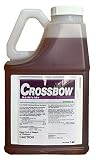
Crossbow is non-selective toward many broadleaf plants, so desirable shrubs, flowers, and trees must be protected from spray contact. Its suitability depends on the exact Crossbow formulation and the site listed on the product label.
Application should target actively growing vegetation and follow the label for rates, timing, spray volume, and permitted sites. Avoid using generalized application rates from another triclopyr or 2,4-D product.
4. Remedy Ultra – Best Herbicide For Thick Oregon Grape Shrubs
Remedy Ultra is the best herbicide for thick Oregon grape shrubs when a triclopyr ester formulation is appropriate for the intended application. It is designed for control of woody vegetation and can be used in labeled basal bark and cut-stump situations. The formulation is particularly relevant when treating established woody stems.

Remedy Ultra requires careful application because ester formulations can injure desirable vegetation through spray contact or other exposure. The product label determines where it may be applied and which application techniques are permitted.
For established Oregon grape, removing the shrub and treating the appropriate cut surface may be useful where that treatment is permitted. Follow the label for carrier requirements, concentration, equipment, and restrictions around desirable vegetation.
5. Garlon 4 Ultra – Best Herbicide For Oregon Grape Basal Bark Treatment
Garlon 4 Ultra is the best herbicide for Oregon grape basal bark treatment when its label permits that application method and site. It contains triclopyr ester and is formulated for woody vegetation management. Basal bark treatment can be useful where cutting the entire shrub is impractical.


- Target Pests: 55 woody plants and more than 25 tough-to-control annual and perennial broadleaf weeds in noncrop areas - High-anxiety woody species - Cherry, loblolly pine, mesquite, red oak, sweetgum and Scotch broom. See Product label for all listed pests.
- For use In: Roadsides, railroads, pipelines, industrial sites, forests, grazing areas, and rights-of-way such as power lines - establishment and maintenance of wildlife openings and can be used on sites that include grazed areas. See Product label for complete list.
Basal bark applications require accurate coverage of the appropriate portion of the stem according to the label. Careless application can expose desirable trees and shrubs to herbicide and cause serious injury.
Garlon 4 Ultra can also be used in other labeled woody-plant control programs. Always use the current product label to determine application rates, carrier requirements, restrictions, and permitted sites.
6. 2,4-D – Best Herbicide For Oregon Grape Seedlings
2,4-D is the best herbicide for Oregon grape seedlings when selective broadleaf control is appropriate for the site. It is a synthetic auxin herbicide that affects susceptible broadleaf plants. Young plants are generally easier to manage than large established woody shrubs.

- Low, economical use rate of 1 to 4 pints per acre
- Controls many broadleaf weeds & woody plants
2,4-D formulations vary considerably, so application rates and permitted uses must come from the specific product label. Spray drift can injure sensitive crops, ornamentals, and other desirable broadleaf vegetation.
Established Oregon grape may be more difficult to control with 2,4-D alone than young plants. Where larger shrubs are involved, a product and application method specifically labeled for woody vegetation may be more appropriate.
7. Dicamba – Best Herbicide For Oregon Grape In Pastures
Dicamba is the best herbicide for Oregon grape in pastures only where the specific dicamba product is labeled for the intended pasture or grassland use. It provides systemic activity against susceptible broadleaf plants. Product selection must account for livestock, grazing, nearby crops, and the exact site restrictions.

- CROP-SAFE WEED KILLER: This herbicide weed killer targets broadleaf weeds in a variety of crops, including corn, soybean, cotton, sugarcane, and turf. Its fast-acting formula ensures long-lasting results, keeping your fields and pastures clean
- FLEXIBLE FIELD COVERAGE: Compatible with both ground and aerial application equipment, this broadleaf herbicide is easy to apply regardless of your farming setup. Whether treating dense vegetation or large-acreage fields, you can depend on consistent coverage
Dicamba can injure desirable broadleaf plants through spray contact or drift, making application near gardens and sensitive crops particularly demanding. Formulations also differ in volatility and application restrictions.
Pasture applications should therefore follow the exact product label for grazing restrictions, rates, timing, and approved sites. Never substitute directions from one dicamba formulation for another.
8. Imazapyr – Best Herbicide For Long Term Oregon Grape Control
Imazapyr is the best herbicide for long term Oregon grape control when extended residual activity is acceptable for the site. It is a systemic herbicide that can control susceptible woody and perennial vegetation. Its residual activity makes site selection especially important.

- BROAD-SPECTRUM WEED CONTROL: The weed and grass killer concentrate is effective at controlling a wide range of weeds, including vines and hardwood brush. Ideal for forestry and rangeland, it provides lasting protection and eliminates tough vegetation
- VERSATILE APPLICATION METHODS: This weed and grass killer can be applied using multiple methods: broadcast, targeted handgun, low volume, cut stump, or basal application. It offers a flexible application for both large areas and specific vegetation
Imazapyr can remain active in soil and affect plants established after treatment. It should therefore not be selected casually for areas where sensitive ornamentals, crops, or desirable trees will soon be planted.
Use only formulations labeled for the intended site and application method. Carefully follow the label for rates, vegetation restrictions, replanting information, and environmental precautions.
9. Picloram – Best Herbicide For Deep Rooted Oregon Grape
Picloram is the best herbicide for deep rooted Oregon grape when a labeled picloram product is appropriate for the site and long residual activity is acceptable. It is a systemic broadleaf herbicide used against many difficult perennial and woody species. Its persistence makes careful planning essential.

- Effective: Kills cut stumps on fence lines&non-cropland areas. Control unwanted trees by cut surface treatments in forest&non-crop areas such as fence rows, roadsides&rights-of-way
Picloram can affect sensitive broadleaf plants through soil residues, so it should not be used indiscriminately near gardens or crops. The exact product label determines permitted sites, rates, and restrictions.
Where long-term residual activity is undesirable, a shorter-residual herbicide may be more appropriate. Always consider future planting plans before selecting a persistent herbicide.
10. Aminopyralid – Best Herbicide For Oregon Grape Pasture Edges
Aminopyralid is the best herbicide for Oregon grape pasture edges when the exact product is labeled for the intended pasture, rangeland, or other site. It provides systemic broadleaf weed control while generally allowing established grasses to remain. Product restrictions must be considered before application around livestock areas.

- Target Pests: . See Product label for all listed pests.
- For use In: Rangeland, permanent grass pastures, CRP Acres, non-cropland areas, non-irrigation ditch banks, natural areas, and grazed areas in and around these sites. See Product label for complete list.
Aminopyralid can have residual activity that affects sensitive broadleaf plants and some rotational crops. This makes label compliance particularly important when treated vegetation will be followed by other crops or desirable plantings.
Use the exact product label for grazing, haying, manure, compost, and rotational-crop restrictions. Do not assume that all aminopyralid formulations have identical restrictions.
11. Glufosinate – Best Non Selective Herbicide For Oregon Grape
Glufosinate is the best non selective herbicide for Oregon grape when rapid contact activity and minimal soil residual are important considerations. It primarily acts on treated green tissue and requires thorough spray coverage. It is therefore more suitable for smaller plants than large established shrubs that depend heavily on root reserves.

- NON-SELECTIVE BROAD-SPECTRUM CONTROL Provides post-emergence control of a wide range of broadleaf and grassy weeds, including tough and resistant species such as marestail (horseweed).
- EFFECTIVE ON RESISTANT WEEDS Ideal for managing weeds resistant to glyphosate and multiple herbicide modes of action, making it a powerful rotational or rescue treatment.
Glufosinate is non-selective and can injure desirable vegetation that receives spray. Good coverage of actively growing foliage is important for achieving useful control.
Because it does not provide the same systemic root movement associated with some woody-plant herbicides, established Oregon grape may require a different treatment strategy. Always follow the specific formulation label.
12. Diquat – Best Herbicide For Small Oregon Grape Seedlings
Diquat is the best herbicide for small Oregon grape seedlings when rapid contact burndown is the primary objective and the product is labeled for the intended site. It acts quickly on treated green tissue. Because it is primarily a contact herbicide, established woody plants can regrow after treatment.

- INSTANT WEED CONTROL: Expect visible results within hours, as hydrilla killer starts working immediately on contact with green plant tissue, making it an ideal solution when fast, effective weed control is needed with minimal downtime
- GLYPHOSATE-FREE POWER: This non-selective aquatic herbicide for ponds provides broad-spectrum control without using glyphosate. It works quickly to kill a wide range of weeds and is ideal for those looking for an efficient and fast-acting substitute
Diquat requires good spray coverage because untreated tissue may survive. It is non-selective, meaning desirable vegetation can also be injured when contacted.
For established Oregon grape, a systemic woody-plant treatment may provide better long-term control where permitted. Always verify that the specific diquat formulation is labeled for the intended use site.
13. Diuron – Best Residual Herbicide For Oregon Grape Control
Diuron is the best residual herbicide for Oregon grape control only where a diuron product is specifically labeled for the intended site and residual vegetation control is acceptable. It primarily affects susceptible plants through inhibition of photosynthesis. Its soil activity makes it unsuitable for many areas where desirable plants will be established soon.

- FULL-CYCLE WEED PROTECTION: Tackle weeds before and after they sprout with Diuron herbicide weed killer’s dual-action formula. It is ideal for long-term control of annual grasses and broadleaf weeds in non-crop areas where consistent results matter most
- BUILT FOR HARSH ENVIRONMENTS: Built for demanding environments like highways, airports, and industrial zones, this weed killer delivers proven weed control where other herbicides fall short, keeping large-scale areas clear and low-maintenance
Diuron products can provide pre-emergence and post-emergence activity depending on the formulation and application. The exact label determines whether the product can be used for the intended vegetation-management situation.
Because residual herbicides can affect subsequent plantings, future land use should be considered before treatment. Never assume that a diuron product is suitable around gardens, ornamentals, or sensitive crops without checking its label.
14. Bromacil – Best Herbicide For Total Oregon Grape Vegetation Control
Bromacil is the best herbicide for total Oregon grape vegetation control only where a bromacil product is labeled for the intended site and broad vegetation control is acceptable. It provides residual activity and can affect a wide range of susceptible vegetation. This makes site selection more important than simply targeting the Oregon grape itself.

- ALL-SEASON WEED GUARD: Bromacil weed and grass killer provides consistent suppression of tough annual and perennial grasses and broadleaf weeds for up to 360 days, reducing the need for repeated applications and keeping your site weed-free
- SELECTIVE AND VERSATILE APPLICATION: Formulated for use in various non-crop areas, this pre-emergent weed prevention controls weeds without harming desirable plants, making it ideal for utility sites, railroads, pipelines, and industrial zones
Bromacil is associated with non-crop vegetation-management uses in certain labeled products. Because it can persist in soil, it should not be selected for locations where desirable plants will soon be established unless the label specifically permits that use.
Application rates and permitted sites vary by product, so use the current label rather than generic bromacil recommendations. Avoid treating areas where residual activity could conflict with future planting objectives.
15. Hexazinone – Best Herbicide For Oregon Grape Fence Lines
Hexazinone is the best herbicide for Oregon grape fence lines only when the specific hexazinone product is labeled for that use. It is a systemic herbicide absorbed primarily through roots and can provide residual vegetation control. This makes it more suitable for certain vegetation-management sites than areas intended for immediate replanting.

- Visible Results in One Hour - Spruce dehydrates to kill roots, showing visible results in just 1 hour, dead weeds in 1 day. The hardworking weed sprayer can kill all types of broadleaf and grassy weeds including dandelions, large crabgrass, white clover, dollarweed and morning glory vines.
- Ready to Use Worry-Free Formula - Spruce grass and weed killer is safe to use around people, pets, and bees when used as directed, and one bottle can treat up to 400 weeds. This versatile weed killer spray is made with water, essential oils and surfactant.
Hexazinone can affect desirable vegetation through soil activity, so application near gardens, crops, and valuable trees requires particular caution. Product labels determine approved sites, rates, application methods, and restrictions.
For fence-line management, consider whether long residual activity is desirable before choosing this type of herbicide. Always follow the current label and avoid using a generic rate from another hexazinone formulation.
7 Factors To Consider When Choosing An Oregon Grape Herbicide
- Plant size: Young seedlings are generally easier to manage than established woody shrubs with extensive root systems.
- Application method: Foliar, cut-stump, basal bark, and soil applications are not interchangeable, so choose a product specifically labeled for the intended method.
- Active ingredient: Compare the active ingredient and mode of action rather than relying only on the trade name.
- Selectivity: Consider whether desirable grasses, trees, ornamentals, crops, or native plants are growing close to the Oregon grape.
- Residual activity: Persistent herbicides can affect future plantings, so residual behavior should match the future use of the site.
- Application timing: Follow the product label for the appropriate growth stage, weather conditions, temperature, and application window.
- Label restrictions: Always check the current label for permitted sites, rates, protective measures, grazing restrictions, water restrictions, and replanting requirements.
Frequently Asked Questions
1. What is the best herbicide for Oregon grape?
Glyphosate and triclopyr are commonly considered for Oregon grape because both can provide systemic activity when used in appropriate labeled applications. The appropriate product depends on plant size, application method, surrounding vegetation, and the exact product label.
2. Will glyphosate kill Oregon grape roots?
Glyphosate is systemic and can move from treated foliage into other parts of susceptible plants. Successful root control depends on the formulation, application, plant condition, and other factors, so follow-up treatment may be necessary.
3. What is the best herbicide for Oregon grape cut stump treatment?
Triclopyr and glyphosate are used in certain cut-stump programs, but the specific product must be labeled for that application. Follow the exact label for concentration, timing, carrier, and application procedure.
4. Can I spray Oregon grape near desirable plants?
Some herbicides can seriously injure desirable plants, especially broadleaf ornamentals and trees. Use targeted application methods and follow the label to minimize drift, overspray, and root-zone exposure.
5. When should Oregon grape be treated with herbicide?
The appropriate timing depends on the herbicide and application method. Many systemic treatments perform best when susceptible plants are actively growing, but the product label should always determine the application window.
6. Does Oregon grape come back after herbicide treatment?
Established Oregon grape can regrow when roots or other viable plant material survive treatment. Monitoring and follow-up treatment may therefore be necessary, particularly when dealing with mature shrubs or extensive infestations.
7. Is Oregon grape the same as Japanese barberry?
No. Oregon grape generally refers to Mahonia species such as Mahonia aquifolium, while Japanese barberry is Berberis thunbergii. Correct identification is important before selecting a herbicide because the appropriate treatment depends on the plant and the labeled use.
Conclusion
In conclusion, the best herbicide for Oregon grape depends on the size of the shrub, the application method, surrounding vegetation, and the desired level of residual control. Glyphosate provides a useful systemic option, while triclopyr products are particularly relevant to woody-plant and cut-stump programs when the label permits those uses.
For established shrubs, the best approach may involve a targeted foliar, basal bark, or cut-stump application rather than simply spraying the entire area. As a runner-up approach, a different systemic active ingredient may be appropriate when the first treatment is unsuitable because of selectivity, site restrictions, or future planting plans.
Residual herbicides such as imazapyr, picloram, aminopyralid, diuron, bromacil, and hexazinone require additional consideration because their soil activity can affect desirable plants and future plantings. Products containing 2,4-D or dicamba also require careful attention to drift and broadleaf-plant sensitivity.
Choose the herbicide according to the exact site and intended application rather than relying on a generic product ranking. Always read the current product label, protect desirable vegetation, follow application restrictions, and monitor treated Oregon grape for regrowth after the initial treatment.