Dogbane is a perennial broadleaf weed that spreads aggressively through underground rhizomes and creeping root systems, forming dense colonies in pastures, fence rows, roadsides, and natural areas. It contains toxic cardiac glycosides that are dangerous to livestock, and its milky sap can irritate human skin. Because it is a broadleaf species, selective broadleaf herbicides control it without harming most grasses.
Effective dogbane control depends on killing the plant from the roots up, not just burning the visible top growth. Dogbane resprouts readily after mowing, cutting, or contact herbicides because the rhizomes survive underground. Systemic herbicides that translocate to the root system deliver the best results.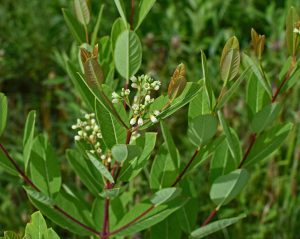
Dogbane is often found alongside other tough perennials like milkweed, hemp dogbane, and Canada thistle, so product selection must account for the full weed spectrum. Combining multiple modes of action, timing applications for late summer and early fall, and repeating treatments over several seasons delivers the most reliable long-term control.
In this guide, we review the best herbicides for dogbane by examining systemic broadleaf products, application timing, and safe-use practices for long-term control.
Best Herbicide For Dogbane: Top 15 Options
1. Southern Ag Amine 2,4-D Weed Killer – Best Overall Herbicide For Dogbane
Southern Ag Amine 2,4-D Weed Killer is the best overall herbicide for dogbane because it delivers systemic root kill at a low cost per acre. It is a synthetic auxin that causes uncontrolled cell division and twisting. It is absorbed through leaves and translocated throughout the plant, reaching the rhizomes and roots.


- Low, economical use rate of 1 to 4 pints per acre
- Controls many broadleaf weeds & woody plants
This 2,4-D amine product is labeled for pastures, fence rows, and non-crop areas and works best when applied to actively growing dogbane in late summer or early fall. It kills the roots over two to four weeks. It does not harm most grasses when applied according to the label.
Because it is a concentrate, you mix it with water according to the label rate. It is not safe around desirable broadleaf plants, so drift control is essential in mixed landscapes.
- Affordable concentrate
- Safe for most grasses
- Systemic root kill
- Absorbed and translocated
- Widely available
- Covers large areas
- Trusted by land managers
- Requires mixing
- Drift risk to desirable plants
- Not safe around gardens
2. Hi-Yield 2,4-D Amine Weed Killer – Best Multi-Use Herbicide For Dogbane
Hi-Yield 2,4-D Amine Weed Killer is the best multi-use herbicide for dogbane because it works on pastures, fence rows, roadsides, and non-crop areas with the same reliable systemic action. It is absorbed through leaves and translocated throughout the plant, killing the roots over two to four weeks. It is labeled for lawns, fence rows, and non-crop areas.

- This selective weed killer kills or controls many Broadleaf Weeds and plants susceptible to 2, 4-D.
- Works on Dandelion, Arrowhead, Buckhorn, Aster, Goatsbeard and more. See label for full list.
This 2,4-D amine product works best when applied to actively growing dogbane in late summer or early fall, when the plant is moving energy to its roots. It does not harm most grasses when applied according to the label. It is an affordable option for landowners managing dogbane across multiple sites.
Because it is a concentrate, you mix it with water according to the label rate. It is not safe around desirable broadleaf plants, so drift control is essential in mixed landscapes.
- Multi-use formulation
- Affordable concentrate
- Systemic root kill
- Safe for most grasses
- Widely available
- Covers large areas
- Trusted by land managers
- Requires mixing
- Drift risk to desirable plants
- Not safe around gardens
3. Southern Ag Trimec Classic Broadleaf Herbicide – Best Three-Way Herbicide For Dogbane
Southern Ag Trimec Classic Broadleaf Herbicide is the best three-way herbicide for dogbane because it combines 2,4-D, MCPP, and dicamba for broad-spectrum systemic control on tough perennials. It is absorbed through leaves and roots and kills the plant over two to four weeks. It is labeled for lawns, pastures, and non-crop areas.

- High degree of tolerance in sensitive warm-season turfgrasses
- Wide spectrum broadleaf weed control
This three-way product works best when applied to actively growing dogbane in late summer or early fall. It controls a broader weed spectrum than single-ingredient products, including clover and dandelion. It does not harm most grasses when applied according to the label.
Because it contains three active ingredients, it slows resistance and handles mixed infestations. Apply before plants die back and reapply the following season if regrowth appears.
- Three active ingredients
- Broad-spectrum control
- Safe for most grasses
- Systemic root kill
- Widely available
- Concentrate formula
- Trusted by land managers
- Requires mixing
- Drift risk to desirable plants
- Some soil residual
4. Crossbow Herbicide – Best Herbicide For Dogbane In Fence Rows And Non-Crop Areas
Crossbow Herbicide is the best herbicide for dogbane in fence rows and non-crop areas because it combines 2,4-D and triclopyr for strong systemic control on woody and herbaceous broadleaf weeds. It is absorbed through leaves and roots and kills the plant over two to four weeks. It is labeled for fence rows, rights-of-way, and non-crop areas.
This 2,4-D plus triclopyr product works best when applied to actively growing dogbane in late summer or early fall. It handles dogbane alongside poison ivy, blackberry, and other tough brush species. It does not harm most grasses when applied according to the label.
Because it contains triclopyr, it has some soil residual activity and can affect sensitive broadleaf plants. Avoid application near gardens and desirable ornamentals.
- Broad-spectrum control
- Safe for most grasses
- Systemic root kill
- Works in non-crop areas
- Absorbed and translocated
- Trusted by land managers
- Long-lasting control
- Some soil residual
- Drift risk to desirable plants
- Not for use near gardens
5. Triclopyr 4 Herbicide – Best Herbicide For Dogbane And Woody Brush
Triclopyr 4 Herbicide is the best herbicide for dogbane and woody brush because it targets tough broadleaf species and woody plants while leaving most grasses unharmed. It is absorbed through leaves and roots and kills the plant over two to four weeks. It is labeled for pastures, rights-of-way, and non-crop areas.

- REVIVE FORESTS AND PASTURES: Triclopyr 4 Herbicide targets & controls woody plants, broadleaf weeds, & brush, making it ideal for restoring pastures and managing unwanted vegetation in forests, rangelands, and industrial sites without harming grasses
- YEAR-ROUND APPLICATION FLEXIBILITY: With flexible application options throughout the year, this broadleaf herbicide offers versatility for a wide range of conditions. Its ester formulation allows for effective absorption through leaves and roots
This triclopyr product works best when applied to actively growing dogbane in late summer or early fall. It handles dogbane alongside multiflora rose, poison ivy, and other woody invaders in the same program. It does not harm most grasses when applied according to the label.
Because it is a Group 4 herbicide, it is a useful rotation partner with Group 1, Group 2, and Group 9 products in resistance-management programs. Apply according to the label for consistent results.
- Controls tough broadleaf weeds
- Safe for most grasses
- Systemic root kill
- Works in non-crop areas
- Different mode of action
- Trusted by land managers
- Long-lasting control
- Some soil residual
- Drift risk to desirable plants
- Not for use near gardens
6. Fertilome Weed Free Zone – Best Fast-Acting Herbicide For Dogbane
Fertilome Weed Free Zone is the best fast-acting herbicide for dogbane because it delivers visible results within days on tough broadleaf perennials. It is absorbed through leaves and kills the plant over one to two weeks. It is labeled for lawns and non-crop areas.

- Controls over 80 broadleaf weeds including Clover, Spurge, Chickweed, Thistle, see label for more.
- Safe on Kentucky Bluegrass, Bermudagrass, Bahiagrass, Zoysiagrass and more. See label for full list.
This selective broadleaf product works best when applied to actively growing dogbane in late summer or early fall before the plant dies back. It contains four active ingredients that control a broader weed spectrum than single-ingredient products. It does not harm most turfgrasses when applied according to the label.
Apply before plants die back and reapply the following season if regrowth appears. It is a good option when quick top-kill is needed ahead of seed set.
- Fast-acting formula
- Multiple active ingredients
- Safe for most grasses
- Effective on tough perennials
- Controls multiple weed types
- Trusted by land managers
- Visible results in days
- Higher cost
- Requires repeat applications
- Drift risk to desirable plants
7. Bonide Weed Beater Ultra – Best Ready-To-Use Herbicide For Dogbane
Bonide Weed Beater Ultra is the best ready-to-use herbicide for dogbane because it comes pre-mixed in a spray bottle for quick spot treatment on small patches. It is absorbed through leaves and kills the plant over two to four weeks. It is labeled for lawns and non-crop areas.

- KILLS OVER 200 BROADLEAF WEEDS - In one easy step, spray controls lawns from growing dandelion, clover, ground ivy, bedstraw, aster, gumweed, nettle, oxalis, ragweed, chickweed, and many more.
- FOR USE ON GRASS - Designed to kill a variety of weeds, not lawn grasses. When used as directed it kills broadleaf weeds in lawns, roots and all.
This selective broadleaf product works best when applied to young, actively growing dogbane before it flowers. It contains three active ingredients for reliable control on tough broadleaf weeds. It does not harm most turfgrasses when applied according to the label.
Because it comes ready to use, there is no mixing or measuring required. Spot-treat individual plants or small patches rather than spraying the entire area.
- Ready to use
- No mixing required
- Safe for most grasses
- Ideal for spot treatment
- Trusted by homeowners
- Fast-acting formula
- Widely available
- Higher cost per ounce
- Small coverage area
- Requires repeat applications
8. Ortho Weed B Gon Chickweed Clover And Oxalis Killer – Best Herbicide For Dogbane In Lawns
Ortho Weed B Gon Chickweed Clover And Oxalis Killer is the best herbicide for dogbane in lawns because it selectively controls broadleaf weeds without harming established turf. It is absorbed through leaves and kills the plant over two to four weeks. It is labeled for lawns.
No products found.
This selective broadleaf product works best when applied to actively growing dogbane in late spring or early fall. It handles dogbane alongside clover, oxalis, and chickweed in the same program. It does not harm most turfgrasses when applied according to the label.
Do not apply during drought stress or when temperatures are above 85 degrees Fahrenheit. Reapply if regrowth appears, but treat before plants set seed to prevent new infestations.
- Selective for broadleaf weeds
- Safe for most turfgrasses
- Effective on dogbane
- Absorbed and translocated
- Widely available
- Trusted by homeowners
- Easy to apply
- Requires repeat applications
- Drift risk to desirable plants
- Temperature restrictions
9. Hi-Yield Atrazine Weed Killer – Best Herbicide For Dogbane In Non-Crop Areas
Hi-Yield Atrazine Weed Killer is the best herbicide for dogbane in non-crop areas because it provides both pre-emergent and post-emergent activity plus long soil residual. It is absorbed through roots and leaves and inhibits photosynthesis in susceptible plants. It is labeled for non-crop areas, fence rows, and some crops.

- This selective weed killer controls Henbit, Clover, Chickweed and more. See label for full list.
- Intended for use on St. Augustine and Centipedegrass.
This atrazine product works best when applied to actively growing dogbane in late spring or early summer. It has significant soil residual activity that helps prevent new seedlings from emerging. It is a restricted-use product in some states and must be applied according to label directions.
Because it is a Group 5 herbicide, it is a useful rotation partner with Group 4 and Group 9 products in resistance-management programs. Apply according to the label for consistent results.
- Pre and post-emergent activity
- Broad-spectrum control
- Long soil residual
- Effective on dogbane
- Reduces repeat applications
- Trusted by land managers
- Different mode of action
- Restricted-use in some areas
- Groundwater concerns
- Long soil residual
10. Glyphosate 41 Herbicide – Best Non-Selective Herbicide For Dogbane Burndown
Glyphosate 41 Herbicide is the best non-selective herbicide for dogbane burndown because it kills the plant from the leaves down to the rhizomes and roots. It is absorbed through foliage and translocated to roots, killing both top growth and the underground crown. It has no soil residual activity.

- Glyphosate- 41% (same active ingredient as Roundup)
- Residential areas, Parks and Recreational Areas
This glyphosate product is used for fence line clearing, driveway cracks, and site preparation before planting. It works best when applied to actively growing dogbane in late summer or early fall. It is not selective, so it kills desirable plants on contact.
Resistance to glyphosate has developed in many weed species, so rotating to other modes of action helps preserve its effectiveness. It requires careful application to avoid drift onto desirable vegetation.
- Kills rhizomes and roots
- Broad-spectrum control
- No soil residual
- Effective on dogbane
- Works in site preparation
- Affordable price
- Trusted by land managers
- Non-selective
- Kills desirable plants
- Widespread resistance
11. Southern Ag Crossbow Herbicide – Best Herbicide For Dogbane In Pastures
Southern Ag Crossbow Herbicide is the best herbicide for dogbane in pastures because it controls dogbane and woody brush without harming established pasture grasses. It combines 2,4-D and triclopyr for systemic root kill. It is labeled for pastures, rights-of-way, and non-crop areas.

- Controls most unwanted trees and brush
- Use on rangeland, grass pastures, non-crop areas

This 2,4-D plus triclopyr product works best when applied to actively growing dogbane in late summer or early fall. It handles dogbane alongside other broadleaf and woody weeds in grazing land. It does not harm most grasses when applied according to the label.
Because it contains triclopyr, it has some soil residual activity and can affect sensitive broadleaf plants. Observe grazing restrictions on the label before returning livestock to treated areas.
- Safe for pasture grasses
- Controls dogbane and brush
- Systemic root kill
- Works in grazing systems
- Absorbed and translocated
- Trusted by land managers
- Long-lasting control
- Some soil residual
- Grazing restrictions apply
- Not for use near gardens
12. Bayer Advanced Brush Killer Plus – Best Concentrate Herbicide For Dogbane
Bayer Advanced Brush Killer Plus is the best concentrate herbicide for dogbane because it delivers strong systemic control on tough broadleaf and woody species at a low cost per application. It is based on triclopyr and absorbed through leaves and roots. It is labeled for fence rows, rights-of-way, and non-crop areas.

- SPECIAL FORMULA: Brush Killer Plus concentrated formula eliminates Kudzu, Poison Ivy, Poison Oak, Blackberry, and over 70 other listed weeds and brush when used as directed
- PENETRATES & KILLS TOUGH BRUSH: Special penetrating formula targets listed roots and vine weeds; Use around homes, cabins, buildings, fences, walkways, trails, and wooded areas
This triclopyr-based concentrate works best when applied to actively growing dogbane in late summer or early fall. It handles dogbane and brush in a single mix. It does not harm most grasses when applied according to the label.
Because it contains triclopyr, it has some soil residual activity and can affect sensitive broadleaf plants. Avoid application near gardens and desirable ornamentals.
- Controls broadleaf and brush
- Safe for most grasses
- Systemic root kill
- Concentrate formula
- Covers large areas
- Trusted by homeowners
- Long-lasting control
- Requires mixing
- Some soil residual
- Not for use near gardens
13. Monterey Remuda Full Strength Herbicide – Best Herbicide For Dogbane And Grass Control
Monterey Remuda Full Strength Herbicide is the best herbicide for dogbane and grass control because it provides non-selective control of both broadleaf weeds and grasses in non-crop areas. It is based on glyphosate and absorbed through leaves and translocated to roots. It is labeled for fence rows, rights-of-way, and non-crop areas.

- WEED CONTROL - Remuda is a non-selective herbicide, it kills both annual and perennial grass, like crabgrass and many broadleaf weeds in lawns like thistle, clover, creeping charlie and poison ivy.
- CONCENTRATED - This is post emergent herbicide is a 41% glyphosate concentrate with surfactant. Glyphosate is the worlds most commonly used herbicide.
This glyphosate-based concentrate works best when applied to actively growing dogbane in late summer or early fall. It kills grasses and broadleaf plants on contact. It is not selective, so it should be used only where total vegetation control is acceptable.
Because it is non-selective, avoid application near desirable grasses and broadleaf plants. It has no soil residual activity, so it does not prevent new weeds from germinating.
- Kills dogbane and grasses
- Non-selective control
- Systemic root kill
- No soil residual
- Works in non-crop areas
- Concentrate formula
- Trusted by land managers
- Non-selective
- Kills desirable plants
- Requires careful application
14. Preen Garden Weed Preventer – Best Pre-Emergent Herbicide For Dogbane In Gardens
Preen Garden Weed Preventer is the best pre-emergent herbicide for dogbane in gardens because it stops new dogbane seeds from germinating in beds and around ornamentals. It contains trifluralin and forms a soil barrier that prevents weed seeds from sprouting. It is labeled for garden beds and landscape plantings.

- Coverage - Preen Garden Weed Preventer provides weed control for up to 2,560 sq. ft. This preemergent herbicide prevents weed seeds from germinating for up to 3 months when applied around established flowers, vegetable, trees, mulch & shrubs
- Application - Use hand spreader, included applicator scoop, or fertilizer spreader to distribute ready-to-apply granules over gardens. Remove existing weeds, sprinkle across garden soil in spring, summer, or fall seasons & water thoroughly
This trifluralin product works best when applied in spring before dogbane seeds germinate. It prevents new weeds from emerging without harming existing perennial plants. It does not control established dogbane plants.
Because it is a Group 3 herbicide, it is a useful rotation partner with Group 4 and Group 9 products in resistance-management programs. Apply according to the label for consistent results.
- Prevents dogbane germination
- Safe for ornamentals
- Long soil residual
- Reduces hand-weeding
- Works in garden beds
- Different mode of action
- Trusted by gardeners
- No post-emergent activity
- Requires proper timing
- Long soil residual
15. Hi-Yield 2,4-D Amine And Triclopyr Tank Mix – Best Combination Herbicide For Dogbane
The tank mix of Hi-Yield 2,4-D Amine Weed Killer with Triclopyr 4 Herbicide is the best combination herbicide for dogbane because it pairs fast broadleaf knockdown with strong systemic activity on rhizomes and woody tissue. Both ingredients are absorbed through leaves and translocated to the roots. It is labeled for pastures, fence rows, and non-crop areas.
- This selective weed killer kills or controls many Broadleaf Weeds and plants susceptible to 2, 4-D.
- Works on Dandelion, Arrowhead, Buckhorn, Aster, Goatsbeard and more. See label for full list.
- REVIVE FORESTS AND PASTURES: Triclopyr 4 Herbicide targets & controls woody plants, broadleaf weeds, & brush, making it ideal for restoring pastures and managing unwanted vegetation in forests, rangelands, and industrial sites without harming grasses
- YEAR-ROUND APPLICATION FLEXIBILITY: With flexible application options throughout the year, this broadleaf herbicide offers versatility for a wide range of conditions. Its ester formulation allows for effective absorption through leaves and roots
This tank mix works best when applied to actively growing dogbane in late summer or early fall. It delivers faster and more complete control than either product alone, and it slows resistance because it contains two modes of action. It does not harm most grasses when applied according to the label.
Observe grazing restrictions and buffer zones on both labels before application. Avoid use near gardens and desirable broadleaf plants.
- Two modes of action
- Broad-spectrum control
- Safe for most grasses
- Systemic root kill
- Slows resistance
- Trusted by land managers
- Long-lasting control
- Requires mixing
- Grazing restrictions apply
- Not for use near gardens
7 Tips For Controlling Dogbane With Herbicides
- Identify the weed first: Confirm the plant is dogbane and not milkweed or another lookalike before choosing a product.
- Treat in late summer or early fall: Apply systemic herbicides when dogbane is moving energy to its roots. Fall applications deliver the best long-term control.
- Use systemic products: Contact herbicides burn the top growth but do not kill rhizomes. Choose systemic herbicides like 2,4-D, triclopyr, or glyphosate for root kill.
- Wear protective equipment: Dogbane sap can irritate skin. Wear gloves and long sleeves when handling or treating the plant.
- Protect grazing animals: Dogbane is toxic to livestock. Observe grazing restrictions on the label and remove animals from treated areas until safe.
- Rotate modes of action: Using the same herbicide group repeatedly selects for resistant weeds. Rotate between synthetic auxins, Group 4, Group 5, and Group 9 products.
- Monitor and re-treat: Dogbane can regrow from rhizomes after a single treatment. Scout treated areas several times per season and re-treat new growth while it is small.
Best Herbicide For Dogbane Frequently Asked Questions
1. What is the best herbicide for dogbane?
Southern Ag Amine 2,4-D Weed Killer is the best overall herbicide for dogbane because it delivers systemic root kill at a low cost per acre. Crossbow Herbicide and Triclopyr 4 Herbicide are best for fence rows, pastures, and non-crop areas.
2. Will 2,4-D kill dogbane?
Yes, 2,4-D kills dogbane when applied to actively growing plants in late summer or early fall. It is absorbed through leaves and translocated to the rhizomes, killing the plant over two to four weeks.
3. When should I spray dogbane?
Spray dogbane in late summer or early fall when the plant is moving energy to its roots. Fall applications deliver the best long-term control. Pre-emergent products go down in spring before seed germination.
4. Is dogbane toxic to livestock?
Yes, dogbane contains cardiac glycosides that are toxic to livestock. Poisoning can occur when animals graze on fresh or dried plant material. Remove animals from infested pastures and observe grazing restrictions on the label.
5. Does dogbane come back after spraying?
Dogbane can regrow from rhizomes after a single treatment. Repeated applications over two to three seasons are usually needed for complete control.
6. Can I use vinegar to kill dogbane?
Vinegar can burn dogbane foliage but rarely kills the rhizomes. It works best as part of an integrated program combining hand-pulling, repeated mowing, and systemic herbicides.
7. What is the difference between dogbane and milkweed?
Dogbane has branching stems with opposite leaves and small white flowers, while milkweed has upright stems with opposite leaves and larger pink or orange flower clusters. Both have milky sap, but control products and timing can differ.
Conclusion
Southern Ag Amine 2,4-D Weed Killer is the best overall herbicide for dogbane because it delivers systemic root kill at a low cost per acre. Hi-Yield 2,4-D Amine Weed Killer, Southern Ag Trimec Classic, and Crossbow Herbicide follow closely as multi-use, three-way, and broad-spectrum options for pastures and non-crop areas.
For tough infestations, Triclopyr 4 Herbicide, Southern Ag Crossbow Herbicide, and Bayer Advanced Brush Killer Plus add woody plant control. Glyphosate 41 Herbicide and Monterey Remuda Full Strength Herbicide are the best non-selective options for total burndown. Preen Garden Weed Preventer provides pre-emergent control in garden beds, and the 2,4-D plus triclopyr tank mix delivers the strongest combination approach for severe infestations.
Effective dogbane control requires matching the product to the site, timing applications for late summer or early fall, and protecting grazing animals from toxic plant material. Rotating modes of action prevents resistance and keeps products effective over time.
Start your dogbane control program this season, choose the right product for your site, and plan for follow-up treatments each year. Consistent effort over two to three seasons delivers a clean pasture and long-term control.