Dichondra is a low-growing perennial broadleaf plant that many homeowners treat as a weed, while others cultivate it as a warm-season lawn alternative. Because it is a broadleaf species, controlling dichondra without harming surrounding turf requires a selective broadleaf herbicide. The right product depends on whether you are managing common turfgrass, warm-season grass, or dichondra as a standalone ground cover.
Most broadleaf herbicides labeled for turf will injure or kill dichondra, which is why standard 2,4-D and dicamba products are not appropriate when dichondra is desirable. When dichondra is the target weed, those same products work well because they selectively control broadleaf plants without harming grasses. Understanding this distinction is the key to choosing the right product.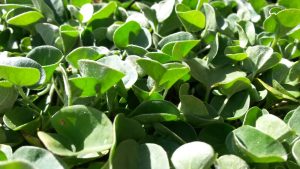
Herbicides for dichondra control fall into several groups, including synthetic auxins, ALS inhibitors, and combination products. Application timing, rate, and turf species all affect how well a product works and whether it damages desirable plants. Always read the label before applying any herbicide near dichondra.
In this guide, we review the best herbicides for dichondra by examining selective broadleaf products, application timing, and safe-use practices for lawns, sports fields, and ornamental plantings.
Best Herbicide For Dichondra: Top 15 Options
1. 2,4-D Amine – Best Overall Herbicide For Dichondra
2,4-D amine is the best overall herbicide for controlling dichondra in turf because it selectively kills broadleaf plants without harming established grasses. It is a synthetic auxin that causes uncontrolled cell division, twisting, and eventual death of susceptible broadleaf weeds. It is absorbed through leaves and translocated throughout the plant.


- Low, economical use rate of 1 to 4 pints per acre
- Controls many broadleaf weeds & woody plants
2,4-D amine is used in lawns, sports fields, parks, and other turf areas to control dichondra and other broadleaf weeds. It works best when applied to actively growing dichondra in spring or fall, and it is often tank-mixed with dicamba or MCPP for broader spectrum control.
This product is easy to apply with a backpack or hose-end sprayer and requires careful calibration for even coverage. It is not safe around desirable broadleaf plants, so drift control is essential in mixed landscapes.
Selective for broadleaf weeds
Safe for most turfgrasses
Affordable
Widely available
Absorbed and translocated
Works in lawns and sports fields
Trusted by turf managers
Drift risk to desirable plants
Requires repeat applications
Restricted-use in some areas
Not safe around gardens
2. Dicamba – Best For Tough Broadleaf Weeds
Dicamba is a selective broadleaf herbicide in the synthetic auxin group that controls dichondra and other tough broadleaf weeds in turf. It is absorbed through leaves, roots, and stems, making it effective under a wider range of conditions. It is often combined with 2,4-D for broader spectrum control.

- CROP-SAFE WEED KILLER: This herbicide weed killer targets broadleaf weeds in a variety of crops, including corn, soybean, cotton, sugarcane, and turf. Its fast-acting formula ensures long-lasting results, keeping your fields and pastures clean
- FLEXIBLE FIELD COVERAGE: Compatible with both ground and aerial application equipment, this broadleaf herbicide is easy to apply regardless of your farming setup. Whether treating dense vegetation or large-acreage fields, you can depend on consistent coverage
Dicamba is used in lawns, golf courses, and non-crop turf areas. It provides both contact and residual activity, helping to prevent new broadleaf weeds from emerging. It works best on actively growing dichondra in spring or fall.
Dicamba is volatile and can drift long distances, damaging sensitive broadleaf plants in nearby gardens and landscapes. It is regulated in many states, with restrictions on timing and buffer zones.
Broad-spectrum broadleaf control
Some soil residual
Works with 2,4-D
Effective on tough weeds
Widely available
Affordable
Trusted by turf managers
Highly volatile
Long-distance drift risk
State-regulated use
Can damage sensitive plants
3. MCPP – Best For Clover And Dichondra Control
MCPP is a selective broadleaf herbicide that controls dichondra, clover, and several other broadleaf weeds without harming most turfgrasses. It is a synthetic auxin absorbed through leaves and roots and translocated through the plant. It is often used in combination with 2,4-D and dicamba.
- Low, economical use rate of 1 to 4 pints per acre
- Controls many broadleaf weeds & woody plants
MCPP is labeled for lawns, sports fields, and non-crop turf areas. It is particularly effective on clover and other legumes, making it a good option when both dichondra and clover are present. It works best when applied to actively growing weeds.
This product requires careful calibration and even coverage for consistent results. It is not safe around desirable broadleaf plants such as tomatoes, roses, and ornamentals.
Effective on clover and dichondra
Safe for most turfgrasses
Absorbed through leaves and roots
Works in lawns and sports fields
Often tank-mixed for broader control
Trusted by turf managers
Affordable
Drift risk to desirable plants
Requires even coverage
Not for use near gardens
Repeat applications may be needed
4. 2,4-D + Dicamba + MCPP – Best Three-Way Herbicide
Three-way herbicides combine 2,4-D, dicamba, and MCPP in a single formulation, providing broad-spectrum broadleaf control including dichondra. These products are absorbed through leaves and roots and act on multiple sites within the plant. They are widely used in turf management.

- USE SITES: For use on both cool and warm season grasses
- EFFECTIVE AGAINST: Dandelion, clover, plantain, and many other listed broadleaf weeds
Three-way herbicides are labeled for lawns, sports fields, parks, and other turf areas. They control a wide range of broadleaf weeds including dichondra, clover, dandelion, and plantain. They work best when applied to actively growing weeds in spring or fall.
These products require careful calibration and even coverage for consistent results. They are not safe around desirable broadleaf plants, so drift control is essential in mixed landscapes.
Broad-spectrum broadleaf control
Safe for most turfgrasses
Multiple modes of action
Works in lawns and sports fields
Widely available
Trusted by turf managers
Convenient single product
Drift risk to desirable plants
Requires even coverage
Restricted-use in some areas
Not for use near gardens
5. Triclopyr – Best For Woody And Tough Broadleaf Weeds
Triclopyr is a selective broadleaf herbicide in the synthetic auxin group that targets woody plants and tough broadleaf weeds including dichondra. It is absorbed through leaves, stems, and roots, depending on the formulation. It is available in ester and amine forms.

- REVIVE FORESTS AND PASTURES: Triclopyr 4 Herbicide targets & controls woody plants, broadleaf weeds, & brush, making it ideal for restoring pastures and managing unwanted vegetation in forests, rangelands, and industrial sites without harming grasses
- YEAR-ROUND APPLICATION FLEXIBILITY: With flexible application options throughout the year, this broadleaf herbicide offers versatility for a wide range of conditions. Its ester formulation allows for effective absorption through leaves and roots
Triclopyr is labeled for turf, rights-of-way, and non-crop areas. It is often tank-mixed with 2,4-D or clopyralid for broader spectrum control. It works best when applied to actively growing weeds during mild weather.
This product has some soil residual activity in ester formulations. It can injure desirable broadleaf plants if applied carelessly, so careful targeting is essential in mixed landscapes.
Controls tough broadleaf weeds
Safe for most turfgrasses
Absorbed through multiple routes
Works in non-crop areas
Tank-mix flexibility
Trusted by land managers
Effective on woody species
Some soil residual
Can injure desirable plants
Careful targeting required
Higher cost
6. Clopyralid – Best For Asteraceae And Legumes
Clopyralid is a selective broadleaf herbicide in the synthetic auxin group that targets weeds in the Asteraceae and legume families, including dichondra. It is absorbed through leaves and roots and translocated throughout the plant. It leaves most grasses unharmed.

- POST-EMERGENT CONTROL - Thistledown is a full-strength herbicide based on the active ingredient clopyralid and is designed to control actively growing broadleaf weeds and thistle in a range, pasture, and other non-crop areas.
- SELECTIVE WEED KILLER - Weeds controlled by Thistledown include Canada thistle, musk thistle, star thistle, and knapweed. It can also be used to control kudzu, dandelion, and Oxalis.
Clopyralid is labeled for turf, pastures, and non-crop areas. It is effective on clover, dichondra, and thistles when applied to actively growing plants. It is often tank-mixed with 2,4-D for broader spectrum control.
Clopyralid has long soil residual activity that can affect sensitive broadleaf plants, including legumes and vegetables. Compost made from treated grass clippings has caused damage to garden plants in some cases.
Effective on dichondra and clover
Safe for most grasses
Absorbed and translocated
Works in turf and pastures
Long-lasting control
Trusted by land managers
Reduces repeat applications
Long soil residual
Can affect sensitive plants
Compost contamination risk
Restricted in some areas
7. Fluroxypyr – Best For Fast-Acting Broadleaf Control
Fluroxypyr is a selective broadleaf herbicide that acts quickly on dichondra and other broadleaf weeds in turf. It is absorbed through leaves and translocated to growing points, causing rapid distortion and decline of treated plants. It is often tank-mixed with 2,4-D or MCPP.

- Selective control of woody plants and brush
- Thorough translocation kills hard-to-control brush like blackberry, rose and privet
Fluroxypyr is labeled for turf, sports fields, and non-crop areas. It is particularly effective on clover, dichondra, and other broadleaf weeds that are difficult to control with 2,4-D alone. It works best when applied to actively growing weeds during mild weather.
This product has limited soil residual activity, reducing the risk of damage to sensitive plants after application. It requires even coverage for consistent results.
Fast-acting on broadleaf weeds
Safe for most turfgrasses
Limited soil residual
Tank-mix flexibility
Works in turf and sports fields
Effective on tough species
Trusted by turf managers
Requires even coverage
Drift risk to desirable plants
Not for use near gardens
Repeat applications may be needed
8. Metsulfuron Methyl – Best For Low-Rate Broadleaf Control
Metsulfuron methyl is a selective ALS inhibitor that controls dichondra and other broadleaf weeds at very low application rates. It is absorbed through leaves and roots and translocated to growing points, disrupting cell division. It is highly effective on many broadleaf species.

- BROAD SPECTRUM WEED CONTROL: The MSM herbicide effectively targets over 100 species of broadleaf weeds and brush, giving you comprehensive vegetation management in pastures, rangelands, and industrial sites with precision and reliability
- VERSATILE APPLICATION OPTIONS: Use weed killer concentrate as a post-emergent herbicide for active weeds or apply pre-emergent at dormancy break for early control. This flexibility makes it ideal for diverse settings, from forestry to utility rights-of-way
Metsulfuron methyl is labeled for turf, non-crop areas, and some crops. It controls dichondra, clover, and other broadleaf weeds when applied to actively growing plants. It works best when applied in spring or fall during mild weather.
This product has significant soil residual activity that can affect sensitive broadleaf plants for months. It is not suitable for use where sensitive plants will be planted soon after application.
Low application rates
Effective on many broadleaf weeds
Safe for most turfgrasses
Long-lasting control
Reduces repeat applications
Works in turf and non-crop areas
Trusted by land managers
Long soil residual
Can affect sensitive plants
Not for use near gardens
Restricted in some areas
9. Carfentrazone – Best For Fast Burndown Of Dichondra
Carfentrazone is a selective PPO inhibitor that causes rapid cell membrane disruption and desiccation of treated weeds, including dichondra. It is absorbed through leaves and acts on contact, with symptoms appearing within hours. It is often tank-mixed with systemic herbicides for longer control.

- Provides ultra-fast weed control
- Visible results in just 24 hours
Carfentrazone is labeled for turf, cereals, and non-crop areas. It is particularly effective on small broadleaf weeds like dichondra and clover when applied in tank mixes with other products. It works best on actively growing weeds with good spray coverage.
This product has limited soil residual activity and does not control grasses. It requires even coverage for effective results and works best on small, actively growing weeds.
Fast contact action
Effective on small broadleaf weeds
Tank-mix flexibility
Works in turf and cereals
Limited soil residual
Trusted by turf managers
Burndown partner
Requires good spray coverage
No grass control
Best on small weeds only
Limited residual
10. Quinclorac – Best For Dichondra In Cool-Season Turf
Quinclorac is a selective herbicide that controls dichondra and other broadleaf weeds in cool-season turf. It is absorbed through leaves and roots and acts as an auxin-like compound, disrupting cell division. It is particularly effective on clover and other legumes.

- Water-Based Formulation: Experience the power of our unique water-based formulation that ensures superior control and faster plant uptake, delivering results you can see quickly
- Extended Residual Control: Enjoy up to 30 days of residual control, keeping your turfgrass free from troublesome weeds for longer periods and reducing the need for frequent applications; Rainfast in less than an hour
Quinclorac is labeled for turf, including lawns, sports fields, and golf courses. It controls dichondra, clover, and other broadleaf weeds when applied to actively growing plants. It is often tank-mixed with 2,4-D or MCPP for broader spectrum control.
This product has some soil residual activity that helps prevent new weeds from germinating. It is safe for most cool-season grasses but should be used carefully around sensitive species.
Effective on dichondra and clover
Safe for most cool-season turf
Absorbed through leaves and roots
Some soil residual
Works in lawns and sports fields
Tank-mix flexibility
Trusted by turf managers
Not safe for all turf species
Requires even coverage
Drift risk to desirable plants
Repeat applications may be needed
11. Penoxsulam – Best For Low-Rate ALS Control
Penoxsulam is a selective ALS inhibitor that controls dichondra and other broadleaf weeds at low application rates. It is absorbed through leaves and roots and translocated to growing points, disrupting cell division. It is highly effective on many broadleaf species in turf.


Penoxsulam is labeled for turf, including lawns, sports fields, and golf courses. It controls dichondra, clover, and other broadleaf weeds when applied to actively growing plants. It works best when applied in spring or fall during mild weather.
This product has some soil residual activity that helps prevent new weeds from germinating. It is safe for most turfgrasses when applied according to label directions.
Low application rates
Effective on many broadleaf weeds
Safe for most turfgrasses
Some soil residual
Works in lawns and sports fields
Reduces repeat applications
Trusted by turf managers
Some soil residual
Can affect sensitive plants
Requires even coverage
Restricted in some areas
12. Sulfentrazone – Best For Broadleaf And Sedges
Sulfentrazone is a selective PPO inhibitor that controls dichondra, clover, and some sedges in turf. It is absorbed through roots and shoots and acts on contact, disrupting cell membranes. It has both pre-emergent and post-emergent activity.

- STOP WEEDS BEFORE THEY START: This pre-emergent and post-emergent herbicide targets weed seeds just as they're germinating; Say goodbye to troublesome weeds like crabgrass and creeping charlie before they take over your lawn or garden
- COST-EFFECTIVE: With low usage rates, our product provides an economical weed-killing solution, ideal for both small and large areas
Sulfentrazone is labeled for turf, including lawns, sports fields, and golf courses. It controls dichondra, clover, and other broadleaf weeds when applied to actively growing plants. It is often tank-mixed with other herbicides for broader spectrum control.
This product has significant soil residual activity that contributes to its pre-emergent effect. It requires even coverage for effective results and works best on small, actively growing weeds.
Pre and post-emergent activity
Effective on dichondra and clover
Safe for most turfgrasses
Some soil residual
Works in lawns and sports fields
Tank-mix flexibility
Trusted by turf managers
Some soil residual
Requires even coverage
Drift risk to desirable plants
Repeat applications may be needed
13. Halosulfuron – Best For Dichondra And Nutsedge
Halosulfuron is a selective ALS inhibitor that controls dichondra, clover, and yellow nutsedge in turf. It is absorbed through leaves and roots and translocated to growing points, disrupting cell division. It is one of the few products that controls both broadleaf weeds and sedges.

- TRUSTED PERFORMER: Empero contains 75% halosulfuron-methyl; the active ingredient professionals trust most for control of tough nutsedge.
- TOTAL NUTSEDGE TAKEDOWN: Empero travels down to the root system tubers for complete top-to-bottom weed kill.
Halosulfuron is labeled for turf, including lawns, sports fields, and golf courses. It controls dichondra, clover, and yellow nutsedge when applied to actively growing plants. It works best when applied in late spring or early summer.
This product has some soil residual activity that helps prevent new weeds from germinating. It is safe for most turfgrasses when applied according to label directions.
Controls dichondra and nutsedge
Safe for most turfgrasses
Absorbed and translocated
Some soil residual
Works in lawns and sports fields
Reduces repeat applications
Trusted by turf managers
Some soil residual
Requires even coverage
Drift risk to desirable plants
Restricted in some areas
14. Aminocyclopyrachlor – Best For Long-Term Broadleaf Control
Aminocyclopyrachlor is a selective synthetic auxin that controls dichondra and other tough broadleaf weeds at low rates. It is absorbed through leaves and roots and translocated throughout the plant, providing long-lasting control. It is labeled for turf and non-crop areas.

- REVIVE FORESTS AND PASTURES: Triclopyr 4 Herbicide targets & controls woody plants, broadleaf weeds, & brush, making it ideal for restoring pastures and managing unwanted vegetation in forests, rangelands, and industrial sites without harming grasses
- YEAR-ROUND APPLICATION FLEXIBILITY: With flexible application options throughout the year, this broadleaf herbicide offers versatility for a wide range of conditions. Its ester formulation allows for effective absorption through leaves and roots
Aminocyclopyrachlor is labeled for turf, rights-of-way, and non-crop areas. It controls dichondra, clover, and other tough broadleaf weeds when applied to actively growing plants. It works best when applied in spring or fall during mild weather.
This product has long soil residual activity that can affect sensitive broadleaf plants for months. It is not suitable for use where sensitive plants will be planted soon after application.
Long-lasting control
Effective on tough broadleaf weeds
Safe for most turfgrasses
Low application rates
Reduces repeat applications
Works in turf and non-crop areas
Trusted by land managers
Long soil residual
Can affect sensitive plants
Not for use near gardens
Restricted in some areas
15. Prodiamine + Broadleaf Herbicide – Best Pre And Post Combo
Prodiamine combined with a broadleaf herbicide provides both pre-emergent and post-emergent control of dichondra in turf. Prodiamine forms a soil barrier that prevents new dichondra seeds from germinating, while the broadleaf partner kills existing plants. This combination delivers the most complete control.

- Crabgrass Control
- Pre-emergent and broadleaf weed control
Prodiamine plus broadleaf herbicide is labeled for turf, including lawns, sports fields, and golf courses. It controls dichondra and other broadleaf weeds when applied in spring before germination and again in fall as a post-emergent treatment. It works best when applied to actively growing weeds.
This combination has significant soil residual activity from prodiamine that prevents new weeds from germinating for months. It requires even coverage for effective results and works best when applied according to label directions.
Pre and post-emergent control
Effective on dichondra
Safe for most turfgrasses
Long soil residual
Reduces repeat applications
Works in lawns and sports fields
Trusted by turf managers
Long soil residual
Can affect sensitive plants
Requires even coverage
Restricted in some areas
Tips For Controlling Dichondra With Herbicides
- Confirm dichondra is the target: Confirm that dichondra is the weed you are targeting before treating, since some turf species and ground covers look similar in early growth stages.
- Choose the right product: Use a selective broadleaf herbicide labeled for dichondra control in your turf species. Avoid non-selective products that kill grass along with weeds.
- Apply when actively growing: Most broadleaf herbicides work best when dichondra is actively growing in spring or fall. Avoid applications during heat or drought stress.
- Watch drift: Synthetic auxin herbicides can drift onto desirable broadleaf plants and cause serious damage. Spray in calm conditions and use drift-reducing nozzles.
- Rotate modes of action: Using the same herbicide group repeatedly selects for resistant weeds. Rotate between synthetic auxins, ALS inhibitors, and PPO inhibitors.
- Follow the label rate: Apply at the labeled rate for your turf species and dichondra growth stage. Over-application can injure turf and under-application may not control the weed.
- Re-seed after removal: After controlling dichondra, overseed with competitive turfgrass to fill bare spots and prevent dichondra from returning.
Frequently Asked Questions
1. What is the best herbicide for dichondra?
2,4-D amine is the best overall herbicide for dichondra control in turf because it selectively kills broadleaf plants without harming established grasses. Dicamba, MCPP, and three-way products also work well.
2. What kills dichondra but not grass?
Selective broadleaf herbicides including 2,4-D, dicamba, MCPP, triclopyr, and clopyralid kill dichondra without harming most turfgrasses. Always check the label to confirm safety for your specific turf species.
3. Will 2,4-D kill dichondra?
Yes, 2,4-D kills dichondra when applied to actively growing plants. It is absorbed through leaves and translocated to roots, causing the plant to twist and die over one to three weeks.
4. When should I spray dichondra?
Spray dichondra in spring or fall when the plant is actively growing. Avoid applications during summer heat or winter dormancy when the plant is not actively taking up herbicides.
5. Does dichondra come back after spraying?
Dichondra can regrow from seeds in the soil after herbicide treatment. Pre-emergent herbicides and re-seeding with competitive turfgrass help prevent regrowth.
6. Is dichondra a weed or a ground cover?
Dichondra is considered a weed in some lawns and a desirable ground cover in others. It is a low-growing perennial broadleaf plant often used as a warm-season lawn alternative in mild climates.
7. Can I use vinegar to kill dichondra?
Vinegar and other natural remedies can burn dichondra foliage but rarely kill the roots. They work best as part of an integrated program combining hand-pulling, smothering, and selective herbicides.
Conclusion
2,4-D amine is the best overall herbicide for dichondra because it selectively kills broadleaf plants without harming established grasses. Dicamba, MCPP, and three-way products follow closely as broad-spectrum options, while clopyralid, fluroxypyr, and metsulfuron methyl add value for specific situations.
Non-selective products are not appropriate for dichondra control in turf because they kill grass along with weeds. Selective broadleaf herbicides work best when applied to actively growing dichondra in spring or fall, with careful attention to drift control and label rates.
Effective control requires correct product selection, proper timing, even spray coverage, and follow-up monitoring for regrowth. Rotating modes of action prevents resistance, and re-seeding with competitive turfgrass fills bare spots and prevents dichondra from returning.
Start your dichondra control program this season, choose the right product for your turf species, and follow the label directions carefully. With the right approach, you can control dichondra without damaging the grass around it.