Understanding the disadvantages of privet is important before planting this popular hedge and screening shrub. Privet (Ligustrum spp.) is valued for rapid growth, dense foliage, and adaptability, but some species can become serious landscape and ecological problems when they spread beyond cultivation.
Privet is not a single species, and its behavior varies considerably among species and cultivars. Chinese privet (Ligustrum sinense), for example, is recognized as an invasive plant in parts of the southeastern United States because it spreads through seeds and root sprouts and forms dense thickets.
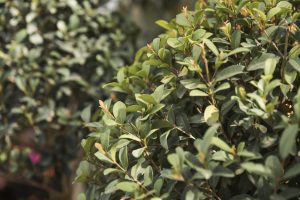
The problems associated with privet can range from excessive maintenance and unwanted seedlings to competition with native vegetation. Established plants can also be difficult to eradicate because cutting the visible stems does not necessarily eliminate the underlying root system.
In this guide , we cover 10 important disadvantages of privet, including invasive growth, rapid spread, dense thickets, seed dispersal, root suckering, difficult removal, competition with native plants, potentially toxic berries, unpleasant flowers, and ongoing maintenance requirements.
What Are The Disadvantages Of Privet? 10 Key Problems
1. Invasive Growth – A Major Disadvantage of Privet
One of the biggest disadvantages of privet is invasive growth in regions where particular Ligustrum species are considered invasive. Chinese privet is a prominent example, having spread from ornamental plantings into natural areas across parts of the southeastern United States.
Its adaptability allows it to establish under a range of growing conditions. UGA Extension reports that small-leaf privet tolerates different soil types, climates, and amounts of sunlight, including relatively shaded forest interiors.
This means an attractive hedge can potentially become a source of unwanted plants beyond the original planting site. For gardeners in areas where invasive privet is documented, species selection should therefore be considered before establishing a hedge.
2. Rapid Growth – Privet Can Become Difficult to Manage
Rapid growth can initially appear to be an advantage because privet can establish a privacy screen relatively quickly. However, rapid growth can become a disadvantage of privet when the shrub exceeds its intended size or begins invading nearby planting areas.
Small-leaf privet can grow rapidly into dense thickets, with UGA Extension reporting that it can reach approximately 20 feet in height under suitable conditions.
This growth rate means gardeners may need to prune repeatedly to maintain a particular hedge height and width. If maintenance is neglected, branches and stems can become increasingly difficult to manage, particularly in confined residential landscapes.
3. Dense Thickets – Privet Can Crowd the Landscape
The ability to create dense growth is another major disadvantage of privet. Chinese privet can produce numerous stems and branches that form thick stands, especially when plants are allowed to spread without management.
Dense thickets occupy considerable growing space and can shade plants growing beneath or around them. In natural areas, this creates particularly serious problems because native vegetation may receive less light and have less available space for regeneration.
A hedge that is deliberately maintained can look orderly, but unmanaged plants can develop into a much more extensive mass. This difference makes regular monitoring important where privet has invasive characteristics.
4. Seed Dispersal – Birds Can Spread Privet
Another disadvantage of privet is its ability to spread through seeds. Privet produces small fruits that are eaten by birds and other wildlife, which can subsequently disperse the seeds away from the original plant.
This natural dispersal mechanism makes controlling invasive populations more complicated. A gardener may maintain the original hedge carefully while seedlings continue appearing elsewhere because wildlife has transported the seeds.
Removing flowers or fruit before seeds are dispersed can reduce this pathway in situations where invasive privet is already present. UGA Extension specifically recommends removing flowers and berries from invasive plants as part of an approach to preventing seed distribution.
5. Root Suckering – Privet Can Regrow After Cutting
The ability of privet to produce root sprouts is another important disadvantage. Chinese privet can produce new plants from its root system, allowing additional shoots to develop around established plants.
This characteristic means cutting the visible stems may not completely solve a privet problem. Remaining roots can continue producing new growth, particularly when the plant has become well established.
For small plants, removing as much of the root system as possible can improve control. UGA Extension specifically warns that even small pieces of roots left in the soil can produce new plants.
6. Difficult Removal – Established Privet Requires Persistence
Established privet can be difficult to remove, particularly when plants have developed extensive root systems or formed dense thickets. Mechanical cutting can remove the above-ground growth while leaving roots capable of producing additional shoots.
Young plants are generally easier to address because they can sometimes be pulled or dug out before becoming deeply established. Larger shrubs require considerably more physical effort and may need repeated follow-up.
This is why prevention and early intervention are important where an invasive privet species is present. UGA Extension emphasizes that invasive-plant control requires persistence rather than assuming that a single removal operation will eliminate the problem.
7. Competition With Native Plants – Privet Can Reduce Plant Diversity
One of the most significant ecological disadvantages of privet is competition with native plants. Dense privet growth can shade native vegetation, consume available resources, and prevent new trees and other desirable plants from establishing.
This effect can become especially severe when invasive privet develops into large, continuous stands. Instead of a diverse understory containing many plant species, an area can become dominated by relatively uniform privet growth.
UGA Extension notes that this replacement of native vegetation can affect biodiversity because wildlife that depends on native plants may also be affected when those plants disappear.
8. Potentially Toxic Berries – A Concern Around Homes
The berries produced by some privet species represent another potential disadvantage of privet around residential landscapes. UGA Extension identifies the fruit of Chinese privet as toxic to humans and reports symptoms associated with ingestion, including nausea, abdominal pain, vomiting, diarrhea, weakness, and changes in blood pressure and body temperature.
This is worth considering when privet is planted where children or animals may have easy access to the fruit. The dark berries can remain on the plant through winter and may be noticeable during periods when fewer other plants are fruiting.
The toxicity information should be applied to the identified species rather than automatically assuming that every Ligustrum cultivar has identical toxicity characteristics. Correct plant identification is therefore important when evaluating an existing hedge.
9. Unpleasant Flowers and Pollen – Privet Can Be Problematic for Sensitive People
Another disadvantage of privet is its flowering period, particularly for people sensitive to strong floral odors or pollen. Chinese privet produces clusters of small white flowers, and UGA Extension describes their fragrance as unpleasant and notes that the pollen can cause allergic reactions in susceptible individuals.
The flowers can therefore be a consideration when planting privet close to frequently used outdoor living spaces. A shrub that looks attractive as a hedge may become less desirable if its flowering period creates an unpleasant odor or aggravates sensitivity.
This issue does not affect every person equally, and fragrance perception varies considerably. Nevertheless, it is a practical consideration when selecting a hedge plant for patios, entrances, windows, and other areas immediately around a home.
10. High Maintenance – Privet Requires Regular Management
Ongoing maintenance is another important disadvantage of privet, particularly when rapid growth is combined with seed production and root sprouting. A formal hedge generally needs regular pruning to maintain its desired height, width, density, and appearance.
Maintenance becomes more demanding when the plant is an invasive species. Gardeners may need to monitor not only the original hedge but also seedlings and root sprouts appearing beyond the intended planting area.
For this reason, the long-term maintenance requirements should be considered before planting privet. Where an invasive Ligustrum species is involved, selecting a locally appropriate alternative can prevent years of additional management.
7 Essential Features to Consider Before Planting Privet
1. Species Identification
Different Ligustrum species have different characteristics and invasive statuses. Identify the species or cultivar before making a planting decision.
2. Local Invasive Status
Check whether the particular privet species is considered invasive in your region. Chinese privet, for example, is classified as invasive in parts of the southeastern United States.
3. Mature Size
Consider the mature height and spread rather than judging the plant by its size when purchased.
4. Seed Production
Consider whether the plant produces abundant berries that could be consumed and dispersed by wildlife.
5. Root Sprouting
Check whether unwanted shoots are appearing around established plants, particularly after pruning or cutting.
6. Maintenance Requirements
Account for regular pruning and monitoring when using privet as a hedge or privacy screen.
7. Alternative Plants
Where privet is invasive, locally adapted native shrubs can provide screening while reducing the risk of introducing an invasive plant. UGA Extension lists options such as inkberry, blackhaw viburnum, and Carolina cherry laurel for appropriate southeastern landscapes.
Disadvantages Of Privet FAQs About the Disadvantages
1. What is the biggest disadvantage of privet?
The biggest concern depends on the species and location, but invasive privet can spread aggressively and form dense thickets that compete with native vegetation. Chinese privet is a particularly important example in parts of the southeastern United States.
2. Does privet spread quickly?
Some privet species can spread rapidly through both seeds and root sprouts. Birds and other wildlife can disperse seeds after feeding on the plant’s berries.
3. Is privet difficult to remove?
Established privet can be difficult to eliminate because cutting the stems may leave roots capable of producing new shoots. Complete removal is generally easier when plants are young and the root system is still relatively small.
4. Does privet damage native plants?
In areas where invasive privet becomes established, dense growth can shade native plants, consume resources, and interfere with the regeneration of native vegetation.
5. Are privet berries poisonous?
Some privet species produce toxic fruit. UGA Extension specifically identifies Chinese privet fruit as toxic to humans and describes several possible symptoms following ingestion.
6. Do birds spread privet?
Yes. Birds and other wildlife can eat privet berries and disperse the seeds through their movements and droppings.
7. Should I remove privet from my garden?
That depends on the species, local invasive-plant status, and the condition of the plant. If the species is invasive locally or is spreading beyond the intended planting area, removal and replacement with an appropriate alternative may be worth considering.
Conclusion
In conclusion, the disadvantages of privet include invasive growth, rapid expansion, dense thickets, seed dispersal, root sprouting, difficult removal, competition with native vegetation, potentially toxic berries, unpleasant flowering characteristics, and ongoing maintenance.
The best approach is to identify the particular Ligustrum species before deciding whether it belongs in a landscape. The runner-up consideration is evaluating how aggressively the plant is spreading and whether it is classified as invasive in the local region.
Privet can provide useful screening and hedge functions where an appropriate species or cultivar is selected and properly maintained. However, invasive species such as Chinese privet require considerably more caution because their seeds and root sprouts can allow them to spread beyond cultivated areas.
Ultimately, gardeners should evaluate species, mature size, reproductive behavior, maintenance requirements, and local invasive status before planting privet. Where an invasive species is already established, early intervention is generally easier than attempting to control a mature, dense thicket.