Understanding the best ways or methods of lambs quarters plant identification is essential for gardeners, botanists, and farmers who need accurate recognition in the field. This common yet often misunderstood plant has unique biological markers that make identification both scientific and practical when approached correctly.
Lambs quarters thrives in disturbed soils and nutrient-rich environments, making it highly visible across gardens and agricultural land. Because it resembles several edible and non-edible species, confusion often leads to misidentification.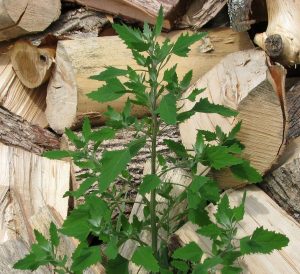
Scientific observation focuses on morphology, structure, and environmental adaptation, which provide consistent identification markers. These methods rely on measurable traits rather than assumptions, improving accuracy significantly.
In this guide , we will explore the best methods of lambs quarters plant identification, focusing on leaf structure, stem features, root systems, and scientific observation techniques that can be applied using both bare eyes and basic tools.
10 Best Methods of Lambs Quarters Plant Identification
1. Leaf Structure – Best Visual Method for Lambs Quarters Identification
Leaf structure is the best visual method for lambs quarters plant identification accuracy, as it provides immediate confirmation without tools. Additionally, the triangular to diamond-shaped leaves create a distinct geometric profile that separates it from oval-leaf plants. As a result, even beginners can quickly recognize the plant in the field. This makes leaf observation the primary identification step.
The surface of the leaf contains a powdery white coating known as farina, which is a wax-based protective layer. Moreover, this coating reflects sunlight and reduces water loss, functioning as a natural adaptation mechanism. Therefore, the dusty or frosted appearance becomes a key scientific marker. This chemical adaptation is unique among many weeds.
Leaf arrangement is alternate along the stem, not symmetrical or paired. Furthermore, lower leaves are broader while upper leaves become narrower and smoother. Consequently, this gradient pattern confirms plant maturity and identity. This structural variation strengthens identification accuracy.
Pros:
• Easy spotting
• Distinct shape
• Powder coating
• No tools
• Fast method
• Reliable trait
• Beginner friendly
Cons:
• Seasonal changes
• Damage risk
• Lookalikes exist
2. Stem Characteristics – Best Structural Identification Method
Stem analysis is the best structural method for lambs quarters plant identification in mature plants, offering strong secondary confirmation. Additionally, the green stem often features purple or reddish streaks, which result from anthocyanin pigments. As a result, this coloration helps distinguish it from uniformly green weeds. This biochemical trait is consistent across environments.
The stem surface is smooth or slightly ribbed, lacking hairs or fuzz. Moreover, its rigid internal structure supports vertical growth and nutrient transport. Therefore, it feels firm and slightly angular when touched. This tactile feature improves identification accuracy.
Branching typically occurs near the top, forming a pyramidal structure. Furthermore, this growth pattern maximizes light exposure for photosynthesis. Consequently, the plant appears dense at the top and sparse at the base. This architectural pattern is a reliable scientific indicator.
Pros:
• Color clues
• Firm texture
• Easy touch
• Visible streaks
• Strong structure
• Reliable sign
• Field useful
Cons:
• Color variation
• Young unclear
• Needs close view
3. Root System – Best Scientific Confirmation Method
Root examination is the best scientific method for lambs quarters plant identification confirmation, especially when above-ground features are unclear. Additionally, the plant develops a taproot system, which allows deep nutrient absorption. As a result, it thrives in competitive environments. This adaptation explains its invasive behavior.
The root is relatively thin but becomes stronger with age. Moreover, lateral roots extend outward to stabilize the plant in loose soil. Therefore, young plants are easy to pull, while mature ones resist removal. This helps determine plant age and growth stage.
Roots are commonly found in nitrogen-rich soils, indicating a strong ecological relationship. Furthermore, soil testing often reveals high fertility where lambs quarters grow. Consequently, habitat analysis becomes part of identification. This is a scientific environmental method.
Pros:
• Scientific proof
• Deep root
• Strong anchor
• Habitat clue
• Accurate method
• Growth insight
• Reliable
Cons:
• Requires digging
• Time consuming
• Not visible
4. Leaf Count & Arrangement – Best Growth Pattern Method
Leaf arrangement is the best method for lambs quarters plant identification through growth pattern analysis, offering insight into development stages. Additionally, seedlings begin with two narrow cotyledons before transitioning to broader leaves. As a result, early identification becomes possible with careful observation. This stage is critical for weed control.
Mature plants produce multiple alternating leaves, often dozens along the stem. Moreover, there is no symmetrical pairing, which differentiates it from opposite-leaf species. Therefore, irregular spacing becomes a key identifier. This structural pattern is consistent.
Leaf density increases near the top of the plant. Furthermore, this clustering supports reproductive growth and flowering. Consequently, the plant appears fuller at the top. This pattern confirms species identity.
Pros:
• Pattern based
• Early detection
• Consistent growth
• Easy observe
• No tools
• Clear structure
• Accurate
Cons:
• Variable count
• Needs practice
• Stage dependent
5. Flower & Seed Structure – Best Reproductive Identification Method
Flower structure is the best reproductive method for lambs quarters plant identification in late growth stages, providing final confirmation. Additionally, flowers are small, green, and lack petals, forming dense clusters. As a result, they resemble grain-like structures. This distinguishes them from flowering plants.
Seeds are tiny, round, and black, produced in extremely high quantities. Moreover, their protective outer layer ensures long-term soil survival. Therefore, the plant can reappear year after year. This explains its persistence.
Flowering occurs in warm seasons under optimal conditions. Furthermore, seed heads become more visible as the plant matures. Consequently, seasonal timing aids identification. This is a biological cycle method.
Pros:
• Clear clusters
• High seeds
• Late confirmation
• Seasonal clue
• Distinct form
• Reliable stage
• Easy spot
Cons:
• Late stage
• Small size
• Needs maturity
6. Surface Texture – Best Microscopic Identification Method
Surface analysis is the best microscopic method for lambs quarters plant identification using visual chemistry, especially when enhanced with magnification. Additionally, the powdery coating consists of wax crystals that reflect light. As a result, the plant appears silvery or dusty. This is a chemical defense mechanism.
When touched, the coating may rub off slightly. Moreover, this reveals the green tissue underneath. Therefore, physical interaction confirms the presence of farina. This is a simple field test.
Under magnification, the coating appears crystalline. Furthermore, it forms a protective barrier against dehydration. Consequently, this feature is scientifically unique. This improves identification accuracy.
Pros:
• Chemical marker
• Unique coating
• Easy test
• Visual proof
• No cost
• Reliable
• Scientific
Cons:
• Fades age
• Needs close look
• Weather affected
7. Habitat & Growth Behavior – Best Environmental Identification Method
Habitat analysis is the best environmental method for lambs quarters plant identification in large areas, offering predictive accuracy. Additionally, the plant thrives in disturbed soils such as farms and gardens. As a result, location becomes a strong indicator. This helps identify it quickly.
It grows rapidly in nitrogen-rich environments, often after fertilization. Moreover, it competes aggressively with crops for nutrients. Therefore, dense clusters often indicate its presence. This is a predictive ecological method.
The plant reappears annually due to seed banks. Furthermore, it spreads quickly across open land. Consequently, repeated sightings confirm identification. This is a long-term observation method.
Pros:
• Location clue
• Predictive
• Easy observe
• No tools
• Fast method
• Wide use
• Reliable
Cons:
• Indirect method
• Needs context
• Not exact