Australia turns on the heat in a way that catches even seasoned gardeners off guard, and knowing how to keep lawn healthy during Australian summer becomes critical once the mercury climbs past forty degrees. The combination of blistering sun, dry westerly winds, and sudden afternoon thunderstorms can push a lawn from lush to straw in a matter of weeks.
Keeping a lawn alive through an Australian summer depends on the grass species, the local climate, how much shade the yard gets, and how much water you can responsibly apply. Warm-season grasses like couch, kikuyu, and buffalo handle the Australian heat better than cool-season tall fescue, but even the toughest lawns struggle without careful management. State water restrictions, mowing height, and soil health all shape the outcome.
Timing and technique decide whether summer care succeeds or fails. Watering deeply before dawn, raising the mowing height, feeding lightly at the right moment, and watching for heat stress all prevent damage, while shallow daily watering, scalping the lawn, and mowing in the heat of the day stress the grass beyond recovery. Get those wrong and the result is a brown, patchy lawn that takes months to recover.
In this guide, we explore 15 top methods for how to keep lawn healthy during Australian summer, including deep watering routines, mowing adjustments, soil improvements, and heat stress management. We examine their intended applications, watering requirements, timing, and suitability for different grass types and Australian climate zones.
How To Keep Lawn Healthy During Australian Summer? 15 Top Methods
1. Deep Watering Before Sunrise – The Most Important Summer Watering Habit
Deep watering before sunrise is the most important summer watering habit because Australian mornings heat up fast, and water applied after 8am evaporates before it reaches the roots. To begin with, running irrigation between 4am and 7am lets the water soak deep into the soil before the sun climbs. This gives couch, kikuyu, and buffalo grass enough moisture to survive a 40°C day.


- 【Easy Programming Program】Through the Sprinkler Timer to program, you can set the Start Time, Watering Duration is 1min-3h59min, Watering Frequency from 1h to 12h or 1 day to 7 days, so you can customize your watering time, and can be more accurate.
- 【Rain Delay & Manual Mode】With rain delay mode, your programmed schedule will be paused for 24, 48, or 72 hours, and will be automatically resumed. Using manual mode, any lawn or garden can be watered as needed, with customizable times from 1 min to 8 hrs, and without interrupting your schedule.
The watering should be deep and infrequent rather than light and daily. One standout feature is that deep watering encourages roots to follow moisture downward, which is essential in the shallow, sandy soils common across much of Western Australia and Queensland. For gardens under Level 2 or Level 3 water restrictions in Victoria, NSW, or South Australia, this efficiency matters greatly.
Checking soil moisture with a probe confirms water is reaching depth. Another advantage is that dawn watering reduces fungal disease compared with evening watering, which is especially important during humid Queensland summers. Without question, it remains the most important single habit for surviving an Australian summer.
- Deep root watering
- Beats rapid morning evaporation
- Encourages deep roots
- Reduces humid-weather disease
- Saves water under restrictions
- Works on couch, kikuyu, buffalo
- Respects state water rules
- Requires irrigation setup
- Early morning timing
- Needs soil moisture checks
2. Raising The Mower Height – The Simplest Way To Reduce Heat Stress
Raising the mower height is the simplest way to reduce heat stress because taller grass shades the soil and cools the root zone during Australia’s long, bright days. Right from the start, setting the mower one notch higher keeps more leaf surface for photosynthesis. As such, couch and buffalo lawns stay greener through January and February.

- Oregon Replacement Deck Leveling Gauge
- Oregon Genuine Replacement Part
The mowing height should sit between three and four inches for most warm-season grasses used in Australia. One impressive feature is that taller grass also crowds out weeds like nutgrass and bindii, which spread quickly in summer. With consistent mowing, the lawn stays cool and dense.
Keeping blades sharp prevents torn tips that brown in the Australian sun. Just as important, raising the mower height takes only a moment. Taken together, it offers one of the simplest and most effective summer habits.
- Shades soil
- Reduces summer heat stress
- Conserves moisture
- Crowds out nutgrass and bindii
- Simple adjustment
- Works on couch and buffalo
- Free to implement
- Mowing takes longer
- Needs sharp blades
- Can look shaggy to some
3. Leaving The Clippings On The Lawn – The Free Way To Feed And Cool Grass
Leaving the clippings on the lawn is the free way to feed and cool grass because the fine clippings return moisture and nitrogen to the soil during the hottest weeks. From the outset, mowing without the catcher drops fine clippings that break down quickly in the summer heat. This reduces the lawn’s fertilizer needs in Australian conditions where nitrogen leaches away quickly.
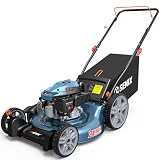
- Powerful 144cc Engine with Seconds-Fast Startup: Say goodbye to frustrating pull-starts. This reliable 144cc 4-cycle OHV engine comes pre-filled with oil, allowing for immediate startup and low-vibration operation. Delivering 3.4 HP and 5.8 ft-lb of torque, it provides consistent power to slice through thick grass while maintaining fuel efficiency at approximately 27 oz per hour.
- Versatile 3-in-1 Mowing Flexibility: Adapt to any season or grass condition with ease. The versatile steel deck seamlessly switches between rear bagging, side discharge, and mulching modes to suit your specific lawn care needs. It includes a large 1.7-bushel grass catcher to reduce emptying frequency and an ergonomic handle designed to maximize comfort during extended use.

The clippings must be small enough to fall between the grass blades. One impressive feature is that the added organic matter improves soil water-holding capacity in the sandy soils found across much of the Australian coastline. With proper mowing, the lawn stays greener with less feeding.
Mowing when the grass is dry prevents clumping. Just as important, the practice saves money on fertilizer and mulch during the expensive summer months. Taken together, it offers a simple, sustainable option for Australian summer lawn care.
- Returns nutrients
- Saves on fertilizer
- Improves sandy soil moisture
- Reduces waste
- Sustainable
- Works on any Australian lawn
- Free to implement
- Needs mulching mower
- Can cause clumping
- Not ideal if grass is wet
4. Applying A Light Summer Feed – How To Fertilize Without Burning The Lawn
Applying a light summer feed is how to fertilize without burning the lawn because a small dose of slow-release nitrogen keeps the grass growing without pushing soft, heat-sensitive growth during the 40°C spells. Right from the start, the light feed supports recovery from stress without forcing lush new growth. As such, the lawn stays healthy rather than weak.

- Feel Proud of Your Lawn: Slow release fertilizer packed with 65% granular nitrogen - this spring lawn fertilizer feeds up to 110 days for deep green grass and lush growth you’ll love coming home to
- Green Grass Starts Here: High nitrogen lawn food starter fertilizer with a 25-5-10 NPK blend delivers quick and steady growth - perfect grass food to revive tired lawns and kickstart your lawn care routine
The fertilizer should be applied at half the spring rate, ideally in early December before the peak heat arrives. One impressive feature is that slow-release granules feed steadily through January and February when the Australian sun is strongest. With proper timing, the lawn holds color without burning.
Watering after application prevents leaf burn. Just as important, avoiding high-nitrogen feeds during peak heat prevents soft growth that attracts lawn grubs and disease. Taken together, it offers a balanced summer feeding approach for Australian conditions.
- Light feed prevents stress
- Slow release feeds through January
- Helps recovery
- Holds color
- Reduces burn risk
- Works on Australian grasses
- Widely available
- Timing matters
- Needs watering in
- Can burn if overapplied
5. Core Aerating In Spring – Preparing The Soil Before The Heat Arrives
Core aerating in spring prepares the soil before the heat arrives because pulling plugs of soil opens the root zone to water and air before the Australian summer stress begins. From the outset, aeration relieves compaction in the heavy clay soils common in Victoria and NSW. This makes the lawn far more resilient when the heat peaks in January.

- 【EFFECTIVE MANUAL LAWN AERATOR TOOL】: Walensee spike lawn aerator helps loosen soil and create small channels so air, water, and nutrients can reach grass roots more easily. It is a practical lawn care tool for preparing small lawn areas before seeding, watering, or fertilizing, helping your yard, garden, or patio lawn stay greener and better maintained.
- 【15 SHARP IRON SPIKES FOR BETTER COVERAGE】: Designed with 15 sturdy iron spikes, each about 2.8 inches long, this manual lawn aerator covers more ground with each step compared with single-row or fewer-spike tools. The three-row spike layout helps improve working efficiency for small lawns, lawn edges, bare spots, and lightly compacted patches.
The aeration should be done in September or October, not during summer. One impressive feature is that the holes allow water to reach deeper roots during the hot Australian months. With proper timing, the lawn roots more deeply before December.
Watering after aeration helps the soil settle and roots recover. Just as important, the practice reduces thatch build-up that traps heat and moisture. Taken together, it offers an excellent foundation for surviving an Australian summer.
- Relieves compaction
- Improves water penetration
- Strengthens roots before summer
- Reduces thatch
- Works on Australian clay soils
- Improves nutrient uptake
- Widely available
- Requires equipment
- Best done in spring
- Can stress the lawn
6. Top Dressing With Compost – Building A Sponge Layer Under The Turf
Top dressing with compost is building a sponge layer under the turf because the organic matter improves water retention in the fast-draining soils common across Australian suburbs. Right from the start, spreading a thin layer of compost over the lawn builds moisture-holding capacity in the root zone. As such, the grass survives longer between waterings during hot, dry spells.

- Adjustable Handle for Comfort: The handle features three adjustable heights (42.91 in / 109 cm, 44.88 in / 114 cm;48.03 in / 122 cm), making it easy to adapt to different user heights and reducing strain on the back. The fertilizer spreader comes with straight-bar design that offers better control of direction and speed, improving work efficiency during lawn care.
- Durable and Sturdy: Built with an integrated steel drum and precision-cutting technology, this compost spreader is solid and sleek. The 25 mm (0.98 inch) thick handle is powder-coated for enhanced durability and rust resistance. Its large size (60 x Φ40 cm) ensures higher spreading efficiency for lawns and farmlands.
The compost must be applied thinly and worked into the grass, ideally in October or early November. One impressive feature is that the compost also improves soil structure in the heavy clay soils found across much of South Australia. With proper application, the lawn handles both drought and sudden summer storms better.
Watering after top dressing helps the compost settle. Just as important, the practice reduces the need for chemical fertilizers before the Australian heat peaks. Taken together, it offers a sustainable foundation for summer lawn health.
- Improves water retention
- Builds soil life
- Improves clay drainage
- Reduces fertilizer need
- Sustainable
- Works on any Australian lawn
- Widely available
- Labor intensive
- Needs quality compost
- Best done in spring
7. Pre-Watering Before A Heatwave – Giving Grass A Buffer Against The Peak
Pre-watering before a heatwave is giving grass a buffer against the peak because the extra moisture helps the lawn survive the worst hours of a 45°C day. Right from the start, a deep watering the evening before a forecast heatwave gives couch and buffalo grass moisture to draw on. As such, the damage is far less severe.

- Large 2-gallon capacity with measurement markings for precise control.
- Features a timeless design with a sunflower embossed on each side.
The second watering after the heatwave helps the grass recover. One impressive feature is that the two-watering approach prevents both drought stress and shock, which is common after the hot north winds that sweep across southern Australia. With proper timing, the lawn bounces back faster.
Checking the Bureau of Meteorology forecast each week prepares the schedule. Just as important, the method works with hose, sprinkler, or drip irrigation. Taken together, it offers a strategic option for extreme Australian weather.
- Pre-hydrates soil
- Reduces heatwave damage
- Speeds recovery
- Works with any irrigation
- Easy to plan with BOM forecasts
- Reduces long-term damage
- Widely available
- Needs weather monitoring
- Extra water use
- Can waste water if forecast is wrong
8. Draping Shade Cloth Over Tender Patches – Protecting The Weakest Spots
Draping shade cloth over tender patches is protecting the weakest spots because the cloth reduces the intensity of the Australian sun during the hottest afternoon hours. From the outset, a frame draped with shade cloth shields seedlings, newly laid turf, and thin patches. This makes it ideal for vulnerable areas during a Queensland or Western Australian heatwave.

- 90% Sun Block: Shade&Beyond shade cloth with grommets provides 90% UV protection and resists UV fading. With excellent shading and heat insulation, you can get a shady retreat and keep your belongings away from the sun's harsh effects. By lowering the temperature under its shelter, these sunshades for patio always allow you to enjoy a cool and refreshing outdoor experience, making them ideal for patios, gardens, and more
- Premium Shade Fabric: Crafted from 200GSM high-density polyethylene (HDPE) material, the pergola shade cover is built to last. HDPE is known for its exceptional strength, durability, and resistance to wear and tear, ensuring that your outdoor shade cloth will stand the test of time. These lightweight breathable sun shades also provide maximum airflow and stretchability
The cloth must be anchored so it does not flap in the strong summer winds. One impressive feature is that the cloth is reusable and portable from season to season. With proper placement, the grass beneath stays cooler and greener.
Removing the cloth in the evening lets airflow return and reduces humidity. Just as important, the method works well in small areas or on new seed. Taken together, it offers a targeted option for extreme heat protection.
- Reduces sun intensity
- Protects thin patches
- Reusable
- Portable
- Works on new turf and seedlings
- Reduces summer heat stress
- Widely available
- Needs anchoring
- Limited to small areas
- Can block too much light
9. Repairing Bare Spots Before December – Fixing Thin Areas Before Summer Hits
Repairing bare spots before December is fixing thin areas before summer hits because thin patches dry out and die faster under the Australian sun. Right from the start, overseeding or laying turf in spring fills bare spots so the whole lawn can handle the summer. As such, the surface stays even and cool.

- WHEN TO APPLY : This lawn seed mix of Kentucky bluegrass seed, perennial ryegrass, and fine fescue grass seed germinates best when daytime temperatures are between 60°F and 80°F with no danger of frost
- PATCH & REPAIR: Scotts EZ Seed Patch & Repair Sun and Shade is a revolutionary grass seeding product that makes grass patch repair for lawns easy; it's designed to fill in bare spots and repair lawn damage
The patches should be repaired in September or October while the grass is actively growing. One impressive feature is that a dense lawn shades the soil and resists summer weeds like bindii and crowsfoot. With proper repair, the summer damage is limited to small spots.
Watering the repaired areas separately helps them establish before the heat. Just as important, the repair prevents the bare spots from spreading during the hot, dry months. Taken together, it offers an excellent preparation strategy for Australian summer.
- Fills bare spots
- Shades the soil
- Reduces summer weed invasion
- Improves appearance
- Prevents spread of damage
- Works on Australian lawns
- Widely available
- Needs spring timing
- Extra watering
- Higher cost
10. Clearing Weeds Before The Heat – Reducing Competition For Water
Clearing weeds before the heat is reducing competition for water because Australian summer weeds like nutgrass and bindii steal moisture and nutrients when both are scarce. From the outset, spraying or pulling weeds in spring reduces competition before the summer stress begins. This makes it ideal for lawns that struggled with weeds the previous year.

- This selective weed killer kills or controls many Broadleaf Weeds and plants susceptible to 2, 4-D.
- Works on Dandelion, Arrowhead, Buckhorn, Aster, Goatsbeard and more. See label for full list.
The weed control should happen before the weeds set seed, ideally by late November. One impressive feature is that removing weeds frees water and nutrients for couch and buffalo grass. With proper timing, the lawn fills in before December arrives.
Following label rates prevents damage to the grass in the summer heat. Just as important, using a selective herbicide keeps the lawn intact while the weeds die. Taken together, it offers a strong preparation strategy for Australian summer.
- Removes competition
- Frees water and nutrients
- Prevents seed set
- Selective on lawns
- Improves appearance
- Works with spring timing
- Widely available
- Needs care around desirable plants
- Requires repeat checks
- Chemical exposure risk
11. Watching For Footprints And Wilting Blades – Early Signs Of Heat Stress
Watching for footprints and wilting blades is spotting early signs of heat stress before they become dead patches on an Australian lawn. Right from the start, looking for footprints that stay visible, wilting blades, and grayish patches catches stress before it kills. As such, action can be taken quickly.

- Trusted Since 2015: Become one of the many plant lovers who rely on the proven accuracy of XLUX. Established in 2015, our soil moisture meter has earned over 60,000+ verified ratings for its consistent performance. While many many newer brands come and go, we provide the long-term reliability and quality that American households have trusted for over a decade.
- Take the guesswork out of watering: While your eyes and fingers can only determine the moisture level of the soil surface, the XLUX meter tells you exactly what’s happening deep inside your pot or garden. Our high-sensitivity probe reaches the root zone where it matters most, requiring no batteries or charging—simply insert for an immediate, real-time reading to help your plants stay healthy and vibrant.
The signs appear first on north-facing slopes and in full-sun areas where the Australian sun is strongest. One impressive feature is that the moisture meter confirms whether stress is from drought or lawn grubs, which are especially active in summer. With proper monitoring, the response is targeted and effective.
Checking the lawn early each morning catches stress before the heat peaks. Just as important, the habit helps prevent bigger problems. Taken together, it offers a simple but powerful monitoring habit for Australian conditions.
- Early detection
- Targeted response
- Distinguishes drought from grubs
- Simple habit
- Works on any Australian lawn
- Widely available
- Low cost
- Requires daily check
- Easy to miss signs
- Needs extra tools
12. Programming Irrigation For Water Restrictions – Staying Legal And Still Watering Right
Programming irrigation for water restrictions is staying legal and still watering right because Australian states enforce watering rules that dictate when and how much you can water. From the outset, matching the irrigation schedule to local rules avoids fines while still keeping the lawn alive. This makes it ideal for gardens under Level 2 or Level 3 restrictions in Victoria, NSW, or South Australia.

- Whole-Home Remote Control Irrigation Network: GoveeLife automatic watering system has a rock‑solid connection up to 1640 ft from the gateway – no dropouts. Connects up to 64 devices via one gateway, unifying front, back, and side yards.
- Smart Weather Adaptive Watering: This hose timer auto-adjusts watering based on real-time rain, light, temp and humidity via internet data. Skips rainy days, increases watering in dry, hot weather—turning fixed schedules into dynamic management. Prevents over/under watering, saves bills.
The timer should be programmed to run only on allowed days and times, which vary between councils. One impressive feature is that the smart timer makes compliance easier across different states. With proper settings, the lawn stays healthy within the legal limits.
Checking local council rules each season prevents accidental breaches. Just as important, the practice saves water and money during the expensive summer months. Taken together, it offers an excellent option for gardeners under Australian water restrictions.
- Complies with state rules
- Prevents fines
- Saves water
- Smart control
- Works with any irrigation
- Reduces waste
- Widely available
- Requires regular updates
- Higher upfront cost
- Rules vary by council
13. Using Wetting Agents On Sandy Soil – Making Water Actually Soak In
Using wetting agents on sandy soil is making water actually soak in because the sandy soils found across much of coastal Australia become hydrophobic in summer. Right from the start, applying a wetting agent breaks the water-repellent coating and lets moisture soak in. As such, the irrigation actually reaches the roots instead of running off.

- Regular use promotes deeper root system: E-Z Wet Soil Penetrant 26 enhances water absorption in various soil types, promoting a deeper root system
- Non-ionic formula with neutral pH: E-Z Wet features a non-ionic formula and neutral pH, suitable for all soils
The product should be applied at the start of summer, ideally in early December. One impressive feature is that the wetting agent lasts for months through the peak heat of January and February. With proper application, the lawn stops developing dry patches despite regular watering.
Watering after application activates the product. Just as important, the practice improves the efficiency of every watering that follows, which matters under water restrictions. Taken together, it offers an effective fix for hydrophobic Australian soils.
- Breaks water repellence
- Improves water absorption
- Lasts through peak heat
- Reduces dry patches
- Works on sandy Australian soil
- Improves irrigation efficiency
- Widely available
- Needs reapplication
- Higher cost
- Only works on hydrophobic soil
14. Mowing In Cool Hours Only – Why Timing Your Mowing Matters
Mowing in cool hours only is why timing your mowing matters because mowing cuts stress the grass and expose it to the fierce Australian sun. Right from the start, mowing in the cool of the early morning or late evening avoids additional stress. As such, the lawn recovers faster and suffers less browning.

- 【UV Protection & Cooling】Made of 100% brand new High Density Polyethylene material and eliminate the use of splicing fabrics.Blocks up to 95% of harmful UV rays and direct sunlight exposure."Breathable" fabric allows air to pass freely and achieve a certain degree of cooling.
- 【Measuring Dimensions】Measure and clean the area where the Sun visor is to be installed. Leave a margin of 0.5-1 feet between the fixing point and the sunshade sail to install hardware/hooks or ropes. (Please refer to the measurement pictures we provided).Due to the characteristics of this material, the finished product may have a deviation of ± 4 inches.
The grass should never be mowed when it is wet from summer storms or during the hottest part of the day. One impressive feature is that the timing change costs nothing and protects the lawn from the worst of the Australian heat. With proper scheduling, the mowing routine becomes safer for the grass.
Mowing less often during heatwaves further reduces stress. Just as important, letting the grass grow a little longer helps shade the soil through January. Taken together, it offers a simple but effective timing adjustment for Australian summers.
- Reduces mowing stress
- Prevents sun browning
- Free to implement
- Works on any Australian lawn
- Slower recovery avoided
- Protects the grass
- Simple change
- Requires schedule change
- Mowing takes planning
- Grass grows longer between mows
15. Following The Forecast Week By Week – Planning Ahead For Storms And Heat
Following the forecast week by week is planning ahead for storms and heat because Australian summers bring sudden heatwaves and afternoon thunderstorms that catch gardeners off guard. From the outset, checking the Bureau of Meteorology forecast each week allows you to adjust watering, feeding, and mowing ahead of the heat. This makes it ideal for gardeners who want to stay one step ahead of the Australian weather.

- 𝐇𝐈𝐆𝐇-𝐏𝐑𝐄𝐂𝐈𝐒𝐈𝐎𝐍 𝐑𝐀𝐈𝐍𝐅𝐀𝐋𝐋 𝐖𝐈𝐓𝐇 𝐒𝐖𝐈𝐒𝐒 𝐓𝐄𝐌𝐏 & 𝐇𝐔𝐌𝐈𝐃𝐈𝐓𝐘 𝐒𝐄𝐍𝐒𝐎𝐑: Accurately tracks rainfall with ±1 mm precision in light rain and ±7% in heavy rain, with manual calibration for localized adjustments. Swiss-made temperature and humidity sensors provide dependable readings, with temperature monitoring from -40°F to 140°F (up to ±2°F/1°C accuracy) and humidity from 10% to 99%. Ideal for weather enthusiasts, IT professionals, engineers, and anyone who values accurate, real-time weather data
- 𝟔.𝟓-𝐈𝐍𝐂𝐇 𝐋𝐀𝐑𝐆𝐄 𝐒𝐂𝐑𝐄𝐄𝐍 𝐖𝐈𝐓𝐇 𝟑-𝐋𝐄𝐕𝐄𝐋 𝐀𝐃𝐉𝐔𝐒𝐓𝐀𝐁𝐋𝐄 𝐁𝐀𝐂𝐊𝐋𝐈𝐆𝐇𝐓: Built for home weather station daily use, this unit features a 6.5 inch large screen with extra big bold fonts and high contrast. Great for home weather stations wireless indoor outdoor scenarios, the weather stations wireless indoor outdoor device supports 3 level adjustable backlight. Seniors and weather fans can easily view all readings in bright daylight or low light rooms, perfect for bedroom, kitchen, garden and backyard placement
The plan should respond to forecasts rather than fixed schedules. One impressive feature is that the habit prevents panic watering during a February heatwave. With proper planning, the lawn stays healthy through the whole season.
Recording weather patterns each year helps refine the plan for your local climate, whether you garden in Brisbane, Perth, Adelaide, or Melbourne. Just as important, the habit builds long-term resilience. Taken together, it offers the most strategic long-term approach to Australian summer lawn care.
- Prevents panic watering
- Works ahead of heatwaves
- Adjusts for summer storms
- Builds long-term resilience
- Improves lawn health
- Works with BOM forecasts
- Free to start
- Requires daily check
- Needs planning
- Forecasts can change
How To Keep Lawn Healthy During Australian Summer? FAQs
1. How do I keep my lawn healthy during Australian summer?
Water deeply before dawn, raise the mowing height, apply light slow-release fertilizer, aerate in spring, and watch for heat stress signs. Adjust irrigation for local water restrictions.
2. How often should I water my lawn in summer in Australia?
Two to three deep waterings per week are usually enough for established lawns. Shallow daily watering encourages weak roots and wastes water.
3. What is the best time to water a lawn in Australia?
Early morning, ideally between 4am and 7am, is the best time. Watering in the evening encourages fungal disease.
4. Should I mow my lawn higher in summer?
Yes. Raising the mowing height to three or four inches shades the soil and reduces heat stress.
5. Can I fertilize my lawn in summer in Australia?
Only a light slow-release feed at half the spring rate. Heavy nitrogen fertilizer during peak heat causes soft growth that burns and invites disease.
6. How do I fix brown patches in my Australian summer lawn?
Check whether the patches are from drought, disease, or lawn grubs. Water deeply, apply a wetting agent on sandy soil, and repair bare areas with seed or turf before next summer.
7. What is the best grass for Australian summer?
Warm-season grasses like couch, kikuyu, and buffalo handle Australian heat far better than cool-season varieties like fescue.
Conclusion
For how to keep lawn healthy during Australian summer, deep watering before sunrise stands out as the most reliable overall method because water reaches the root zone before the sun evaporates it. Raising mowing height and leaving clippings on the lawn follow closely as simple habits that cost nothing and protect the lawn every day.
Light summer feeding, spring aeration, compost top dressing, pre-heatwave watering, shade cloth, patch repair, weed control, heat stress monitoring, water restriction compliance, wetting agents, cool-hour mowing, and forecast planning each solve a specific Australian summer lawn challenge.
Understanding how to keep lawn healthy during Australian summer is not about a single trick but about layering habits and adjusting to the season. Deep watering, higher mowing, and careful monitoring are what make the difference.
Start with a watering schedule, raise the mower, and monitor the Bureau of Meteorology forecast. Thoughtful care today means a green lawn through the worst of the Australian summer and a faster recovery when autumn arrives.