Xeriscaping has emerged as one of the most sustainable and water-wise approaches to landscaping, particularly in drought-prone regions where water conservation is essential. The best trees for xeriscape combine exceptional drought tolerance, deep root systems, and attractive forms that create beautiful, low-maintenance landscapes with minimal irrigation requirements.
Originating in Colorado’s dry climate, xeriscaping principles emphasize selecting plants adapted to arid conditions, improving soil quality, using efficient irrigation, and grouping plants by water needs. Trees suitable for xeriscape must survive extended dry periods, thrive in challenging soils, and provide ornamental value while using significantly less water than traditional landscape trees.
This comprehensive guide explores the finest trees for xeriscape landscaping, evaluating drought tolerance, water efficiency, adaptability, and ornamental value to help you create beautiful, sustainable landscapes that conserve water and thrive in dry conditions.
10 Best Trees For Xeriscape Landscaping
1. Desert Museum Palo Verde – Best xeriscape tree for desert regions

The Desert Museum Palo Verde (Parkinsonia x ‘Desert Museum’) stands as the ultimate xeriscape tree for desert and arid regions, combining exceptional drought tolerance with stunning beauty. This hybrid palo verde features green bark for photosynthesis, brilliant yellow spring flowers, and a graceful, vase-shaped canopy that provides filtered shade with minimal water requirements.
Reaching 20-30 feet in height with spreads of 20-25 feet, Desert Museum Palo Verdes develop open, airy canopies with delicate, fern-like foliage that creates dappled shade. The tree’s green bark allows photosynthesis during drought when leaves may drop, ensuring survival through extended dry periods.
This tree demonstrates outstanding drought tolerance and heat resistance, thriving in xeriscape conditions with minimal supplemental water once established. Its low water requirements, fast growth, and beautiful flowers make it a premier choice for water-wise landscapes.
Pros
- Exceptional drought tolerance
- Beautiful yellow spring flowers
- Unique green photosynthetic bark
- Fast growth rate
- Low water requirements
- Heat and desert adapted
Cons
- Limited cold hardiness
- Filtered shade only
- Deciduous in extreme drought
2. Honey Mesquite – Best native xeriscape tree


- Native Desert Species: Honey Mesquite (Prosopis glandulosa) seeds harvested near Phoenix, Arizona from trees naturally adapted to the harsh conditions of the Sonoran Desert in the southwestern United States
- Drought-Tolerant Landscaping: This hearty tree thrives in arid climates and requires minimal water once established, making it an ideal choice for xeriscaping and water-conscious landscape designs in dry regions
The Honey Mesquite (Prosopis glandulosa) stands as a quintessential xeriscape tree, having adapted over millennia to survive in some of the driest environments on earth. Its extraordinary deep root system can reach depths of 50 feet or more, accessing groundwater far below the surface and ensuring survival through the most severe droughts.
Growing 25-35 feet in height with spreads of 25-30 feet, Honey Mesquites develop open, airy canopies with delicate, fern-like foliage that provides filtered shade. Their yellow-green catkin flowers appear in spring and summer, followed by bean pods that feed wildlife and livestock throughout the region.
This tree excels in challenging xeriscape conditions, tolerating extreme heat, drought, and poor soils with minimal water requirements. Its ability to fix nitrogen improves soil fertility for surrounding plants, making it valuable for sustainable xeriscape designs.
Pros
- Exceptional drought tolerance
- Extremely deep root system
- Nitrogen fixation
- Native to arid regions
- Wildlife food source
- Filtered shade
Cons
- Thorny branches
- Messy pod drop
- Can become invasive
3. Texas Mountain Laurel – Best drought-tolerant flowering tree

- STUNNING BLOOMS: Produces beautiful bluish lavender flower clusters that carry a delightful fragrance often compared to grape soda.
- MULTIPLE COMMON NAMES: Also known as Mescal Bean, Frijolito, and Grape Soda Tree, this Texas native is a beloved landscape showpiece.
The Texas Mountain Laurel (Sophora secundiflora) delivers spectacular spring flowers with exceptional drought tolerance, making it one of the most beautiful and resilient trees for xeriscape landscapes. Its grape-scented, purple-blue blossoms provide stunning spring displays while its evergreen foliage remains attractive throughout the year with minimal water.
Growing 15-25 feet in height with spreads of 10-15 feet, Texas Mountain Laurels develop dense, rounded canopies with glossy, dark green leaves that remain attractive year-round. Their compact size makes them ideal for smaller xeriscape gardens, entryways, and courtyard plantings where water is limited.
These laurels demonstrate exceptional drought tolerance through their deep root systems that access water during extended dry periods. Their adaptation to alkaline, limestone soils and minimal water requirements make them ideal choices for sustainable, low-maintenance xeriscape designs.
Pros
- Spectacular purple spring flowers
- Grape-like fragrance
- Evergreen foliage
- Excellent drought tolerance
- Limestone soil adapted
- Compact, manageable size
Cons
- Very slow growth rate
- Seeds are toxic
- Limited shade coverage
4. Live Oak – Best large xeriscape shade tree

- An open-grown live oak is a massive, picturesque, wide-spreading tree with magnificent horizontal and arching branches that form a broad, rounded canopy. A squat, tapering trunk (larger in diameter than that of any other oak) supports the huge, irregular limbs which often rest their elbows on the ground.
- Dark-green, waxy, unlobed leaves fall just as new leaves emerge in the spring, making the tree appear evergreen, though the coordinated leaf loss means its not actually a true evergreen.
The Live Oak (Quercus virginiana) provides massive, cooling shade with exceptional drought tolerance, making it one of the most valuable large trees for xeriscape landscapes. Its extensive root system taps deep groundwater during dry periods, while its dense, evergreen canopy provides year-round beauty with minimal water requirements once established.
Reaching 40-60 feet in height with spreads of 60-100 feet, Live Oaks develop the characteristic broad, horizontal branches that create breathtaking shade across wide areas. Their dense, dark green foliage remains attractive throughout the year, providing consistent screening and cooling even during the hottest, driest summer months.
These magnificent trees demonstrate exceptional drought tolerance through their extensive root systems that can reach depths of 30-40 feet to access groundwater. Their longevity and cultural significance make them valuable investments for xeriscape properties seeking enduring, sustainable shade solutions.
Pros
- Exceptional drought tolerance
- Massive, cooling canopy
- Year-round evergreen beauty
- Long-lived species
- Wildlife habitat value
- Iconic presence
Cons
- Requires substantial space
- Slow to moderate growth
- Susceptible to oak wilt
5. Desert Willow – Best flowering xeriscape tree

- 25+ Desert WIllow seeds
- Beautiful pink flowers make this a unique specimen. Great bonsai material
The Desert Willow (Chilopsis linearis) provides stunning summer flowers with exceptional drought tolerance, creating colorful beauty in xeriscape landscapes with minimal water. Its orchid-like blooms appear from spring through fall, attracting hummingbirds and butterflies while providing light, dappled shade in water-wise gardens.
Growing 20-30 feet in height with spreads of 15-25 feet, Desert Willows develop open, airy canopies with long, narrow leaves that provide filtered shade. Their trumpet-shaped flowers appear in shades of pink, purple, and white, creating long-lasting color that brightens the hottest summer months.
These trees demonstrate outstanding drought tolerance through their deep root systems that access water during extended dry periods. Their adaptability to alkaline, rocky soils and low water requirements make them ideal choices for xeriscaping and sustainable landscaping.
Pros
- Long summer flowering season
- Excellent drought tolerance
- Attracts hummingbirds
- Adaptable to poor soils
- Low maintenance
- Picturesque bark
Cons
- Limited shade coverage
- Deciduous with winter bareness
- May be messy with seed pods
6. Crape Myrtle – Best xeriscape tree for warm climates

- Extended Blooming Period: Features vibrant red blooms that continue flowering throughout the entire summer season
- Regional Suitability: Beautiful Flowering Trees specifically suited for Southern States climate and growing conditions
The Crape Myrtle (Lagerstroemia indica) delivers spectacular summer flowers with good drought tolerance, making it a valuable addition to xeriscape landscapes in warmer regions. Its long-lasting blooms, attractive bark, and multi-season interest provide beauty with moderate water requirements.
Depending on variety, Crape Myrtles range from 10-30 feet in height with spreads of 6-15 feet, with compact cultivars suitable for smaller xeriscape spaces. Their summer flower clusters appear in pink, red, purple, and white shades, creating spectacular displays that last for months, while their exfoliating bark adds winter interest.
These heat-loving trees demonstrate good drought tolerance once established, thriving in xeriscape conditions with minimal supplemental water. Their variety of sizes and multi-season interest make them valuable additions to water-wise landscapes in warmer climates.
Pros
- Long-lasting summer flowers
- Beautiful exfoliating bark
- Excellent heat tolerance
- Good drought tolerance
- Multi-season interest
- Variety of sizes available
Cons
- Less cold hardy
- Can be messy with flowers
- Requires some water for best bloom
7. Arizona Cypress – Best evergreen xeriscape tree

- For sale are 20 Carolina Sapphire (Arizona) Cypress trees that are approximately 6-12" tall and shipped in pots
- MESMERIZING SILVERY-BLUE FOLIAGE - Marvel at the gorgeous blue-green needles with silvery undertones that create a stunning color display unlike any ordinary evergreen, shifting beautifully in different lighting throughout the day
The Arizona Cypress (Cupressus arizonica) provides exceptional evergreen beauty for xeriscape landscapes, with its striking blue-gray foliage and dense, pyramidal form creating year-round structure with minimal water. This Southwestern native has adapted to arid conditions, thriving in hot, dry environments where other evergreens struggle.
Reaching 40-50 feet in height with spreads of 20-30 feet, Arizona Cypress develops a symmetrical, pyramidal form with scale-like blue-gray leaves that create a striking presence in xeriscape gardens. Its dense growth provides effective screening and wind protection while requiring minimal irrigation once established.
This tree demonstrates outstanding drought tolerance and heat resistance, thriving in full sun and poor, rocky soils. Its evergreen nature provides consistent shade, structure, and beauty throughout the year, making it valuable for xeriscape designs seeking year-round interest.
Pros
- Year-round evergreen beauty
- Excellent drought tolerance
- Striking blue-gray foliage
- Windbreak capability
- Adaptable to poor soils
- Low maintenance
Cons
- Limited cold hardiness
- May get bagworms
- Roots may be shallow
8. Chinese Pistache – Best xeriscape tree for fall color
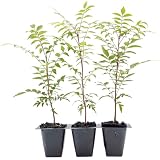
- READY TO PLANT: Includes 3 Chinese Pistache live starter saplings (Pistacia chinensis) in 2.5-inch nursery cubes—ideal for streetscapes, front yards, shade plantings, and specimen landscaping.
- DORMANT SHIPPING NOTICE: Trees will ship fully dormant during fall and winter and may arrive without leaves or with dried foliage—this is normal. While dormant, energy is stored in healthy, living roots. New foliage will emerge naturally in spring as temperatures warm, typically by April. Dormant orders are covered by our replacement guarantee through April—if no new growth appears by then, simply send us a photo for a refund or replacement.
The Chinese Pistache (Pistacia chinensis) delivers spectacular fall color with excellent drought tolerance, making it one of the most beautiful and practical xeriscape trees. Its brilliant orange, red, and gold autumn foliage creates stunning seasonal displays with minimal water requirements once established.
Reaching 30-40 feet in height with spreads of 25-35 feet, Chinese Pistaches develop symmetrical, rounded canopies with compound leaves that provide cooling shade. Their spectacular fall color, drought tolerance, and adaptability to various soils make them valuable additions to water-wise landscapes.
These trees demonstrate outstanding drought tolerance and adaptability to alkaline, poor soils, thriving in xeriscape conditions with minimal supplemental water. Their moderate growth rate and low maintenance requirements make them ideal for sustainable landscapes seeking seasonal beauty.
Pros
- Spectacular fall color
- Excellent drought tolerance
- Symmetrical form
- Adaptable to poor soils
- Low maintenance
- Pest resistant
Cons
- Moderate growth rate
- Female trees produce messy fruit
- Leaf drop in fall
9. Eastern Redbud – Best native xeriscape tree

- VIGOROUS POTTED STARTER: You receive a well-rooted Eastern Redbud tree settled in its own nursery container. This sturdy starter is easy for you to handle and is intended to provide a massive head start for your outdoor garden with a highly developed root system compared to unrooted cuttings or bare-root saplings.
- STRIKING SPRING BLOOMS: This classic ornamental variety is famous for its breathtaking, vibrant pink to light purple flowers that cover the bare branches in early spring. These high-impact blooms provide a dependable display of elegant color and a bold, spectacular look for your outdoor space before the foliage even appears.
The Eastern Redbud (Cercis canadensis) provides native beauty with good drought tolerance, making it an excellent choice for xeriscape landscapes seeking seasonal interest and wildlife value. Its spectacular spring flowers, attractive foliage, and manageable size create beauty with moderate water requirements.
Growing 20-30 feet in height with spreads of 25-30 feet, Eastern Redbuds develop rounded canopies with distinctive, heart-shaped leaves that create attractive texture. Their brilliant spring floral display signals the arrival of spring, while their moderate size fits comfortably in xeriscape gardens and smaller properties.
These trees demonstrate good drought tolerance once established and adapt well to various soil conditions. Their native status, wildlife value, and seasonal beauty make them valuable additions to sustainable, water-wise landscapes.
Pros
- Spectacular spring flowers
- Heart-shaped attractive leaves
- Native to North America
- Good drought tolerance
- Wildlife value
- Moderate, manageable size
Cons
- Short flowering period
- Can be susceptible to diseases
- Limited shade coverage
10. Honey Locust – Best adaptable xeriscape tree

- For sale is a Thornless Honey Locust tree that is approximately 18-24 inches tall and shipped bareroot
- PERFECT FILTERED SHADE WITHOUT KILLING YOUR LAWN - Creates beautiful dappled shade with incredibly fine, fern-like foliage that allows grass, flowers, and groundcovers to thrive beneath unlike dense maples or oaks that create dead zones
The Honey Locust (Gleditsia triacanthos) provides exceptional adaptability for xeriscape landscapes, tolerating drought, heat, poor soils, and urban conditions with remarkable resilience. Its delicate, fern-like foliage creates filtered shade while its golden-yellow fall color adds seasonal beauty to water-wise gardens.
Growing 40-70 feet in height with spreads of 30-50 feet, Honey Locusts develop airy, open canopies with fine-textured foliage that creates dappled shade. Thornless varieties like ‘Sunburst’ provide improved safety and spectacular yellow fall color that illuminates the landscape.
These trees demonstrate outstanding adaptability to various challenging conditions, including drought, salt, compacted soils, and urban environments. Their low water requirements and fine-textured beauty make them valuable additions to xeriscape landscapes seeking reliable performance.
Pros
- Excellent drought tolerance
- Fine-textured foliage
- Brilliant golden fall color
- Adaptable to poor soils
- Urban tolerant
- Fast growth rate
Cons
- Thorny in natural form
- Seed pods can be messy
- Moderate longevity
7 Essential Strategies For Xeriscape Tree Success
- Select drought-adapted species: Choose trees proven to survive with minimal water, including palo verdes, mesquites, and desert willows. These species have evolved natural adaptations to arid conditions that exotic trees lack.
- Water deeply and infrequently: Establish deep root systems through deep, infrequent watering rather than frequent shallow irrigation. Water trees deeply once every 2-4 weeks during establishment, allowing moisture to penetrate 12-18 inches to encourage deep root growth.
- Amend soil for drainage: Xeriscape trees need well-drained soil to prevent root rot. In heavy soils, create raised planting mounds or amend with coarse sand and organic matter to improve drainage and encourage healthy root development.
- Mulch heavily to conserve moisture: Apply 3-4 inches of organic mulch around trees, keeping it away from the trunk, to reduce evaporation, moderate soil temperature, and suppress weeds. This is particularly important in xeriscape designs where water conservation is critical.
- Group plants by water needs: Place xeriscape trees in zones with other low-water plants to simplify irrigation and maximize water efficiency. Grouping plants by similar water requirements prevents overwatering or underwatering.
- Plant in fall for best results: Fall planting allows xeriscape trees to establish root systems during cooler months before facing summer heat. Plant from September through November to give trees the best chance of surviving their first summer with minimal water.
- Prune for structure and drought resistance: Regular pruning develops strong branch structure and removes weak, diseased, or crossing branches. Well-structured trees better withstand drought stress and maintain health with limited water.
Frequently Asked Questions About Xeriscape Trees
1. What is the best tree for xeriscape?
Desert Museum Palo Verde and Honey Mesquite are excellent choices for xeriscape, offering exceptional drought tolerance, beautiful flowers, and low water requirements. For larger shade, Live Oak provides massive cooling canopies with minimal water once established.
2. What trees need the least water?
Desert Museum Palo Verde, Honey Mesquite, and Arizona Cypress have some of the lowest water requirements among landscape trees. These species have evolved in arid conditions and survive extended dry periods with minimal supplemental irrigation.
3. What trees are drought tolerant for landscaping?
Texas Mountain Laurel, Desert Willow, and Chinese Pistache offer excellent drought tolerance with ornamental beauty. Live Oak and Honey Locust provide reliable shade while requiring minimal water once established.
4. Can xeriscape trees survive in cold climates?
Some xeriscape trees have limited cold hardiness, but Eastern Redbud and Honey Locust offer good cold tolerance for colder regions. Choose species appropriate for your hardiness zone and provide winter protection when needed.
5. What xeriscape trees have colorful flowers?
Desert Museum Palo Verde offers brilliant yellow spring flowers, Texas Mountain Laurel provides fragrant purple blooms, and Desert Willow produces showy pink, purple, or white flowers from spring through fall. Crape Myrtle also offers summer flowers in warmer climates.
6. How often should I water xeriscape trees?
Established xeriscape trees typically require watering once every 2-4 weeks during the growing season and less during winter. Water deeply to encourage deep root growth, and adjust frequency based on rainfall, temperature, and tree species.
7. What xeriscape trees are best for shade?
Live Oak provides the most extensive shade for xeriscape landscapes, with its massive canopy creating significant cooling. Honey Locust and Chinese Pistache offer good shade with beautiful foliage and drought tolerance.
Conclusion
Selecting the best trees for xeriscape landscaping creates sustainable, water-wise landscapes that conserve precious resources while providing beauty, shade, and environmental benefits. The Desert Museum Palo Verde emerges as the premier xeriscape tree for desert regions, offering exceptional drought tolerance, brilliant yellow flowers, and unique green bark that allows photosynthesis during dry periods.
For those seeking native xeriscape trees, Honey Mesquite provides extraordinary drought tolerance with its deep root system and nitrogen-fixing capabilities, while Texas Mountain Laurel delivers fragrant spring flowers with evergreen beauty in a compact, manageable size. Live Oak offers massive shade with remarkable drought tolerance for larger xeriscape properties.
Remember that successful xeriscape tree selection considers not just drought tolerance but also soil adaptability, climate suitability, and maintenance requirements. With appropriate species choice and proper establishment care, your xeriscape trees will provide decades of beauty, shade, and environmental benefits with minimal water use.
Whether you choose the iconic Desert Museum Palo Verde, the tough Honey Mesquite, or the colorful Chinese Pistache, your investment in xeriscape trees will reward you with lasting beauty and sustainability while significantly reducing your landscape water consumption.