Best grass for yard in Texas is a critical decision because the state spans multiple climate zones, from the humid Gulf Coast to the arid Panhandle and the transition zone of North Texas. Best grass for yard in Texas must handle extreme summer heat, extended drought, alkaline clay soils, and mild to moderate winters, depending on your region. Choosing the right grass is the single most important factor in growing a healthy, drought-tolerant Texas lawn.
Selecting the best grass for yard in Texas requires understanding your specific climate, soil type, sun exposure, and water availability. Moreover, the choice usually comes down to warm-season grasses like Bermudagrass, St. Augustine, and Zoysia for most of the state, with cool-season options reserved for the northern Panhandle. As a result, matching the grass to your region is the key to success.
Texas is divided into three main grass-growing regions: the warm humid east, the warm arid west, and the transition zone in the north. Therefore, a grass that thrives in Houston may struggle in El Paso or Amarillo, making regional selection essential.
In this guide, the best grass options for a Texas yard are carefully reviewed based on heat tolerance, drought resistance, shade tolerance, maintenance needs, and regional performance to help you choose the right lawn for your property.
8 Best Grass Options For A Texas Yard
1. Bermudagrass – Best Overall Grass For Texas Yards
Bermudagrass is the best overall grass for Texas yards, thriving in full sun across most of the state with unmatched heat and drought tolerance. Additionally, it recovers quickly from damage thanks to its aggressive spreading stolons and rhizomes. As a result, it is the most widely planted lawn grass in Texas.

- O.M. Scott & Sons Bermudagrass Grass Seed grows dense grass to stand up to extreme heat and drought (once established) so you can go hard on your yard
- Designed for hot and dry Southern regions, our 3-in-1 grass seed, fertilizer and soil improver is crafted with hand-selected varieties of Bermudagrass seed grown in California, and paired with Natural Grass Food and soil-improving clay

Bermudagrass is a warm-season grass that loves Texas heat and stays green from spring through fall, going dormant in winter. Moreover, it tolerates heavy traffic, repairs itself, and requires less water than St. Augustine once established. Therefore, it offers durable, low-water performance for Texas lawns.
This grass is easy to establish in late spring when soil temperatures stay above 65°F. Furthermore, it requires frequent mowing and monthly fertilization during the growing season to look its best. Overall, Bermudagrass delivers unmatched summer toughness for Texas yards.
Pros:
- Excellent heat tolerance
- Drought-tolerant
- Self-repairs quickly
- Tolerates heavy traffic
- Lower water needs
- Widely available
Cons:
- Goes dormant in winter
- Poor shade tolerance
- Aggressive spread into beds
2. St. Augustinegrass – Best Grass For Texas Shade And Coastal Areas
St. Augustinegrass is the best grass for Texas shade and coastal areas, tolerating partial shade better than Bermudagrass while thriving in the humid Gulf Coast climate. Additionally, its thick, broad blades create a lush, carpet-like lawn. As a result, it is the top choice for Houston, San Antonio, and coastal Texas.

- 32-Count St Augustine ProVista SodPods: Includes 4 trays of 8 pods each (32 total). Each individual pod measures 3" x 3".
- Coverage Area: Once fully matured, each 32-count pack covers 72-sq ft when plugs are planted 18 inches apart (on center).
St. Augustinegrass is a warm-season grass with excellent shade tolerance and salt tolerance, making it ideal for coastal and partially shaded yards. Moreover, it spreads by stolons to form a dense turf that crowds out weeds. Therefore, it offers lush, shade-tolerant performance for humid Texas regions.
This grass is easy to establish as sod or plugs, as seed is not commercially available. Furthermore, it requires moderate to high water and is susceptible to chinch bugs and gray leaf spot. Overall, St. Augustinegrass delivers beautiful, shade-tolerant lawns for coastal and east Texas.
Pros:
- Excellent shade tolerance
- Salt-tolerant
- Lush, dense turf
- Good for coastal areas
- Spreads by stolons
- Widely available as sod
Cons:
- High water needs
- Susceptible to chinch bugs
- Prone to gray leaf spot
3. Zoysiagrass – Best Low-Maintenance Grass For Texas Yards
Zoysiagrass is the best low-maintenance grass for Texas yards, offering a dense, premium lawn that naturally resists weeds and requires less mowing than Bermudagrass. Additionally, it handles drought and cold better than St. Augustine. As a result, it is ideal for homeowners who want a beautiful lawn without constant work.
No products found.
Zoysiagrass is a warm-season grass that forms a thick, carpet-like turf with a fine to medium texture. Moreover, its slow growth means less frequent mowing, and its dense growth crowds out weeds naturally. Therefore, it offers a premium appearance with lower maintenance once established.
This grass is easy to maintain by mowing at 1.5 to 2.5 inches during the growing season. Furthermore, it establishes slowly and is best planted as sod or plugs for faster results. Overall, Zoysiagrass delivers a beautiful, low-maintenance lawn for Texas properties.
Pros:
- Dense, weed-resistant turf
- Low mowing frequency
- Drought-tolerant
- Good cold tolerance
- Tolerates light shade
- Soft texture
Cons:
- Slow to establish
- Higher upfront cost
- Goes dormant in winter
4. Buffalo Grass – Best Native Grass For Drought-Prone Texas Yards
Buffalo grass is the best native grass for drought-prone Texas yards, requiring up to 75% less water than traditional lawn grasses once established. Additionally, it is native to the Great Plains and thrives in the arid western half of the state. As a result, it is ideal for water-wise landscapes in West Texas.

- HIGH QUALITY TURF: The most advanced turf-type buffalo grass available, Sundancer buffalograss offers accelerated establishment and superior turf quality, making it ideal for diverse environments. It does not require much turf builder as it outperformed the other entries for turfgrass quality, color, spring green-up and canopy density.
- VERSATILE USAGE: This drought tolerant grass seed has dark green color, enhanced density, fine leaf texture and low plant height of 6 inches, making them the perfect buffalo grass seeds for lawn, natural-looking golf course roughs, roadside plantings, airport landscaping, and parklands.
Buffalo grass is a warm-season native grass with fine texture, soft blue-green color, and exceptional drought tolerance. Moreover, it needs no fertilization in most soils once established, making it one of the lowest-input lawn options. Therefore, it offers a sustainable, low-water lawn for arid Texas regions.
This grass is easy to establish from seed, sod, or plugs in late spring. Furthermore, it requires full sun and does not tolerate shade or heavy traffic. Overall, Buffalo grass delivers a sustainable, drought-tolerant lawn for West Texas and water-conscious homeowners.
Pros:
- Native to Texas
- Extreme drought tolerance
- Very low water needs
- Minimal fertilization
- Soft, fine texture
- Low maintenance
Cons:
- Poor shade tolerance
- Slow to establish
- Not for heavy traffic
5. Centipedegrass – Best Grass For East Texas Acidic Soils
Centipedegrass is the best grass for East Texas acidic soils, thriving in the sandy, acidic soils of the Piney Woods region where other grasses struggle. Additionally, it requires very little fertilizer and mowing, making it one of the most low-maintenance options available. As a result, it is ideal for East Texas homeowners seeking an easy-care lawn.


- IMPROVED GERMINATION AND SURVIVABILITY: Coated grass seeds protect without added mulch; No sprigging required; Ideal in hot climates with steady rainfall; Tolerates sun, acidic soil with lower pH; More shade tolerant than Bermuda Grass seed
- LOW MAINTENANCE: Once established your Centipede Lawn requires less care; Feed it twice a year; Less fertilizer use than St.Augustine Grass, saving time and money; Slow growing for less mowing; Tolerates moderate foot traffic
Centipedegrass is a warm-season grass with a light green color and coarse texture, spreading by stolons to form a dense turf. Moreover, it tolerates acidic, low-fertility soils and requires minimal mowing. Therefore, it offers low-maintenance performance for East Texas lawns.
This grass is easy to establish from seed, sod, or plugs in spring. Furthermore, it requires full sun to light shade and does not tolerate heavy traffic or high-pH soils. Overall, Centipedegrass delivers low-maintenance beauty for East Texas properties.
Pros:
- Low fertilizer needs
- Low mowing frequency
- Tolerates acidic soil
- Drought-tolerant
- Spreads by stolons
- Affordable
Cons:
- Poor shade tolerance
- Not for heavy traffic
- Susceptible to centipede decline
6. Tall Fescue – Best Cool-Season Grass For North Texas Yards
Tall Fescue is the best cool-season grass for North Texas yards, staying green through winter in the transition zone around Dallas, Fort Worth, and the Panhandle. Additionally, it tolerates shade better than Bermudagrass. As a result, it is the top choice for homeowners in northern Texas who want winter color.

- Kentucky 31 Tall Fescue is the original turf for your home
- Provides a durable, economical lawn
Tall Fescue is a cool-season bunch grass with a deep root system that provides better drought tolerance than other cool-season options. Moreover, it stays green from October through May in North Texas. Therefore, it delivers year-round greenery in the northern part of the state.
This grass is easy to maintain by mowing high at 3.5 to 4 inches during summer to shade the soil and keep roots cool. Furthermore, it requires annual fall overseeding to maintain density since it does not spread aggressively. Overall, Tall Fescue delivers the best winter color for North Texas lawns.
Pros:
- Stays green in winter
- Excellent shade tolerance
- Deep roots for drought tolerance
- Good wear tolerance
- Grows well in clay soils
- Better for North Texas
Cons:
- Struggles in extreme Texas heat
- Requires annual overseeding
- High water needs in summer
7. Bahiagrass – Best Low-Input Grass For Rural Texas Properties
Bahiagrass is the best low-input grass for rural Texas properties, tolerating sandy, acidic soils and requiring almost no maintenance once established. Additionally, it is drought-tolerant and resistant to most pests and diseases. As a result, it is ideal for large acreage and low-maintenance rural landscapes.
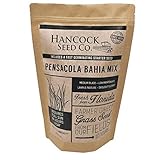
- Our Pensacola Bahia Grass Seed mixture is used for lawn and pasture applications in the southern climates.
- Pensacola Bahia is commonly used for lawns, pastures and roadside applications from North Carolina to California.
Bahiagrass is a warm-season grass with coarse blades and a deep, extensive root system that makes it extremely drought-tolerant. Moreover, it thrives in poor soils where other grasses fail and requires minimal fertilization. Therefore, it offers reliable, low-input performance for rural Texas properties.
This grass is easy to establish from seed in spring or early summer. Furthermore, it tolerates sandy, acidic soils and requires infrequent mowing. Overall, Bahiagrass delivers dependable, low-maintenance cover for rural Texas landscapes.
Pros:
- Extremely drought-tolerant
- Tolerates poor soils
- Minimal maintenance
- Pest and disease resistant
- Good for acreage
- Low fertilization needs
Cons:
- Coarse, less attractive texture
- Produces tall seed heads
- Not for high-traffic lawns
8. Turf-Type Tall Fescue Blend – Best Premium Cool-Season Blend For North Texas
Turf-Type Tall Fescue Blend is the best premium cool-season blend for North Texas, combining advanced-generation cultivars for superior color, disease resistance, and drought tolerance. Additionally, blends often include Kentucky Bluegrass for self-repair. As a result, it is ideal for homeowners who want the best possible winter lawn.

- 3 IN 1 PRODUCT: This lawn care product contains a combination of grass seed, lawn fertilizer for grass, and soil improver to help establish deep roots for a thick, green lawn to be proud of
- HOW TO WATER: Tall Fescue seed should be watered daily or as needed to keep the soil moist for at least 3 weeks or until seedlings reach 2 inches in height
Turf-Type Tall Fescue Blend uses improved cultivars for darker color, finer texture, and better brown patch resistance than older varieties. Moreover, blending multiple cultivars provides genetic diversity for better overall performance. Therefore, it offers premium performance and appearance for North Texas lawns.
This grass is easy to establish in fall at 6 to 8 lbs per 1,000 square feet after core aeration. Furthermore, annual overseeding at 3 to 5 lbs per 1,000 square feet maintains density. Overall, Turf-Type Tall Fescue Blend delivers premium quality and reliability for North Texas lawns.
Pros:
- Dark, rich color
- Improved disease resistance
- Better drought tolerance
- Fine texture
- Genetic diversity
- Premium appearance
Cons:
- Higher seed cost
- Requires annual overseeding
- Struggles in extreme heat
7 Essential Factors For Choosing Grass For A Texas Yard
- Region: East Texas favors St. Augustine, Centipede, and Bermuda. Central and South Texas favor Bermuda and Zoysia. West Texas favors Buffalo grass and Bermuda. North Texas favors Tall Fescue and Bermuda.
- Sun exposure: Full sun favors Bermuda, Zoysia, and Buffalo grass. Partial shade favors St. Augustine and Zoysia. Heavy shade requires St. Augustine or Tall Fescue.
- Water availability: Buffalo grass and Bermudagrass need the least water. St. Augustine and Tall Fescue need the most. Zoysia and Centipede are moderate.
- Soil type: Texas has alkaline clay in the west and center, and acidic sandy soil in the east. Buffalo grass and Bermuda tolerate alkaline clay, while Centipede and St. Augustine prefer acidic soils.
- Traffic and use: High-traffic yards with kids and pets do best with Bermudagrass. Light-traffic yards can use Zoysia, St. Augustine, or Centipede.
- Winter color preference: If you cannot accept brown winter grass in North Texas, choose Tall Fescue. In the rest of the state, warm-season grasses go dormant in winter.
- Maintenance willingness: Bermuda requires frequent mowing and fertilization. Zoysia and Centipede are lower maintenance. Buffalo grass is the lowest maintenance of all.
Frequently Asked Questions About Best Grass For Yard In Texas
1. What is the best grass for a Texas yard?
Bermudagrass is the best overall grass for Texas yards, offering unmatched heat and drought tolerance. St. Augustinegrass is best for shade and coastal areas, while Buffalo grass is best for drought-prone West Texas.
2. What is the best grass for North Texas?
Tall Fescue is the best grass for North Texas if you want winter color, while Bermudagrass is best for full-sun summer performance. Many homeowners use both in a mixed lawn.
3. What is the best grass for South Texas?
Bermudagrass and Zoysiagrass are the best grasses for South Texas, handling extreme heat and drought. St. Augustine is also a good choice for shaded or coastal yards.
4. What is the best grass for East Texas?
St. Augustinegrass and Centipedegrass are the best grasses for East Texas, thriving in the region’s acidic, sandy soils and humid climate.
5. What is the best drought-tolerant grass for Texas?
Buffalo grass is the most drought-tolerant grass for Texas, requiring up to 75% less water than traditional lawn grasses once established. Bermudagrass is the best drought-tolerant option for high-traffic yards.
6. When should I plant grass seed in Texas?
Warm-season grasses like Bermuda, Zoysia, and Buffalo should be planted in late spring when soil temperatures stay above 65°F. Cool-season grasses like Tall Fescue should be planted in fall from September to November.
7. What grass stays green year-round in Texas?
No grass stays green year-round across all of Texas. Tall Fescue stays green in winter in North Texas, while warm-season grasses go dormant and turn brown in winter across the rest of the state.
Conclusion
In conclusion, Bermudagrass is the best overall grass for a Texas yard due to its unmatched heat tolerance, drought resilience, self-repairing growth, and adaptability across most of the state. The runner-up, St. Augustinegrass, offers excellent shade tolerance and salt tolerance, making it ideal for coastal and East Texas yards.
Both options provide effective solutions for Texas lawns while addressing different regional climates and yard conditions. Moreover, Zoysiagrass, Buffalo grass, Centipedegrass, Tall Fescue, Bahiagrass, and Turf-Type blends each offer unique benefits for specific Texas regions.
Ultimately, the best grass for your Texas yard depends on your region, sun exposure, water availability, and maintenance willingness. However, the featured selections offer reliable solutions for growing a thriving lawn in the Lone Star State.
Don’t struggle with a failing lawn in the Texas heat. Choose the right grass for your property today and enjoy a beautiful, healthy lawn season after season.