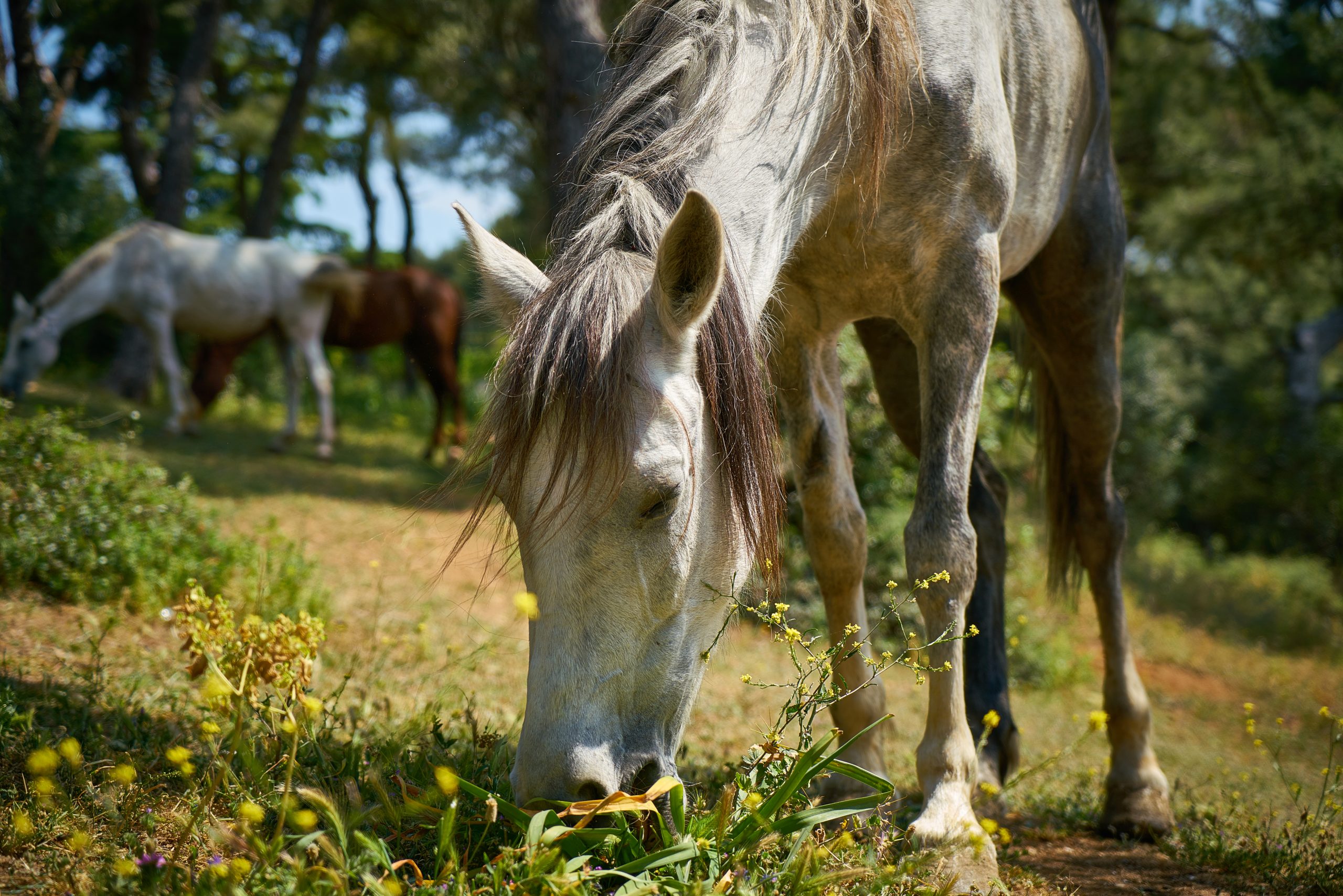
Knowing the weeds that are toxic to horses is an important part of responsible pasture management because poisonous plants can cause digestive problems, neurological disorders, reproductive problems, respiratory distress, and even death. The risk is not limited to plants that horses willingly graze, because hungry animals, overgrazed pastures, drought, and contaminated hay can increase exposure.
Some toxic plants are highly dangerous in very small quantities, while others cause problems after repeated consumption or under specific environmental conditions. Horse owners should therefore learn to recognize dangerous weeds and investigate unfamiliar plants before allowing horses to graze areas where they occur.
The risk can also change after plants are cut, wilted, dried, or incorporated into hay. Red maple, for example, becomes particularly dangerous when leaves wilt or dry, while certain weeds can accumulate nitrates under rapid growth, drought, or nitrogen-fertilization conditions.
In this guide , we examine 30 weeds that are toxic to horses, explaining how to identify each plant, why it can be dangerous, and how to reduce exposure. Because poisoning can be life-threatening, suspected plant poisoning should be treated as a veterinary emergency rather than managed solely through pasture observation.
30 Weeds That Are Toxic To Horses
1. Poison Hemlock
Identification: Poison hemlock (Conium maculatum) is a tall, branching plant with finely divided, fern-like leaves and distinctive stems that commonly display purple blotches. It often occurs along roadsides, ditches, waste areas, field margins, and other disturbed locations. It can resemble several harmless plants, so identification should be based on multiple characteristics rather than a single feature.
Why It Is Toxic: Poison hemlock is extremely toxic to livestock, including horses, and all parts of the plant are considered dangerous. Its alkaloids affect the nervous system and can cause muscle tremors, incoordination, paralysis, respiratory failure, and sudden death.
How to Control It: Remove poison hemlock before horses can access it, particularly around pasture edges, fences, drainage areas, and disturbed ground. Mechanical removal should be performed carefully with protective clothing, while herbicide treatment should use a product specifically labeled for the site and target weed.
2. Water Hemlock
Identification: Water hemlock (Cicuta spp.) is associated with wet areas such as marshes, wet pastures, drainage ditches, and stream margins. It can resemble other members of the carrot family, making careful identification important before attempting removal.
Why It Is Toxic: Water hemlock is among the most dangerous plants affecting livestock. Its toxin is particularly concentrated in the roots and can cause nervousness, muscle tremors, seizures, collapse, respiratory problems, and death.
How to Control It: Restrict horses from wet areas containing suspected water hemlock until the plant has been correctly identified and managed. Because disturbing the roots can increase exposure risk, removal should be approached cautiously, with professional or extension assistance when necessary.
3. Horsenettle
Identification: Horsenettle (Solanum carolinense) is a perennial member of the nightshade family with lobed leaves, prickles on its stems and leaves, white or purple flowers, and round yellow berries that develop as the plant matures. It can occur in pastures, cultivated fields, hay fields, and disturbed areas.
Why It Is Toxic: All parts can be toxic, with berries being particularly concerning. Horsenettle can affect the gastrointestinal and nervous systems, producing salivation, colic, diarrhea, weakness, muscle tremors, and depression. It can also remain toxic when incorporated into hay.
How to Control It: Prevent horsenettle from establishing and producing berries in horse pastures. Maintain dense desirable forage, remove isolated plants before seed production where practical, and use appropriately labeled herbicides when infestations exceed what mechanical control can reasonably manage.
4. Nightshade
Identification: Nightshade species vary considerably, but many have alternate leaves, small star-shaped flowers, and berries that may become red, purple, black, or other colors depending on species. They occur in disturbed soils, pastures, field margins, gardens, and woodland edges.
Why It Is Toxic: Nightshade species can contain glycoalkaloids and other toxic compounds. Penn State identifies nightshade vegetation and berries as poisonous to livestock and reports gastrointestinal and neurological symptoms including colic, diarrhea, trembling, paralysis, shock, and coma.
How to Control It: Remove nightshade plants from areas accessible to horses and prevent them from producing berries and replenishing the seedbank. Improve pasture competition and address disturbed soil where nightshade repeatedly establishes.
5. Jimsonweed
Identification: Jimsonweed (Datura stramonium) is a large annual weed with broad, irregularly toothed leaves, trumpet-shaped flowers, and distinctive spiny seed capsules. It commonly appears around barnyards, cultivated fields, waste areas, and disturbed soils.
Why It Is Toxic: The entire plant is poisonous, with seeds particularly concerning. Jimsonweed contains tropane alkaloids that affect the nervous system and can cause severe poisoning; animals may also consume it when seeds contaminate feed.
How to Control It: Remove jimsonweed before seed production and prevent contaminated feed from reaching horses. Mowing can help reduce seed production, but repeated monitoring is necessary because plants can regenerate or emerge from the soil seedbank.
6. White Snakeroot
Identification: White snakeroot (Ageratina altissima) is a perennial herb with opposite leaves, branching stems, and clusters of small white flowers. It commonly grows in moist areas, woodland edges, shaded locations, and along roads.
Why It Is Toxic: White snakeroot contains tremetol and can be highly toxic to horses and other livestock. Poisoning may produce trembling, stiffness, incoordination, coma, and death.
How to Control It: Reduce white snakeroot in areas where horses graze, particularly shady pasture margins and woodland edges. Improving forage competition and removing plants before seed production can reduce exposure, while labeled herbicides may be considered where appropriate.
7. Milkweed
Identification: Milkweed species generally have opposite or whorled leaves, distinctive flower clusters, and milky latex when stems or leaves are damaged. Several species occur in fields, pastures, roadsides, wetlands, and disturbed sites.
Why It Is Toxic: Milkweed can be highly toxic to livestock, with the entire plant potentially dangerous. Severe poisoning can involve weakness, seizures, respiratory problems, coma, and death.
How to Control It: Prevent significant milkweed populations from developing in horse-accessible areas. Small populations can sometimes be removed mechanically before flowering and seed production, while larger infestations may require an appropriately labeled herbicide program.
8. Buttercup
Identification: Buttercups (Ranunculus spp.) are low-growing plants with yellow flowers and leaves that vary considerably among species. They commonly occur in wet pastures, marshy areas, and poorly drained soils.
Why It Is Toxic: Buttercup species contain irritating compounds that can affect the mouth, throat, and gastrointestinal tract. Horses and other livestock may experience excessive salivation, irritation, colic, and diarrhea after consuming sufficient quantities.
How to Control It: Correct drainage problems where feasible and maintain vigorous pasture forage to reduce buttercup establishment. Targeted herbicide treatment can be useful when infestations become substantial and the product is labeled for the pasture.
9. Pokeweed
Identification: Pokeweed (Phytolacca americana) is a large perennial with smooth stems, large leaves, clusters of small flowers, and dark purple-black berries. It frequently grows in rich disturbed soil around fences, barnyards, woodland margins, and pastures.
Why It Is Toxic: All parts can contain toxic compounds, with roots particularly concerning. Poisoning can produce gastrointestinal problems such as colic and diarrhea and may also affect the nervous system.
How to Control It: Remove isolated pokeweed plants before berries mature and spread seed. Because mature plants develop substantial roots, mechanical removal should aim to remove the root crown, while larger infestations may require repeated control.
10. Red Maple
Identification: Red maple (Acer rubrum) is a common tree with opposite leaves that typically have three to five lobes and turn red in autumn. The primary pasture concern is not a weed in the conventional sense but fallen, wilted, or dried foliage entering horse-accessible areas.
Why It Is Toxic: Red maple is extremely toxic to horses and ponies when dangerous leaves are consumed. Wilted or dried leaves contain compounds that can destroy red blood cells, producing breathing difficulty, jaundice, dark brown urine, weakness, and potentially death.
How to Control It: Remove fallen red maple leaves from paddocks and prevent horses from accessing piles of wilted branches. Inspect pastures after storms because broken branches can introduce highly dangerous foliage.
11. Box Elder
Identification: Box elder (Acer negundo) is a maple with compound leaves and distinctive paired winged seeds. Only female trees produce the seeds associated with equine poisoning.
Why It Is Toxic: Box elder seeds contain hypoglycin A, which can cause equine atypical myopathy, also called seasonal pasture myopathy. Signs can include muscle weakness, stiffness, tremors, dark urine, rapid breathing, and potentially death.
How to Control It: Prevent horses from grazing areas heavily contaminated with box elder seeds, especially during periods when seeds fall. Remove hazardous trees where practical or fence them away from horses, and clear accumulated seed material from paddocks.
12. Black Cherry
Identification: Black, pin, and choke cherries belong to the Prunus group and may occur as trees or shrubs around pasture boundaries, woodland edges, and fence lines. Identification should be based on the complete plant rather than berries alone.
Why It Is Toxic: Leaves, twigs, bark, and seeds can contain cyanogenic compounds. Wilted leaves can be particularly dangerous and may cause anxiety, breathing difficulty, staggering, convulsions, collapse, and death.
How to Control It: Inspect fence lines and pasture margins for cherry trees and remove dangerous branches that could fall into grazing areas. Pay particular attention after storms, when wilted foliage may become accessible.
13. Bracken Fern
Identification: Bracken fern (Pteridium spp.) is a large fern with divided fronds and commonly grows in woodland edges, open forests, rough pasture, and other areas where it can form patches.
Why It Is Toxic: Bracken fern contains compounds that can interfere with vitamin B1 metabolism and may produce weakness, weight loss, gait abnormalities, abnormal heart rhythm, inability to rise, and death after sufficient exposure.
How to Control It: Prevent horses from relying on bracken fern when pasture forage becomes scarce. Improving forage density and controlling established fern patches can reduce exposure, while repeated management may be necessary where the plant is well established.
14. Hoary Alyssum
Identification: Hoary alyssum (Berteroa incana) is a small branching plant with gray-green foliage and clusters of white flowers. It commonly occurs in pastures, roadsides, disturbed soils, and dry sites.
Why It Is Toxic: Hoary alyssum is an important horse-pasture concern. University of Minnesota Extension identifies it among the plants most frequently associated with horse poisoning in its region, while Penn State notes that consumption can be associated with stocking up, or swelling of the lower legs, particularly when it constitutes a substantial portion of the feed source.
How to Control It: Prevent hoary alyssum from becoming a major component of pasture or hay. Maintain competitive forage, avoid overgrazing, and control infestations before seed production using mechanical or appropriately labeled chemical methods.
15. Alsike Clover
Identification: Alsike clover (Trifolium hybridum) is a clover with rounded leaflets and pale pink to white flower heads. It can become established in pastures and forage systems, particularly where clover is intentionally included.
Why It Is Toxic: The plant has been associated with photosensitization and liver disease in horses. Penn State classifies the toxicity as relatively low but still recommends management where affected horses are exposed.
How to Control It: Reduce alsike clover dominance by managing pasture composition and encouraging competitive grass growth. Horses showing suspected photosensitization or other signs should be removed from the pasture and evaluated by a veterinarian.
16. Red Clover With Black Patch
Identification: Red clover (Trifolium pratense) is a common forage legume with trifoliate leaves and pink to purple flower heads. Healthy red clover itself is not the direct toxic agent associated with the condition commonly called slobbers.
Why It Is Toxic: A fungus associated with clover can produce slaframine, which stimulates excessive salivation in horses. Penn State explains that the clover itself is not toxic; the problem arises when the fungus develops under suitable stress conditions.
How to Control It: Inspect clover stands for signs of fungal infection and avoid allowing affected horses to consume large quantities. Removing horses from the affected pasture and providing fresh water generally reduces exposure.
17. White Clover With Black Patch
Identification: White clover (Trifolium repens) has trifoliate leaves, often with pale markings, and rounded white flower heads. It is common in lawns and pastures and can become abundant where soil fertility and grazing conditions favor clover.
Why It Is Toxic: Like red clover, white clover can be associated with slaframine-producing fungus and excessive salivation in horses. The plant itself is not inherently toxic in this situation; the concern is fungal contamination.
How to Control It: Monitor clover stands during periods favorable to fungal development. If horses develop excessive drooling, remove them from the affected forage and provide clean water while investigating the cause.
18. Endophyte-Infected Tall Fescue
Identification: Tall fescue (Schedonorus arundinaceus) is a cool-season perennial grass with relatively coarse blades. The toxicity concern involves certain endophyte-infected varieties, including traditional Kentucky 31, rather than every tall fescue plant.
Why It Is Toxic: Endophyte-infected tall fescue can contain ergovaline, which is particularly problematic for pregnant mares. Penn State reports that affected mares can experience prolonged pregnancies, abortion, and other reproductive problems.
How to Control It: Identify the forage variety and endophyte status where possible. Pregnant mares should be managed carefully on affected pasture, and endophyte-free or appropriate novel-endophyte varieties may provide safer forage alternatives where suitable.
19. Common Lambsquarters
Identification: Common lambsquarters (Chenopodium album) is an upright annual weed with triangular to diamond-shaped leaves that often have a grayish or mealy appearance. It frequently appears in cultivated fields, disturbed soil, gardens, and overgrazed areas.
Why It Is Toxic: Lambsquarters can accumulate nitrates, particularly when growing rapidly, under drought stress, or after nitrogen fertilization. Excessive nitrate intake can interfere with oxygen utilization in the bloodstream and cause weakness and breathing difficulty.
How to Control It: Prevent heavy infestations and avoid allowing horses to depend on lambsquarters when pasture forage is poor. Monitor potentially nitrate-rich forage under drought or heavily fertilized conditions and seek forage testing when risk is significant.
20. Redroot Pigweed
Identification: Redroot pigweed (Amaranthus retroflexus) is an erect annual weed with broad leaves and a characteristic reddish root. It commonly occurs in cultivated fields, disturbed soil, gardens, and overgrazed pastures.
Why It Is Toxic: Redroot pigweed can accumulate nitrates, creating a poisoning risk when horses consume significant amounts under high-risk growing conditions. Nitrate poisoning can interfere with oxygen transport and produce weakness, respiratory difficulty, and other serious symptoms.
How to Control It: Prevent pigweed from dominating horse pasture or hay sources. Control young plants before they become abundant and avoid excessive nitrogen fertilization that can contribute to nitrate accumulation.
21. Sorghum-Sudangrass
Identification: Sorghum-sudangrass hybrids are tall warm-season grasses rather than conventional weeds, but they can become a pasture or forage hazard under certain conditions. They resemble other sorghum grasses and should be identified correctly before grazing.
Why It Is Toxic: Sorghum species can accumulate nitrates and may also present cyanide-related risks under particular conditions. University of Minnesota Extension identifies sorghum-sudangrass among important nitrate-poisoning concerns.
How to Control It: Manage grazing and forage harvesting according to crop-specific recommendations and avoid exposing horses to potentially hazardous forage without assessing its condition. Testing forage for nitrates can be valuable when drought, fertilization, or rapid growth creates concern.
22. Cocklebur
Identification: Cocklebur (Xanthium spp.) is an annual weed with broad leaves and distinctive burr-like seed structures that readily attach to animals, clothing, and equipment. It commonly occurs in disturbed ground, field margins, and wet or fertile sites.
Why It Is Toxic: Cocklebur can be poisonous to livestock, particularly when young plants or seeds are consumed. Toxicity can involve gastrointestinal and systemic effects, making contamination of hay or forage particularly concerning.
How to Control It: Prevent cocklebur from producing mature burs and seed. Mowing before seed development, improving pasture competition, and using appropriate labeled herbicides can help reduce populations.
23. Fiddleneck
Identification: Fiddleneck plants (Amsinckia spp.) are annual herbs with narrow leaves and coiled flower clusters that resemble the shape of a fiddle neck. They occur in dry fields, rangelands, roadsides, and disturbed areas.
Why It Is Toxic: Some fiddleneck species contain pyrrolizidine alkaloids that can cause liver injury in livestock. Chronic exposure can be particularly problematic because serious liver damage may develop before obvious clinical signs become apparent.
How to Control It: Prevent fiddleneck from becoming established in horse pastures and hay fields. Control infestations before seed production and avoid harvesting contaminated forage for horses.
24. Tansy Ragwort
Identification: Tansy ragwort (Jacobaea vulgaris) is a biennial or short-lived perennial with deeply divided leaves and clusters of yellow, daisy-like flowers. It is commonly associated with disturbed ground, pastures, roadsides, and hay-producing areas.
Why It Is Toxic: Tansy ragwort contains pyrrolizidine alkaloids that can cause cumulative liver damage in horses. The risk can be especially serious because chronic poisoning may develop gradually rather than producing immediate dramatic symptoms.
How to Control It: Remove plants before seed production and prevent contaminated hay from reaching horses. Long-term control requires repeated management because surviving plants and the soil seedbank can maintain infestations.
25. St. John’s Wort
Identification: St. John’s wort (Hypericum perforatum) is a perennial herb with opposite leaves containing translucent dots and yellow flowers. It commonly grows in fields, pastures, roadsides, and disturbed areas.
Why It Is Toxic: St. John’s wort can cause photosensitization, making exposed unpigmented skin particularly vulnerable to sunlight. Livestock that consume sufficient quantities can develop skin irritation and other effects.
How to Control It: Reduce St. John’s wort in horse pastures through grazing management, mechanical removal, and appropriate herbicide treatment where labeled. Pay particular attention to areas where horses can selectively graze the plant.
26. Lupine
Identification: Lupines (Lupinus spp.) are attractive plants with palmately arranged leaflets and upright flower spikes. Species vary considerably, and not every lupine presents the same level of toxicity.
Why It Is Toxic: Some lupines contain quinolizidine alkaloids that can cause nervous-system disturbances and other signs of poisoning in livestock. Identification to species is important because toxicity varies among lupines.
How to Control It: Prevent horses from consuming unknown lupine populations, particularly when forage is limited. Identify the species where possible and remove or manage toxic populations from grazing areas.
27. Catsear
Identification: Catsear (Hypochaeris radicata), also called false dandelion, forms a basal rosette and yellow flowers that can make it easy to confuse with true dandelion. Its flowering stems are typically forked and solid with multiple flowers, unlike the single, hollow flowering stems of dandelion.
Why It Is Toxic: Catsear is associated with stringhalt in horses, particularly when consumed in substantial quantities. Penn State recommends managing catsear presence in horse pastures and limiting horses’ exposure to the plant.
How to Control It: Learn to distinguish catsear from true dandelion and target infestations before they become abundant. Improving pasture density and controlling rosette plants before flowering can reduce the available forage.
28. Oaks
Identification: Several oak species, including red, white, black, chestnut, and pin oaks, can occur around horse pastures. Leaves, acorns, and young seedlings may become accessible when trees overhang grazing areas.
Why It Is Toxic: Young oak leaves and immature acorns can contain higher concentrations of tannins and related compounds. Excessive consumption can cause poor appetite, weight loss, diarrhea, increased drinking and urination, kidney damage, and potentially death.
How to Control It: Prevent horses from consuming large quantities of oak foliage and acorns. Fence off heavily affected trees, remove fallen acorns where practical, and provide adequate forage so horses are less likely to browse unusual plant material.
29. Black Locust
Identification: Black locust (Robinia pseudoacacia) is a tree with compound leaves and clusters of fragrant white flowers. It can occur along fence lines, woodland margins, roadsides, and pasture boundaries.
Why It Is Toxic: Leaves, seeds, bark, and wood can be toxic to livestock. Penn State reports gastrointestinal effects including severe gastritis and colic as potential signs of poisoning.
How to Control It: Prevent horses from browsing black locust branches and remove hazardous trees or branches from accessible areas where practical. Clean up fallen material after storms and prevent horses from consuming wood debris.
30. Yew
Identification: Yew (Taxus spp.) is an evergreen landscape shrub or small tree with narrow, dark-green needles and red berry-like structures surrounding the seed. It may be planted around homes, gardens, barns, and show grounds.
Why It Is Toxic: Yew is extremely toxic to livestock and humans, with all plant parts potentially dangerous. Poisoning can cause muscle tremors, incoordination, colic, slowed heart rate, and sudden death.
How to Control It: Never allow horses access to yew shrubs or their trimmings. Remove yew from horse-accessible areas or establish secure barriers, and dispose of pruned material where animals cannot reach it.
7 Reliable Strategies for Managing Toxic Weeds Around Horses
1. Inspect Pastures Regularly
Walk horse pastures frequently and inspect field edges, wet areas, fence lines, shaded locations, disturbed soil, and areas with poor forage competition. Regular scouting makes it easier to remove toxic plants before they become abundant.
2. Learn Plant Identification
Do not rely solely on common names because different plants can share similar names. Scientific names, leaf arrangement, flowers, stems, roots, growth habit, and habitat should all be considered when identifying a potentially toxic plant.
3. Maintain Adequate Forage
Healthy, well-managed pasture reduces the likelihood that horses will consume unfamiliar plants because of hunger. Penn State notes that toxic plants are generally less likely to be eaten when healthy horses have adequate good-quality forage.
4. Prevent Overgrazing
Overgrazing reduces desirable forage and creates open ground where weeds can establish. Rotational grazing, appropriate stocking rates, and pasture rest can help maintain competitive forage.
5. Remove Toxic Plants Before Seed Production
Whenever practical, remove toxic weeds before they flower and produce seed. This reduces both immediate exposure and the amount of seed returned to the soil.
6. Inspect Hay and Feed Sources
Toxic plants can enter hay during harvesting, and some plants remain dangerous after drying. Inspect forage carefully and avoid feeding hay that contains significant quantities of unidentified or known poisonous plants.
7. Contact a Veterinarian Immediately When Poisoning Is Suspected
Do not wait for severe symptoms before seeking veterinary assistance. Signs such as colic, weakness, abnormal gait, tremors, breathing difficulty, excessive salivation, dark urine, seizures, or sudden behavioral changes can indicate serious toxicity and require professional evaluation.
Weeds That Are Toxic To Horses FAQs
1. What is the most dangerous weed for horses?
Several plants can cause severe or fatal poisoning, including poison hemlock and water hemlock. The degree of danger depends on the plant species, amount consumed, plant part, animal, and exposure circumstances.
2. Can horses naturally avoid poisonous weeds?
Often, healthy horses with adequate forage avoid highly unpalatable toxic plants. However, hunger, overgrazing, drought, limited forage, or contaminated hay can increase the likelihood of consumption.
3. Can toxic weeds remain poisonous after drying?
Yes. Drying does not automatically make a poisonous plant safe. Some plants remain hazardous in hay, while others can become particularly dangerous after wilting. Red maple is an important example for horses.
4. What are common signs of plant poisoning in horses?
Signs vary according to the plant and toxin but can include colic, diarrhea, excessive salivation, weakness, incoordination, tremors, respiratory difficulty, abnormal heart rate, dark urine, seizures, and collapse. Suspected poisoning requires prompt veterinary attention.
5. Can weeds cause nitrate poisoning in horses?
Yes. Common lambsquarters, redroot pigweed, and sorghum-sudangrass are among plants that can accumulate nitrates. Risk can increase when plants are rapidly growing, drought stressed, or exposed to high nitrogen availability.
6. Are all clovers toxic to horses?
No. The situation is more complicated than simply labeling clover poisonous. Alsike clover has been associated with photosensitization and liver disease, while red and white clover can become associated with excessive drooling when contaminated by slaframine-producing fungus.
7. What should I do if my horse eats a poisonous plant?
Remove the horse from the suspected source and contact a veterinarian immediately. If possible, identify the plant and preserve a sample or photograph for identification, but do not delay veterinary care while attempting to identify the plant yourself.
Final Thoughts
Toxic weeds can present a serious hazard in horse pastures, hay fields, fence lines, and disturbed areas, particularly when forage becomes limited. Learning to recognize dangerous plants such as poison hemlock, water hemlock, horsenettle, nightshade, and white snakeroot can help horse owners reduce unnecessary exposure.
The risk is not limited to fresh pasture plants because some toxins remain dangerous in hay, while others become more hazardous after wilting or under environmental stress. Maintaining adequate forage, preventing overgrazing, inspecting hay, and regularly scouting pastures are therefore important parts of prevention.
No single control method is appropriate for every toxic plant. Mechanical removal, pasture improvement, grazing management, fencing, and properly labeled herbicides can all contribute to reducing exposure, depending on the species and site.
Ultimately, suspected poisoning should always be treated seriously. If a horse develops unexplained colic, weakness, tremors, abnormal movement, breathing problems, excessive salivation, dark urine, seizures, or collapse after possible plant exposure, contact a veterinarian immediately and provide any available information about the suspected plant.