The best pesticide for hornets can help manage aggressive stinging insects when they are nesting near homes, gardens, sheds, roof spaces, or other areas used regularly by people. Choosing an appropriate treatment depends on the hornet species, nest location, colony size, application distance, and whether the product is specifically labeled for hornet or wasp control.
Effective hornet management begins with understanding where the insects are coming from and whether a nest is actually present. Aerosol sprays, residual insecticides, dusts, traps, and professional treatments each have different uses, while weather conditions, application timing, wind, and surrounding wildlife can affect both performance and safety.
It is also important to avoid disturbing an active nest unnecessarily because hornets can become highly defensive when their colony is threatened. Protective clothing, careful observation, keeping children and pets away from the treatment area, and following the pesticide label precisely are essential whenever chemical control is considered.
In this guide, we examine 15 pesticide and control options that can be considered for hornet problems and explain where each approach is most useful. We will also cover application considerations, nest management, prevention, safety precautions, and practical answers to common questions about controlling hornets around residential and outdoor spaces.
Best Pesticide For Hornets
1. Ortho Wasp B Gon Wasp And Hornet Killer
Ortho Wasp B Gon Wasp And Hornet Killer is designed for situations where a long-range aerosol spray is useful for treating visible wasp and hornet activity. Its extended spray distance can allow the applicator to remain farther from the target, which is particularly important when dealing with an active nest.
This type of aerosol is most useful when the nest is clearly visible and can be reached without climbing or placing the applicator in an unstable position. Treating during periods of lower hornet activity can reduce the chance of encountering large numbers of defensive insects, although the product label should always determine the permitted timing and application procedure.
Because hornet colonies can contain many individuals, one application should not automatically be assumed to have eliminated the colony. Inspect the treated area from a safe distance after the label-specified interval and avoid approaching an active nest until you are confident that treatment has worked.

- FOAMING AEROSOL: foam expands to where insects live. Extension tube lets you spray into hard-to-reach areas.
- KILLS CARPENTER BEES: treats active carpenter bee tunnels. Bees distribute the insecticide throughout the nest.

Pros:
- Designed for wasp and hornet control.
- Long-range application can increase distance from the nest.
- Useful for visible outdoor nests.
- Convenient aerosol format.
- Suitable for targeted treatment when used according to the label.
- Can provide rapid knockdown.
- Practical for isolated nests.
Cons:
- Requires careful handling around active nests.
- Wind can interfere with spray direction.
- Not appropriate for every nest location.
2. Spectracide Wasp And Hornet Killer
Spectracide Wasp And Hornet Killer is another aerosol-style option intended for stinging-insect control. Products in this category are particularly useful when a nest is exposed and the applicator can maintain a safe distance while directing the spray toward the entrance and surrounding colony.
The greatest benefit of a long-range formulation is that it can reduce the need to stand directly beneath or beside an active nest. Nevertheless, distance should never be treated as complete protection because disturbed hornets may fly beyond the treated area and respond aggressively.
Use the product only on sites specifically permitted by its label and avoid spraying when wind could carry the pesticide toward people, animals, ponds, edible crops, or other sensitive areas. After treatment, give the colony adequate time to become inactive before considering any physical removal.

- FAST KNOCKDOWN: Kills wasps, hornets & yellow jackets.
- ELIMINATES THE NEST: Eliminates the nest where insects live & breed.
Pros:
- Formulated for stinging insects.
- Long-range spraying can improve operator distance.
- Useful for exposed nests.
- Easy to deploy when conditions are suitable.
- Can provide quick insect knockdown.
- Useful around appropriate outdoor structures.
- Fits targeted pest-control situations.
Cons:
- Requires careful attention to wind.
- Active colonies can remain dangerous after initial spraying.
- May not suit concealed nests.
3. Hot Shot Wasp And Hornet Killer
Hot Shot Wasp And Hornet Killer is intended for controlling wasps and hornets and can be useful when insects are concentrated around an accessible outdoor nest. Aerosol delivery allows treatment to be directed toward the colony without requiring close physical contact with the nest.
For best results, identify the nest location before beginning treatment and establish a clear retreat path. Do not stand underneath a nest, block yourself against a wall, or use a ladder simply to obtain a closer position, since an agitated colony can create a serious stinging hazard.
After applying the pesticide according to its label, avoid unnecessary activity around the treated nest. If hornets continue entering and leaving the nest after the appropriate waiting period, a second assessment or professional pest-control service may be more appropriate than repeated unplanned spraying.

- KILLS ON CONTACT: Hot Shot Wasp & Hornet Killer controls wasps, hornets, yellow jackets, scorpions, mud daubers and tent caterpillars.
- UP TO 27 FOOT JET SPRAY: With a jet spray that reaches up to 27 feet, you can stand a safe distance from the nest.
Pros:
- Designed for wasp and hornet control.
- Aerosol format is convenient.
- Useful for visible nests.
- Can provide rapid knockdown.
- Allows targeted application.
- Useful for outdoor pest situations.
- Can complement broader nest-management practices.
Cons:
- Spraying an active nest carries sting risk.
- Concealed nests can be difficult to treat.
- Application must follow the label carefully.
4. Raid Wasp And Hornet Killer
Raid Wasp And Hornet Killer is an aerosol insecticide intended for controlling stinging insects. Its spray format makes it particularly convenient for situations involving visible activity around suitable outdoor locations where the product label permits treatment.
When dealing with hornets, the main advantage of an aerosol is the ability to direct the formulation toward the insects and nest entrance while maintaining some distance. Even so, users should never rely solely on spray range as protection and should leave the area immediately if hornets become active.
Environmental conditions matter when using any aerosol pesticide outdoors. Avoid applications during strong winds or conditions that could cause drift, and keep people and pets away from the treatment zone according to the product instructions.

- Two 14 oz cans of Raid Wasp & Hornet Killer Spray kill flying, stinging bugs on contact, including paper wasps, yellow jackets, mud daubers, bald-face hornets, and more
- Raid Hornet Killer is electrically non-conducting up to 32,500 volts for an effective option
Pros:
- Convenient aerosol application.
- Designed for stinging insects.
- Useful for exposed nest situations.
- Allows targeted treatment.
- Easy to store and deploy when permitted.
- Can rapidly reduce active insects.
- Useful for localized infestations.
Cons:
- Spray drift can be a concern.
- Active nests can remain hazardous.
- May be unsuitable for enclosed nest locations.
5. Bengal Wasp And Hornet Killer
Bengal Wasp And Hornet Killer is formulated for stinging-insect control and is another option for exposed nests. Long-distance aerosol application can be useful when the nest can be reached from ground level without putting the person treating it directly beside the colony.
Before applying any pesticide, inspect the surroundings and determine where hornets are entering and exiting. This helps identify the nest entrance and also reduces the temptation to spray repeatedly into random areas where insects happen to be flying.
Use only according to the current product label, particularly concerning application sites, distance, weather, and precautions. If the nest is inside a wall, roof cavity, attic, chimney, or another difficult location, professional treatment may provide a safer solution.

- WASP & HORNET KILLER: This solvent based insecticide spray provides instant protection from a range of stinging insects including wasps, bees, hornets and yellow jackets
- KILLS ON CONTACT: Our fast and effective bug spray kills flying insects in an instant, paralyzing them and knocking them down to die before they can sting
Pros:
- Intended for wasp and hornet control.
- Useful for exposed nests.
- Long-range application can improve working distance.
- Suitable for targeted outdoor treatment.
- Can provide quick knockdown.
- Convenient aerosol delivery.
- Useful for localized pest problems.
Cons:
- Not suitable for every nest location.
- Weather can affect application.
- Careless treatment can increase sting risk.
6. Bonide Wasp And Hornet Killer
Bonide Wasp And Hornet Killer provides an aerosol approach for managing stinging insects around appropriate outdoor areas. It can be considered where a visible nest is accessible from a safe ground-level position and the product label specifically permits the intended application.
One of the most important considerations is timing. Hornet colonies may be less active during cooler periods, but conditions vary, and users should follow the label rather than assuming that a particular time of day is universally safe.
Keep the treatment area clear after application and monitor the nest from a distance. If significant hornet activity continues, avoid repeatedly approaching the colony and consider obtaining professional assistance.

Pros:
- Designed for stinging-insect control.
- Useful for accessible nests.
- Aerosol delivery is convenient.
- Allows targeted application.
- Can provide rapid insect knockdown.
- Useful for localized infestations.
- Can be incorporated into a broader control strategy.
Cons:
- Requires cautious application.
- Not suitable for all nest structures.
- Wind may affect spray placement.
7. Terro Wasp And Hornet Killer
Terro Wasp And Hornet Killer is intended to provide targeted control of wasps and hornets. An aerosol product can be useful when insects are concentrated around an exposed nest and the person applying it can remain at an appropriate distance.
Hornets can react quickly to disturbance, so preparation is just as important as the pesticide itself. Clear people and pets from the surrounding area, identify a retreat route, and avoid standing in a position where the nest entrance or flight path could trap you.
Once the treatment has been applied, resist the urge to immediately inspect the nest at close range. Follow the waiting period and other directions on the label, then reassess the colony from a safe distance.
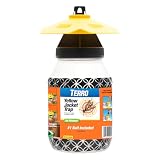
- ATTRACT & KILL YELLOW JACKETS: Attracts and traps yellow jackets outdoors
- INSECTICIDE FREE: Contains no chemical insecticides
Pros:
- Made for wasp and hornet problems.
- Convenient aerosol format.
- Useful for targeted treatment.
- Can help reduce active insects rapidly.
- Practical for suitable exposed nests.
- Easy to use when label conditions are met.
- Useful for localized control.
Cons:
- Active nests require extreme caution.
- Not ideal for inaccessible colonies.
- Repeated treatment should not replace proper diagnosis.
8. EcoSMART Wasp And Hornet Killer
EcoSMART Wasp And Hornet Killer is marketed as a plant-oil-based approach to controlling certain stinging insects. It may appeal to users who are looking for an alternative formulation while still requiring a product specifically labeled for the intended pest and application site.
Plant-based does not automatically mean harmless, and a hornet nest should never be approached casually because of the formulation used. Treat the product with the same respect given to other pesticides, including attention to spray drift, exposure, storage, and label directions.
This type of product can be considered where its current label permits hornet control and the infestation is suitable for direct treatment. For large colonies or nests positioned inside buildings, professional pest management remains the safer choice.

- KILLS BY CONTACT. Proven to work and easy to use, this aerosol spray is designed for quick kill and fast knockdown of wasps. With a 15 feet long distance jet spray, it kills wasps, hornets, and yellow jackets. Also treats open-faced hives.
- PROTECT YOUR HOME AND OUTDOOR AREAS. This versatile wasp, hornet, and yellow jacket control spray can be used throughout outside areas like porches, patios, decks, playscapes, and more.
Pros:
- Plant-oil-based formulation.
- Provides an alternative to conventional formulations.
- Convenient spray delivery.
- Useful for targeted applications.
- Suitable for certain outdoor situations.
- Can provide rapid contact control.
- Appeals to users seeking alternative formulations.
Cons:
- Plant-based does not eliminate application risks.
- Direct contact with insects is important.
- May not be appropriate for large concealed colonies.
9. Bonide Eight Insect Control
Bonide Eight Insect Control is a broader insect-control product that may be used against various insects where the product label specifically includes the target pest and application site. Its broader formulation can make it useful in situations involving several insect problems, but hornets should never be treated simply because a product is described as a general insecticide.
Always check the current label to determine whether hornets are listed and whether the intended location is approved. Crop, ornamental, structural, and residential applications can have different restrictions, so the same product should not automatically be assumed suitable everywhere.
Targeted treatment remains preferable to indiscriminate spraying. If hornets are nesting in a location that makes treatment hazardous, changing the product may not solve the fundamental safety problem and professional removal may be warranted.

- INSECT KILLER - Our product controls over 130 insects/pests including species of ant, cockroach, cricket, spider, flea, tick, mite, moth, earwig, beetle, water bug, & more.
- VARIETY OF USES - This bug defense is great for use on listed vegetables, roses, lawns, flowers, shrubs, trees, & other outdoor plants & surfaces. Eight Garden & Home is not listed for indoor use.
Pros:
- Broad insect-control applications.
- May be useful where multiple labeled pests are present.
- Can complement an integrated pest strategy.
- Convenient formulation.
- Useful when the target site is label-approved.
- Can reduce dependence on several separate products.
- Suitable for targeted pest management.
Cons:
- Must be checked specifically for hornet use.
- Broad-spectrum products can affect beneficial insects.
- Not automatically appropriate for every application site.
10. Sevin Insect Killer
Sevin Insect Killer is a broad-spectrum insecticide available in different formulations, making it important to distinguish between the specific product and its permitted uses. Some formulations may target particular insects or locations, but users should verify the current label before considering any application against hornets.
Because hornets are stinging insects that may defend their colony, applying a broad-spectrum pesticide around an active nest can create unnecessary exposure if the site is difficult to reach. The treatment method should therefore be selected according to the actual infestation rather than simply choosing the strongest available insecticide.
Where the label permits the intended use, follow all instructions concerning concentration, protective equipment, application timing, and re-entry. If the label does not specifically support hornet control at the intended site, choose a properly labeled alternative instead.

- Plant insecticide to protect your roses and edibles from listed damaging pests
- This insecticide sprayer won't harm plants or blooms
Pros:
- Available in multiple formulations.
- Broad insect-control capability.
- Useful for appropriately labeled pest situations.
- Can complement integrated pest management.
- Suitable for some outdoor applications.
- Widely recognized insect-control product.
- Can address multiple labeled insect pests.
Cons:
- Not every formulation is appropriate for hornets.
- Broad-spectrum action can affect beneficial insects.
- Label restrictions must be checked carefully.
11. Permethrin-Based Insecticide
Permethrin is a widely used insecticidal active ingredient found in numerous pest-control formulations. Depending on the specific product, it may be labeled for various insects and application sites, but the presence of permethrin alone does not mean that every formulation is approved for hornet control.
For hornet management, the exact product label is more important than the active ingredient name. Check whether the formulation lists hornets, wasps, the intended structure or surface, and the appropriate application method before using it.
Permethrin products can be useful in professional and appropriately labeled residential pest-management programs, particularly where residual control is permitted. Keep applications away from aquatic environments and follow all precautions concerning people, pets, beneficial insects, and treated surfaces.

- For use inside and outside.
- Controls insect pests for up to 4 weeks.
Pros:
- Widely used insecticidal active ingredient.
- Available in several formulations.
- Can provide residual insect control where labeled.
- Useful for certain structural pest applications.
- Can form part of an integrated program.
- Suitable for multiple labeled insect pests.
- Commonly available to pest-management users.
Cons:
- Formulations have different legal uses.
- Can affect non-target insects.
- Requires careful handling and label compliance.
12. Cypermethrin-Based Insecticide
Cypermethrin is another pyrethroid active ingredient used in a range of insect-control products. Some formulations provide residual activity on suitable surfaces, although suitability for hornets depends entirely on the specific registered product and its label.
This approach is generally more relevant to structured pest-control programs than casual spraying of flying hornets. Before application, determine whether the product is actually labeled for hornets or wasps and whether the intended surface, building, or outdoor area is permitted.
Residual treatments should be applied carefully because unnecessary pesticide deposits can expose non-target organisms. Follow the label for protective equipment, dilution, application rate, re-entry, and environmental precautions.

- Cypermethrin 40%
- Cyper can be used in the following locatons; Commercial and Resdential Structures, Hospitals, Nursing Homes, Non-Food Handling Areas, and Outdoors.
Pros:
- Provides residual insect-control potential.
- Available in professional pest-management formulations.
- Useful for appropriately labeled applications.
- Can complement direct nest treatment.
- Suitable for certain structural pest situations.
- Can target several labeled insects.
- Supports targeted residual management.
Cons:
- Product-specific labeling is essential.
- Can affect non-target insects.
- Concentrates require careful preparation and handling.
13. Wasp And Hornet Insecticide Dust
Insecticidal dust can be useful for certain concealed nests where the product label specifically permits application into cracks, voids, or other protected spaces. Dust formulations can remain active after application and may be carried through portions of a colony when insects move across treated material.
However, concealed nest treatment is considerably more complicated than spraying an exposed nest. A nest inside a wall, roof cavity, attic, or other enclosed structure can create problems if insects are driven into occupied areas, so professional pest control is often the safer route.
Never improvise by blowing or spreading pesticide dust into an unknown cavity. Use only a product labeled for the exact application and follow directions concerning application equipment, protective clothing, ventilation, and people or pets returning to the area.

- Ready-to-use, wasp nest killer, uses a waterproof dust that kills insects for up to 8 months
- Use this bug killer outdoors to cover nest and perimeter for colony knockdown around households
Pros:
- Useful for certain concealed pest locations.
- Can provide residual activity.
- Suitable for some crack and crevice applications.
- May reach insects inside protected areas.
- Can complement structural pest management.
- Requires less liquid than spray applications.
- Useful for appropriately labeled professional treatments.
Cons:
- Incorrect application can spread pesticide unnecessarily.
- Concealed nests can be difficult to diagnose.
- Professional assistance may be safer for structural infestations.
14. Wasp And Hornet Traps
Wasp and hornet traps do not work in the same way as pesticides, but they can help reduce adult activity around outdoor areas and provide information about the species present. They are particularly useful when the objective is to intercept foraging insects rather than immediately eliminate a concealed colony.
Trap placement matters considerably because placing one directly beside a patio or entrance may attract activity closer to the area you are trying to protect. Position traps according to their instructions and keep them away from high-traffic areas.
Traps should be regarded as one component of an integrated approach rather than a guaranteed solution for an established nest. If large numbers continue appearing, locating and safely addressing the source colony is usually more important than continually adding traps.

- QUICK-DROWN FORMULA: Designed to keep insects submerged for quick drowning.
- QUICK & EASY SETUP: No tools are needed to complete the setup.
Pros:
- Does not require spraying pesticide over an area.
- Can reduce adult activity.
- Useful for monitoring.
- Simple to deploy.
- Can help identify periods of high activity.
- Useful around suitable outdoor spaces.
- Can complement other management methods.
Cons:
- Does not necessarily eliminate the nest.
- Incorrect placement can attract insects near people.
- Requires regular inspection and replacement.
15. Professional Hornet And Wasp Treatment
Professional pest control is often the best option when hornets have established a large colony, built a nest inside a structure, or selected a location that makes direct treatment dangerous. Trained technicians can identify the pest, assess the nest location, select an appropriate registered treatment, and determine whether physical nest removal is necessary.
This approach is particularly valuable for nests in walls, attics, chimneys, roofs, trees beside occupied buildings, or other places where reaching the colony would require ladders or close contact. Professional treatment also reduces the temptation to repeatedly spray an inaccessible nest from different angles.
When hiring a pest-control company, ask whether the technician is appropriately licensed or certified in your jurisdiction and whether the treatment will use products registered for the specific pest and site. A good service should also explain precautions for occupants, pets, and the surrounding environment.

- Compatible With: the aluminum access tool for opening termi-te bait station trap lids opens termi-te bait station trap lids easily and in large quantities, making inspections easier and faster. compatibility: compatible with some termi-te bait station traps
- Wide Range of Applications: the termi-te bait station trap service tool has two metal protrusions on the inside of the tool. you need to place the tool on the workstation cover and turn it counterclockwise until the two locking pads release from the locking ring. it will help you cover the lid and you don't even have to touch it if you don't want to
Pros:
- Reduces the need for homeowners to approach dangerous nests.
- Useful for concealed colonies.
- Professionals can identify the pest.
- Suitable for large or difficult infestations.
- Can address structural nest locations.
- Helps reduce repeated DIY applications.
- Provides specialist assessment.
Cons:
- Costs more than many DIY products.
- Availability varies by location.
- Requires scheduling a professional visit.
Buyer’s Guide
1. Identify The Hornet Or Wasp First
Not every large stinging insect is a hornet, and identification can influence the appropriate management strategy. If possible, observe the insects from a safe distance and photograph them without approaching the nest.
2. Consider The Nest Location
An exposed nest that can be treated from ground level presents a different situation from a colony inside a wall, attic, roof, chimney, or underground cavity. Difficult or concealed nests are often better handled by a qualified pest professional.
3. Check The Pesticide Label
Choose a product whose current label specifically permits the intended pest, location, and method of application. Never assume that an insecticide is suitable simply because its active ingredient is known to kill insects.
4. Think About Application Distance
Long-range aerosols can be useful for exposed nests because they may allow greater separation between the applicator and colony. Distance does not eliminate sting risk, however, and you should always have a clear escape route before beginning treatment.
5. Protect People, Pets, And Wildlife
Remove people and pets from the treatment area and follow the label concerning re-entry. Avoid unnecessary applications around flowering plants, ponds, beneficial insects, and other sensitive areas.
6. Consider The Weather
Wind can carry aerosol droplets away from the intended target and make treatment less predictable. Apply pesticides only under conditions permitted by the product label, and avoid improvising when weather conditions are unsuitable.
7. Know When To Call A Professional
A large colony, repeated aggressive activity, a nest inside a building, an inaccessible nest, or a location near vulnerable people should be treated as a reason to seek professional help. Attempting increasingly aggressive DIY treatments can create more risk without solving the underlying problem.
FAQs
1. What is the best pesticide for hornets?
The best pesticide for hornets depends on the species, nest location, and product labeling in your area. A purpose-made wasp and hornet aerosol can be suitable for some exposed nests, while concealed or dangerous colonies may require a professionally applied insecticide.
2. What kills hornets instantly?
Products specifically formulated for wasps and hornets can provide rapid knockdown when they make direct contact with the insects. However, no product should be assumed to eliminate an entire colony instantly, and approaching an active nest too soon can remain dangerous.
3. Can I spray a hornet nest myself?
You may be able to treat a suitable exposed nest with a pesticide specifically labeled for hornets, provided you can maintain a safe distance and follow every instruction on the label. Do not attempt DIY treatment when the nest is inaccessible, inside a structure, unusually large, or positioned where you cannot retreat safely.
4. What time of day is best for treating hornets?
Many pest-control labels provide specific directions concerning application timing, and hornet activity can vary with temperature and weather. Rather than relying on a universal rule, follow the product label and avoid treatment when conditions increase the risk of spray drift or personal exposure.
5. Will insecticide kill the entire hornet nest?
A direct treatment can kill exposed hornets, but the outcome depends on the product, colony size, nest structure, application quality, and whether the treatment reaches the colony effectively. Continued activity after the appropriate waiting period indicates that the nest may require further assessment rather than repeated indiscriminate spraying.
6. Is pesticide safe to use around a house?
Pesticides can be used safely only when the product is registered for the intended application and the label instructions are followed carefully. Keep people and pets away from treated areas as directed, prevent spray drift, and never apply a product to a surface or location that its label does not permit.
7. Should I use a pesticide or call pest control for hornets?
A small exposed nest in an appropriate location may sometimes be manageable with a correctly labeled consumer product, while large, concealed, or difficult-to-reach colonies are better suited to professional treatment. When there is significant sting risk, especially around entrances, roof spaces, walls, or areas frequently used by children, professional assistance is the safer choice.
Conclusion
In conclusion, the best pesticide for hornets is not necessarily the strongest insecticide available, but the product that is specifically labeled for the target pest and can be applied safely in the particular location. Purpose-made wasp and hornet aerosols are practical for some exposed nests, while concealed colonies, large infestations, and hazardous locations often call for professional treatment.
A long-range wasp and hornet aerosol is the strongest overall choice for a suitable exposed nest because it combines targeted delivery with greater separation from the colony. A properly labeled residual insecticide or professional treatment is an excellent alternative when hornets are entering structural voids or when the nest cannot be approached safely from ground level.
Successful hornet management depends on more than pesticide selection, since identification, nest location, weather, application distance, surrounding people and animals, and the presence of beneficial insects all influence the safest approach. Careful monitoring can also prevent unnecessary spraying when only occasional foraging insects are present and there is no established colony nearby.
The most responsible recommendation is to match the control method to the actual infestation rather than treating every hornet sighting as a reason for chemical application. Use only legally approved products, follow the current label exactly, avoid disturbing active nests unnecessarily, and contact a qualified pest professional whenever the colony presents a significant safety risk.