Horsetail weed is a persistent and invasive plant that can take over gardens, lawns, and farmland if left unchecked. Correct identification is critical to controlling its spread and protecting soil and crops.
Many gardeners and farmers struggle to distinguish horsetail from its lookalikes because of its segmented, upright stems and brush-like tips. Early recognition allows for more effective removal and reduces chemical dependency.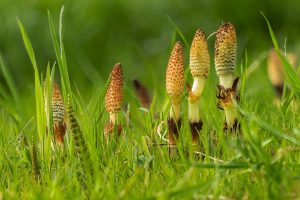
Horsetail thrives in wet, poorly drained soils, often appearing in clusters along streams, garden beds, and pastures. Understanding its growth pattern and morphology is key to differentiating it from similar weeds.
In this guide, we explore the 10 best methods of horsetail weed identification, offering practical tips for gardeners, landscapers, and farmers. Each method provides insight into recognizing this invasive species early for more efficient management.
Also Read: Best Weed Killer For Horsetail 
Horsetail Weed Identification Guide
1. Examine Stem Structure – Best Beginner Method
One of the easiest ways to identify horsetail weed is by examining its stem structure. Horsetail has hollow, jointed stems with distinct nodes that give it a segmented appearance.
The stems are rigid and brush-like at the top, resembling small bottle brushes. Unlike many lookalikes, true horsetail stems grow directly from underground rhizomes.
Observing the stems closely can help distinguish field horsetail from sedges or nutgrass, which may have similar growth habits but lack hollow segments.
Pros:
• Easy to check
• Fast ID
• Distinct nodes
• Hollow stems
• Brush-like top
• Beginner-friendly
• Perennial
Cons:
• Small stems
• Seasonal
• Can confuse
2. Check Leaf Arrangement – Best Visual Cue
Horsetail leaves are tiny and scale-like, growing in whorls at each stem node. They are non-photosynthetic, and most of the plant’s photosynthesis occurs in the stems.
This arrangement is different from grasses or sedges, which have larger, blade-like leaves. Observing leaf whorls is a reliable method for distinguishing horsetail from its lookalikes.
Look for leaves that are short, pointed, and fused to the stem, creating a sheath-like structure around each node.
Pros:
• Clear marker
• Visual cue
• Easy-ID
• Non-photosynthetic
• Consistent pattern
• Unique nodes
• Beginner-friendly
Cons:
• Small leaves
• Hard-see
• Requires close look
3. Inspect Underground Rhizomes – Best Root Method
Horsetail spreads primarily through underground rhizomes, which store nutrients and allow regrowth after removal.
These rhizomes are thin, black, and wiry, forming dense mats beneath the soil. Digging carefully to inspect these roots helps confirm a horsetail infestation and differentiate from shallow-rooted weeds.
Removing rhizomes completely is key to long-term control. Observation of rhizomes also indicates the potential spread risk in neighboring areas.
Pros:
• Accurate ID
• Shows spread
• Confirms species
• Reveals infestation
• Root-specific
• Effective removal
• Underground view
Cons:
• Labor-intensive
• Soil disturbance
• Hard-dig
4. Observe Growth Habitat – Best Environmental Method
Horsetail weed thrives in wet, poorly drained, or compacted soils. It commonly appears near ponds, streams, ditches, and garden beds with excess moisture.
Recognizing these preferred habitats can help anticipate and identify horsetail before it becomes widespread. Look for clusters along wet areas or low-lying garden patches.
Monitoring habitat also helps in planning control strategies such as soil drainage or mulching.
Pros:
• Habitat clue
• Predictive
• Early ID
• Moisture-linked
• Cluster pattern
• Observational
• Easy
Cons:
• Soil-specific
• Seasonal
• Requires experience
5. Check Stem Color and Texture – Best Color Method
Horsetail stems are usually green to dark green with a rough, ridged texture. They may appear shiny in direct sunlight and are rigid to the touch.
Compared to softer lookalikes, these stems stand upright and resist bending, providing a tactile identification method. Feeling and observing the stem texture helps distinguish horsetail from grasses and sedges.
This method is particularly useful in early spring when stems first emerge.
Pros:
• Tactile check
• Color cue
• Distinct texture
• Upright stems
• Beginner-friendly
• Early season
• Easy-ID
Cons:
• Color varies
• Sun-dependent
• Requires touch
6. Examine Reproductive Structures – Best Seasonal Method
Horsetail reproduces using spores rather than seeds, which are produced in cone-like strobili at stem tips. These cones are brownish or yellowish and release spores into the air.
Observing the presence of strobili during spring helps identify horsetail before other weeds emerge. This reproductive cue separates horsetail from many perennial weeds that rely on seeds.
Spore presence also indicates active growth and upcoming spread.
Pros:
• Seasonal ID
• Spore-based
• Cone markers
• Early detection
• Distinct from seeds
• Perennial clue
• Accurate
Cons:
• Seasonal
• Short duration
• Requires look
7. Measure Plant Height – Best Growth Indicator
Horsetail grows between 6 inches to 3 feet tall, depending on soil fertility and water availability. Measuring the height of emerging plants helps differentiate it from smaller ground covers.
Height also indicates the age and density of the infestation. Taller clusters often suggest mature rhizome networks underground.
Height observation is a simple yet effective visual cue for gardeners.
Pros:
• Easy measure
• Growth clue
• Visual ID
• Indicates maturity
• Early detection
• Shows density
• Perennial
Cons:
• Height varies
• Soil-dependent
• Not alone
8. Look for Segmented Stem Nodes – Best Structural Method
Horsetail stems are segmented with distinct nodes separated by smooth internodes. Each node may feature whorled branches or leaves, forming a jointed structure.
Segmented stems are the hallmark of horsetail and rarely found in grasses or sedges. Observing this pattern provides an accurate structural identification method.
Combining node inspection with other cues improves overall confidence in ID.
Pros:
• Structural clue
• Accurate
• Easy ID
• Jointed stems
• Unique pattern
• Visual
• Confirms species
Cons:
• Requires close look
• Small nodes
• Seasonal
9. Observe Seasonal Emergence – Best Timing Method
Horsetail emerges in early spring before most lawn grasses. Early emergence allows gardeners to identify and manage infestations before plants mature.
Seasonal observation helps prevent mistaken identification with lookalike weeds that emerge later in the growing season. Tracking emergence patterns ensures timely herbicide application.
This method works best in combination with other identification techniques.
Pros:
• Early detection
• Seasonal clue
• Visual ID
• Planning aid
• Herbicide timing
• Predictive
• Beginner-friendly
Cons:
• Seasonal
• Weather-dependent
• Requires monitoring
10. Use Reference Guides and Apps – Best Modern Method
Gardeners can use weed identification guides or smartphone apps to confirm horsetail presence. Apps provide images, growth data, and community verification.
Digital tools complement hands-on identification, especially for beginners or large properties. Using apps ensures that control methods are applied correctly to true horsetail weeds.
This method reduces misidentification and improves management success.
Pros:
• Easy reference
• Accurate
• Beginner-friendly
• Digital tools
• Visual aid
• Community support
• Guides available
Cons:
• Requires device
• App learning
• Dependent on quality
Horsetail Weed Identification FAQs
1. How can I quickly identify horsetail in my garden?
Check segmented stems, whorled leaves, and growth in wet areas. Height and node structure are also good indicators.
2. Can horsetail be mistaken for grasses?
Yes, but grasses have solid stems and blade-like leaves. Horsetail stems are hollow and jointed.
3. When is the best time to identify horsetail?
Early spring is ideal when stems first emerge. Strobili appear later in spring for reproductive ID.
4. Are digital apps reliable for horsetail identification?
Yes, especially for beginners, but they should complement visual inspection.
5. Can soil type help identify horsetail presence?
Yes, moist, poorly drained soils often indicate potential horsetail growth.
6. How fast does horsetail spread?
Through rhizomes and spores, horsetail can colonize large areas within one season.
7. Is physical observation enough to confirm horsetail?
Combining visual, tactile, and environmental cues ensures accurate identification.
Conclusion
In conclusion, these 10 best methods of horsetail weed identification provide a comprehensive toolkit for gardeners and farmers. Stem structure, leaf arrangement, and rhizome inspection were chosen as the most reliable methods.
The runner-up methods, including digital apps, seasonal observation, and reproductive structure checks, enhance accuracy and convenience. Using a combination of these approaches ensures early detection and effective control.
By implementing these identification methods, you can prevent horsetail from overtaking your garden or farmland. Early and accurate recognition allows for targeted removal, protecting soil health and crop productivity.
Start using these methods today to identify horsetail weed accurately and maintain healthy, thriving landscapes. Combining multiple methods ensures the best long-term weed management success.