Lambsquarters is a fast-growing broadleaf weed that competes aggressively with corn and soybean crops, reducing yields and increasing management costs. Selecting the best herbicide for lambsquarters in corn and soybean fields ensures that growers can control infestations effectively while protecting their crops.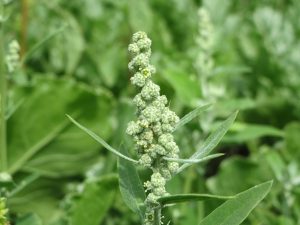
Herbicide choice depends on weed growth stage, crop tolerance, and soil conditions, with pre‑emergence and post‑emergence options providing different advantages. Proper timing and mode of action rotation are critical to prevent resistance and achieve season-long control.
Integrated weed management combines residual soil activity with targeted foliar sprays to reduce lambsquarters populations efficiently. Understanding each herbicide’s spectrum, residual effect, and crop safety helps farmers select the most effective products.
In this guide, we explore the 10 best herbicides for lambsquarters in corn and soybean fields, analyzing performance, application timing, and crop compatibility. Each product is reviewed for its ability to manage lambsquarters while supporting healthy, high-yielding corn and soybean crops
10 Best Herbicide for Lambsquarters in Corn and Soybean Fields
1. 2,4-D + Dicamba Blend – Best Overall for Lambsquarters in Soybeans and Corn
The combination of 2,4-D and dicamba has long been a trusted option for broadleaf weed control, offering strong post-emergence activity against lambsquarters in both corn and soybean fields. This blended herbicide is effective when applied at the right growth stages and is popular in fields with confirmed lambsquarters pressure.
Applied post-emergence, the dual action targets lambsquarters foliage and moves efficiently throughout the plant to disrupt growth. It’s compatible with many modern corn and soybean herbicide programs and is often tank-mixed with grass controls for broader weed spectrum.
Farmers value this blend because it provides reliable broadleaf activity even under warm conditions when lambsquarters germination peaks. Proper application timing and rates are key to maximizing control without crop injury, making it a versatile choice for commercial row crops.
Pros:
• Broad-spectrum control
• Strong lambsquarters activity
• Works in corn/soybeans
• Good crop safety
• Compatible in mixes
• Reliable field performance
• Easy calibration
Cons:
• Potential drift risk
• Timing sensitive
• Not residual
2. Glyphosate (Roundup/Generic) – Best Non-Selective Post-Emergence Control
Glyphosate is a non-selective systemic herbicide that effectively shuts down lambsquarters growth when sprayed on emerged plants. In glyphosate-tolerant (GMO) corn and soybean systems, it offers growers a go-to solution for dense lambsquarters populations.
This herbicide moves quickly through plant tissues, disrupting essential growth enzymes and causing visible control within days. It’s most effective when lambsquarters is small and actively growing, typically under 6 inches in height.
While excellent for post-emergence control, glyphosate provides little residual soil activity, so it’s often combined with pre-emergence programs to enhance season-long control. It remains one of the most widely used herbicides in row crop production due to its ease of use and broad efficacy.
Pros:
• Highly effective
• Rapid activity
• Broad weed spectrum
• Easy to apply
• Widely available
• Cost-effective
• Works in GMO crops
Cons:
• No residual
• Resistance risk
• Not for non-GMO fields
3. Mesotrione (Callisto/Generic) – Best Residual + Post-Emergence Combo
Mesotrione is a powerful HPPD inhibitor that provides both early post-emergence control and some soil residual activity against lambsquarters. It is commonly used in corn herbicide programs to manage broadleaf weeds and small grasses.
This herbicide works by disrupting pigment synthesis, leading to chlorosis and plant death. Mesotrione can be applied early post-emergence and supports longer control windows than many simple contact herbicides.
Producers appreciate mesotrione’s flexibility and ability to reduce reinfestation when integrated with other modes of action. Its effectiveness on lambsquarters makes it a staple in many modern corn weed control programs.
Pros:
• Residual activity
• Strong lambsquarters control
• Works with many mixes
• Corn crop safety
• Supports multiple timings
• Flexible use pattern
• Good overall efficacy
Cons:
• Needs rain for activation
• Timing critical
• Potential photodegradation
4. Fomesafen (Reflex/Generic) – Best PPO Inhibitor for Tough Lambsquarters
Fomesafen is a PPO (protoporphyrinogen oxidase) inhibitor with strong post-emergence activity against lambsquarters and other broadleaf weeds. It’s effective when plants are young and rapidly growing.
Applied in soybeans, fomesafen acts quickly, disrupting cell membrane integrity and causing rapid burn-down of lambsquarters foliage. Its activity spectrum makes it a go-to for fields where lambsquarters escapes pre-emergence control.
Tank-mixing fomesafen with other herbicides broadens weed control spectrum and can help delay resistance development. Ensure safe intervals and label recommendations are followed to protect the crop.
Pros:
• Rapid action
• Excellent lambsquarters kill
• Flexible timing
• Good tank-mix partner
• Broadleaf activity
• Works in soybeans
• Reliable field results
Cons:
• Crop rotation limits
• Requires care in tank mixes
• Burn risk if misapplied
5. Atrazine – Best Complementary Pre-Emergence in Corn
Atrazine remains a cornerstone of pre-emergence control in corn, providing residual suppression of lambsquarters and other broadleaf weeds before planting. When incorporated or activated by rainfall, it protects emerged seedlings and delays weed flushes.
Used with other residual herbicides, atrazine improves overall weed spectrum control and reduces early competition for corn. It works especially well in cooler soil conditions where some herbicides are less active.
Though resistance concerns exist in certain regions, proper rotation and stacking with alternative modes of action preserve atrazine’s utility. Its inclusion in corn weed programs continues to deliver dependable lambsquarters control.
Pros:
• Strong pre-emergence
• Corn crop safety
• Wide adoption
• Works with mixes
• Long soil activity
• Reduces early weeds
• Cost-effective
Cons:
• Resistance concern
• Limited post-emergence
• Not for soybean
6. S-Metolachlor (Dual/Generic) – Best Pre-Emergence Grass + Broadleaf Suppression
S-metolachlor is a soil residual herbicide with good activity on lambsquarters when applied pre-emergence, often used in corn and soybeans. It works by inhibiting seedling root development in emerging weeds.
This herbicide pairs well with other actives to broaden the weed control spectrum and delay resistance evolution. Its long soil activity maintains suppression through early crop stages when lambsquarters typically germinates most.
Growers value the residual stability and early season coverage that s-metolachlor brings to herbicide programs, making it a solid choice for lambsquarters management.
Pros:
• Strong residual
• Helps prevent escapes
• Works in corn/soybean
• Broad soil activity
• Compatible with mixes
• Extended control window
• Helps resistance management
Cons:
• May require rainfall
• Crop safety limits
• Slow initial action
7. Chlorimuron-ethyl (Classic/Generic) – Best for Early Soybean Lambsquarters Control
Chlorimuron-ethyl is a sulfonylurea herbicide with strong post-emergence control of lambsquarters in soybeans. It works at low use rates and is active on a wide range of broadleaf weeds.
Application timing is crucial, as younger lambsquarters are more susceptible than older plants. Its high potency means small quantities deliver effective control, though crop safety must be observed.
Often tank-mixed with other herbicides to broaden spectral control, chlorimuron-ethyl remains a common choice in soybean weed programs where lambsquarters pressure is high.
Pros:
• Highly potent
• Low use rates
• Good lambsquarters control
• Works in soybeans
• Tank-mix friendly
• Cost-efficient small amounts
• Fast activity
Cons:
• Sensitive to application timing
• Rotation restrictions
• Limited residual
8. Metribuzin – Best Broadleaf/Post-Emergence Booster
Metribuzin is a triazinone herbicide that delivers both pre-emergence and post-emergence control of lambsquarters in corn and soybean fields. It’s particularly useful when plants are small and actively growing.
Its mode of action disrupts photosynthesis, causing chlorosis and plant death. Metribuzin can be applied earlier than some other post-emergence herbicides, helping fill control gaps in integrated programs.
Farmers appreciate that metribuzin adds flexibility and control consistency when lambsquarters populations are variable. Proper crop rotation and soil type considerations ensure safe and effective use.
Pros:
• Dual timing use
• Broadleaf activity
• Useful in both crops
• Flexible application
• Helps fill control gaps
• Good in mixtures
• Reliable
Cons:
• Sensitive soils
• Crop injury risk
• Not standalone in heavy pressure
9. Flumioxazin (Valor/Generic) – Best Residual Herbicide Partner
Flumioxazin is a protoporphyrinogen oxidase (PPO) inhibitor with strong pre-emergence residual activity against lambsquarters and other broadleaf weeds. It’s often incorporated at planting to protect crops early.
This herbicide provides long-lasting suppression, reducing early flushes of lambsquarters as crops emerge. Its use is most common in integrated programs where multiple modes of action are needed for season-long control.
Monitor label specifics for rotational crop intervals and water management to avoid injury, especially in sensitive soils.
Pros:
• Excellent residual
• Broad spectrum
• Works early
• Helps delayed flushes
• Compatible mixes
• Corn/soybean use
• Reduces early competition
Cons:
• Requires activation
• Rotation limits
• Not strong post-emergence
10. Clopyralid (Stinger/Generic) – Best Supplemental Broadleaf Control
Clopyralid provides targeted post-emergence control of lambsquarters along with many other broadleaf weeds. It’s effective when weeds are actively growing and small.
Often used as a supplemental herbicide in rotation programs, clopyralid helps manage escapes that survive initial treatments. Its specificity makes it less likely to injure grasses, which is beneficial when mixed with grass-targeting actives.
As part of a holistic weed management plan, clopyralid adds another effective mode of action to delay resistance and improve control outcomes.
Pros:
• Effective post-emergence
• Good broadleaf activity
• Works on escapes
• Useful in rotation
• Compatible in mixes
• Reliable performance
• Reduces competition
Cons:
• Limited residual
• Crop timing matters
• Not primary control
Best Herbicide for Lambsquarters in Corn and Soybean Fields — FAQs
-
What stage should I spray herbicide for lambsquarters?
Apply when lambsquarters is small (2–4 inches) for best control. -
Can I use glyphosate in non-GMO soybeans?
No — glyphosate must be used in tolerant varieties only. -
Do I need both pre-emergence and post-emergence herbicides?
Yes — layering residual and post sprays improves season-long control. -
Is resistance a concern with lambsquarters?
Yes — rotate modes of action to delay resistance. -
Can lambsquarters grow after a rain?
Yes — moisture triggers germination, so timing residuals is crucial. -
Are there crop safety risks with these herbicides?
Yes — always follow label rates and growth stage restrictions. -
Can tank mixes improve control?
Yes — tank mixes broaden spectrum and reduce escape weeds.
Conclusion
In conclusion, selecting the best herbicide for lambsquarters in corn and soybean fields is crucial for protecting yields and maintaining clean crop stands. The 2,4-D + dicamba blend stands out as the overall best due to its broadleaf control and compatibility with modern row crop herbicide programs.
Glyphosate remains an effective choice for glyphosate-tolerant fields, while products like mesotrione and fomesafen offer excellent residual and post-emergence activity that enhances control. Complementary pre-emergence herbicides such as atrazine and flumioxazin strengthen early season suppression of lambsquarters.
Proper integration of these herbicides with crop rotation and application timing will result in healthier fields and fewer weed escapes. Investing in a robust lambsquarters control program ensures stronger crop growth, reduced competition, and optimized yield potential season after season.