Maintaining a productive hay field requires careful attention to soil fertility and nutrient management. Fertilizing correctly ensures lush growth, higher yields, and better quality forage for livestock.
Hay fields need a balance of nitrogen, phosphorus, and potassium, along with trace minerals, to support robust growth throughout the season. Without proper fertilization, fields can become depleted, reducing both yield and nutritional quality.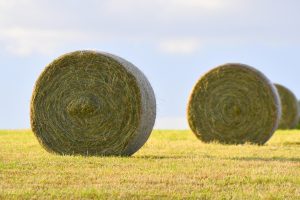
Timing is crucial, with early spring and post-cutting applications providing nutrients when grasses actively grow. Matching fertilizer type and rate to soil test recommendations maximizes efficiency and avoids nutrient loss. Seasonal weather and field conditions should guide your fertilization schedule.
Understanding the soil’s pH and fertility, combined with selecting the right fertilizer type, promotes healthy grass growth and long-term field sustainability. The proper fertilization strategy ensures a consistent, high-quality hay harvest year after year.
In this article, you will find the 10 best fertilizers for hay fields, detailed buyer tips, frequently asked questions, and expert guidance on application. Whether you manage a small pasture or a large commercial hay field, these recommendations optimize yield and forage quality.
10 Best Fertilizers For Hay Field
1. 10-10-10 Balanced Granular Fertilizer — Best for Overall Field Health
This classic balanced fertilizer delivers equal parts nitrogen, phosphorus, and potassium for strong root and shoot development. It provides essential nutrients to support consistent hay growth. Slow-release forms reduce the risk of nutrient leaching.
Apply evenly across the field in early spring to promote early-season growth. Watering or rainfall helps nutrients penetrate the soil for efficient uptake. This formula maintains balanced fertility for all grass types commonly found in hay fields.
Consistent use of a balanced fertilizer encourages higher yields and improved forage quality. It is suitable for fields with mixed grass species. Farmers rely on it for predictable, year-round results.
Pros:
- Balanced nutrients
- Reliable growth
- Easy application
- Supports roots
- High forage quality
- Long-term use
- Widely available
Cons:
- Slow effect
- Needs reapplication
- Not specialized
2. High-Nitrogen Fertilizer (e.g., 30-10-10) — Best for Rapid Growth
High-nitrogen fertilizer promotes lush, leafy growth, ideal for early hay production. Nitrogen supports photosynthesis and vigorous shoot development. Overuse can lead to excessive leaf growth without proper structural support.
Apply early in spring when new shoots appear. Split applications may be necessary for larger fields. Careful monitoring prevents nutrient imbalance and excessive top growth.
This fertilizer helps maximize early cut yields while maintaining quality. It is particularly effective for grass-heavy hay fields. Growers often combine it with phosphorus and potassium for balanced nutrition.
Pros:
- Rapid growth
- High yield
- Supports leaves
- Boosts early cut
- Effective for grass
- Easy to find
- Flexible rates
Cons:
- Excessive foliage
- Short-term effect
- Needs careful timing
3. Phosphorus-Rich Fertilizer (e.g., 10-20-10) — Best for Root Development
Phosphorus supports root growth and establishment, which is critical for perennial hay grasses. Strong roots improve drought tolerance and regrowth after cutting. This fertilizer also contributes to early season vigor.
Apply during planting or early growth stages. Ensure even distribution for uniform root development. Complement with nitrogen for optimal above-ground growth.
Phosphorus-rich fertilizers enhance overall field resilience. They promote deeper rooting, which supports long-term forage productivity. Fields with poor soil fertility often benefit most from this approach.
Pros:
- Strong roots
- Drought tolerant
- Supports regrowth
- Boosts vigor
- Improves yield
- Long-term health
- Complementary to N
Cons:
- Slow effect
- Needs complementary N
- Higher cost
4. Potassium-Rich Fertilizer (e.g., 10-10-30) — Best for Stress Resistance
Potassium enhances cell strength, disease resistance, and drought tolerance in hay crops. Adequate potassium improves forage quality by enhancing sugar content. It also promotes better regrowth after cutting.
Apply during active growth or before environmental stress periods. Ensure uniform distribution to prevent weak areas. Monitor soil test results to avoid excessive potassium buildup.
Potassium-rich fertilizers improve resilience under heat or drought stress. This supports high-quality hay production even in challenging conditions. Regular use can enhance overall field productivity.
Pros:
- Improves resilience
- Enhances regrowth
- Boosts forage quality
- Supports cell strength
- Reduces disease
- Long-term benefit
- Compatible with N/P
Cons:
- Slow effect
- Costly for large fields
- Requires soil testing
5. Organic Compost or Manure — Best for Soil Health
Organic compost or well-rotted manure improves soil structure, water retention, and microbial activity. It supplies slow-release nutrients for sustained growth. This approach enhances field fertility naturally over time.
Apply in early spring or after cutting. Incorporate into soil if possible for better nutrient availability. Combine with mineral fertilizers for balanced nutrition.
Organic fertilizers promote long-term soil health and reduce dependency on synthetic chemicals. They support perennial hay crops and encourage deep root systems. Fields with low organic matter benefit most from this approach.
Pros:
- Improves soil
- Slow-release
- Supports microbes
- Enhances structure
- Environmentally friendly
- Reduces chemical use
- Boosts long-term fertility
Cons:
- Bulk handling
- Variable nutrient content
- Slower effect
6. Urea (46-0-0) — Best for Quick Nitrogen Boost
Urea is a concentrated nitrogen source that encourages rapid grass growth. It is especially useful for fields needing a quick growth surge before cutting. Proper application prevents over-fertilization and leaf burn.
Apply in split doses during the growing season. Water in to reduce volatilization losses. Monitor plant response and adjust subsequent applications.
Urea helps maximize early and mid-season yields. It is highly soluble and efficient when properly managed. This fertilizer is ideal for grass-dominated hay fields.
Pros:
- High nitrogen
- Rapid effect
- Boosts growth
- Efficient
- Cost-effective
- Widely available
- Good for multiple cuts
Cons:
- Burn risk
- Frequent application
- Leaching potential
7. Ammonium Nitrate — Best for Early Season Green-Up
Ammonium nitrate provides readily available nitrogen for early-season green-up. It helps stimulate rapid leaf growth for maximum photosynthesis. Apply carefully to prevent excess growth and nitrate leaching.
Ideal for early spring application before the first cut. Follow soil test recommendations for proper rates. Monitor field response for uniform growth.
This fertilizer ensures strong early growth and contributes to higher total yields. It is especially effective for cool-season grass species. Split applications improve efficiency and safety.
Pros:
- Quick effect
- High nitrogen
- Supports early growth
- Boosts yield
- Efficient
- Good for cool-season
- Reliable
Cons:
- Overgrowth risk
- Leaching potential
- Needs careful storage
8. Superphosphate — Best for Root and Bloom Support
Superphosphate is a phosphorus-rich fertilizer that promotes root establishment and regrowth after cutting. It also enhances flowering in legumes like alfalfa. Apply during soil preparation or post-cutting.
Even distribution across the field ensures consistent uptake. Integrate with nitrogen and potassium for balanced growth. It is particularly useful for older fields with depleted phosphorus levels.
Superphosphate improves field resilience and forage quality. It supports strong perennial root systems. Using it according to soil tests optimizes nutrient efficiency.
Pros:
- Promotes roots
- Supports regrowth
- Enhances blooms
- Improves quality
- Good for legumes
- Long-lasting
- Balances NPK
Cons:
- Slow effect
- Needs complementary N
- Additional cost
9. Potash (K2O) — Best for Stress Tolerance and Fiber Strength
Potash boosts potassium levels, improving drought tolerance, disease resistance, and fiber quality in hay crops. It enhances leaf turgor and regrowth after cutting. Potash also supports energy transfer within plant tissues.
Apply pre-season or post-cutting for best results. Ensure soil testing guides application rates. Combine with N and P for balanced fertility management.
Potash promotes stronger, higher-quality forage that lasts longer in storage. It improves field resilience during periods of stress. This is critical for commercial hay operations.
Pros:
- Improves drought tolerance
- Supports regrowth
- Enhances fiber
- Increases disease resistance
- Balances NPK
- Long-term benefit
- Boosts yield
Cons:
- Costly
- Slow-acting
- Needs testing
10. Controlled-Release Multi-Nutrient Fertilizer — Best for Low-Maintenance Fields
Controlled-release multi-nutrient fertilizers gradually deliver N, P, K, and trace elements over months. They reduce labor and the risk of over-application. Ideal for large commercial hay fields requiring consistent fertility.
Apply in spring or after harvest. Moisture triggers nutrient release as needed. This method ensures steady nutrition without frequent top-ups.
Controlled-release formulas simplify management and maintain yield quality. They prevent spikes in growth and nutrient imbalances. This is a long-term solution for sustainable hay production.
Pros:
- Low maintenance
- Steady nutrition
- Reduces labor
- Prevents overfeeding
- Supports yield
- Consistent quality
- Safe application
Cons:
- Higher cost
- Slower start
- Replacement needed
Buyer’s Tips for Fertilizing Hay Fields
- Conduct soil tests before choosing fertilizer.
- Apply nitrogen in split doses for optimal growth.
- Include phosphorus and potassium based on soil deficiencies.
- Consider organic amendments to improve long-term soil health.
- Time applications around growth cycles and cutting schedules.
- Monitor field response and adjust rates accordingly.
- Check pH and adjust liming as needed.
Best Fertilizer For Hay Field Frequently Asked Questions
1. How often should I fertilize a hay field?
Early spring and post-cutting applications are recommended. Split applications may improve efficiency and yield.
2. What is the ideal NPK ratio for hay?
Balanced fertilizers (10-10-10) or high-nitrogen formulas (30-10-10) depending on grass species and soil test results.
3. Can I use organic fertilizer in hay fields?
Yes. Compost or well-rotted manure improves soil health and provides slow-release nutrients.
4. Does potassium help hay quality?
Yes, it improves fiber strength, drought tolerance, and regrowth vigor.
5. Can over-fertilization harm hay crops?
Excess nitrogen can lead to weak stems, reduced forage quality, and nutrient runoff.
6. Is phosphorus necessary for established fields?
Yes, especially for root development and regrowth after cutting.
7. When is the best time to test soil?
Late fall or early spring, before fertilization, to plan nutrient management for the season.
Conclusion
Applying the correct fertilizer to a hay field maximizes yield, improves forage quality, and maintains soil health. Choosing fertilizers based on soil tests and grass species ensures optimal growth.
Split applications of nitrogen, combined with phosphorus and potassium as needed, support sustained productivity. Organic amendments and controlled-release fertilizers enhance long-term soil fertility and reduce labor.
By following proper fertilization timing, using appropriate nutrient ratios, and monitoring field response, hay growers can achieve consistent, high-quality harvests. Proper nutrient management strengthens roots, enhances leaf growth, and maintains regrowth capacity after each cut. Investing in the right fertilizers is critical for profitable, productive hay farming.